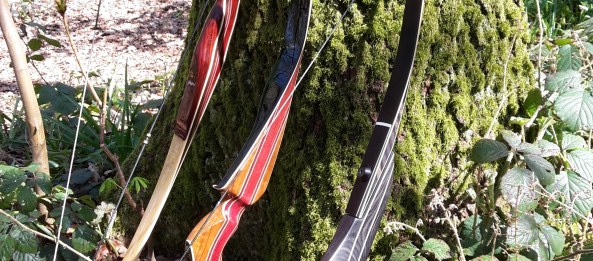
A few from the bookshelf

Help is out there – Literature and online resources

A few days ago I posted some resources to help you get through the UK lockdown titled Home isolation opportunities here are the followup details I promised.
You might be wondering where I am getting all these ideas on combating target panic or am I making it up as I go, based on a vivid imagination. Well no. I’m not that imaginative, just ask Sharon. She will tell you how I always struggle with Christmas and birthday present ideas.
The truth is there is a wealth of literature, along with hours of footage out there on archery of all forms and many of it addresses methods to control target panic.
Most of the techniques I mention initially come from a variety of sources, but have been tweaked or modified by myself. I do a lot of reading and reviewing of online material, along with active coaching of archers of all levels. I endeavour to learn from those experiences, trying different things, tweaking ideas for the individuals. Sometimes it works, other times it takes a while, but we get there eventually. For this reason, I would like to offer a list of resources that I have found useful over the years.

Literature

One very useful guide I’ve found which I’ve mentioned previously came recommended to me by another coach was “Instinctive archery insights” by Jay Kidwell. In the book, Jay who has a PhD in Psychology and is an archer the selves is offering a breakdown of how the human brain works with some very useful insights into practice techniques.
I’ve used versions of these techniques with several people, struggling with different manifestations of target panic or anxiety of shooting and found they work well. 
The Chimp Paradox by Dr Steve Peters may sound a strange choice as it has nothing to do with archery, but I have found the writings on the subject of mind management helpful. To put it simply it goes into detail of how we have two elements of our brain, the chimp brain and the computer brain. The key part is your chimp brain reacts faster, being more instinctive than the computer brain. The thing to remember is with work, you can program your computer brain which provides you with greater control. This is a really simplified definition of the book which doesn’t do it justice so please have a read as it can provide help when combating target panic.
Songi Woo an international archery coach mentioned using this book in a recent article in Bow International issue 138.
Bow international magazine tends to focus on more target elements of our hobby but it does produce some interesting articles on coaching advice and guidance.

Other sources are out there too

The Push ( https://www.thepusharchery.com/) podcasts have a wealth of knowledge and have run a series of podcasts on coaching advice and tips that provides a huge resource and can provide some great insights. You might recall I wrote a review of them a while back and I often go back to their coaching moments recordings.
Nusensei YouTube channel (youtube.com/channel/UC4IL0laJkpzH9JHmxNqjjMg) has some great material, though focused more on target archery it does offer some great advice and guidance applicable to all.
Joel Turner ( https://www.shotiq.com/) has done some fantastic work and offers loads of advice for archers. He has also produced a concept that offers great opportunities for archers in what he describes as open and closed-loop shooting. I’ll try and describe it in brief here.
Open-loop is when you have automatic movements or subconscious and does not have any time for feedback to stop or change the process
Closed-loop is when you make decision i.e choosing to move from one stage to another in your shot sequence, proving feedback so you can stop or adjust.
Archery 101 ( https://www.youtube.com/channel/UCl-LVJYEHvPXzVyrduIMtIg) is also worth checking out for ideas on improvements.
Over here in the UK, we have a few YouTubers who have been producing materials for years.
The cuddly bear fronting Archery Adventures known to many as “Grizzly Jim” ( https://www.grizzlyjim.co.uk/) has produced some really good videos over the years along with the odd articles in Bow international.
Though he’s been a bit quiet on the archery front over the last few years Wolfie Hughes has produced some great videos in the past. ( https://www.youtube.com/channel/UCnkId_L6JEv0r_x1MzMvxfg)
Richard Head Longbows has been producing videos for years on different topics so check out their channel ( https://www.youtube.com/channel/UCr0ec0H7tNwfEEgoQ8qWoPQ)
I hope you find these of use, if you have any other resources you feel should be included then leave me a comment here or drop me a line.
Thanks for reading.
sharon - old bow

Low poundage bows are not a waste of time or money

So before I start let me wish everyone a very Happy New Year. I hope you all had a fantastic Christmas and are looking forward to the new year, full of archery.

I wanted to start this year by addressing a question that has arisen through recent coaching sessions, that of the use of light draw weight bows.

In many of the techniques I’ve mentioned over the years and will be in these articles on target anxiety or target panic, I’ve sited, you are best using a light poundage bow, rather than your normal draw weight.
This is something I believe is of huge benefit for archers whether they are new to the hobby or experienced.
Bows of relatively light draw weight, say 18lbs provide a useful tool for an archer, as from personal experience I find them heavy enough to allow the person to execute proper back tension, whilst being light enough poundage for them not to have to be fighting to hold it at full draw. I’ve used light draw bows myself when I’ve been struggling with my form or recovering from a shoulder injury so I know it works.
Another advantage with these bows is it allows the archer time to focus on improving different elements such as draw up, release or anchoring more easily. By shooting the lighter draw weight, it allows you to develop good posture, overall form, release, etc. All these elements then go to give you confidence in your ability and shot sequence. In turn building confidence in your shooting when you transit to your normal weight bow.
Think back to when you started shooting. Chances are you didn’t start with a heavy draw weight bow? I’m guessing you started with a lower draw weight bow, so you could develop your skills and muscles, without straining yourself. So does it not make sense to revisit these bows when you are developing your confidence and techniques to overcome target panic?
Remember using these bows is less about being strong and/or hitting the bullseye at 40 yards, it’s about learning to control your anxiety.
I have a couple of such bows in my coaching arsenal that have helped more archers than I can remember. They are simple 18lb takedown recurves, one ILF for those more used to shooting that style and one with wooden riser and simple bolt-in limbs for those who prefer the feel of a wooden riser. I quite enjoy using these bows myself at times to keep my form and technique solid. For those interested, I normally shoot a 45lb flatbow.
Sadly I’ve seen an implied stigma from some archers when you suggest using a lighter bow, as though they see its a failure or not macho. It’s not an indication of failure and this mentality is something I get very annoyed about. So in short and a message to those that think that, grow up.

N.B. Just a quick point here. If you are fighting to draw and hold your bow at full draw, then chances are you are over bowed i.e. the draw weight is too high.

Thanks for reading

3D deer in field

Shoot Report – Barry Cheadles’ 3D course October 2019

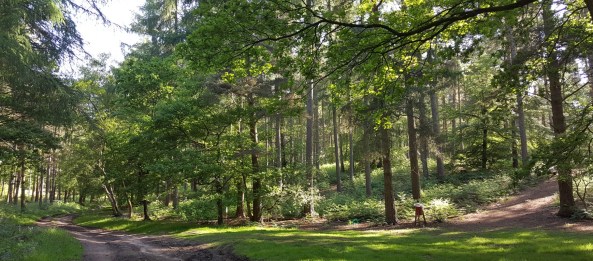
Sun through the trees

Sun through the trees

This was another shoot where I would be behind a camera rather than a bow, but I wanted to get something written and out there as I feel its worth promoting. This isn’t an NFAS club by run Barry Cheadle who does all the course laying and preparation.
Situated at Bower Hill, Nr Button Oak its about a 45 minute drive for us, depending on the traffic. In fact it wasn’t the traffic that delayed us but the weather, as when we were packing the car to leave we were having to scrape the ice off the outside, that was  once we got that far as the padlock on the gate was actually frozen. Anyhow lets get back to the shoot report.
Groups mustering

Groups mustering

The course consisted of 30 targets, all of which were 3D targets ranging in sizes from some small rabbits to wolves, not forgetting the small carp set in the stream.
The grounds are a hillside which comprises a mixed woodland and sections of confers, offering a variety of terrains and lighting.
Archers in the woods

Archers in the woods

One negative comment I will make and to be fare was completely outside of Barry’s control. The previous day the area, like much of the UK had had very heavy rain. This made some of the paths and routes through the course quite treacherous underfoot, with them resembling streams rather than pathways. I know Barry is looking at this for his next shoot and as I said I don’t think he was expecting the weather we had the day before.
Archers waiting for the off

Archers waiting for the off

This wasn’t his first shoot and I was glad to see the course numbers were up from previous shoots he’s organised with there being over 40 archers all of them shooting unsighted classes.
Archers gathering

Archers gathering

The scoring system  was different to other competitions but was easy to follow. Barry combined elements from the NFAS and  Border archery competitions. You got your shooting peg on which there was one for an adult and one for a junior. You shot your first arrow and if you were in you were going to score 15 points if in the animal or 20 points if in the kill /  central marked zone. If you were not successful of your first arrow you can take a second row from the same peg, with a potential of 5 points or 10 points. This made it very easy for both the maths and also for newbies or experienced archers. It also made for a pretty fast shoot, which is ideal in the winter months.
Wooden arrow and Carbon arrow

Wooden arrow and Carbon arrow fighting for central spot

Unlike the NFAS you weren’t having to move pegs and it meant you could try and adapt for your second shot if you need one.  I wonder whether it makes it a bit easier for the course layer too as you set your shooting line and have less issues with different positions along that line. I’ve commented already on the weather on the previous day and early morning but have to say that Sunday was a truly glorious day with bright sunshine if a little on the chilly side.
As I said getting round in a few places was quite challenging due to the previous days heavy rain fall. I think a few more direction signs might have helped too as Barry was using new areas of the woodland.
Archers in the field

Archers in the field

Not all targets were in the woods somewhere outside in fields making for a bit of a nice mix. He also has the ability to shoot out from the wood into fields or from fields into the wood which offers a nice contrast.
3D deer in field

3D deer in field

There weren’t that many long shots, by long I mean over 30 yards but I think it is quite a technical course and works well for developing skills.
I hope Barry will run future shoots as I’ve been to a couple of his and each has improved on the previous. He asked for comments and feedback and I think he’s received lots, the majority of which have been positive and constructive in any criticism.
Sharon shooting

Sharon shooting

One interesting thing Barry has to do, which is the same as we have to at our shoot grounds is to mark any deer targets. He actually puts some coloured tape around the ear all the neck to signify it is actually a target, as his area has a small resident wild herd of deer which occasionally puts in an appearance.
On the peg waiting for the start

On the peg waiting for the start

 In all I think it was  a really good day I think the only downside was if the fact that it was 30 targets without a break I think maybe in future he could reorganise the paths so that you can have a break halfway around.
Considering this has been set by one person I think it’s done really well and want to wish him the best of luck in the future.
Thanks for reading.