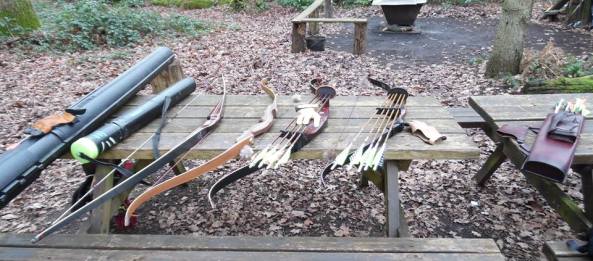
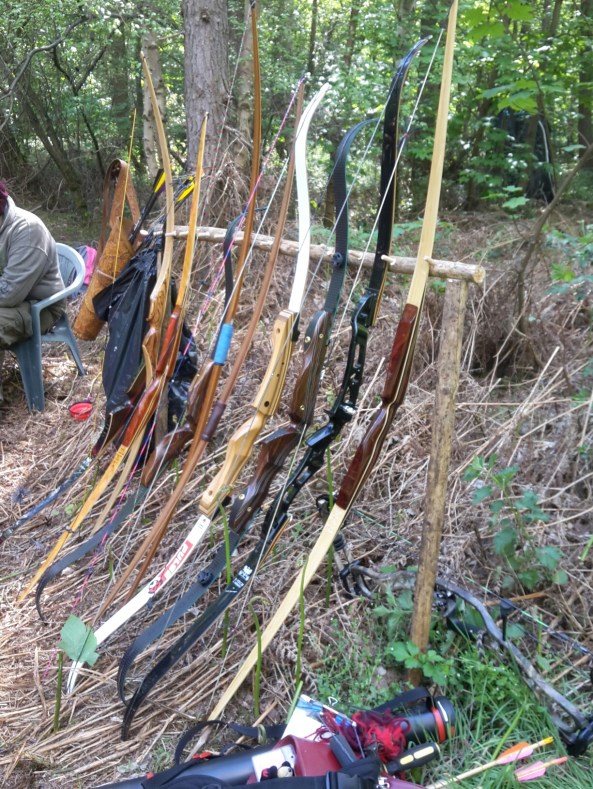
Selection of bows
This is a question that most archery coaches are asked at some point by their students.
What bow should I should get?
Like all good answers it is both simple and at the same time complex. In simple answer terms, it should be a bow that works for you. Knowing what works for you is the difficult part. So here are a few thoughts that might help, I hope you find them useful.
Buying your first bow is such a personal decision for anyone to make, it is very hard for me to say buy this bow over another. Each of us is different, for that reason I have to say it is up to the archer which bow they choose. But, yes there is a but, I will try and give some advice on what to look out for and to consider when buying the bow.
When I can I tend to go with my students to the archery shop when they want to buy their bow, so they can ask advice or my opinion. Also it is so I can be sure they get good service, not something that is a problem with good archery shops.
So for your first bow I would suggest you go with something that will develop with you and give you the opportunity to develop and not restrict you. Ideally you are looking for something that is not too heavy a draw weight so you aren’t over-bowed and not too heavy in the hand that you you struggle to hold it.
You want to have a bow that can support your development. Sadly too often I have seen new archers who have bought a bow and then found it to be too heavy a draw weight, too demanding to shoot or even the wrong hand.

Sharon – shooting her first bow
For this reason I would tend to point archers to a basic take down recurve bow initially. Why?
Well I believe there are a number of advantages of this type of bow for a beginner.
- Entry level take down recurves are relatively inexpensive as bows go, being about £65 to £85 depending where you get them.
- You can up bow draw weights if you want too as your muscles develop. On this point I’d like to say you need to watch the draw weight though, so you don’t buy too light a limb and have to change them within a few weeks, but then don’t go to heavy that you strain. A good coach or shop will advise you as specifics vary for individuals. My students have ranged from 18lbs to 28lbs. My first bow was 32lbs but I had been shooting around that weight of club bow for several weeks and knew it was comfortable.
- One piece bow or take down recurve. You can’t change the limbs with a one piece bow unless you buy a whole new bow so buying a one piece might not be the best investment for a starting archer.
- Take down recurves tend to be pretty easy to shoot allowing the archer to develop an understanding of what is involved in archery and bow set up.
- It is worth mentioning entry level take down recurve bow maintenance is pretty straight forward too and allows a new archer to learn how to maintain their bow.
- It also allows them to develop good form as pretty easy bow to shoot compared with flatbows or British longbows.
Swapping limbs
It is worth remembering that not all manufacturers limbs fit all other manufacturer bow risers and it is something that can be an issue when looking to upgrade limbs. The limbs can be too wide or the screw thread alignment might be different.Unless they are ILF limbs and riser (i’ll cover that later)
A piece of advice I give some is not to trade in your old lighter limbs when you upgrade to a heavier draw weight. Some shops offer a discount if you do this but I would suggest you keep them as sparer, which you can go back too should you need too. Say after a break from archery due to holiday,work pressure or I’ll health.

Limb pocket and bolt
So what is ILF?
ILF – stands for international limb fitting. ILF limbs are a standard design which bow manufacturers produce to. This allows ILF bows risers and ILF limbs to be quickly and easily swamped between bows so you could have KAP limbs on a Samick riser. Or Samick limbs on a Sebastian flute riser and so on.
By the way, for those interested there is something called a Warf bow. Nothing to do with the character from Star Trek, he was Worf.
A Warf bow is one made from a compound riser, but been modified to house ILF limbs.
There are some downside of these beginner bows.
- The limb weights tend to be limited from about 18lbs to 32lbs.
- The basic take down bows limb performance is limited as the limbs aren’t that high performance, tending to be made of wood, rather than carbon fibre etc so they don’t have the same speed.
So this is a brief overview of a few things to consider. I hope this proves helpful and as always thanks for reading.


