Remember to wax your string

Remember to maintain your string

Remember to wax your string

Remember to wax your string

Just a quick post about strings and keeping them in a god condition. With the outdoor season now in full swing I have been shooting in a new string over the last few days and thought it worth reminding people that waxing your string is pretty important, but often forgotten.

Before you start make sure the string it clean of any mud or grime. Also make sure it is dry, lets face it, we live in the UK and it maybe the start of Summer but it can still rain.
Applying the wax helps to bind the individual strands of the string together and protects the string from wear,tear and fraying.

Apply the wax liberally

Apply the wax liberally

Some people use a piece of leather to rub the wax in to the string (Sharon does, but that is because she has sensitive skin and sometimes finds her skin can crack on her fingers, especially when gardening).

I tend to just use my thumb of forefinger, running them up and down the string. The friction causes the wax to soften and seep into the string.

I use my fingers to rub / melt the wax

I use my fingers to rub / melt the wax

If you have string silencers (string spiders, puff balls etc.) make sure you wax up to them as the strands can often separate there.
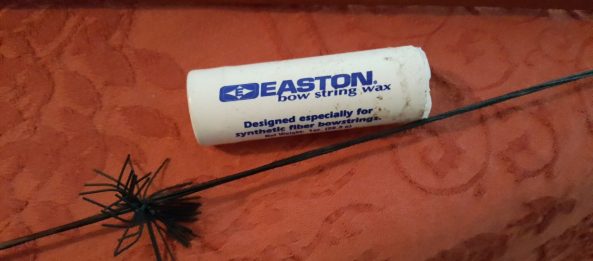
I try to remember to wax my string every other time I shoot the bow. I know some will use beeswax, but I’m just using the Easton string wax here, which I carry in my quiver.

N.B. another tip is to carry a spare string in your quiver that is shot in and ready to use, just in case you need it on a shoot.

While waxing the string you can also check the condition of the severing and ensure that is not wearing either at the nocking point or the limb tip loops.

Hope this helps and as always thanks for reading.

First Aid Kit

Carry a simple first aid kit

It is the time of year when the days have been getting longer and we are out more often. Some will be out on two day shoots, camping in some beautiful British countryside, or maybe course laying in readiness for the shoot.  The downside of the warmer days is it results in me having to start taking antihistamine tablets due to slight hay fever and possibility of insect bites.
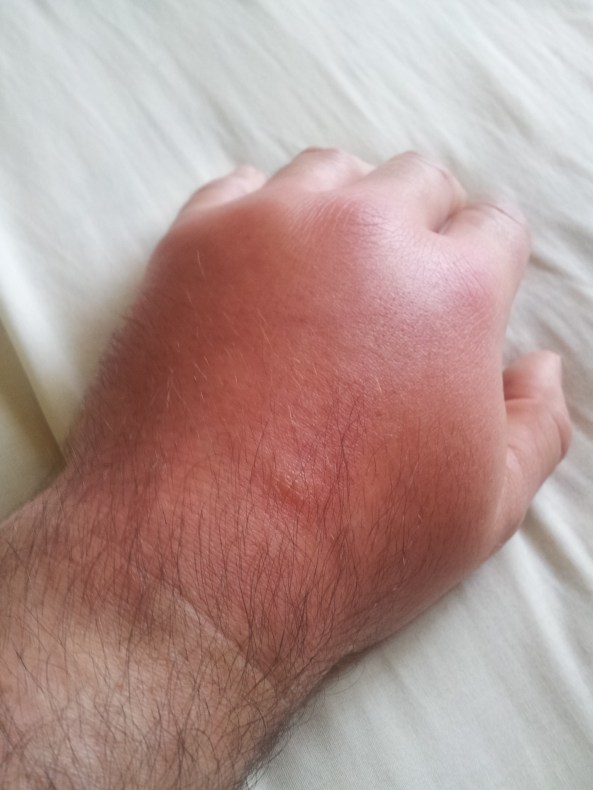
I’m pretty lucky, as I’ve been bitten or stung by most things including a swarm of angry bees one time when we disturbed a nest putting in a new target. The only bug that tends to result in a very bad reaction are horse fly bites and those I really react badly too. You can see below how my hand swelled up after a few hours, following one. Luckily I got my wedding ring off before the fingers swelled up too much or I might have had to have it cut off. (The ring not the finger)
horsefly bite

horsefly bite = very swollen hand

It is also when I go through the first aid kit on my quiver belt to check things are still in date. I do it every year and whether camping, skiing, hiking or enjoying field archery I always carry a simple first aid kit, either in my backpack, day sack or on my quiver belt. It doesn’t take up much space and weighs nearly nothing.
Top tip – put everything contained within the kit into waterproof zip bags. It keeps the kit together and more importantly dry.
The kit is pretty basic, the sort you can pick up from most outdoor stores with a few extra items, I’ve added  like antiseptic wipes, spare micropore tape, antihistamine cream, dehydration sachets etc. I’ve also added in a tick removing tool, as the numbers of ticks seem to be on the increase and we as field archers tend to frequent areas infested with the little things.
When asked why I bother carrying one as the organisers are bound to have something I tend to reply saying “It’s one of those things you hope to never have to use but am glad to carry”.
Thanks for reading.