What to do during winter months

First of all, Happy New year to all readers.

Okay, so the winter months are here, short days and long nights with not much chance of shooting.

If you are a gardener you could be reading seed catalogues for the next growing year, if you are a warm weather lover you could be looking at holiday brochures, but if you are an archer what do you do?

Well you could be practising indoors if you have the option and facilities.

or

You might be cross referencing the latest catalogues and internet sites to work out the best combination of carbon arrows for the bow (think this is the closest we get to checking seed catalogues). I know this is something Sharon is doing at present in her quest to find some carbon arrows for next season.

or

Something you might find useful to do is review targets?

What do I mean? Don’t they all look the same? After all a circular target is the same day in day out. Well yes, if you are shooting at a circular target.  But in the field archery I shoot you aren’t shooting circular targets. I’m shooting either 3D animal targets or animal paper faces.

How is it scored?

Well if you hit with your first arrow you can score 20 points for a kill shot and 16 points for wound (if you get an inner kit you score 24 points)

If you miss with your first arrow you are allowed to take another shot from the second peg.  If you hit, you can score 14 points for a kill shot and 10 points for wound (if you get an inner kit you score 14 points i.e. no difference now as the bonus points are only if you hit with first arrow).

If you miss with your second arrow you can take a third and final shot from the last peg. From there you can score 8 points for a kill shot and 4 points for wound (if you get an inner kit you score 8 points)
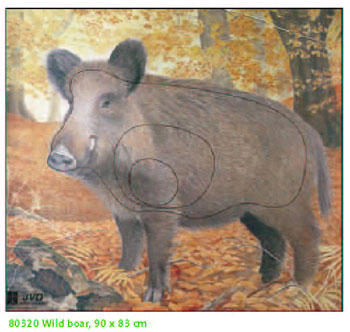
JVD Boar

JVD Boar

The image above shows clearly the 3 scoring zones. The outer most line is the wound line. The next in is the kill line and the smallest is the inner kill.

As you can see not all the animal scores on paper faces so if you hit a leg, you don’t get anything.

There are now hundreds of animal faces and 3D targets on the market (JVD, Martin, Delta and Maple Leaf to name a few)  and if a course is laid well you should never be faced with the same target face on a shoot.  Also new target faces are always arriving on the market,  Merlin Archery in the UK have recently produced some fantastic quality paper target faces.

Target face - merlin boar

Merlin Boar

Another good target they produce is their ram.

target face - merlin ram

Merlin Ram

The only downside I have found with these faces, is they tend to reflect light so be careful course layers and try to avoid putting them in direct sunlight. Think they are changing this in next batch.

The problem with having all these faces, is trying to remember them all and know where the key high scoring areas are. In the NFAS only a few bow classes can use memory aids  such as booklets of targets faces or phone apps. For the rest of us we have to try and remember.

I’ve lost track of how many different boar or deer faces are on the market at present. All slightly different in size and shape. Some are life size others are reduced.

Likewise there are hundreds of different 3D targets out there too.

3d javalina

3d Javalina

A good tip I have been given is to aim for the leg line when shooting a 3D target, as if you drop low you are still in the leg. Downside of this means you aren’t in the highest scoring areas, but at least you don’t blank the target.

3d Turkey

3d Turkey

Anyway it is something to do, whilst we wait for the longer days and the season to start

As always thanks for reading and good luck for 2013.

Buying equipment – first bits and pieces part 1

Having been inspired by some of the recent articles on here, including ones by Jordan Sequillion I thought I would put a posting together on buying equipment as a newbie. The only problem is it grew longer and longer, so I thought I would do a couple of postings, so here goes.

This is very much an overview and I’ll go into more details in future postings.

As a coach I often get asked by students about buying a bow, how much do they cost, what should I got for, where can I get one, I’ve seen one on ebay,etc. I always reply by saying wait a few weeks or couple of months, use the club equipment for now until you have a better idea of what is a good buy.

But sooner or later your students will want to purchase their own bow (which is great don’t get me wrong) but there are a few things that might be worth getting first. So I have put this post together to offer some advice

First things for any new archer to buy (before a bow) should be

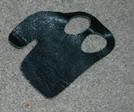
  • A tab or glove of their own, normally I recommend a beginner starts with a tab, it’s easier on their fingers and promotes good finger position on the string
Simple finger tab

Simple finger tab

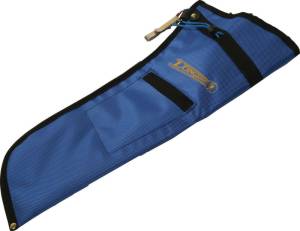
  • Belt quiver, you can pay a small fortune for some quivers, but when you are starting go for something simple.

    simple belt quiver

    simple belt quiver

  • Arrow puller, makes life easier for drawing arrows
  • Whistle (for safety calls and is a necessity for insurance on some sites)
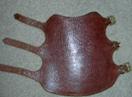
  • An arm bracer or arm guard that fits (doesn’t fall down the arm or is too tight and cuts off circulation, and they like, there are loads of different designs, some that go all the way up the arm some that only cover the forearm.
Leather arm guard

Leather arm guard

  • Arrow rake for finding those arrows that fall short (a cheap decorating roller can be used, once modified for the purpose )

What kind of bow should I buy?

As a first bow the best is the take down recurve practise bow in my view.

They are relatively cheap (£55-£75 depending on where you get them), so if they don’t stick with it it’s not such a huge investment. Also you might be able to pick one up from club member who has progressed.

The limbs can be upgraded to heavier poundage as archer develop their strength and skill (I did this after a few months myself, with some shops giving a discount if you trade your old limbs in )

They are forgiving to use which is what you want as a beginner.

They come in a vast variety of sizes, shapes, poundage so good for all abilities, heights, draw lengths etc so are easy to find one suitable for all shapes and sizes of archer.

A basic beginners recurve doesn’t require as much maintenance as a longbow,  compound or performance recurve. Sharon still has her first bow and we use it for coaching all the time and its over 4 years old.

Arrows – for arrows I tend to recommend aluminium arrows for a beginner, they are durable and cheap. Easton Neos Beginners Alloy Arrow work well and come in variety of lengths and spines.

I tend to recommend avoiding carbon arrows at this stage even though you can get them for less than aluminium. There tend not to be as durable if they catch the side of a target or branch and some clubs don’t allow beginners to use them. They are also harder to find in the undergrowth with a metal detector.

Where should I buy my first bow from?

  • NOT eBay – there is nothing wrong with eBay before anyone says anything. I simple would not advise anyone to buy their first bow off it, as you don’t know the history or condition of the bow.
  • Try before you buy –  really important, try bows of different draw weights, bow lengths and manufacturers. You will find that some limbs will feel harder to draw than others
  • Visit local shop – There are a number of archery shops (Quicks, Merlin etc) round the country and all quality ones will give you the opportunity to try first and spend time with you. My first bow was bought from Quicks Archery and they were very helpful and spent time explaining everything. (If possible take an experienced person with you when looking to buy one ideally your coach or fellow club member)

Ok that is a start, I’ll add more and another post on other facts to consider like draw weights, measuring exact draw length for arrows etc, comfort and bow lengths etc next week

Thanks for  reading, let me know what you think.