I think I’m more a winter person than a hot weather person. I prefer winter sports like skiing to sitting on a beach slowly turning into a lobster 😉
This means i shoot throughout the year. But it does mean I have to wrap up which can make archery challenging.

winter shooting, yes that is snow on the arrow.
As yet we’ve not had any snow but we have had lots of rain. Many of you will have seen the news footage of flooding effecting large parts of UK. Here is one from one of our old clubs in Derbyshire, the boss is not meant to be under water. In fact there’s not meant to be any water there, the stream running down the side of the course had flooded.
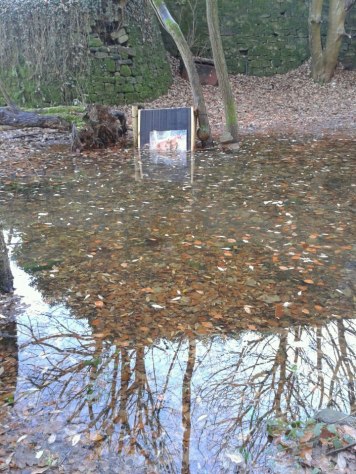
Flooded target
We’ve had a few hard frosts, but so long as we can get to the woods it doesn’t stop us

Sharon shooting in the snow
Good cold weather gear is vital. So I thought I might share my experiences and thoughts.Like when skiing i work on the layering approach. Billy Connolly I think once said on one of his TV shows “there is no such thing as bad weather just wrong clothing”
- Base layer of icebreaker Marino wool i have found to be perfect. It keeps you warm when you need to be and doesn’t develop that synthetic feel other base layers do. Sadly they aren’t cheap but well worth it.
- Disposable hand warmer are useful to carry in a pocket
- Decent waterproof boots are essential
- Decent windproof / water proof breathable gore-tex jacket that you can move and shoot in.
- Don’t wear jeans. If they get wet, heat will leach out of you as they take an eternity to dry. I use a pair of Craghopper Kiwi lined trousers and when very cold a base layer below.
- Fleece shirt and body warmer (Ideally windproof).
- Warm hat and neck scarf or ideally neck buff will keep you warm. One thing I’ve not mentioned are gloves. Flip over mittens work well. These are finger less gloves with a loop of fabric that fits over the fingers so making them into mittens.
- Snacks energy bars and liquid ideally a warm flask. I tend to have a mug flask with hot fruit cordial on my belt and a flask of spicy soap in car.
Don’t get too hot. may sound strange but if you get too warm and start to sweat you can very easily catch cold and that can lead to hypothermia. It doesn’t have to be 3 ft snow to catch hypothermia, it can set in at above freezing point as it is based on your body temperature dropping. so please take care.
Last thing is to consider of how you are getting home. I’ve been to a number of shoots where the biggest problem is leaving. Tracks have been churned up by cars or snow has changed to hard packed ice. I carry a towrope, small spade, length of old carpet and jump leads just in case and I’ve used them all at shoots.

There is a layer of compacted snow into sheet ice
I also keep a change of shoes and a few blankets in the car just in case.
So if you have any tips or advice please add them here. As always thanks for reading and Happy Christmas


 My Archery Experiences