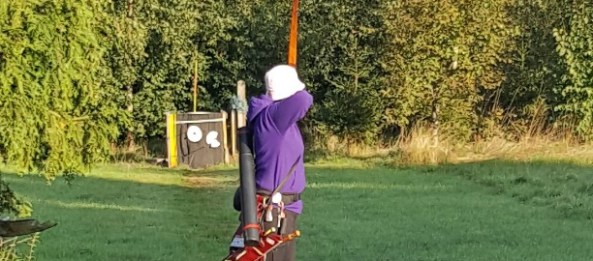
Last weekend we travelled to Nation Field Archery Society, National Championships outside Durham in the North East of England. This was the first national level tournament NFAS had been in a position to run for 2 years due to COVID restrictions. The big question on many people minds would be how would it go?
We decided to take motorhome rather than staying in a local hotel, as it was both a long drive and Sharon would need to be on site early both days, due to running the administration for the competition.
If anyone doubts the work involved in administration of such events I can tell you she had been spending the last few weeks sorting booking and shooting groups well into the night (Special thanks to Lynne for helping and offering her expert help). This work continued on the journey up with Sharon working through a stack of shoot cards attaching the name labels, whilst I was driving the 230 plus miles to the site .
Just as we were leaving home, we received an email notification saying there were problems with camping for the event, due to the very bad weather the area had encountered in the preceding days, read very wet weather. This would mean anyone planning to camp would be accommodated on a separate field away from the central admin marquee and have to travel in each day. I did wonder how this would effect the social aspects and logistics of the event. As it was it would prove to be a bit of a baptism of fire for the NFAS new Field Officer and coordinator of the even Richard Wright.
King of the North
It would actually see the hashtag #KingoftheNorth appearing on several social media sites in respect to his hard work, though I feel it should be said, the newly crowned King of the North has some outstanding knights in support of him, based on what I saw over the weekend. (Complete with amazing horses or should I say horse power, more on that later).
Many readers will be familiar what is involved with the NFAS championships, but for those that don’t know I’ll try and summarise what goes on at the event.
What are the champs?
The National Field Archery Society normally hosts 2 championships each year, one in May the 3D championships, where all the targets are 3D targets. The second is the National championships run over a weekend in mid-September, where all targets are paper faces.
Both of the championships NFAS run are 2-day events with archers competing, in their chosen style (there are eleven different shooting styles from longbow to sighted compound in the NFAS) on 2 courses. Each course consists of 36 targets, set at varying distances. This year there would be a little over 240 archers, less than previous years possibly due to a combination of the change in the normal date, COVID pandemic and location being less central.
All the targets are unmarked distances with only 1 class allowed to use binoculars, that of compound unlimited, though crossbows do have fixed magnification scope. On this point I’d just mention that rangefinders of any form are banned.
This year, due to a combination of COVID pandemic, availability of suitable locations the championships were postponed to early October. There had been no 3D championships for 2 years and no nationals since 2019, so this was the first large scale event NFAS had hosted for nearly 2 years.
If you are interested you can read a write up of that event here.
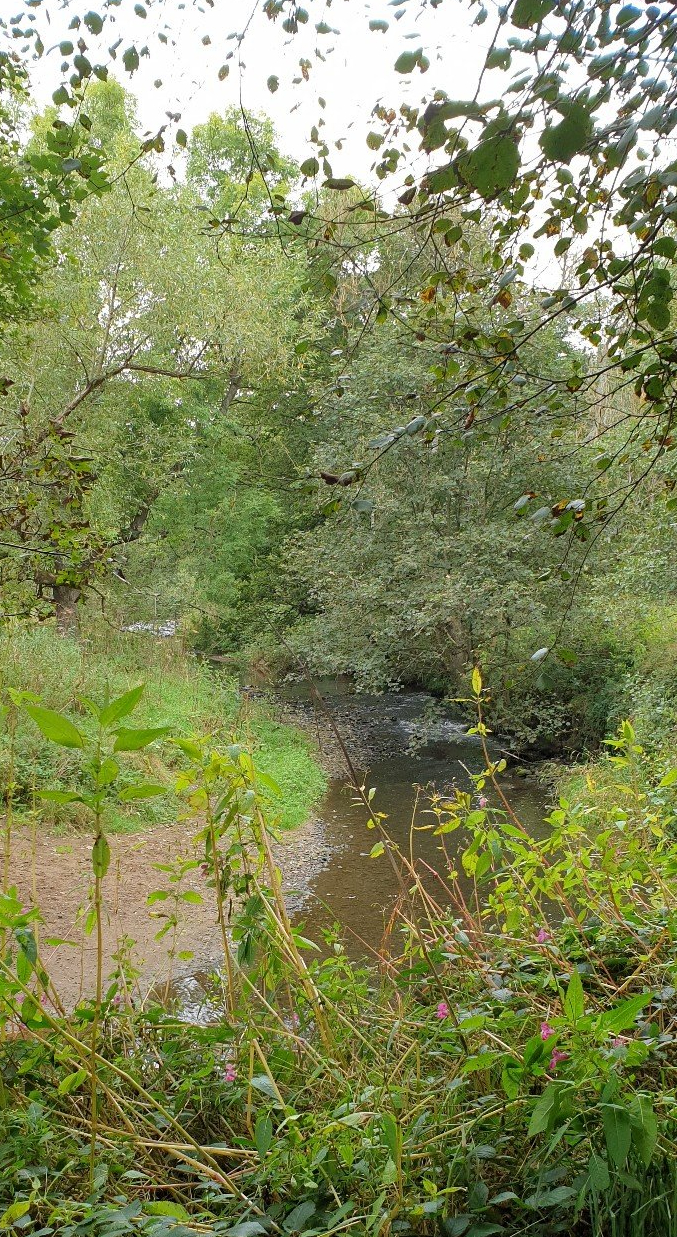
It was also the first time to my knowledge the event had been run in the North East of England. I think the distance and potential travelling time might actually have put off some archers off, which was a real shame. The woodland and surrounds were very pretty, with them being mainly confer with patches of deciduous trees.
Paper faces verse 3D targets
Over the years many archers I have spoken to have voiced their dislike of shooting paper faces and state a preference for 3D targets. Often this is because the occasions they have shot such faces they have been set further than needed, in the belief it gives a “greater challenge”, when in reality it simply means more arrows are shot as archers struggle to hit the target or see if they are in the scoring zones.
A new development this year were the target faces being used. NFAS have invested considerable time and money in developing a bespoke range of custom new target faces. There are 80 currently of varying sizes and animals, with a long term plan of adding more in the future. This meant each course target was individual, with no duplicates appearing over the 2 days. From my understanding the target faces will be available for NFAS clubs to buy but I’m not sure of the pricing policy at this point in time.
Feedback has been really positive on the selection and scoring areas. The scoring lines follow the outline of the animal making them more forgiving than other target faces on the market. This means that scoring a wound (16pts for first arrow, 10pts for 2nd arrows or 4pts for 3rd arrow) was a little easier but the higher scoring zones were more of challenge. Partly due to the size / locations of the zones and archers not being familiar with the faces. This was after all the first time competitors had seen them, other than some samples that had been uploaded on the NFAS website.
The event
Considering the sheer amount of issues that the field officer, his teams and members of admin / organising team I think it is amazing the event not only went ahead but has had such positive feedback. At times it was beyond belief, from cars being stuck in mud, catering van being stuck, back up camping field, being swapped twice due to level of flooding. Yet or maybe because of this the event worked. People really pulled together with some of us doing a lot of pushing too.
So, Saturday morning dawned with archers arriving on site and being allocated to their respective courses. There would be over 200 archers spending the day shooting one the different courses. Sadly, this would be the first day of problems with cars becoming stuck, but the weather was kind and after some pushing we got all off site safely, with considerable help from the 4×4 pickups.
On Sunday morning and due to yet more rain overnight we saw the entrance and sections of the admin field practically impassable to vehicles. The field was closed to traffic and competitors cars were diverted to alternative site with a minibus organised to transport the archers to the shooting venue and registration.
I don’t think I have pushed so many cars out of mud in my life, but I wasn’t the only one. I know i have said this earlier but there were so many people who came together to help that it was quite simply amazing. At times there was a 4×4 pickup attached to another 4×4 pickup, both trying to get a grip in the muddy earth to pull a third vehicle up the slope. Not always successfully. It took us over an hour to move the catering van on Sunday to a firm bit of ground where a 3rd 4×4 this time with off road tyres managed to get it off site and to the course so the archers could get some lunch. Despite this we managed to get people moving. I’m glad we had taken our grip tracks as these proved necessary at times for even the 4x4s. these go under the tyres and offer a bit more traction.
There are some excellent photographs from the weekend on the NFAS website thanks to Alex Tyler’s keen eye.( https://www.nfas.net/ )

I did manage to get out round and have a brief walk round part of the courses over the 2 days A on Saturday with Sharon, Lynne and Julie and part of B course on Sunday with Harry.

From the little I saw of the courses they seemed to be well laid and offered a challenge without being stretched shots. The course layers having worked hard to try and use the terrain and dead ground to the best possible outcome. I really liked the tall standing bear shot which was situated down an avenue of trees.
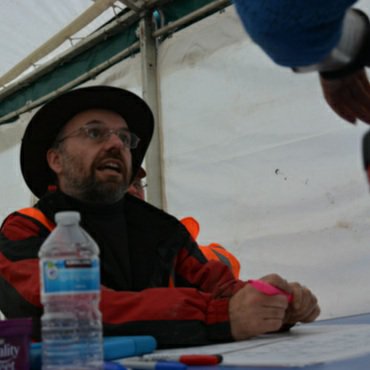
After each stroll it was back to the Admin tent in readiness for the archers as they return off the course and hand in their score cards to be logged. Each day archers would have to hand in their score cards to be checked and recorded. Double scoring is used by all competitors, where 2 members of the shooting group score independently, with regular checks. The restriction being that you can’t score your own score card. This helps to reduce the chance of accidental or intentional errors.

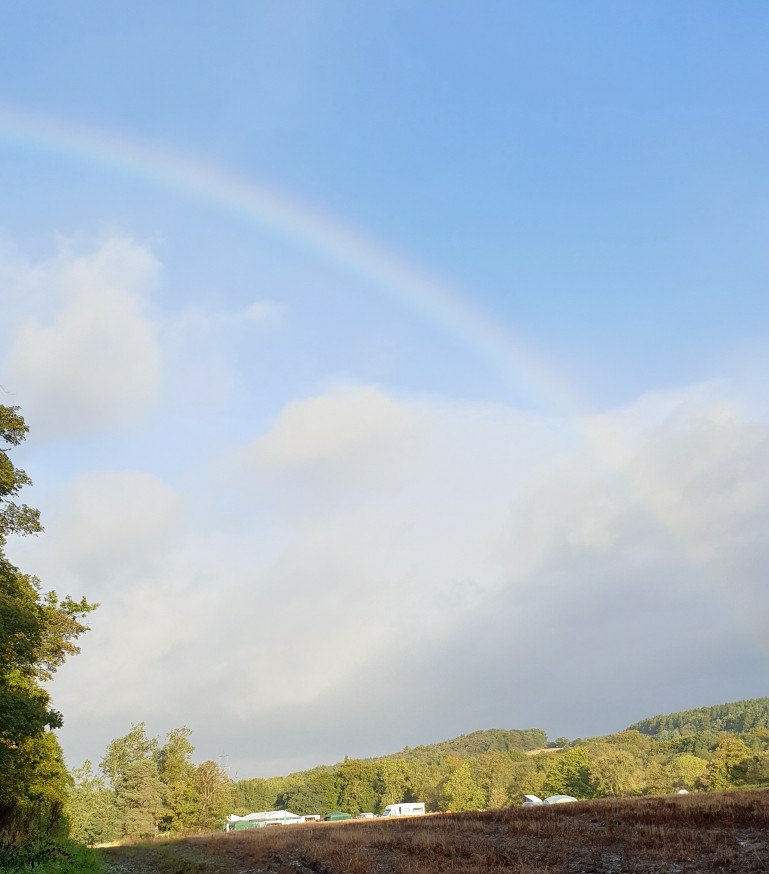
Thankfully the rain was mainly in the evening with only light showers during the day, though those showers did make the field and some of the paths very muddy. One image I shared on social media was that of a rainbow over the admin Marquee and field on Sunday morning, along with one on Monday morning when piece had descended on the field as shown below. The dog by the way is Spencer and was a familiar site over the weekend, belonging to the landowners and spent a lot of time in our admin marque or playing outside.

It was great to catch up with so many people, many of who I had not seen for nearly 2 years in person. I also had opportunity to catch up some followers of this site and discuss how they were doing, what they thought of the new target faces, along with aspects of target panic which some were encountering.
The general feedback from competitors on the weekend and on social media afterwards has been very positive, with many encouraging comments on the use of the new range of paper faces. This is something that the NFAS will need to capitalise on if they are wanting to continue to promote the nationals as a paper faces only event.
It was also nice to chat with John Stanley, editor of Bow International who I had only talked to via email in the past.
I’d like to offer my congratulations to all who attended and survived the mud, especially those who were placed. A full breakdown of scores can be found on the NFAS website (https://www.nfas.net/)
Thanks for reading