I’ve recorded this episode of the podcast as a video on my thoughts on the National Field Archery Society championship faces (NFAS). It seemed more logical to record a video when talking about target faces than just having it as an audio podcast.
For those that don’t know NFAS produce a selection of target faces specifically designed for the big game round used at clubs across the country and at the National Championships in September.
It is available on Spotify, Amazon, Music and YouTube, the latter being shown below.
In the video I cover the positive and negative points of the targets faces, along with my thoughts specifically on the mess version we use at our club. We have been using these styles of faces for a couple of years and in our experience they work pretty well, especially in wet conditions but there are a couple of negative areas where they could be improved. There is one downside you need to consider and that being, the faces are printed on a white mech fabric and can suffer from being shot out, with the threads breaking. I show a couple of examples in the video.
There are currently 80 target faces, 20 per group, which means you could set 2 full 40 target courses and not repeat a face. We’ve used quite a few of the Group 1 target faces on our open shoots and they have been very well received. I especially like the Tiger and Golden Eagle faces, though the African lion I struggle will as it melts into the background.
You can order these directly from the NFAS website, where in the downloads section you will find the order form. https://nfas.net/downloads
Let me know what you think of the faces. Does your club use them?
Overall I think the quality of the images is great, with it being nice to see some NFAS specific faces. There has obviously been a lot of work involved in putting these together.
The mess works well for us at the club as it out last the equivalent paper face. Like all target faces they will get shot out over time, especially if you have a number of good archers nailing the centre time and time again.
Personally I would like to the scoring lines to be marked in a darker colour, so they are more easily seen as the light grey doesn’t work well on many of the faces.
In the video I mentioned a top tip I recorded in a YouTube short a while back, when it comes to securing the mess faces to target bosses.
If you have any questions or queries you can drop me an email on or a message via the website contact me page.
If you have time please check out my YouTube channel (https://www.youtube.com/@offthearrowshelf) . Hopefully you will enjoy the content, and if you do, please hit the Like button and consider subscribing to the channel.
Most of all remember to enjoy your shooting and as always thanks for listening, watching and supporting.
So we are rapidly approaching the end of 2023. What a year it’s been! I hope it has been a productive and positive one for all reading this? Its hard to believe that a year has gone by so quickly.
Did you manage to keep to your 2023 New year goals and resolutions? I hope so.
Before I get started I want to wish you all a very happy, safe and worry free festive season. I hope any travelling you are undertaking is hassle free.
Happy Christmas and good luck for next year
For me it’s been a busy year, highly productive at times, though with less archery than I’d hoped. Can you ever have too much archery?
I’ve been able to get back out on to the NFAS archery circuit for a a few shoots in the last year. Speaking of which I do feel a bit guilt about not writing up for this site ones I’ve enjoyed so much like one at Black Arrow, even with all the rain. So sorry guys.
I managed to shoot the 3D NFAS championships this year, the first for several years. I was shooting Hunting tackle this year and despite not being out shooting for years I was shocked and pleased to finish in top 10. I have realised I don’t have the same confidence I used to when it comes to shooting or even interacting with people. Not sure what I can do about this. I would like to say thanks to a few friends out there that have offered support in so many ways, thank you.
Coaching wise it’s been a quiet year, though I am thinking of revisiting some of my coaching material and update in 2024.
I’ve been really fortunate to have recorded a few podcasts over the past year.In fact I’ve just released my 100th recording. I have chatted with fantastic guests Including Harry President of NFAS Episode 70, Kristina Editor of Bow International Episode 80 , Zach Ball on all matters of course laying episode 58, discussed coaching with Angel of High Power Archery podcasts episode 62. The one that’s seen the highest hits has been the chat with the guys running The Bowhunter Challenge (episode 60) You can find the podcast on Spotify (https://open.spotify.com/show/1kJbhdoxrufx5SfpVVXxnw?si=11136385616f44cf)
On this topics, I’d like to do more chats with archers from across the archery community next year so if you are reading this and interested drop me a line.
I’m experimenting with YouTube content but this is more linked to the podcasts and me walking in the archery wood, enjoying the nature and wildlife. Though I think I will stay behind the camera. By all means drop by and check it out http://www.youtube.com/@offthearrowshelf
I don’t have any new year resolutions or goals as such. I’m going to continue to support the archery community as best I can, whether than be writing, recording or just helping.
If I can offer a thought for next year for all readers, to think or better still act on is that of being more tolerant of our differences.
There has been quite a few conversations recently of them and us, the trad archer verses non trad, recurve verses compound, binocular users verses non users. The list can go on and on if we let it. I feel the only thing this does is divide us. Yes we are all different, yes we all have our favourite styles of bow, yes we all have different views. We also all shoot arrows from bows, whether the arrows are wood, carbon or the bows are flatbows or compounds. We all take joy from the hobby and have made friends through a shared pastime. So lets move forward into 2024 remembering this.
So until the next time, take care of yourself and each other. Have a great Christmas and good luck to 2024.
It’s been a while, in fact, it’s been far too long since I have added anything to this site, for which I apologise. My attention has been focussed on developing the podcasts (https://anchor.fm/off-the-arrow-shelf) at the expense of the written word. So with only one minor delay to say Happy New year and I hope everyone reading this is well, let’s get on to this book review.
Cover Photo
Those of you who are familiar with field archery in the United States or other areas of the world for that matter may well have heard of Joel Turner. I have mentioned him a few times on this site and on my podcasts. He is a highly respected archer and coach, appearing in countless podcasts, videos and articles.
Joel has also authored Controlled Process Shooting – the science of target panic which is going to be the focus of this review. ISBN 9781981346431
Onto the first impressions, well these may not be positive for some people as pages per buck or pound are not high. It is quite a skinny pocket-size book rather than a huge encyclopaedia. The flip side of this is it gets to the point quickly, being quite focussed. It runs to 58 pages and I bought my copy online but it is available from several archery shops.
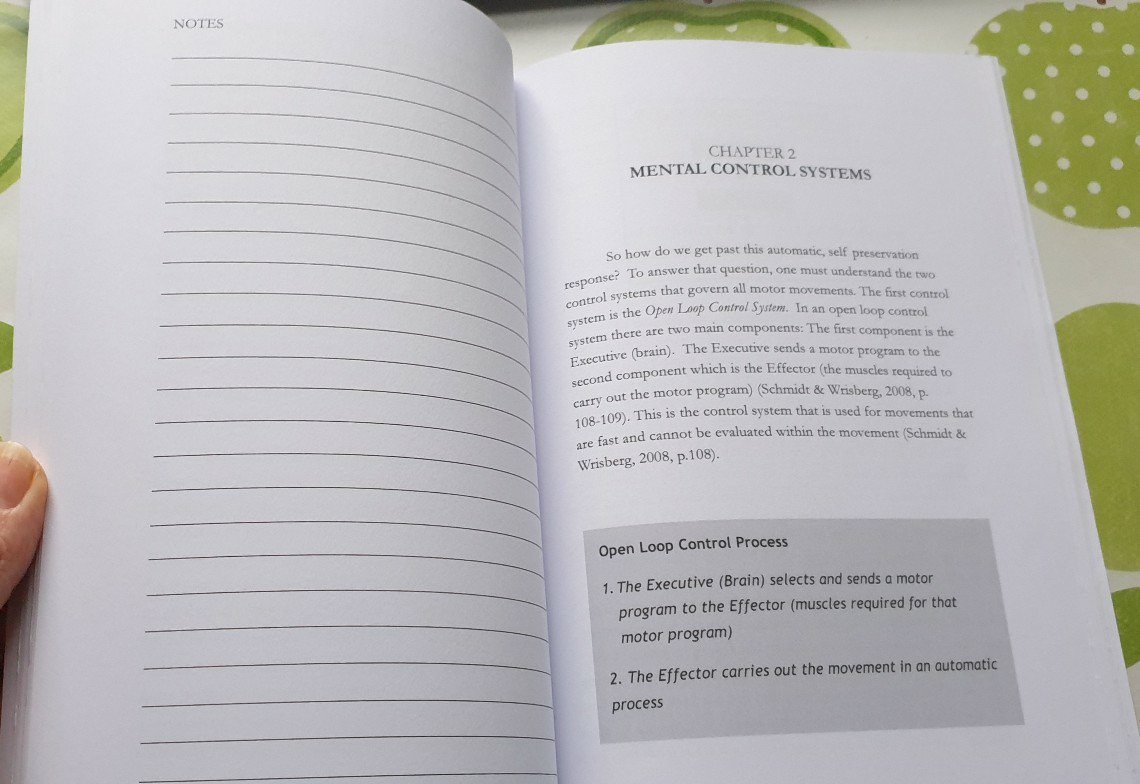
One thing that I really like is the way the book has been constructed with empty notes pages, where you are encouraged to add your own notes as you practise the processes outlined in the sections. I often end up with post-it notes stuck in books with my scrawl all over them as I don’t want to deface the book itself. I was actually talking about this very topic with Simon Thomas at the weekend, who also has the book.
Photo of inside cover
If you have ever watched any of Joel’s videos on YouTube or listened to a podcast, when he was discussing the principles of shooting, then you will be familiar with his style of presentation. The book is written in the same style as he speaks.
My advice would be for you to read it, then go back and read it again to make sure you understand what Joel is saying and the messages he is trying to get across. Then read it a third time to confirm this.
The section on mechanical releases is less relevant to my style of shooting as I shoot off the fingers, normally split-finger so I won’t comment on that chapter.
Some aspects of shooting a bow can be subconscious in the execution, but I still believe you need them to feel right. Maybe that is the way an instinctive archer has a closed-loop shot.
I found elements of the book interesting as Joel talks of a blueprint of a shot, which is effectively the same idea just different wording to how I describe a template of a shot to my students.
I am not sure that his style will suit everyone, in fact I would go as far as to say that it probably won’t suit everyone’s style of shooting or rather their mindset. That is just a fact of life as everyone is different and comes to archery via different life experiences.
Another chapter
I feel you will get out of this book as much as you choose to invest in working through his ideas. So, don’t expect to read it and that be it. You will get more if you read and work with it over time.
Like owning a pair of walking boots. You need to wear them to bed them in. You need to work with this book to get the most from it.
It reads like a training manual for archers wanting to gain control of their shooting, with the option for you to annotate with your own notes and thoughts throughout the book. Hence the blank ruled pages for you to add your own notes and thoughts. I think this is an important part of how to use this book, as it is something for you to work with. Not just read, but work with. That work will take time and commitment.
This is something I try to get across to all my students when I am working with them on improvements to their shooting. They have to work for it. There is no magic arrow. Money spent on top-level equipment will only go so far. “All the gear and no idea” is a phrase I have heard about many sports including archery.
For that reason, you need to read this book, give yourself time to process what is being said and then practise the ideas Joel mentions.
I am a fan of the open and closed-loop process, though not sure that fan is quite the right word to use. I can see what Joel is alluding too when he discusses it. I use a phrase of feedback and feed blocks when I am explaining it to students, but the concepts are very similar.
A long time ago I learnt the importance of listening to the feedback your body is providing you. It is one of the reasons that I spend so much time teaching my students the importance of coming down or drawing down if the shot doesn’t feel right or controlled.
I know some traditional archers are not a fan on his shot control and feel things should be more fluid or instinctive. that’s fine, that is their perspective and opinion. It is so important to recognise that what suits one person is not necessarily going to fit with another person opinion or style. After all, archery is a very diverse discipline and opinions do vary.
I can understand why some who purchase this book may be disappointed when it arrives, possibly because they expect a large document or weighty tome. I think they may fail to understand the purpose of it. I see it as a training guide for your improvement. Like all training material, whether it be learning to drive, brain training or DIY, you have to apply it. many will want to rush out and apply what is read straight away, which is great. My only comment is that you need to give yourself time to adjust to these ideas.
I believe some people will feel this is overpriced for such a small book, but I feel they might be missing the point. It is not a text you simply read, it is a guide for you to work with, or at least that is how it came across to me.




 My Archery Experiences