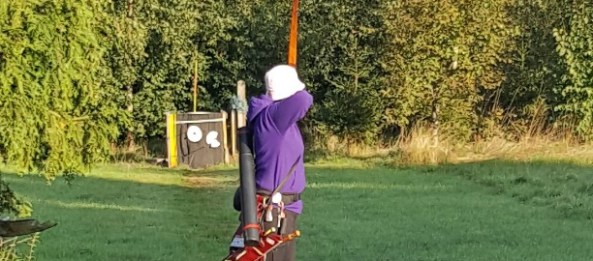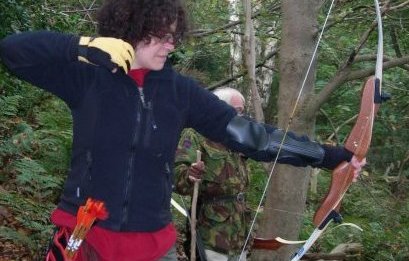
sharon - old bow

What kind of bow should I buy?

Okay so this is the second part of me offering some advice on buying equipment. If you missed the first part you can read it here. So now I am going to focus on the all important first bow and arrows.
Just to be clear I’m not sponsored by any archery shop or manufacturer. If I mention manufacturers or shops, its based on my experiences with them and their products. In short I don’t get any incentives or kickbacks to promote products on this site.

What kind of bow should I buy?

Buy one that feels right and comfortable. Just to be clear I’m not going to tell you to go out and buy “x” or manufacturer “y” as the choice should be yours based on your feelings. All I will do is give you some points to think about. Hopefully it will help and might cover topics you hadn’t considered.
By now you have hopefully had the chance to try a few different types of bows at your club. Ideally these should have been various draw weights and maybe different styles. Some you will have loved, others you may have hated. This might well influence your choice when it comes to buying a bow as you will probably have an idea of the draw weight you find comfortable and what feels right or comfortable when you draw it.
I tend to always recommend a simple 3 piece take down recurve to start with. This is based on personal experience. My first bow was a Samick Polaris, which was a three part take down of around 30lb draw weight. After a few months I bought some new limbs and this upped it to a 37lbs draw weight. This bow came with a wooden riser and limbs, though there are metal risers available at slightly more cost. I preferred the feel of the wooden ones.
So why this bow?
  • Relative cheap at about £60
  • I was familiar with the style as they were nearly identical to the ones I had been borrowing at the club.
  • It was easy to maintain.
  • It was a draw weight I was comfortable with.
  • I wasn’t needing one for hunting just for field archery. A simple recurve can work for target or field.
  • I could shoot it instinctively with wooden or metal arrows for HT BB (sorry Hunting Tackle or Bare bow) under the NFAS society or I could add sights.
  • Lots of people have experience of this type of bow so lots of advice out there.
  • Good to gain confidence with and return to potentially if I needed to.
These types of bows are relatively cheap (£55-£75 depending on where you get them), so if they don’t stick with the hobby it’s not such a huge investment. Also you might be able to pick one up from club member who has progressed.
The advantage of a takedown is the limbs can be upgraded to heavier poundage as archer develop their strength and skill (as I said I did this after a few months myself). Some shops giving a discount if you trade your old limbs in. It is worth noting that not all limbs fit all bows, something I will cover in more detail later.
Another advantage is a basic beginners recurve doesn’t require as much expert maintenance as a longbow, crossbow, compound or performance recurve, whilst still offering the archer a bow that works well. They can also last if you look after them. Sharon still has her first bow, which we use occasionally for coaching and its over 10 years old.
sharon - old bow

Sharon – shooting her first bow

What to think about

Hand grip – Bows risers will have different size hand grips, some you will like others you won’t. Some are quite thin or slender, allowing your fingers to wrap round the bow grip, others are wider so are more suited to longer fingers. So consider this if you have small or large hands. Some archers like a plastic or rubber grip on the riser, others prefer the feel of wood (I’m a wood fan. Which is why I like the wooden grip on my Samic Vision which for hose that don’t know is metal riser ).
I know many archers who retreat indoors over winter but archery can be a year round activity . so remember in winter months you may be wearing gloves, so you need to find a grip that feels right in your hand.
Draw weight – don’t overdo things at this stage and over-bow yourself. In fact don’t overdo things at any stage. Go for something that is comfortable to draw and shoot for an entire day. You can easily pick up some new limbs a few months down the line of a heavier draw weight.
Definition – Over-bowing this is when an archer has a bow of too high a draw weight for them to be able to draw it without struggling. It can result in personal injury or developing bad habits.
Partly due to our sedentary life style these days, i.e. too much tv and not enough exercise, many of the muscles you need to use in archery are under developed, so over bowing is a serious problem. In junior archers it can have a negative effect as their bones are still growing and developing.
Also remember you might take a break from archery for a couple of weeks due to work commitments, holidays etc and it doesn’t take long to lose muscle tone. So it is good to go back to a lighter if you develop bad habits or have an injury. I had a car accident a few years back and went back to light recurve to rebuild strength.
Me shooting recurve

Taken on a very wet shoot

Risers – Metal risers are heavier than wood, carbon are lighter than both. Problem is carbon risers are very expensive (several hundred pounds for riser alone) and not ideal for a beginner. Give some thought to the physical weight of the bow once assembled not just the draw weight. If it is too heavy for you to be able to hold at arm length then you are not going to be to stable.
Just to complicate things more, risers also come in different sizes and can be combined with different limb lengths to make bows of varying lengths.
So this means you can have a 68 inch long bow comprising of
Short riser and long limbs.
Medium riser and medium limbs.
Long riser and short limbs.
Off an arrow rest or the shelf – this will depend on the bow and riser. Some are designed to be shot off the shelf others are designed to use an arrow rest.
For a first bow I think you really want to shoot off an arrow rest. Don’t go for expensive one. Plastic Hoyt super rest works fine (in fact Sharon uses one on her competition bow.)

Whats good to know?

Draw length is very important; in fact it’s vital as this will possibly restrict your choice of bows. So when you get to the shop have it measured. Most people after they have been shooting a while will find it has changed, lengthening slightly as you start to draw on your back muscles and they develop.
If you have a long draw over 29 inch then short bows (60 inch or less) may not feel as comfortable to draw. So you will probably be looking at a bow length of 68-70 inches.
This seems a good point to mention Bow length and stacking (stacking is the feeling of increased resistance in the smooth draw past a certain point)
Short bows tend to work for people with shorter draw lengths, Sharon loves small bows but her draw is only 25 1/2 inches. Whilst she is shooting a 66 inch flatbow currently she also likes shooting shorter bows. One is a custom made Blackbrook bow by Andy Soars. This comes in at 38lbs at 26 inches. Though the norm is to have bows rated at 28” draw, shorter bows often have a 26” rating too.
If I were to try to draw Sharon’s, the thing I notice is when I go past 26 inches. Don’t get me wrong it is a lovely bow to shoot but I can feel the difference as it starts to go past 26” because it has been designed and built for the best performance at 26”. She has another short bow, a Rebel at 54 inches rated 40lbs at 26 inches and 45lbs at 28 inches. She nicknamed this the Bitch as if you get anything wrong it punishes you. I think its a great name as I find it a bitch to draw to 28 inches.
Personal insight – As I have said my draw is 28 inches and all my bows are set up so I can draw smoothly up to my full draw, with an even increase in draw weight. I prefer the feel of a longer bow to draw so most of mine are 68 inches plus. If you have a long draw length then go for a longer bow 68 inches plus.
Never draw a bow that has been designed for another archer without their permission. You may find it has not been designed for lour draw length.

Bow draw weight

I was lucky enough to be shown the specifications that the scouting organisation in the UK use which provides some good guidance on potential draw weights for different age ranges. Its a pretty good starting point, though I have to stress these are only guide lines.
Age Range Maximum bow weight at start of course Maximum draw weight by end of the course
Up to 12 yrs old 14 lbs 16 lbs
13-14 16 lbs 18 lbs
15-16 18 lbs 22 lbs
17-18 20 lbs 24 lbs
19+ 20 lbs 24 lbs

I tend to see most adult archers buy something round the 24lb to 32lb draw weight when they start. This will vary greatly on the individual and how much they have developed muscle strength and form. This may sound a bit sexist but ladies usually go for a slightly lighter draw weight bow of between 20 lbs and 26 lbs.

Budget – try and set yourself a budget you can afford and stick to it. It is very easy to spend more. After all the bows only one part you still need arrows., bow case and bits and pieces. This can be another downside of eBay and getting caught up in the excitement of bidding.
Club restrictions – may sound strange but some clubs, may have their own restrictions on the types of bows or arrows allowed. Some clubs are focused on one style of bow e.g. longbow only.

ILF or not?

Where takedown bows are concerned there are two types of riser and limbs ILF and bolt through.

Limb pocket and bolt

Limb pocket and bolt not ILF

Bolt on limbs are generally inexpensive and work okay. I have several bows that use this technique to secure the limbs to the risers. The down side is there is not standard associated with these, meaning manufacturers can be slightly different in limb pocket size or limb width. This in turn means you can’t always swap limbs from one bow to another if the bows are different manufacturers.


ILF limb pocket on riser,

What is ILF?

ILF stands for international limb fit which is an industry standard. This means you can use any ILF limb with any ILF riser, which dramatically increases your selection available for you. In the past ILF risers have been more expensive but market forces are now pushing the price down and you can pick up some inexpensive ILF risers and limbs.


Between manufacturers limbs will feel different even if they are the same draw weight, and will release energy differently depending on what they are made from. I’ve shot 32lb limbs that have been faster and more efficient than 40lb limbs.

Underside of ILF limb showing pin that slides into riser

Underside of ILF limb showing pin that slides into riser


Don’t go for the first ones offered try a couple of different lengths and weights. You may find you go back to the first ones you tried but make sure you take the opportunity to try different ones.
Don’t go for heavy draw weight limbs initially, you can always upgrade later.

Also get the limbs and bow weight checked when you buy it. Just because the limbs say 28lbs doesn’t mean they are 28lbs with that riser, so its worth checking (A few years back I bought a Solo flatbow, rated and marked up at 40lbs at 28 inches, when I actually got it weighed it came in at 46lbs at 28 inches!!)
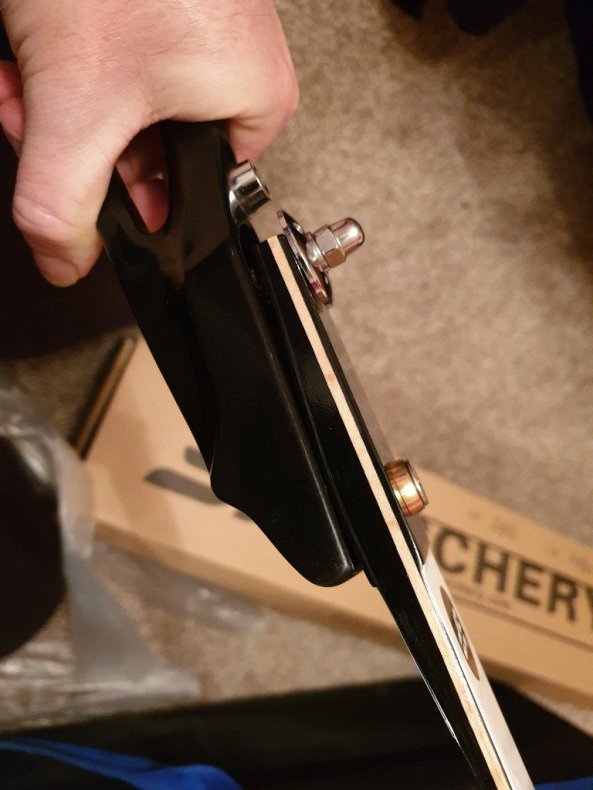
ILF limb in riser

ILF limb in riser

Where should I buy my first bow from?

  • NOT eBay – there is nothing wrong with eBay before anyone says anything. I simple would not advise anyone to buy their first bow off it, as you don’t know the history or condition of the bow. All you have to go on are a few pictures and a description, that can sometimes be less than accurate.
  • Try before you buy – this is really, really important. Take the time and try bows of different draw weights, bow lengths and different manufacturers. You will find that some limbs will feel harder to draw than others, whilst some will feel smoother or shoot faster even though on paper they may be the same draw weight.
  • Visit local shop – There are a number of archery shops doted round the country (Quicks, Merlin, Wales Archery, Bow Sports, etc) and all quality ones will give you the opportunity to try first and spend time with you.
Me shooting my Samick Vision 1

Me shooting my Samick Vision 1 in the rain

Personal insight – My first bow was bought from Quicks Archery and they were very helpful, spending time explaining everything. When I went to but my second recurve, this time from Merlin archery, I had a better idea of what I wanted and they too very willing to spend the time going over options. I recall trying several different limbs until finding ones that felt right.

If possible take an experienced person with you when looking to buy one ideally your coach or fellow club member. If I’m free I try and go with my students when they buy their first bow.


Couple of final points.

No that is not meant to be a pun as I was about to talk about arrows.

Arrows – for arrows I tend to recommend aluminium arrows for a beginner, they are durable and cheap. Easton Neos Beginners Alloy Arrow work well and come in variety of lengths and spines. I’ve used some Mybo cadets but haven’t been a fan of these as I haven’t found them as durable.

Easton Jazz

Easton Jazz

I tend to recommend avoiding carbon arrows at this stage even though you can get them for less than aluminium arrows . My reasoning is pretty simple. I have found some of the cheaper carbon arrows tend not to be as durable if they catch the side of a target or branch. This can result in a damaged arrow and carbon splinters are not nice or always easy to remove. you need to also consider if your club has any specific rules, as some clubs don’t allow archers to use carbon for a variety of reasons. They might be on a shared sport facility and not want to run the risk of carbon splinters.

The other main reason is carbon arrows tend to be a lot harder to find in the undergrowth with a metal detector as only the points and inserts for the nocks are metal. Sorry guys and girls, you will be looking for arrows when you first start, so don’t read this as me having a pop at your ability.

When it comes to arrow length, they should be longer than your draw length by normally a couple of inches. This allows for you overdrawing the arrow by accident and the arrow not coming off your arrow rest.

So having said I recommend aluminium arrows, my first arrows were wooden arrows and within a few months I had started making my own. This was a great move as it meant I learnt the skills to refletch any that lots fletchings, fit points / piles, etc.

Why did I go for wooden arrows? Simple I liked them, they felt more natural and appealing. Also I had broken a few and my coach ran a session on how to making wooden arrows which I really enjoyed.

You aren’t alone

Ask for advice from the archery community, your club members and of course your coach. After all they have a vested interest in you doing well. People will have had experience of bows, shops etc so its worth talking to others in your club. I tend to offer to go with any new student when they go to buy a bow.

I’ll try to put one last posting on what to consider after you have got your bow, maintenance or bow and string, bracing height and something on arrows.

As always, thanks for reading.

Sharon on the range

Target Panic and the archer part 3

So in the second post on target panic I wrote at length about shot sequence and tried to set some foundation of ideas for you to build on. In this post I am going to describe some techniques, but first I want to discuss confidence.

Confidence and it’s role in Target Panic

I have always felt that confidence is hard won and easy knocked.  Remembering this it’s my view confidence and target panic go hand in hand, with a lack of confidence in your own ability often sparking some form of anxiety. Think of this cycle for a moment.
A lack or loss of confidence can spark anxiety, which in turn may cause a loss in performance due to nerves. The loss in performance then results in a loss of confidence in ability. It’s not hard to see how this can quickly become self perpetuating.
The possible result is an archer can develop a variety symptoms, not knowing where or how to aim, unable to reach anchor before releasing etc. Bearing this in mind we can look at elements of your shooting process and how we can identify the separate steps in your shot cycle. This was why in the last article I spoke at length about shot sequence.
As for building confidence, well that is a huge element of archery so I’ll come back to that later in this series of articles. To start let’s look at what I think of as our mindset.

How your mindset plays a vital part

I feel you can be your own worse enemy at times or rather your mindset and memories can help weaken your resolve. How you perceive or approach a target can have a huge impact on how you shoot. Ask yourself this, have you either thought any of these when you see a target?
“I always miss this shot.” ,
“I never hit this face.” ,
” I don’t like long shots.”
The best I think I have heard is “I hate things standing on legs like 3D deer as I always go between the legs.”
Statements like these have an effect on your mindset long before you nock the arrow on the string. Effectively you are starting preparing for your shot by talking yourself out of making the shot successfully, before you even start! Almost as though these are the excuses you can use for when you miss. You might not realise it but I believe this mentality adds stress and starts pre-programming your brain into a negative mindset. So please stop doing it.
You want to avoid trying to use these descriptions when effectively talking to yourself about a shot. So much or archery is in your mind and how you approach or talk to yourself about shots, that talking in negative terms starts a downhill spiral.
I think it was Nelson Mandela who said “I never lose. Either I win or I learn.” I think this could be modified for archers to “I miss and I learn, I hit and I learn more.”
Why do I believe this? When you shoot and miss you might realise you judged the distance wrong or performed a poor release. When you shoot well and hit, you remind yourself you can judge the distance, execute the release, you help to remind yourself you are a capable archer. This helps to build individual confidence it also helps build a reservoir of successful shots.

Remember the good shots

Too often we recall the shots that we perceive as failure or target faces we hate to shoot. This can make us over analyse the shots we take,  going over them again and again in the virtual world of our mind. This can also re-enforces a negative cycle in our brains. I will admit this is something I have struggled with for years. I have a good memory a d remember shots and courses, sometimes for years. The problem was I often recall the poor shots or the ones I felt I should have done better, rather than celebrating the good shots, the successes. It has taken a lot of work to retrain my brain and shift it’s focus, but if I can do it so can you.
For this reason I started to actively remind myself of the good shots, whether this was at the range or at a competition. Changing the terms I would describe events in my own head. I shifted  my focus to remember the actions that made them good shots and I found I could then repeat them more easily. I stopped looking at what I was doing wrong and reminding myself what I was doing or capable  of doing right. I can trace how that change in mindset helped me back to a couple of instances one of which I will recall now.

This is what helped me?

Starting to remember the good shots and learning from them, rather than constantly re-analysing the misses. Knowing why and how I missed is important, but you can overdo things. I would finish a competition shoot feeling down and when asked how I did I’d reply not well. It wasn’t until a mate said your bad days are better than most people good days, I realised I needed to change how I saw my results. (By the way, thanks Jim as it made me think)
There is one specific shot at a NFAS 3D championships a couple of years ago that helped me and was a turning point. I had started a few weeks before the event focusing on the positive, trying to remember the good shots and not to be so negative. I knew this tournament would be the testing ground for my new outlook. The target that brought it home for me was a standing 3D stag, about 60 yards or more. My shooting group was waiting to shoot the target as the groups in front appeared to  pepper the undergrowth. None were hitting it from the first peg and most were taking 3 arrows to score or come close. I think it was fair to say that this wasn’t filling any of us in the group along with others with a sense of confidence. By the time it was my groups turn to shoot there were others groups waiting behind us. Each member of the group took it in turn to shoot before me and only one hit with their third arrow. By the time it was my go the viewing audience of other archers had grown to several groups. I’m not a big fan of being watched when I shoot, so have a couple of dozen people watching me wasn’t high on my list of things to enjoy.
I remember feeling the anxiety build, long before I was on the shooting peg. I took my place at the peg and breathed out, forcing my shoulders down and to relax. I nocked the arrow and slowly breathed in and out a couple more times, smiling to myself while thinking I must be mad to do this to myself.  I remember the conversation in my head ” Come on you’ve shot this distance before over harder terrain. Any doubts then just focus on form and smile.
I focused my concentration on my form, my balance on my feet, my grip on the bow and how my fingers felt on the string. All the time looking at the target. I breathed in and drew up in one fluid motion, bending at the waste for the distance. I reached anchor and when I was ready I released the string, letting the arrow fly towards the target.
I then heard the thud of an impact, not a sound of arrow burying into the ground but the dull thud of an arrow in a 3D.
Lowering my bow arm I could see my arrow central in the body. A good shot, a first arrow hit scoring me 20 points. More importantly it told my doubting head I could do this archery lark.
Now when faced with shots that make me nervous I think back to that shot. How I focused on form, my shot sequence and most important remembering the positive outcome it gave me then and since. I would go on to come second in my class at that national tournament.
So start today to focus on the elements you are doing right and build on them. It will take a bit of time and you’ll probably catch yourself more than once being negative but believe me it’s worth it.
Sharon forcing me to pose for my shot on elk

Sharon forcing me to pose for my shot on elk

With Christmas round the corner I want to share a top tip that many retailers will hate me for. Please don’t spend lots of money on new equipment or upgrades believing this will help with your shot anxiety. IT WON’T. All it will result in is you potentially missing faster, getting more frustrated after spending money, sometimes a lot of money and being back at square one.
Your objective is not to hit the target but to gain control over your target panic / shot anxiety – remember this. Too often we focus and perceive success as making the shot score highly. That is an outcome from solving the anxiety, your true goal is to take back control of the shot.
Thanks for reading and as I have said previously feel free to drop me a line with any questions or thoughts you might have.

Target Panic and the archer part 2

So in the first article l provided a couple of definitions of target panic and explained how I prefer to describe it as shot anxiety, since I see it manifest with some people long before they view a target.
In this post I’m going to offer some personal insights and initial techniques I’ve used to help others and myself.  I am also going to mention what I see as the potential role of the coach. These initial ideas may work for you, they may not, but please give them a try. Feel free to drop me a line or question about anything I cover here.
When I started writing this article and the previous one, I thought I’d be able to cover the key elements in a couple of posts. Well I was wrong. I think it will take a couple more than I was expecting as I want to ensure I cover as much as I can. So in further posts I will go into more detailed strategies, along with some literature and online resources you might find helpful.
In this post I’ll try and set some ground work so to speak. If you don’t have one to hand, go grab a pen and paper as you’ll need one later for a quick bit of mental exercise.

First, some bad news. Overcoming Target Panic or shot anxiety or whatever you prefer to call it requires you to
  1. Put some work in – there are no magic arrows that solve everything or a secret draw technique that quells the nerves.
  2. Remember one size doesn’t fit all – what works for one person may or may not work for you.
  3. Be patient – it takes time to work out what helps you and this means time spent working at it too.
Now for the good news.
There is light at the end of the tunnel and no its not the oncoming train. There is a wealth of knowledge out there and lots of experienced coaches who are willing to help you, so don’t think you are alone and target panic, shot anxiety or whatever you want to call it effects only you.
Coaches Role
My first comment is going to be aimed at and about my fellow coaches. May I suggest you spend as much time as possible researching and reading about target panic from as many sources as possible. You will find there is a wealth of articles, books and videos on the topic.  Some of these are excellent, giving sound, sensible guidance, others I feel are less well thought out so you will need to vet the material before considering using any of the techniques.
So what we can do for our students or fellow club members.
  1. Highlight you are available to help, even if that is just listening to their concerns. Sometimes a casual conversation during a coffee break in the club house can be all that’s needed for someone to know they can talk to you.
  2. It’s not just you – this is a vital aspect to get across to the archer. Shot anxiety can affect lots of people so they aren’t alone.
  3. There are techniques that can help but, what works for one may not work for another so it’s worth learning different techniques.
  4. It will require work on their part and yours as their coach. so expect it to take time and effort.
Archer role
This brings me to the next important factor I want to address and is aimed at the archer.
Find a coach who will work with you and is sympathetic to your concerns.  As I have said the work has to be done by you, the archer – sadly there is no magic bullet or rather magic arrow that will solve this. Nor is it an overnight process, so expect to spend some time on this.
You may try something and it doesn’t work or does work for a couple of weeks and then your anxiety returns. This is pretty normal and is why I’m stressing it takes time and effort.
Don’t be afraid to say you don’t feel its working or want to try something else.
Shot anxiety is the common cold to archers
So what am I talking about now? A bit like the common cold, target anxiety  can return at the local range while practising or at a national tournament, so it is good to remember it can reappear and to keep your tool box of coping methods to hand. You will probably need a few techniques for the different environments.
Coaching isn’t just for beginners.
I have found there is an implied stigma with some people concerning receiving coaching, especially once you are a good or experienced archer. It is almost seen as a failure, that you are seeking or receiving coaching. Phrases I have heard include “Why do you need to see a coach you can already shoot?”, “You’re a good shot just practise more.” etc.  Well here is a little fact for you to think about.
Outside of archery I also ski and have been for about 17 or more years. Even though I have been skiing for years I still go a day or two session with a ski instructor each holiday. This might seem strange to some people, as I can already ski to a reasonable level, (Most red runs in Europe and single black diamonds in Canada to give you an idea), So why take lessons? Because I know there is more to learn and I don’t want to develop bad habit or get sloppy in my skiing.
My coaching approach to help
I am quite fortunate in many ways that the majority of my coaching is either one to one or maybe one to two. This is especially true when coaching for improvement. By this is I mean archers who already know how to shoot but want to improve or have hit some form of wall. This notion of coaching for improvement is where coaching someone with target panic or shot anxiety comes in.
When it comes to coaching people I prefer to work 1-2-1 or at a push with two people. I have found this allows me to dedicate my concentration and focus on them.
My sessions run for a couple of hours and it may seem strange but, there may not be that much shooting in that time. I tend to spend a large proportion of the time talking with the archer to allow them to express their feeling and thoughts. After all they are the ones who are encountering difficulties and no matter how good you are as a coach, you aren’t a mind reader.
So this is something for you, as the archer struggling with anxiety and others of you who are coaches need to remember.
The first thing is to talk with the person and get an idea of how shot anxiety manifests, how they feel it come on. They or you may not be able to easily articulate it but over the space of a few hours or sessions, often helped with a cup of coffee and causal chat you as a coach will get an overview and the archer will feel more comfortable.
So back to target anxiety
Step 1 – How does it effect you? Identifying how it manifests allows you to consider solutions and a strategy to help. If you can try and make a note of how it manifests and how it makes you feel it makes it clear in your head.
Step 2 – What the archer does?
Once you have been able to identify how shot anxiety manifests, you can start some basic work which helps to build a foundation to work on in the future.
I always start with discussing shot sequence. This is largely because I have found that shot anxiety can creep up on a archer without them realising, gradually over time.
Put simply the shot sequence are the steps you as an archer go through when taking a shot.
Think about when you first started shooting. Chances are you were very conscious of your actions and the steps you needed to complete to make the shot. From setting your feet right, getting shoulder alignment, grip on bow etc, etc. Over time you start to perform some of these actions without thinking. This is a kin to learning to drive. When you start to learn you will be looking down at the gear stick, trying to work out how to move from first to second or third to forth and so on. As you become more comfortable and familiar with changing gears,  you change gears without thinking.
Quick Exercise
Go grab a pen and paper. Sit down and go through what you do when you are preparing to take a shot, all the way through to taking the shot and afterwards when the arrows hit the target. Once you’ve done that come back and read the rest of the post.
Why do this?
I do this exercise with students, having them note down their shot sequence, identifying each stage they go through. I then work with them to identify elements that can be improved or areas they have concerns. Okay, so this may sound strange coming form an instinctive archer,  who has to feel if a shots right to make the shot, but believe me this process of knowing your shot sequence does help.
I feel this is really important and if you take nothing else form this article think about this. As we develop as archers many elements of our shot sequence become subconscious. We do them without even thinking about it (remember my example of changing gears in our cars without having to look at the gear stick). The thing is sometimes our brains take short cuts and we miss steps unintentionally. This is a bit like when you drive a different car and find changing gear a bit harder. These steps could result in a less than “perfect” shot. I use the phrase perfect very loosely here, as meaning executing a successful shot.
By the simple action of identifying the actions we go through, the steps we take, it helps us identify what we are doing and sometimes helps us process or identify the action that triggers our anxiety.
Quick tip – Keep a crib card
One way target panic or shot anxiety can manifest is in the archer not being able to remember what to do next. This is not uncommon and I’ve successfully worked with people who feel this happen. and have learnt to overcome it. Often they have found having a crib sheet in their quiver, giving the steps they know is a useful aid. Allowing them to have an instant recap. It’s almost like hitting a reset button to remind them what they already know. Some find that simply knowing they have it is enough.
Some examples of shot sequence
Some people will got to great detail, others will group elements together, so I thought I would write out a couple of examples.
Firstly lets look at a pretty simple shot sequence someone might come up with.
Stance, body alignment, nock arrow, focus on target, draw up, anchor, settle, release.
Pretty straight forward to follow and understand but here is the point. This is an ideal example for the note in the quiver as a reminder, but and yes there is a but, what about the elements in the description e.g. “body alignment” or “draw up”. If you are working with someone or on your own think about what you mean and what you are doing in these stages. Are you rushing one stage to get to another? We are all keen to get to make the shot but it shouldn’t be at the cost of not setting yourself up right in the beginning.
Lets look at a more detailed breakdown
  1. Stance – are my feet flat and weight balanced on right and left leg? Am I balanced on the soles of my feet or toes? am I stable
  2. View the target – can I see it clearly, are there any tree branches that may cause problems for arrow flight or snag my bow?
  3. Focus on the target
  4. Hand on the bow in the right place, does it feel at home and ready?
  5. Load the bow and nock the arrow.
  6. Fingers on the string, can I feel the string on all three fingers,
  7. Breath out and relax.
  8. Flex bow hand to relax it.
  9. Elbow, wrist arrow aligned.
  10. Focus on target to pick my spot, let your brain work
  11. Breath out and relax shoulders.
  12. Do you feel right and ready to move on?
  13. Breath in and draw up smoothly.
  14. Raise the bow arm.
  15. Push and pull evenly with the shoulders.
  16. Hit the anchor.
  17. Hold to settle.
  18. Does it feel right?
  19. Release string moving fingers smoothly.
  20. Keep bow stable.
  21. Wait for the sound of impact.
  22. Evaluate the shot, did it fly true? *
*Just as a point of interest. I find very few archers actually spend much time evaluating the shot. They tend to review the result and not elevate it. Is it in or isn’t it? Did it score yes or no. So what I mean here is actually evaluating your performance. Did you get good back tension? Did you get a clean release? Did the arrow fly well? etc.
Okay so the second example is a much more detailed breakdown of a shot sequence and is normally what many archers do without thinking, but if we take a moment and read it again.
I talk about “Hit the anchor.” and “Hold to settle.”
Often these two actions are ones that archers with anxiety struggle with, possibly releasing before reaching their anchor or releasing as soon as they hit anchor point.
By breaking this down we can more easily work on the specific areas, coming up with suitable strategies to help retrain our brain and control out emotions.
Your turn
Take some time now to note down your shot sequence or review one you have already produced.
Then go and shoot some arrows and update your notes until you have what is an accurate representation of what you do. Once you have done this make yourself a cup of coffee, tea, have a beer or whatever helps you relax and think about.
  • What point in the sequence do you feel the anxiety start? e.g. as soon as you see the target or nock the arrow?
  • What point is it at its worse? e.g. as you are drawing up or about to release?
I know this helps as I have worked through this with archers.
By identifying this start point or worse point in the process it gives you and your coach something to work from.
I hope this helps and I’ll be going into more details in the next post where I will be looking at some strategies and thoughts on mindset, building confidence etc. Let me know what you think or if you have any specific let me know.
Thanks for reading