Shoot report – Paget de Vesey 2013

As promised here is the write up from the Paget shoot which took place on Sunday 17th. This was the first competitive shoot of the 2013 season for us and before I start I will admit to having a soft spot for Paget de Vasey shoots.

Paget was the first NFAS shoot we ever did and have made sure we have booked on their shoot ever since. It was also going to be the first shoot that Sharon would be competing at following recovering from her injury.
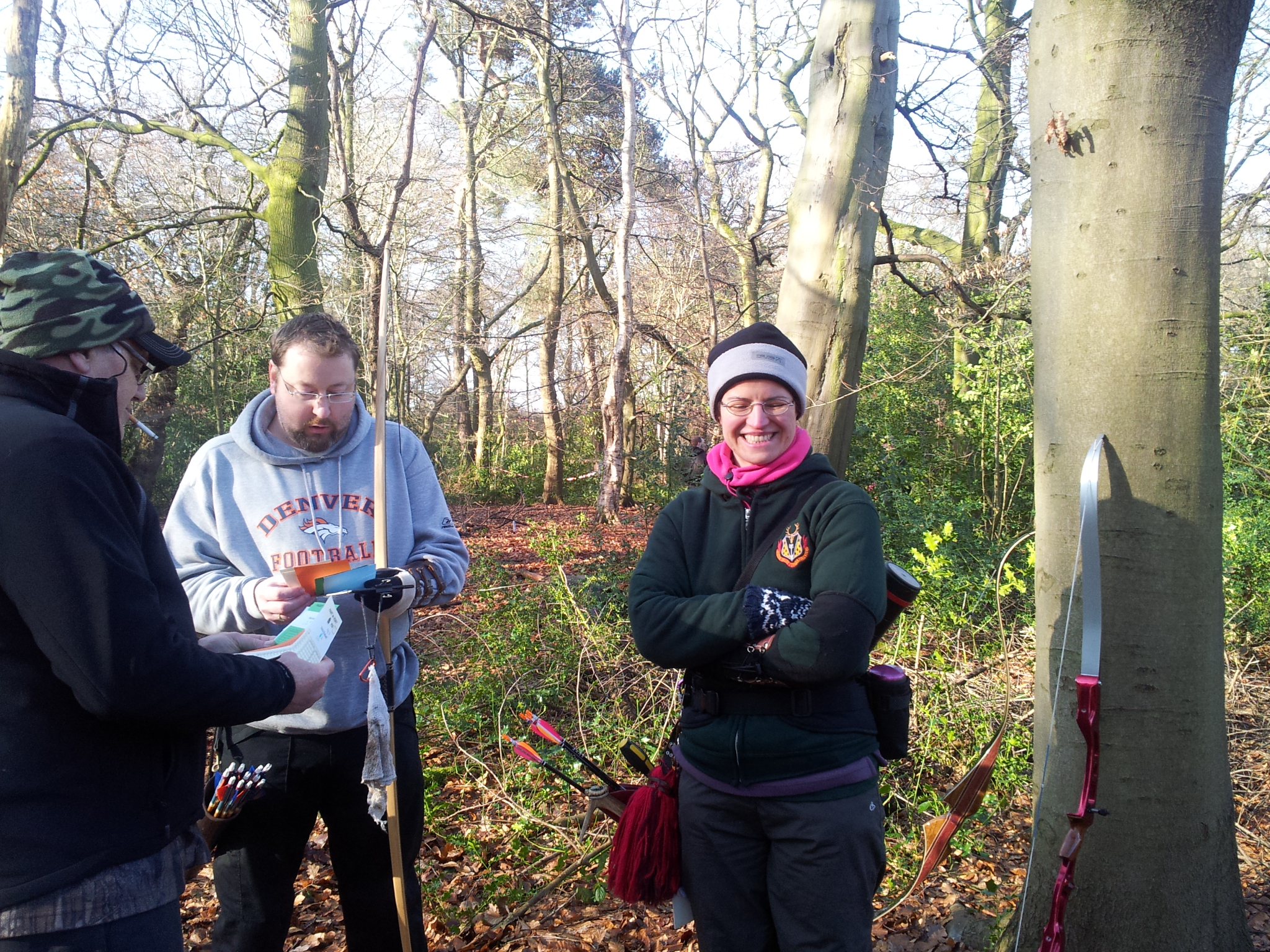
Paget 2013 - start of the day

Sunny start of the day

Unlike in previous years, where the shoot has been cold and damp, last year even having a dusting of snow, we enjoyed a sunny Sunday. The only problem was having the sun in your eyes for a few shots 😉

The Paget club only hold one shoot a year and they use an outdoor activity centre when they do. This means the club members have to set everything up the day before and have everything cleared out by the end of Sunday. An advantage to this site is the catering is superb, with 2 food stop huts with an excellent selection of cakes for those with a sweet tooth.

On the day we were very fortunate to have a had a great group too shoot with Trev, Emma, Robin (also from SVYF who we were taking round for his first ever NFAS shoot), Sharon and myself, with a mix of styles too with longbow, hunting tackle, barebow and compound. I was shooting Hunting Tackle (recurve bow without sights and wooden arrows) as I’d not had any practice with my flatbow.
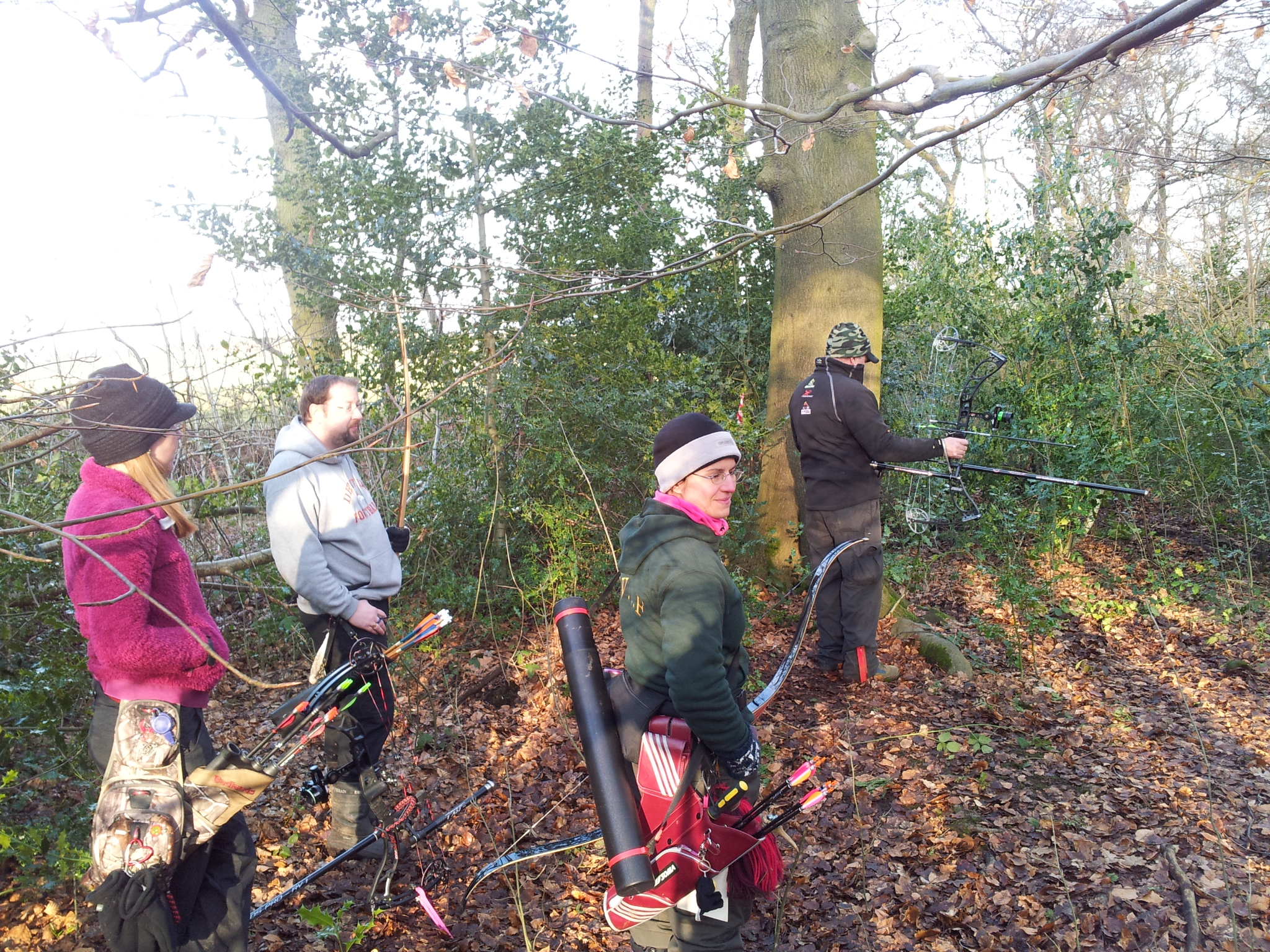
From left to rightEmma, Chris, Sharon and Trev

From left to right
Emma, Robin, Sharon and Trev

The course was made up of 36 targets, being a mix of 3D and paper faces about 50/50 I’d say with some less familiar faces too. The centres grounds are flat, with the woods being mainly deciduous woodland.

The shoot started at 10 am the day flowed well with only a short stop for lunch and no hold ups. We started on target 15.
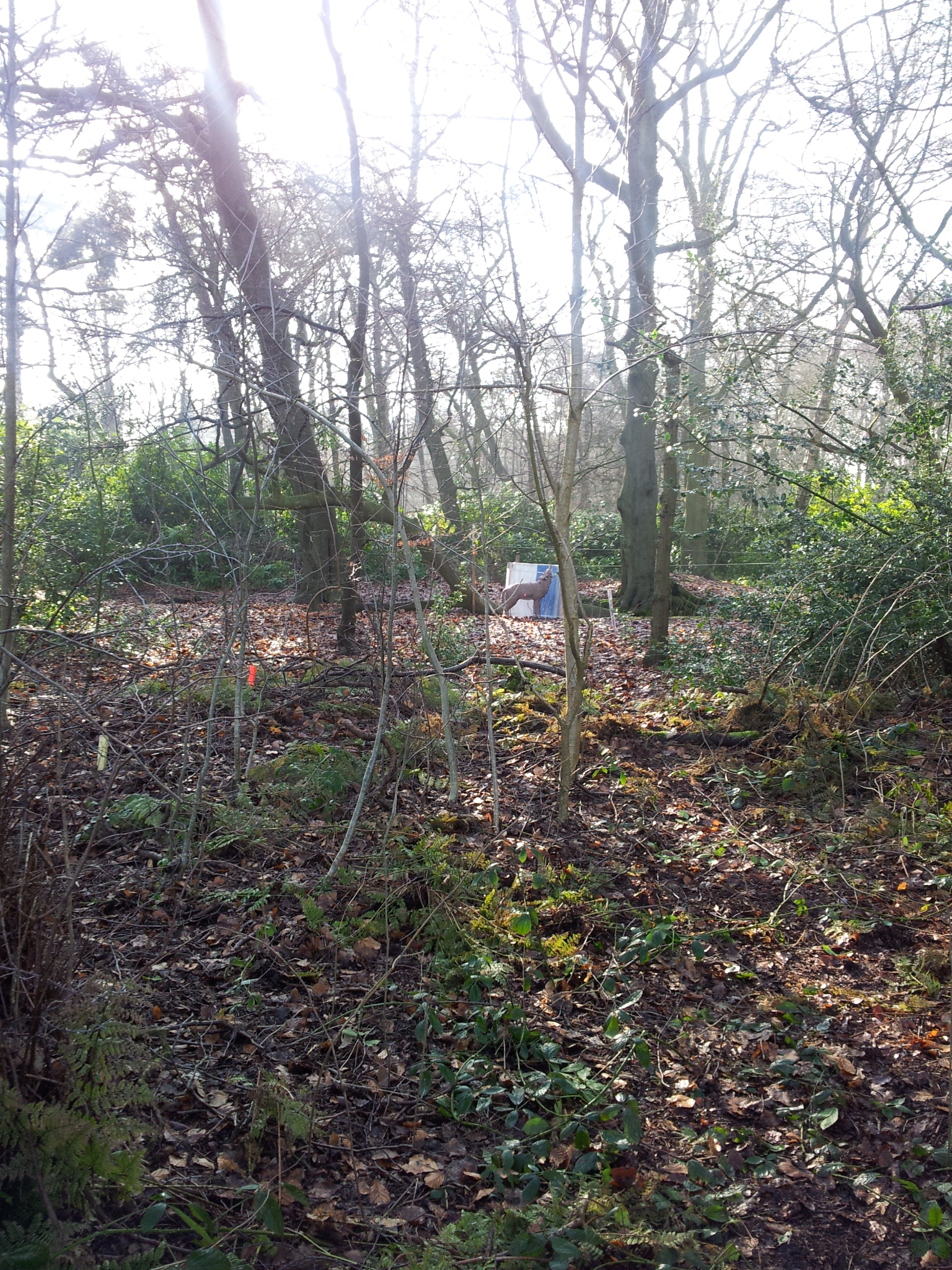
Target 16

Target 16 – 3D coyote

Some of the shots were very nicely set like this one below of a 3D boar in a hole by an uprooted tree.
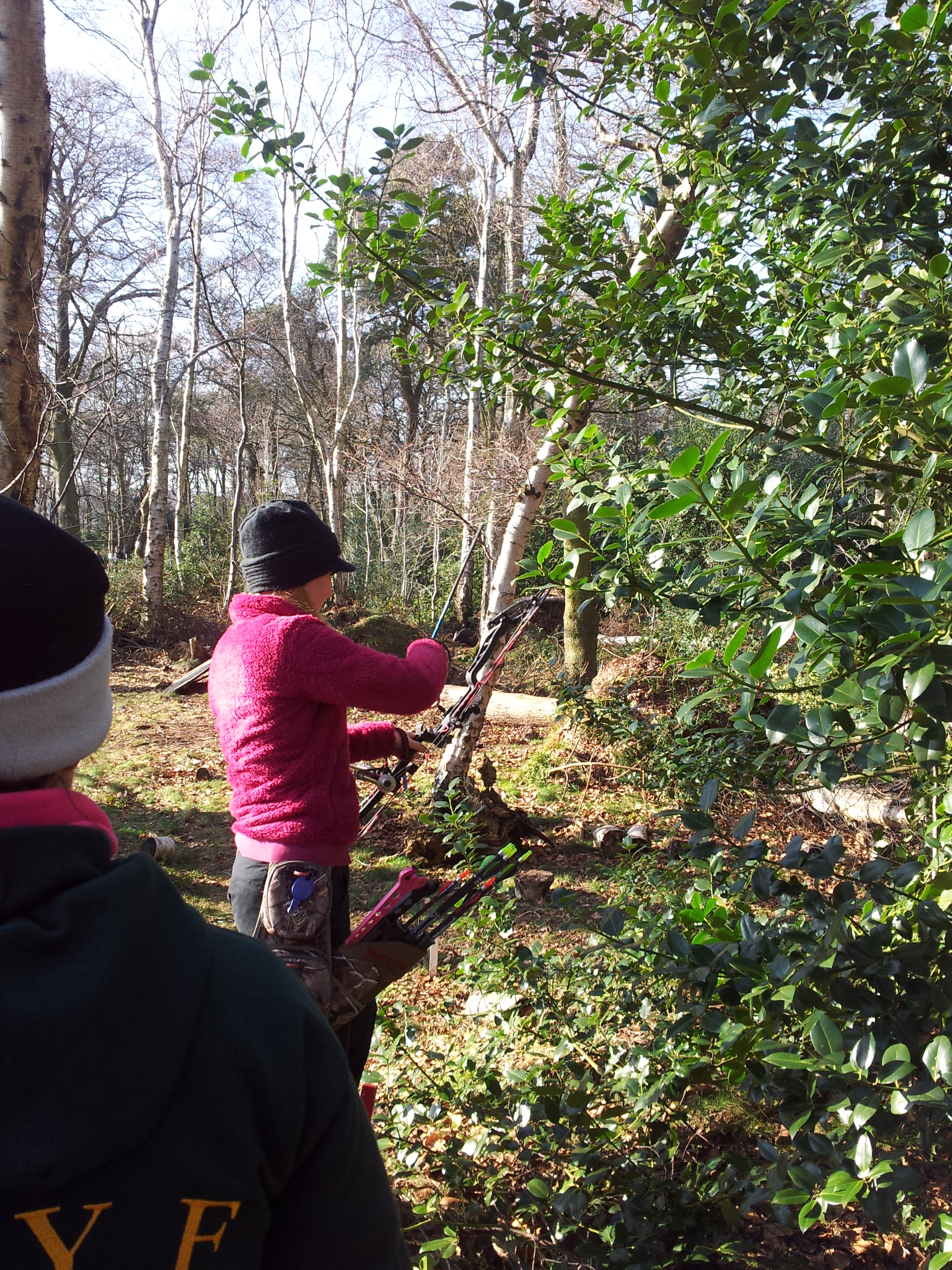
Paget Shoot - 3D boar in hollow

Paget Shoot – 3D boar in hollow

There were a few paper faces targets that were stretched for the distance which was a shame. Often course layers will put a paper face out and increase the recommend distance to make it a harder shot when it truth it can be done with careful positioning or use of ground. Sorry winge over.

In fairness there were also some very nicely set paper faces. This crocodile was a great example, can you spot the interesting feature? (No, Trev hasn’t shot himself in the head, its just the angle of the photo and how he is holding the arrow)

Paper Crocodile shot

Paper Crocodile shot (No Trev hasn’t shot himself in the head)

This target was  made more interesting as the target boss was slightly slanted forward.
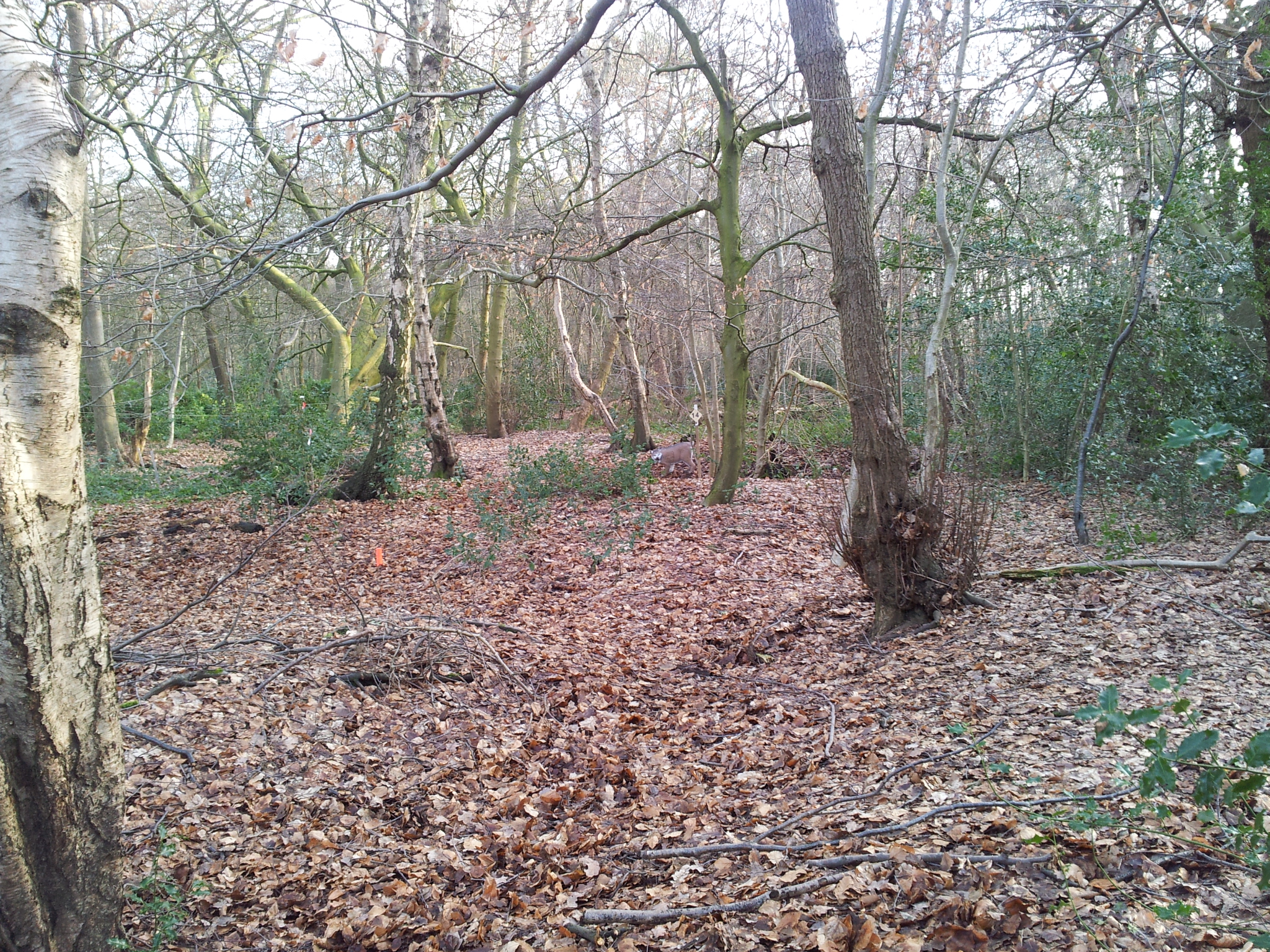
target 14 - last of day

Target 14 – last of day – 3D bobcat

As readers of this blog will know I was a little anxious about this shoot. It would be the first Sharon had competed at following the recovery from injury. Saturday she had managed to shoot round the wood in full (40 targets) for the first time with her own bow for nearly 4 months.
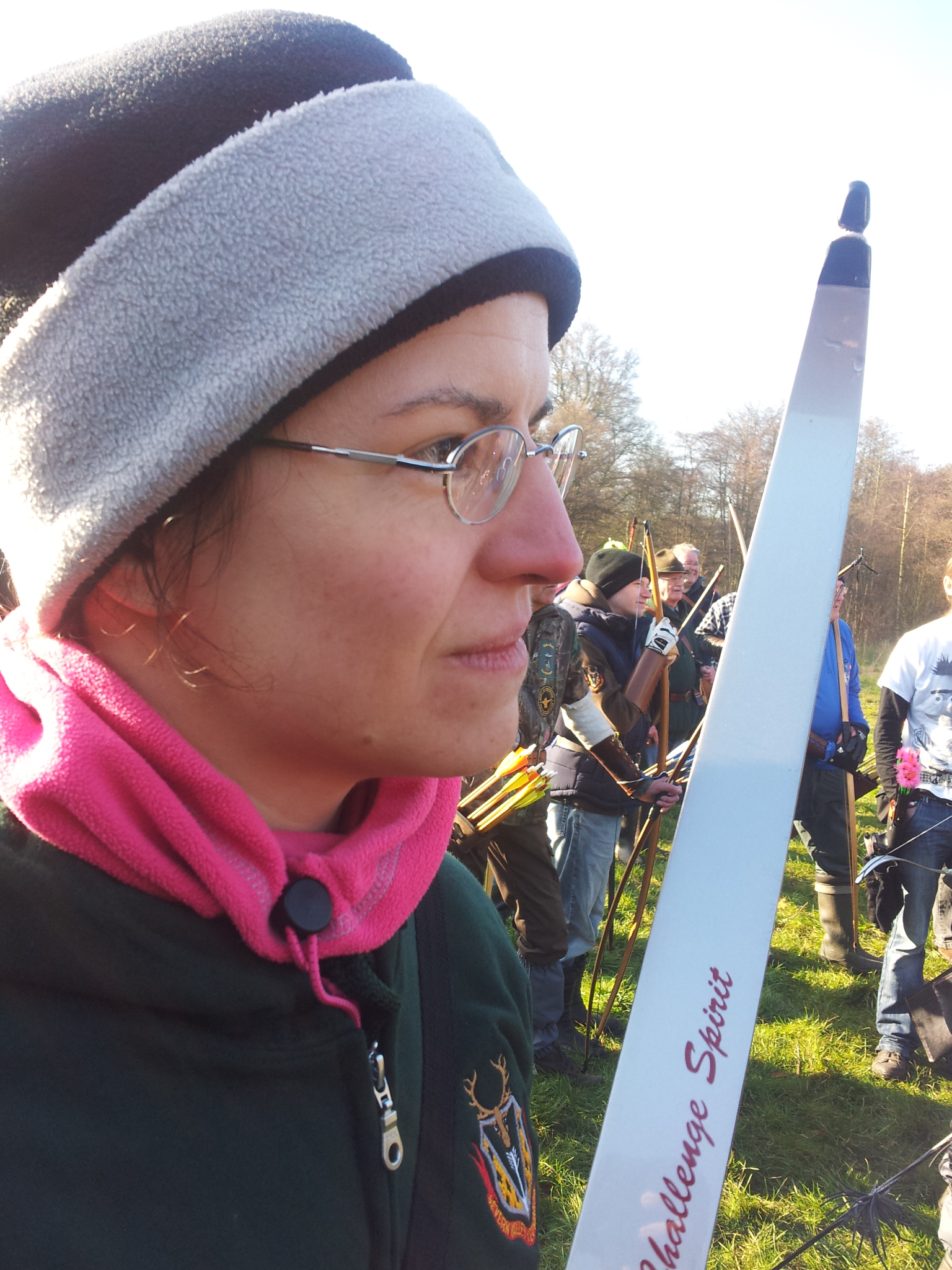
Sharon (holding my bow)

Sharon (holding my bow)

I needn’t have worried as she did really well and enjoyed the day. Though she will admit she was not up to her usual scoring level, she managed to shoot the entire course and it wasn’t until the latter part of the day that she began to feel tired and scores dropped off. Even then she scored 546 points  (an average of just over 15 points a target) which was enough to secure first place in ladies Barebow. Well done.

Robin also did really well and seemed to enjoy himself and already booked on another shoot in  a couple of weeks.

I came in with 596 points, no blanks and secured second place in gents Hunting Tackle, 8 points off first. Not bad considering I’ve only shot the bow a couple of times in the last few months.

Overall I’d say it was a great day, really good to catch up with so many familiar faces who we hadn’t seen for so long. Here is hoping for a good 2013 season.

Thanks for reading.

Setting up a target boss

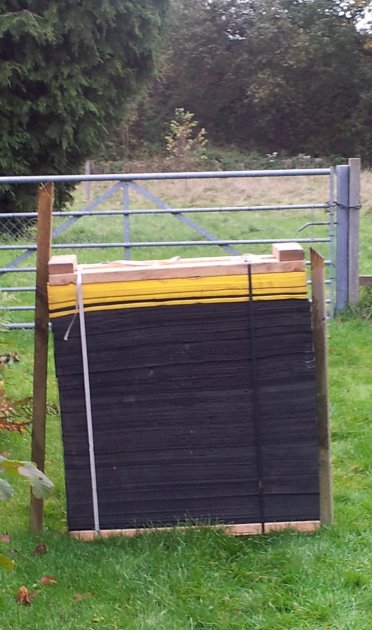
target boss in garden

Setting up a boss is a common activity, but requires some thought and care to ensure it is done correctly and safely whether this be on a course or as in this example in the garden. In this article I will try and cover some of the things to consider.

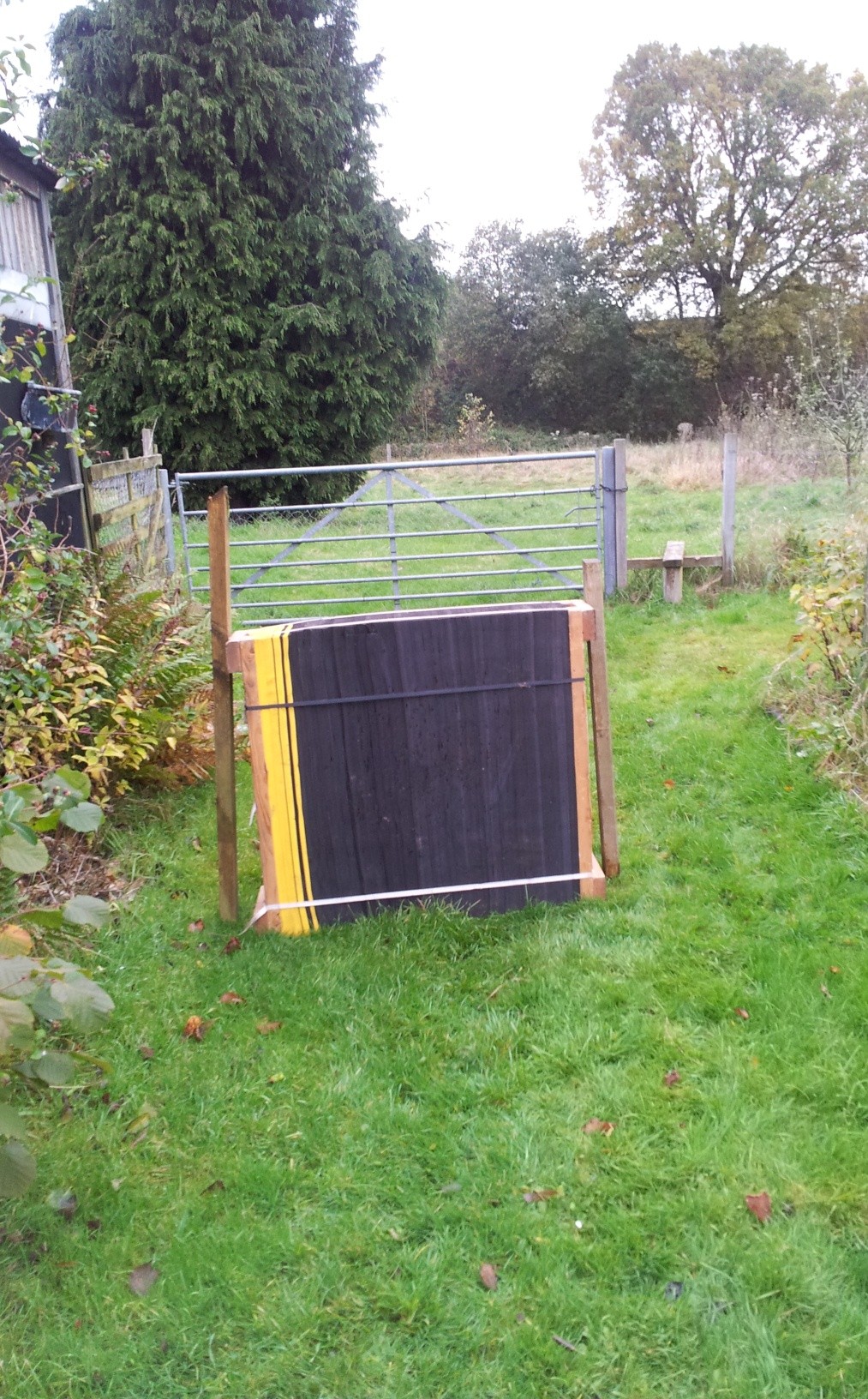
Target

Target set up and ready?

Here you can see a boss having been erected ready for practise. Looks good?

One commonly made mistake when setting up a boss is forgetting to check where the metal binding for the plastic strapping is located.

closeup

These should always be on the back of the boss and never facing the direction of the shot.

Why?

The binding can damage arrow tips if they are hit. I have also seen arrows shot from a compound bow hit one of these metal fastenings and bounce straight back some 15 yards landing at the archers feet.

You should also ensure the wood frame of the boss is always to the side and not on top or bottom.

Why?

If the arrow falls low, it will run the risk of hitting and embedding itself in the wooden frame, which is likely to  result in some work to extract.

If the arrow impacts at the top of the boss it runs the risk of deflecting off in any direction . So rotate the boss to ensure the wood frames are on the side of the boss.

Target Boss

Target Boss

Location, location, location – no not the property program commonly seen in UK.

Look at the space surrounding the boss – there appears to be a stile behind and to the right of the boss, does this mean there is a footpath?

What about the space behind the boss with regards to overshoot. A safe over shoot area is vital for any target positioning.

N.B. we own the field beyond the gate and the boss usually lives in the field.

Any  there any other risks?

Well yes there are. There is a building to the side so you wouldn’t be able to see people approaching from that direction.

The metal gate is also a risk as if an arrow misses the boss and hits the gate it is likely to deflect in any direction.

Securing the boss to the stakes is vital to ensure it doesn’t topple over when arrows are removed. It is worth considering whether the stakes need to be proud of the boss. Also try to put them to the side or rear of the boss frame so as to avoid or limit the number of arrows hitting them.

Those are a few thoughts and tips to consider when positioning practise bosses. Have you got any further advice or tips?

We are fortunate in owning the field and knowing there is no public access or routes to it other than via our boundary.

I hope you find this article of interest and if you have any comments let me know. Thanks for reading.

How to measure your draw length?

I’ve had a couple of people ask about how you measure your draw length and what length to make arrows?

There are a couple of ways of measuring draw length, I know Jordan Sequillion has posted a method on her site. The one I feel works best is using a measuring stick or measuring arrow.

You can buy them from most archery suppliers but I made mine. In essence, mine is an unused arrow shaft which I have glued a nock in one end and then marked up in one inch intervals. To make it easier to read I’ve painted the increments in contrasting colours.

Measuring Arrow

Homemade Measuring Arrow

Get the archer to draw up 3-4 times and then coming down obviously without releasing the measuring arrow. (make sure they are in a safe environment so on the range pointing towards the target boss just encased they accidentally release)

Full Draw

Archer at Full Draw

Ensure they are drawing to their normal anchor point each time, this way you can ensure the measurement is correct.

You can then see easily what there draw length is and the technique can be used for all pretty much all styles of bow, though please be careful when trying this with a compound bow, since it is easy to release the measuring arrow when you come down from full draw.

Here is a couple of additional tips.

Camera Phone – Use your camera phone to capture a couple of images of them at full draw. This will make easier to check the measuring later.

Rubber band or Tape – If you don’t have a camera to hand try using a piece of tape or rubber band at what you think is their draw and then have them draw up a couple more times. This way you can see if it is in the right spot.

If they are a beginner add another inch on as shown in this photograph below.

Measuring Arrow

White tape shows potential arrow length

I tend to recommend a slightly longer arrow if shooting woods and field archery. simply as in winter months you might be wearing a glove on bow arm and it gives you a little more clearance. Also should you lose the pile or snap the tip-off you might be able to taper the end back down and still have a usable arrow.

For competition I tend to cut them exact leaving no “spare”, if I lose the tip the arrow is added to the wood pile for the fire 😦

The other useful thing with using this method is spotting archers who either overdraw or overdraw and then collapse slightly. But I’ll cover this in more detail in my next posting.

Thanks for reading, any questions let me know.