Bows, bows and more bows

What bow is good for a beginner archer?

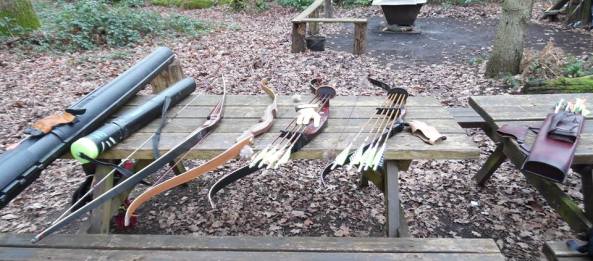
Selection of bows

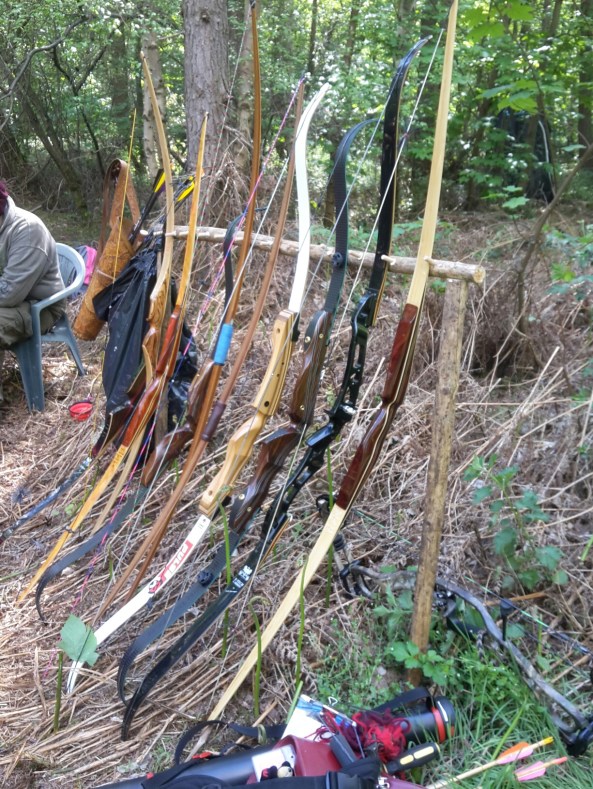
Selection of bows

This is a question that most archery coaches are asked at some point by their students.
What bow should I should get?
Like all good answers it is both simple and at the same time complex. In simple answer terms, it should be a bow that works for you. Knowing what works for you is the difficult part. So here are a few thoughts that might help, I hope you find them useful.
Buying your first bow is such a personal decision for anyone to make,  it is very hard for me to say buy this bow over another. Each of us is different, for that reason I have to say it is up to the archer which bow they choose. But, yes there is a but, I will  try and give some advice on what to look out for and to consider when buying the bow.
When I can I tend to go with my students to the archery shop when they want to buy their bow, so they can ask advice or my opinion. Also it is so I can be sure they get good service, not something that is a problem with good archery shops.
So for your first bow I would suggest you go with something that will develop with you and give you the opportunity to develop and not restrict you. Ideally you are looking for something that is not too heavy a draw weight so you aren’t over-bowed and not too heavy in the hand that you you struggle to hold it.
You want to have a bow that can support your development.  Sadly too often I have seen new archers who have bought a bow and then found it to be too heavy a draw weight, too demanding to shoot or even the wrong hand.
sharon - old bow

Sharon – shooting her first bow

For this reason I would tend to point archers to a basic take down recurve bow initially. Why?
Well I believe there are a number of advantages of this type of bow for a beginner.
  • Entry level take down recurves are relatively inexpensive as bows go, being about £65 to £85 depending where you get them.
  • You can up bow draw weights if you want too as your muscles develop. On this point I’d like to say you need to watch the draw weight though, so you don’t buy too light a limb and have to change them within a few weeks, but then don’t go to heavy that you strain. A good coach or shop will advise you as specifics vary for individuals. My students have ranged from 18lbs to 28lbs. My first bow was 32lbs but I had been shooting around that weight of club bow for several weeks and knew it was comfortable.
  • One piece bow or take down recurve. You can’t change the limbs with a one piece bow unless you buy a whole new bow so buying a one piece might not be the best investment for a starting archer.
  • Take down recurves tend to be pretty easy to shoot allowing the archer to develop an understanding of what is involved in archery  and bow set up.
  • It  is worth mentioning entry level  take down recurve bow maintenance is pretty straight forward too and allows a new archer to learn how to maintain their bow.
  • It also allows them to  develop good form as pretty easy bow to shoot compared with flatbows or British longbows.
Swapping limbs
It is worth remembering that not all manufacturers limbs fit all other manufacturer bow risers and it is something that can be an issue when looking to upgrade limbs. The limbs can be too wide or the screw thread alignment might be different.Unless they are ILF limbs and riser (i’ll cover that later)
A piece of advice I give some is not to trade in your old lighter limbs when you upgrade to a heavier draw weight. Some shops offer a discount if you do this but I would suggest you keep them as sparer, which you can go back too should you need too. Say after a break from archery due to holiday,work pressure or I’ll health.
Limb pocket and bolt

Limb pocket and bolt

So what is ILF?
ILF – stands for international limb fitting. ILF limbs are a standard design which bow manufacturers produce to. This allows ILF bows risers and ILF limbs to be quickly and easily swamped between bows so you could have KAP limbs on a Samick riser. Or Samick limbs on a Sebastian flute riser and so on.
By the way, for those interested there is something called a Warf bow. Nothing to do with the character from Star Trek, he was Worf.
A Warf bow is one made from a compound riser, but been modified to house ILF limbs.
There are some downside of these beginner bows.
  • The limb weights tend to be limited from about 18lbs to 32lbs.
  • The basic take down bows limb performance is limited as the limbs aren’t that high performance, tending to be made of wood, rather than carbon fibre etc so they don’t have the same speed.

So this is a brief overview of a few things to consider. I hope this proves helpful and as always thanks for reading.

Do any of you find motivation in song lyrics?

I know I used to have a playlist of rock tracks for when I’d be at the gym to keep me upbeat through the workout.
There are other tracks that make you think or possibly remind you of childhood. Maybe it’s a title track of a TV show or the first single you bought. So what has this to do with archery?
I was browsing YouTube as you do and came across the title music to The Flashing Blade. This was a kids TV show shown in UK back in the 1970s dubbed into English (I think it was French originally https://www.youtube.com/watch?v=z-ZEDNkZ2L4).

It followed a small band of heroes in the musketeers theme, think sword fights and flintlock pistols. It wasn’t a big budget show or that good but it was Saturday morning and summer holidays tv which you watched on a rainy summers day. The thing is that the lyrics to the titles have stuck with me for years.
As long as we have done our best
Then no one can do more
This got me thinking about archery and how I’ve been struggling with confidence.
If you’re doing your best then great, you might not achieve your goals but you’ve done all you can. The key is you’ve done your best, you’ve made the effort.
I took the shot as well as I could at that time. Okay so you may have dropped short or thrown your arm, messed up the release but you tried. You set out to do your best and make the best shot you can.

Often there is the doubt that creeps in as to whether you have done your best. This brings me on to the next segment of lyrics I remember.

And we should never count the cost
Or worry that we’ll fall

Many of us worry about falling or failing whether it be at work, home or on a shoot. If that becomes the focus of our thoughts it is very self damaging, believe me I know. I’ve been there and still trying to find a consistent way out.

It’s better to have fought and lost
Than not have fought at all.

 If you don’t try then you’ve already lost. Yes it’s hard, read very hard, at times to pick yourself up, dust yourself off and start again. There is one thing I can guarantee,  you will miss the opportunity of every shot or arrow you don’t take.
The interesting thing about this was that I tried to apply some of these lyrics at the 3D championships last weekend. (Yes I will be writing a full review of this event in the next week or so). I hadn’t been feeling confident and due to work and life commitments hadn’t been doing enough positive practise. Yes I had been shooting but not accomplishing the results I wanted in grouping or distance judgement. So when the inevitable missed shot came in I wasn’t surprised, I started the feeling of self doubt and its at this point I thought back to the reading I had been reviewing.
I realised I had to approach each shot as a new start, far easier said than actually done. I forced myself to focus on form and that I was doing the best I could, if I hit or missed it was the best I could have done at the time.
Well it seemed to have worked. I shot two days at a champs and didn’t fall apart. I didn’t win any medals but I did better than I thought. In short there is hope out there for all of us.
Thanks for reading.

lights, camera, action, I mean Archery

And the Oscar goes too…
Some people love being in front of the camera, others prefer to do the filming. The question is can video resources help you if you are an instinctive archer?A few weeks ago I posted an article on how we’ve been using a tablet computer mounted on a tripod to record archers at a club coaching session. So How does this help? This aids the archer as they can be shown exactly what they do when drawing up or at point of release. How their hand moves or whether they drop their bow arm. Often they think they are anchoring correctly to the face when in reality they aren’t because it all happens so fast , too fast for some to process. Recording them has huge benefits to the archer’s understanding of what they are actually doing as opposed to what they think they are doing.
Talking to fellow club members on Sunday they showed me footage shot on their iPhone, playing it back in slow motion to watch the arrow flight. With the growth of YouTube and ease by which people can make and edit their own recording I believe there are more budding Spielbergs are out there.

What we can learn from other sports

It is now common for touchline judges and sport referees to make lots of use of instant replays in games, multiple camera angles along with slow motion footage to aid their decisions. Managers and coaches use it for  post match analysis of players performance, game plans etc. So can we use it for our sport of archery, or more precisely for those of us who consider ourselves instinctive archers. I believe it can be used.
From my perspective I believe video resources can be immensely useful for many sports, field archery included and they are becoming more common.
One word of note, there are advantages and disadvantages of these helpful guides and video tips. For starters some may not be that helpful, so it is worth checking out multiple sources of information to get a more rounded understanding of the topic. If you are going to review these resources then make sure you watch a few different sites or techniques as each presenter convoys a slightly different perspective when they narrate their story. The important thing to remember is that they aren’t always right in what they say.
Some can come across as a marketing or sales pitch for the latest products or next development in the technology. Whilst others take a balanced view giving the positive and negative perspective which is important.Generally I’ve found these resources can be broken down in to three types
  • Instructional recordings  where a skill is demonstrated.
  • Video reviews of equipment, competitions or locations.
  • Personal achievement report.

Instructional –  these vary in length from a few minutes to longer durations. Short duration clips of a few minutes I think can be ideal for helping archers out on different topics from how to serve strings, to fletch arrows, to how to aim and shoot instinctively. The short duration is an important factor here as long reviews might go into more depth, but they are harder to find time to watch. Wolfie instinctive archery (https://www.youtube.com/user/Wolfiesairbrush) YouTube channel has some great advice for instinctive archery techniques.

Equipment reviews are good to so long as they aren’t marketing based publicity. I’ve come across a few that are more about selling the product than actually reviewing it’s merits and flaws. Jim Grizzly Kent Archery Adventures (https://www.youtube.com/channel/UCxl7N0J9Rc8kDnjV_BzH-yg) still comes across as a good product review even though they are now Merlin Archery Adventures. I think Jim does a pretty good job of giving a balanced viewpoint of the bows he reviews.

I also quite like the personal achievement videos; when someone has posted their own success story. You often see these pop up on Facebook sites and YouTube. It can take a lot of courage to put yourself out there for all to see and comment on. There are a lot of people who enjoy criticising others or simply being argumentative. 3d archery (https://www.youtube.com/channel/UC4HdCXofIA4jsWi1q9AdBUA) have some nice event reviews, showing shots from different courses, offering advice and views.

There are loads of different sites on the Internet so I’ve listed a few others sites that are worth a mention too.

Ironmind Hunting (https://www.youtube.com/channel/UC9zPmJfjW2R9r0y2uUzq9aQ) has some good instructional guides.
Jeff Kavanagh (https://www.youtube.com/channel/UCgGoY0qpH8f11COXWkE8aLQ) is worth checking out for a mix of archery related topics.
Nathan Skyrme channel (https://www.youtube.com/channel/UC1kxvgSeCWZXdg4I6_BI5Zg) has also started producing some material and equipment reviews.
If you know of any others that you believe are worth sharing then add a comment here.

Making videos where I’m in front of the camera has never appealed to me. As someone once said “I have the perfect face for radio” , but I can see their merits.
Thanks for reading and don’t worry, I won’t be coming to a YouTube channel near you.