Removing broken wood tip from inside pile

Thought those of you, who like me shoot wooden arrows and sometimes have the misfortune to break the pile off might find this a useful tip. No pun intended.

Quite often I find my arrows break directly behind the pile, leaving a small piece of wood inside the pile which can be difficult to remove especially if you want to reuse the pile.
I know some people drill the wood out and others simply throw away the pile.
Well I thought I would show how I remove the broken piece of wood.
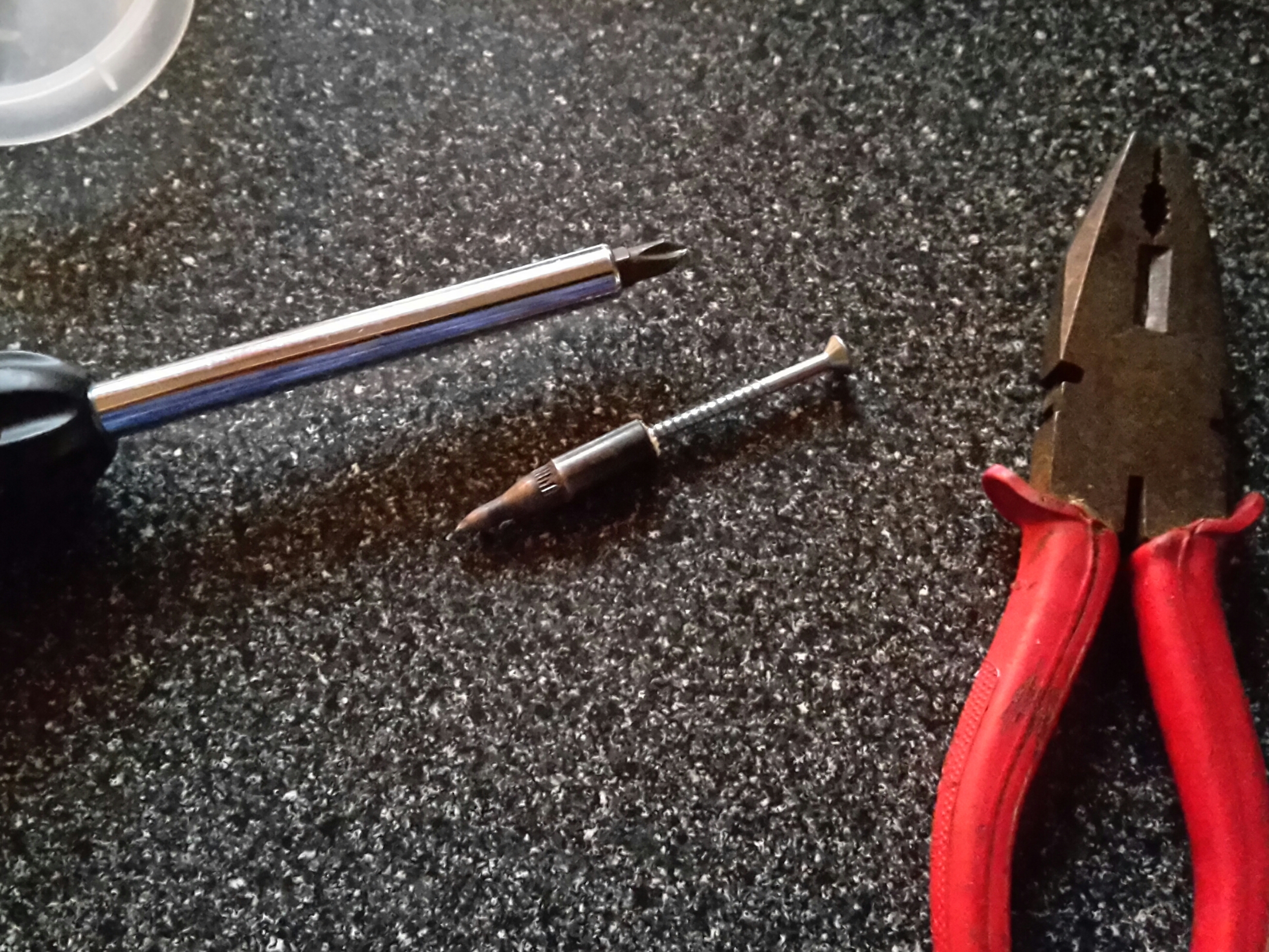
Tools required

Tools required

The tools required are
1 x long wood screw 2 1/2″ is ideal (cross head)
1 x screwdriver
1 x gas stove or gas ring
1-2 x pliers
1 x small pot or basin of water
Step 1
First stage is to carefully take the screw and screw it into the wood still in the pile.
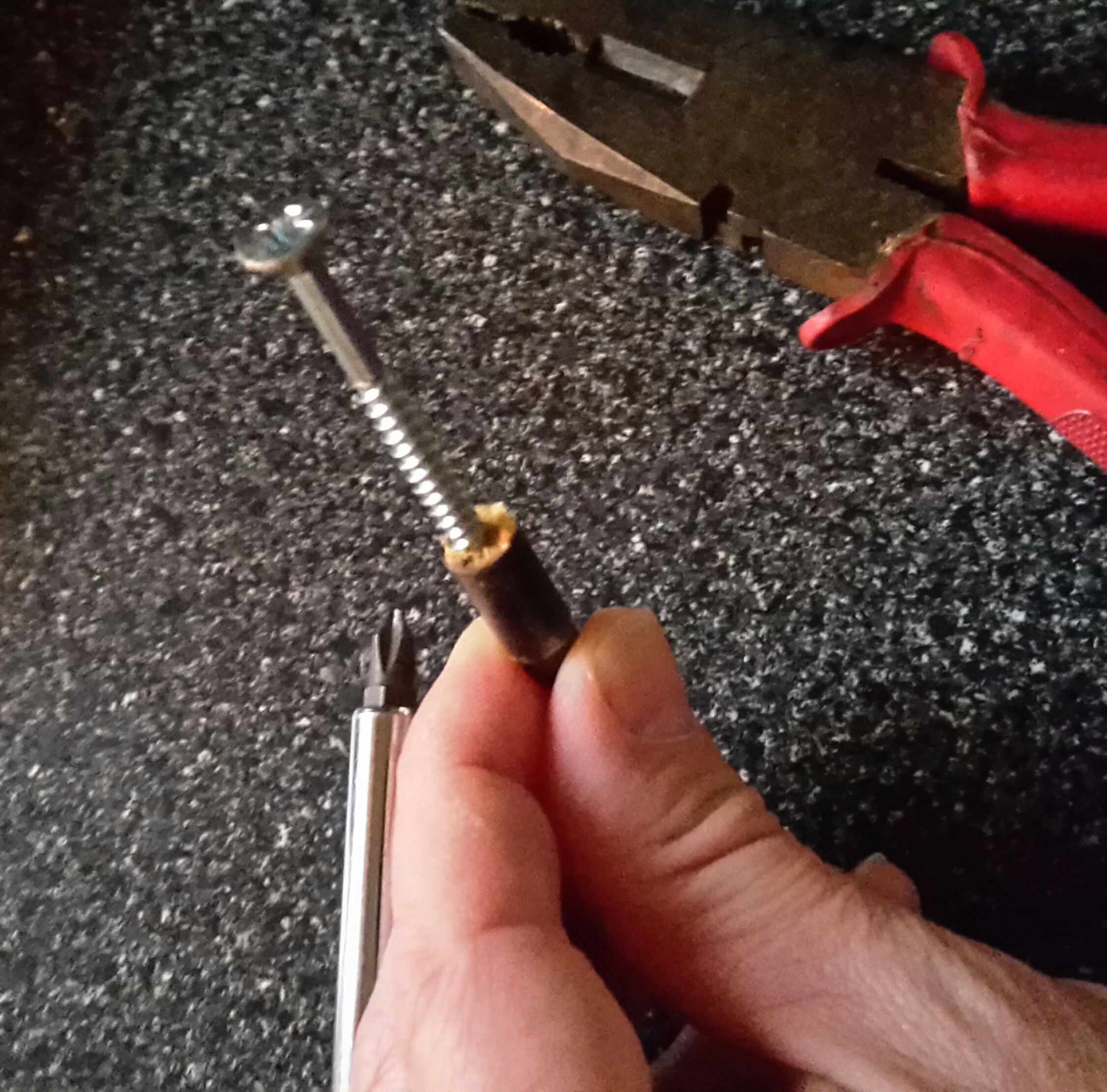
Screw into wood

Screw into wood

Step 2 
Once the screw is secured in the wood, you need to heat the pile up as this breaks down the glue securing the wood to the pile.
Holding it by the screw you can heat the pile using the gas ring. It should only take 10-20 seconds.
Word of warning here. 
I usually use screw on piles, but if you have taper fit or parrell fit you can have the piles pop off as the glue and gases in the glue expand under the heat.
The reason I mention this is on one occasion when removing a pile I left it in the ring to heat up too long as I worked on another. I heard a loud pop and saw the pile shoot across the kitchen towards the window and the screw and wood went in another direction. Fortunately no one was  injured and nothing was broken (otherwise I think Sharon might have injured me)
Heating the pile

Heating the pile

The other thing to be careful of is to not let the wood burn as this will not only smoke the kitchen out possibly triggering a smoke detector but also make it harder to remove the wood.
It’s worth doing this in a well ventilated room as the glue can stinks, especially the two part epoxy I use. How long you keep it in the flame will vary depending on the glue. Hot melt, melts quickly whilst some epoxy ones might take 20 seconds. It’s a bit of trial and error here.

Step 3
Holding the now heated pile  in the pliers (don’t grab it with your hand as it will be hot) take the screw driver and continue to screw the screw into the wood.
You should find that because the glue has melted and lost adhesion to the pile the screw will force the wood free. Resulting in the wood remaining on the screw and free of the pile.
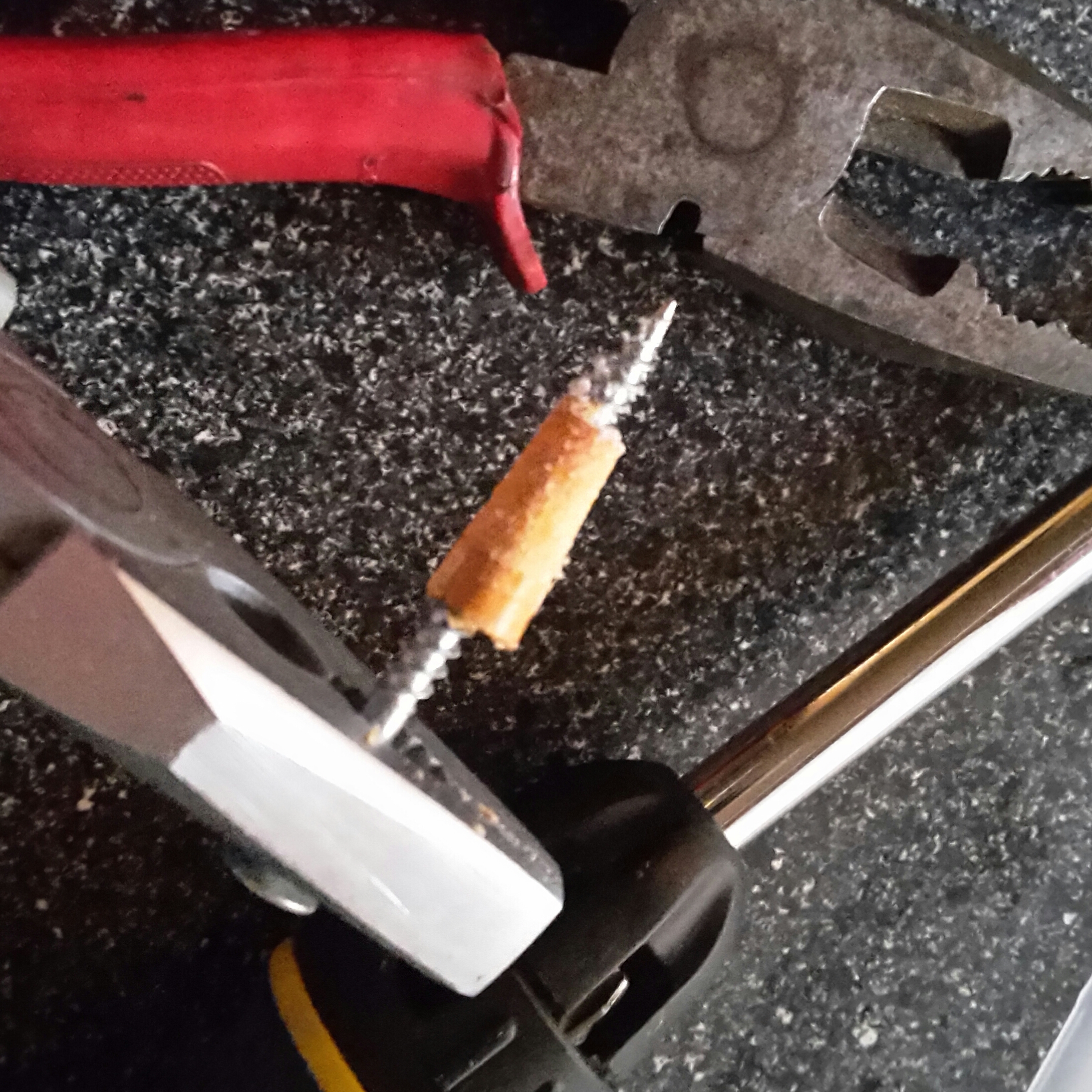
Wood remains on pile

Wood remains on pile

Step 4 
Drop the pile and screw into a pot of cold water to cool.  Once cool you can dry the pile.
You might need to clean out the inside of the pile of glue residue with a bit of wire wool or I find an old shaft tapered down and screwed in and out a couple of times works well to dislodge any residue.
The easiest way to remove the wood from the screw is to hold the wood in the pliers and then using the screw driver “unscrew” it.
Hope you find this useful.
Thanks for reading.

Dixie Leathercraft

Equipment review – custom archery tabs from Dixie Leathercraft

Dixie Leathercraft

Dixie Leathercraft

Dixie Leathercraft is a small business in Leicestershire making a vast array of leather goods.
I first encountered them at the 3d championships this year where they had a large tent selling all kinds of products from quivers to arm braces, pouches to six gun holsters. I ventured into this Aladdins cave looking for a suitable belt pouch to house my Ventolin inhaler. They didn’t have one on show but offered to make me a custom belt pouch for the next day. Which they did and I have used ever since.
A few weeks after the championships a friend was round trying out his new Blackbrook afb and showed me a tab he had commissioned from Dixie. This got me thinking and I contacted Dixie to see if they would be able to make something similar for me.
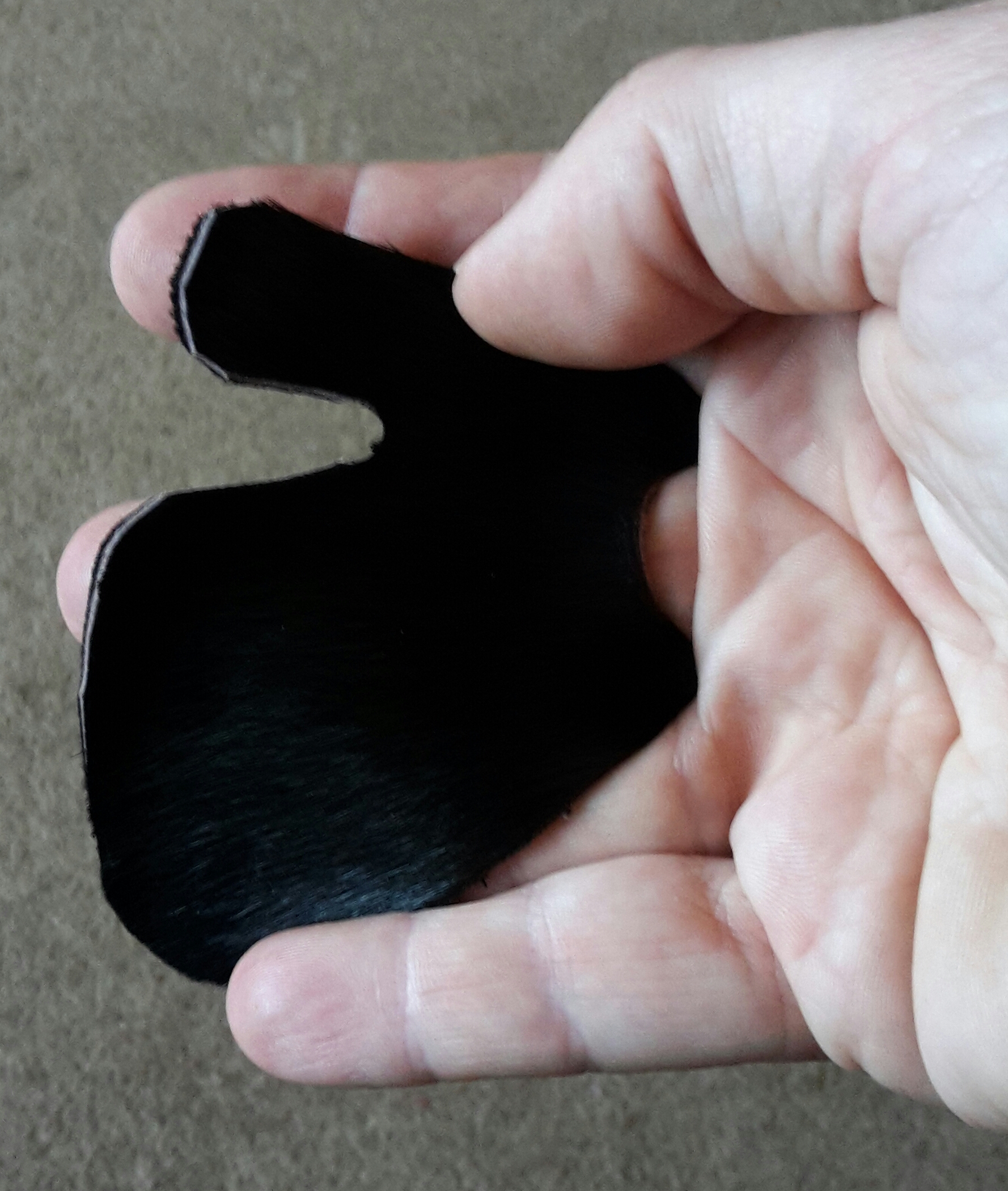
They produced a couple of designs based on my specifications, one single layer and one double. The double was made large enough for me to mount  an old finger spacer from a worn out tab on.

This is the single thickness tab

This is the single thickness tab

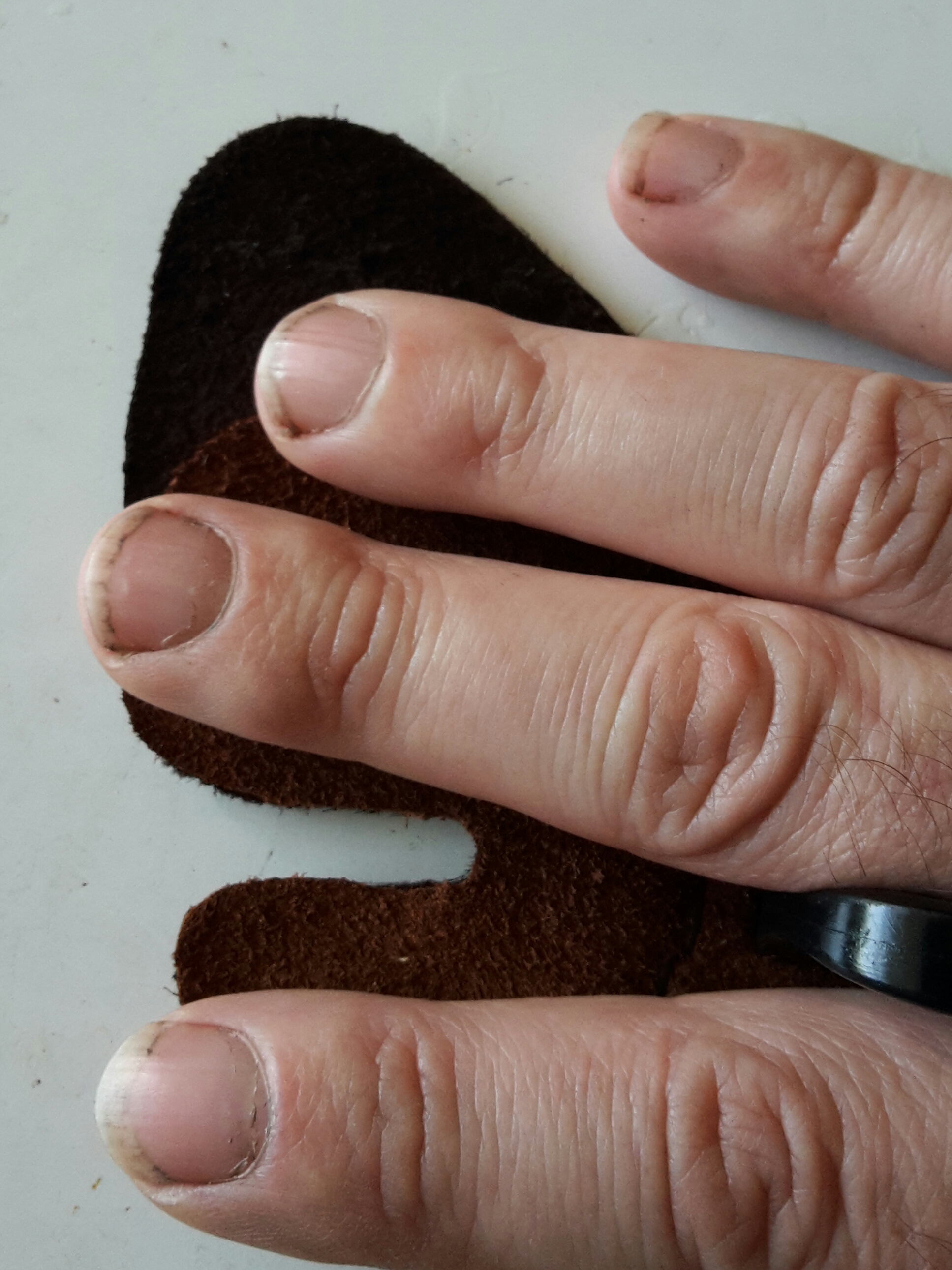
The first design of the double layer worked okay but I felt it needed a slightly larger backing piece to extend to match the facing piece.

Mark 1 tab - needed the backing piece extended

Mark 1 tab – needed the backing piece extended

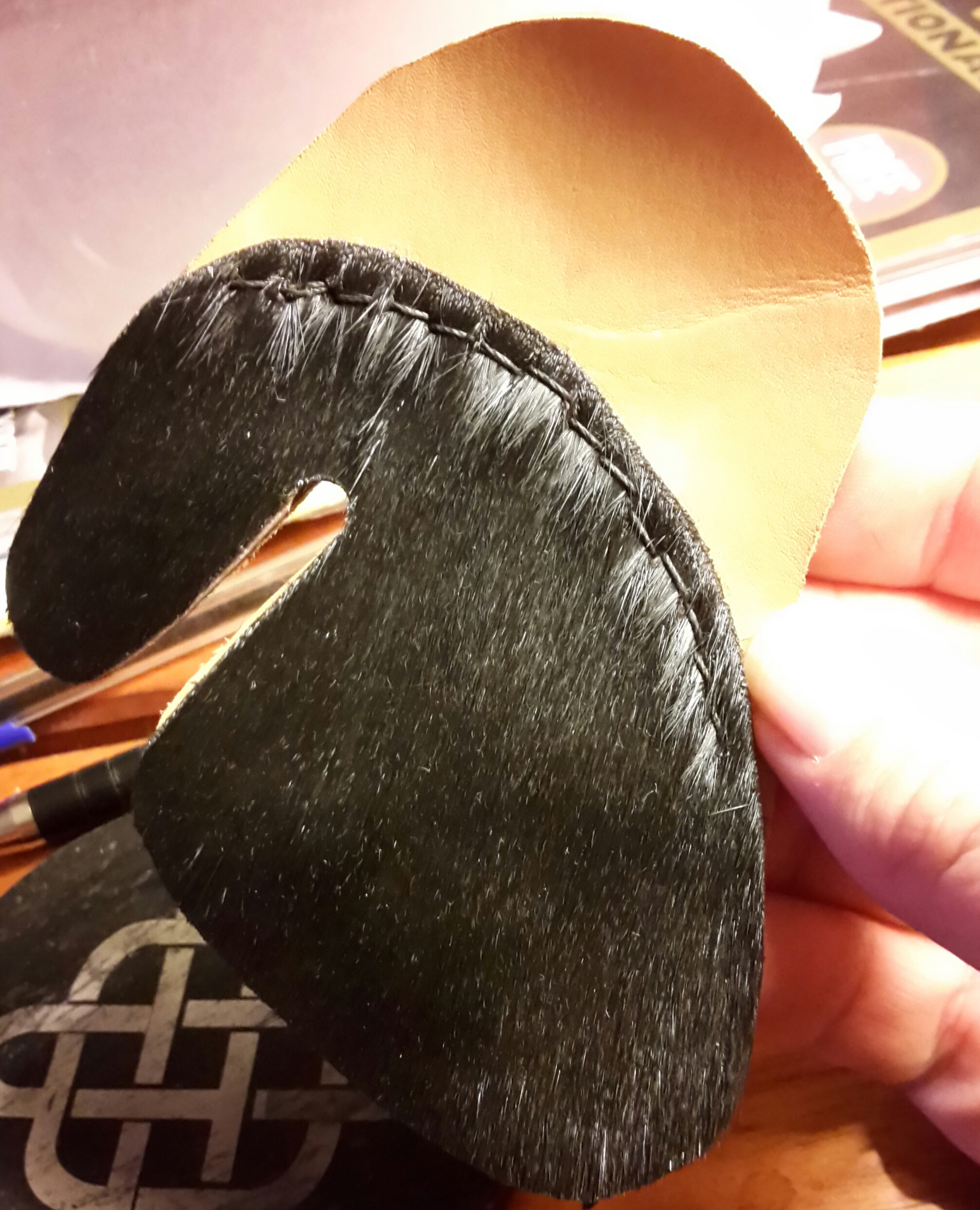
We also extended the leather covering the forefinger slightly.

Mark 2 tab before having spacer fitted

Mark 2 tab before having spacer fitted

The mark two was produced and I have now used this in earnest shooting the club 40 target course, on practice bosses at home and for a couple of shoots.
The extra length protects the ring finger well and the second layer whilst offering additional protection to the fingers, still allows me to feel the string on my fingers when at anchor.
I know a lot of people may think what’s wrong with the normal ones in the shops and my answer is nothing. I used one for several years along with shooting gloves and there are countless ones on the market. The reason I sought out a custom design was to see if it made a difference to me and I believe it does.
The tab is more comfortable to use than a glove  as I have found the glove in warm weather to be very warm and uncomfortable,  making my hand sweat.  I’ve taken to talc in the inside to make it more comfortable. I also tend to take my glove off between shots on warm days.
The cost has been cheaper than I expected and the service has been fabulous. Dixie Leathercraft are really friendly and helpful. I shoot split fingers or mediterranean lose meaning my first finger is above the arrow nock with the other two below the arrow. For this reason when I’m using a tab I have a finger spacer between the first and middle finger.
Mounting the finger spacer was pretty easy. I used my old tab as a guide initially marking the reverse side of the leather where the tab spacer would be.

Mark 1 below the mark 2. You can see how the backing piece now covers the full tab

Mark 1 below the mark 2. You can see how the backing piece now covers the full tab

The spacer on old tab was attached via two small screws which were easily removed from the worn out tab. I made two small holes in the new tab with a braddle for the screws and a third to allow the elastic strap through. If you have one you might want to use a leather hole punch for the elastic hole as it would make it easier to feed the elastic through.
Close up of the securing screws, the elastic is knotted through a hole in the metal plate

Close up of the securing screws, the elastic is knotted through a hole in the metal plate

The old tab had a metal plate triangular in shape with two holes in one end for the screws and the third I threaded the elastic through tying a knot so it wouldn’t be pulled through.
Once the elastic was fed through the tab I then fed the elastic through the gap between the two screws, screwing them tightly to the spacer then secured the elastic in place.
Elastic threaded through between the 2 screws before they are tightened

Elastic threaded through between the 2 screws before they are tightened

Before securing them I made sure the loop of elastic was the right size to accommodate my middle finger.

Shows the spacer and elastic loop on finger

Shows the spacer and elastic loop on finger

Finished leather tab

Finished leather tab

The extra length of leather can be easily folded over the metal plate .

Finished leather tab showing how the leather can be folded over

Finished leather tab showing how the leather can be folded over

I hope people find this of use . I know there have been a few articles and posts on tabs versus gloves. I think Bow International magazine ran an article on custom tabs and spacers a few issues back.
Thanks for reading.

Equipment review – Walking boot review

Being a field archer means you are on your feet a lot, normally from 9 am in the morning when you get to the shoot grounds until 5 pm as you are leaving. You’ll be walking across mixed terain often including swamps,  streams,  rivers and steep hills.
This makes decent shoes or boots a must.
Sadly my old walking boots were approaching the point where they are promoted to gardening use only  (they had lasted 10 years of abuse so retirement is only fair). Though the soles and tred was still good on the old boots the heels collapsing and the rubber seals were cracked and torn. Still not bad for a decade of abuse.

Old walking boot

Old walking boot

So it was time for a new pair.
I didn’t want a leather pair and was wondering about a three sessions boot with a softer sole for better grip.

Local to us is a Cotswolds outdoor shop and I paid them a visit to see what they had to offer. I  was helped by a very patient and knowledgeable young sales assistant who took the time to accurately measure my feet and then suggest manufacturers that would be best suited to the shape and movement of my foot. I must admit to being very impressed by the quality of service and knowledge of the young lady on both the boot fitting process but also the differences in manufactures. It transpired that she was a very keen hiker and knew first hand the importance of decent boots. Top marks.
So I  ended up by in a pair of Salomon boots (Salomon quest 4d 2 gtx) which weren’t the cheapest option but felt the most comfortable at least in the shop offering support for the arches.

Salomon quest 4d 2 gtx

Salomon quest 4d 2 gtx

Having worn them round the house and a couple of time out and about, their real baptism of fire would be the USA road trip which would see them used in city walks and hikes up and round the Yosemite national park and Lake Tahoe trials.
Here are a few things I have noticed

  1. They are more snug fitting than my old boots and this means greater support. The best description I can give was when going from my old ski boots to new custom fit ones.
  2. No need for thick walking socks
  3. Good grip in wet conditions. There was a huge thunderstorm when hiking down the from the Upper Yosemite falls trail and in the 2-3 hours hike down they slipped on the loose grit and stones only a couple of times.
  4. Not ideal for summer and very warm weather as they are a bit too warm.
I  must say I have been really impressed by them. Obviously they wouldn’t be ideal for all people subject to their foot shape etc but so far so good.
Thanks for reading.