New Field Archery Clubs

Recently I was contacted by one of my followers, Alan Holland concerning a new archery club.
Alan along with some friends have set up a field archery club, the Bowmen Of Salcey based in the Milton Keynes and Northampton area of the UK. I’ve not had chance to visit yet but hope to do so soon.
Details of this club can be found on their website. http://bowmenofsalcey.webs.com/
Also Woodend Field Archers have recently been set up by Martin Cotterill in Nottinghamshire. Martin if you are reading this just mind your fingers, you know why 😉 As yet I don’t have a website. There first shoot is in a couple of weeks so good luck, wish I could make it.
Both clubs are NFAS registered and I’d like to wish them all the best of luck.
It’s really great to see new clubs appearing across the country promoting field archery and if you want to find out details of other clubs in your area have a look on the NFAS website. http://www.nfas.net/clubs.asp
Thanks for reading.

Shoot report – Paget de Vesey – February 2014

Well the Field archery season has started with a very, very windy Paget shoot thankfully the rain stayed away.  (An unusual event this winter). Though not officially the start as you can shoot all year round, I always think of Paget as the start of the shooting year.  (Previous reports can be found here 2013)
On this occasion we were joined by Roy and Karen from Frankley Bowmen each with new bows or limbs in Karen case and a new longbow for Roy. Our thanks to them for making it a really enjoyable day.
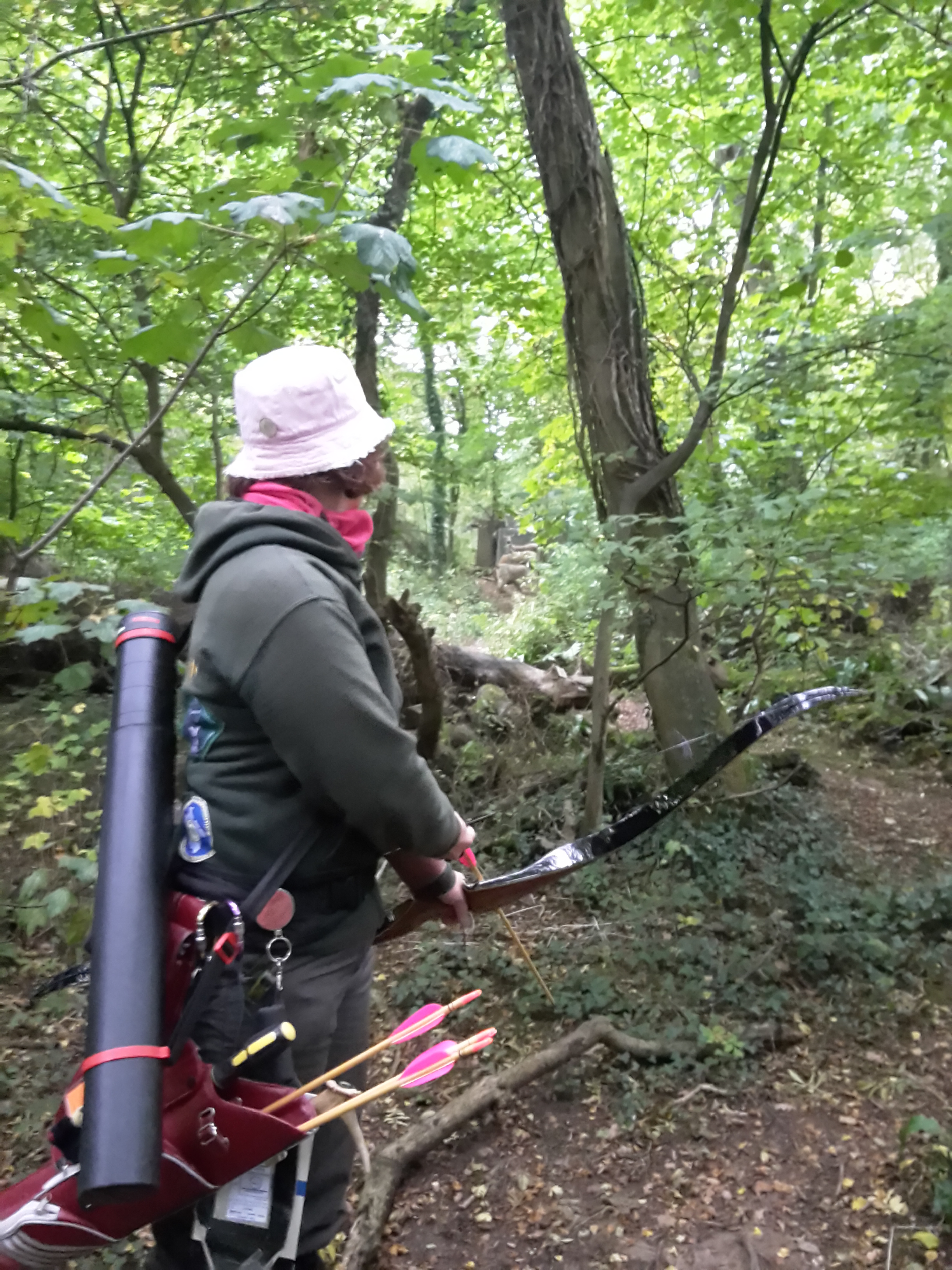
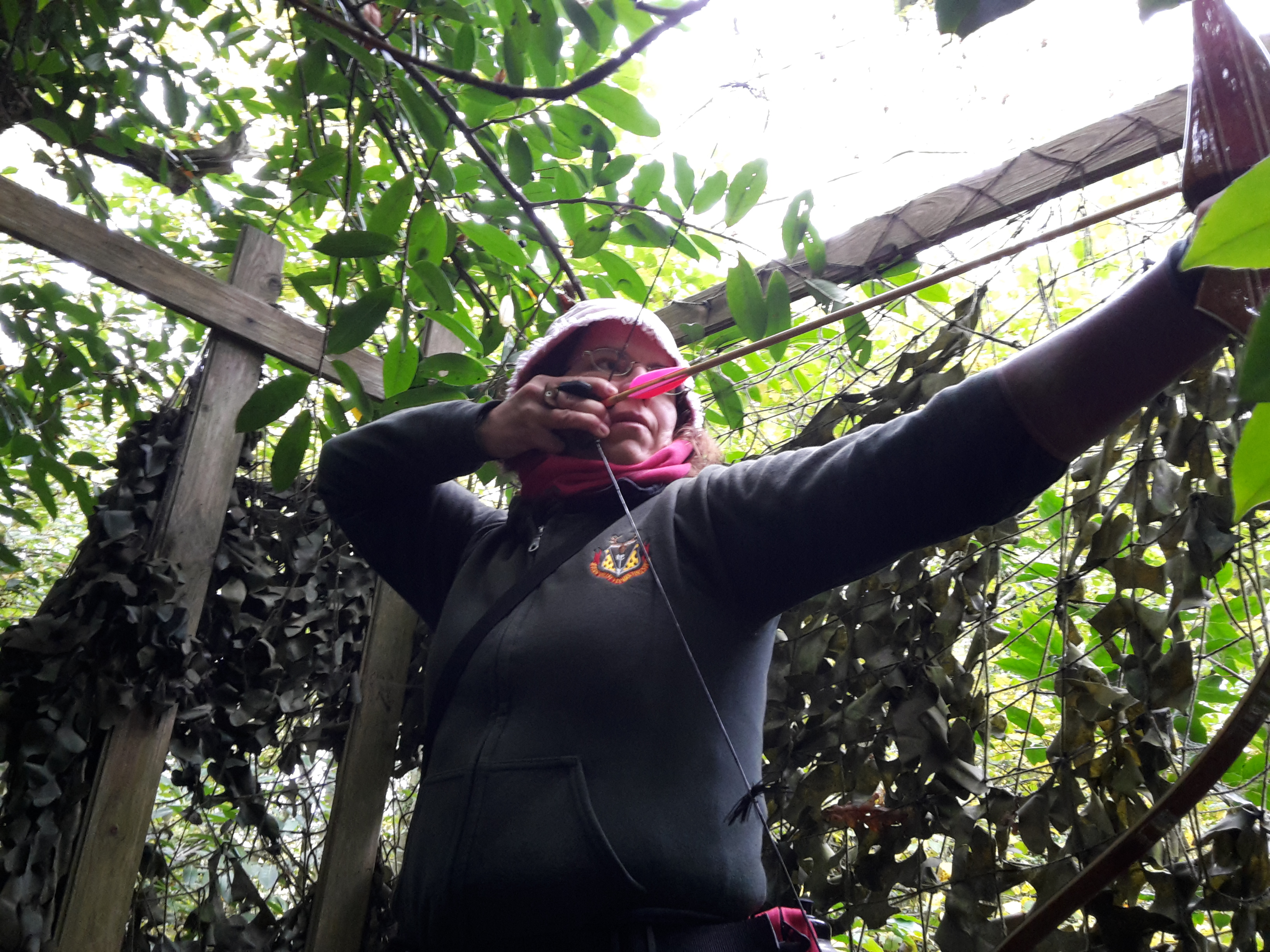
Sharon and Karen at Paget

Sharon and Karen at Paget

As always the food was fantastic with two separate food huts providing ample quantities of hot food, cakes and gallons of tea and coffee.

The course

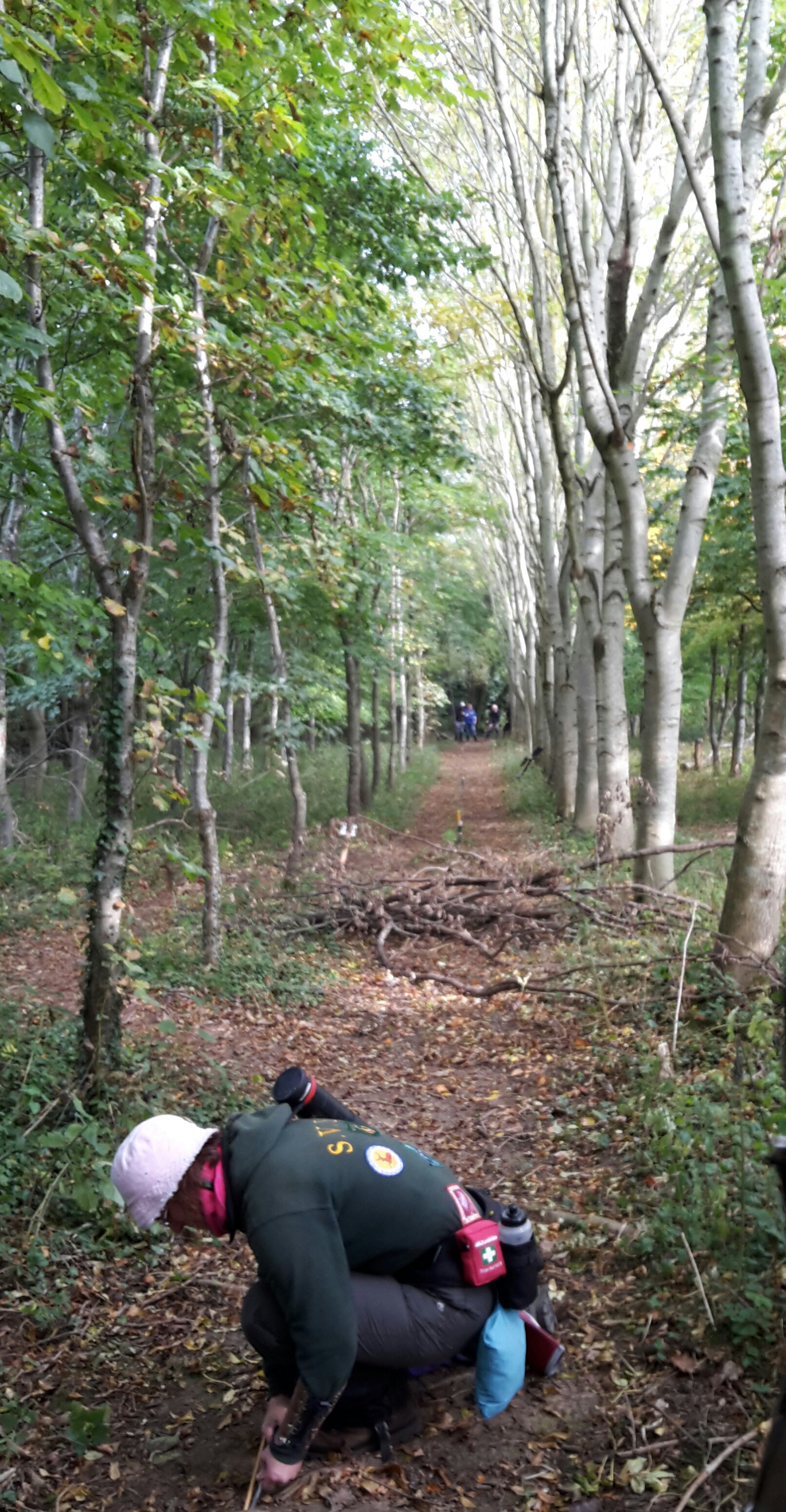
The course layers set a challenging course made more so by the extremely strong winds in a couple of areas of the woods. The Paget ground is made up of 2 woods and the course was split between the 2. In hindsight I think it might have been better to move a few pegs closer in to the targets to make shorter shots that would have been less affected by the wind. Though it is a challenge enough to set a course that works, factoring in the weather makes it really hard.
They had also suffered from falling trees in recent storms resulting in course changes. Well done guys .
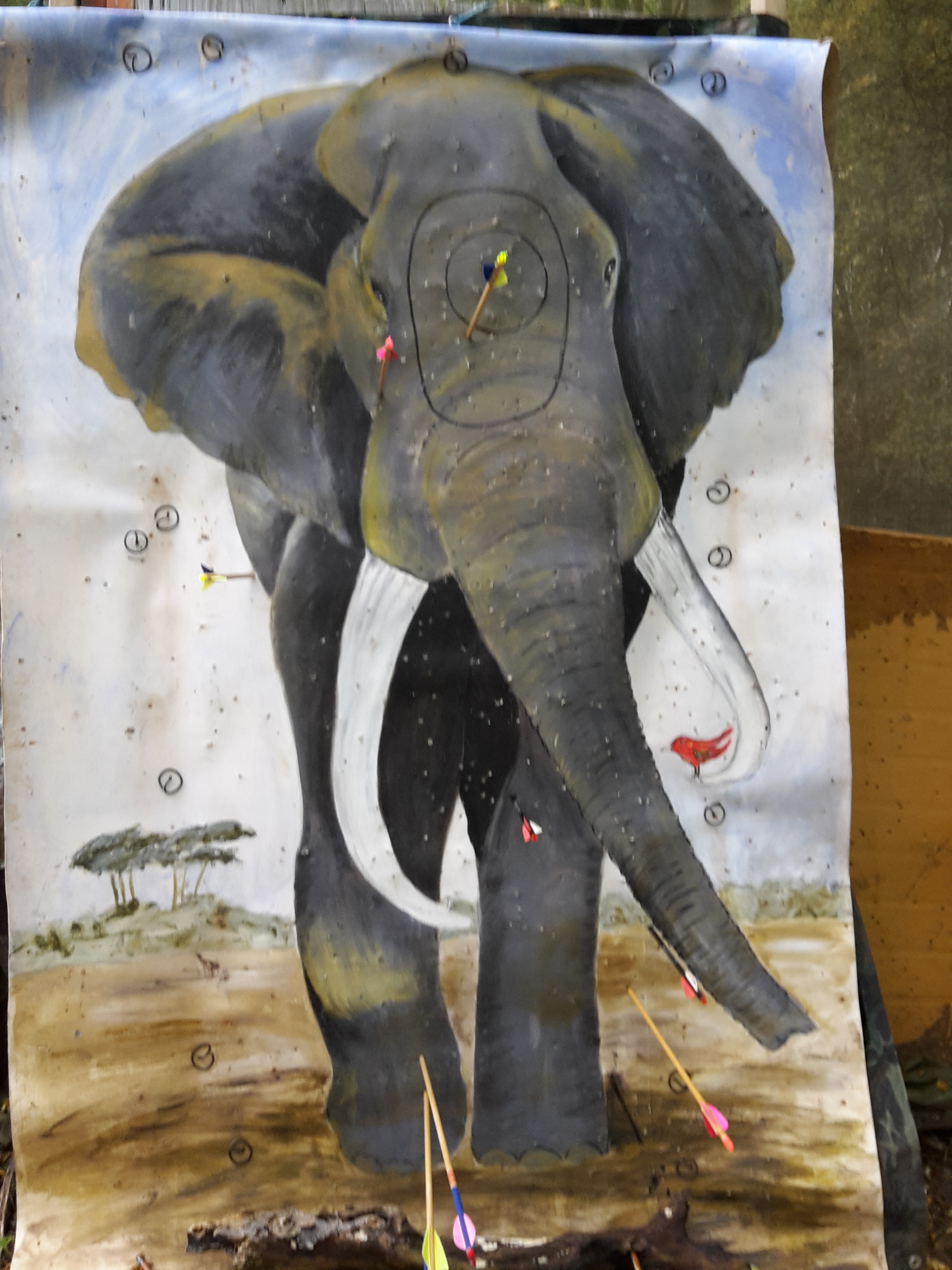
The course itself comprised of 36 mixed 3Ds and paper faces. The club capped the total number of competitors to 180 but with a few no shows on the day it meant most pegs had 4 archers making for an easy flowing day.

3D lion in tree

3D lion in tree

Another great shot was a 3D crocodile between tree stumps which gave a lovely window shot. Sorry I didn’t get a photo of this one. I did manage to get one of the mountain lion in the tree which was a lovely setting.

Arrow Casualties

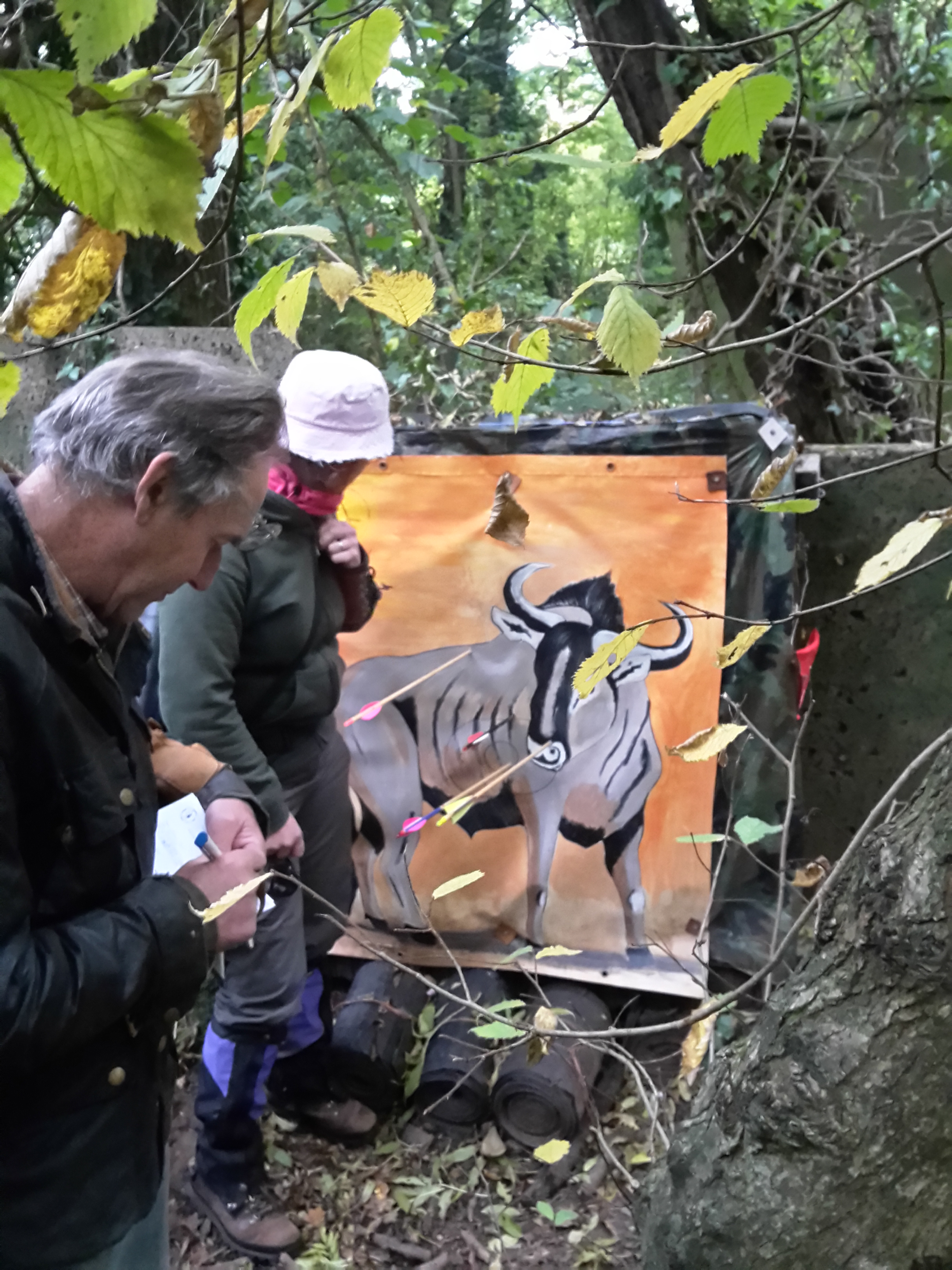
With the strong wind it was somewhat inevitable there would be a few casualties, with Sharon breaking one but it was Roy who won the prize for the most unusual casualty. It’s not uncommon to see arrows snap behind the pile or in half if they encounter a branch, but I’ve never seen an arrow split like Roys.
Roy misjudged one target and skimmed the top of the boss. Clattering into some branches. After a short search we spotted it and appeared fine until you picked it up.

Image arrow looks fine

Image arrow looks fine

It had split down the line of the grain.

Split down grain

Split down grain

They say imitation is a great compliment if so I’m feeling very happy. In a recent post I made reference to a different kind of shot where there was 1 target face but at different sizes. Paget members who had shot it at our shoot liked the idea so much they copied the idea putting out a very similar shot.

Ironically this was the only target I missed all day as when I drew up for it a combination of wind and hand slipping resulted in me releasing early 😦
Neither Sharon or I felt we shot particularly well with the lack of practice evident but it was a good day shooting and catching up with friends.
SVYF did well coming away with a few medals. Well done to Chris Harley on her placing in ladies longbow. Next time keep focused and stop getting distracted. Congrats to young Alfie in placing in his first ever shoot.
Thanks for reading.

Course and Target laying – Target code ARROWS

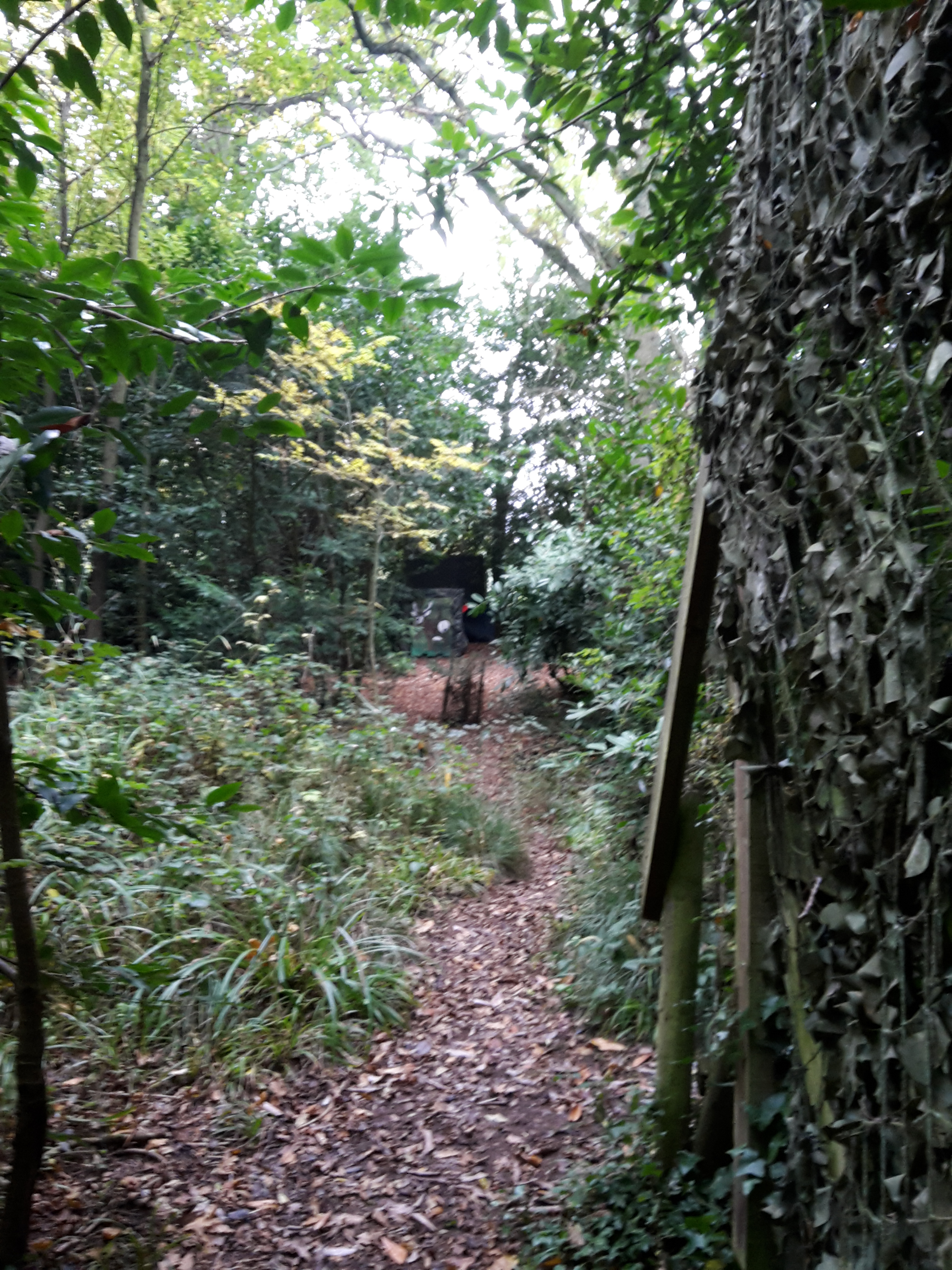
First view from Red peg

First view from Red peg

When I started trying to setup targets and shots I realised there was a lot to remember, from setting up the target, to how you get the archers to the shooting peg, whilst not forgetting about the overshoot for the shot and always remembering the safety elements.
For this reason I tried to analyse the process and come up with something that would help me remember all of these steps. My answer to this was using an acronym  ARROWS – somehow this seemed appropriate. So these are my thoughts on target positioning and locations . Please remember I’m no expert at laying courses or targets but I hope you find it useful.

Before starting here are a few things to familiarise yourself with. Consider your society rules. Do you have to have clear shooting lanes, marked or unmarked distances.

Style or Class of bow. Are you setting for an open where any and every bow styles might compete or maybe a wooden Arrow only.
Useful Tip – When scouting for a new shot I will often use my camera phone to record the view or angel of prospective shots so I can discuss it with others. I know others have used a gps system to track the target position on to a map of the course.
Anyway back to the acronym.

A – You can read this as approach or arrival at the first shooting peg.  It covers the  route to the first shooting peg and standing area when there. Is the route clear? Where possible at no point should the archer walk forward of the shooting peg as this might give them an advantage in distance judgement.  What do the archers see as they arrive? Is there space for a group or maybe two to stand safely without endangering themselves or causing distraction to other archers. Are the paths to the peg clear of obstructions? Brambles are a course layers worst enemy and  I’m sure the wood elves go out at night and lay bramble trip hazards across every path.
The idea is that as they approach they shouldn’t get a clue as to distances etc from peg to target.

View from the red peg

View from the red peg

R-Red peg (the first shooting peg for an adult in NFAS field archery courses)- but really this covers all the  other peg positions too. We have mentioned the approach to the first peg but archers will need to get from one peg to another.
Think of the route they will have to take. A straight path to the  boss makes a corridor for distance judgement or do you set a twisted path so harder to judge distance?
Pegs need to be driven in well as longbow and afb archers won’t thank you if their lower limbs catch the peg.
R – range – not just ranges to boss from each peg, but range of height of archers,  range of bow weight and dynamics.
Longbows need overhead clearance of branches etc.
Think target size here too. Don’t spoil a shot by putting too small a target face on. Remember juniors pegs too, if placed too close to the target boss they run the risk of bounce back.

First view from Red peg

Consider the tree cover and branches

O – overshoot – What is behind the target location or to the side etc in the event of a glance off from trees.
Do you need a back stop or netting? Are there trees or bushes behind the target that arrows could bury themselves in?
Please remember that simply putting up safety netting does NOT make an unsafe shot safe! 
Over shoot with netting

Over shoot with netting

W – walk off – safe route out. When the archers have collected their arrows how do they leave the boss and make their way to the next target?
Is it a walk back  to the original shooting pegs or heading to a path. Is it clear to see navigation or are direction arrows needed?

S – Safety – last but not least. Review the shot completely and in respect of the entire course. There are times when a shot can look perfect but when looked at in respect to the entire course safety issues could appear with overshoot, waiting groups or access.
Foot paths for the general public. Are there any bridal paths or public rights of way that effect the shot or the course. In the NFAS you can’t place any shot that is considered to be close to or has an overshoot towards a footpath.
Do you need special signs on the course or possibly on the course boundaries for the general public?
Target Boss

Target Boss

Some target bosses have strip binding and care must be taken with the metal fastening. These metal bindings should never face the archer as if arrow hits them it is likely to bounce back and has the potential of causing injury. (See setting up a target boss)

Once this is done for one target you need to repeat the process for all the remaining ones.  A normal nfas course is 36 or 40 targets.
Hope you find this of use and as always thanks for reading.