The Shocq Digital archery scale close up

Episode 121 – Equipment Review – Shocq Bow scales

What is your actual draw weight on your bow?

At first glance, this seems both an easy question to answer and a common question especially if you have a draw below or over 28 inches. The truth is that unless you have had the bow weight measured at the archery shop when you buy your bow, you can’t be guaranteed to know what the draw weight is at your draw length. Yes, I know all bows or limbs will have a draw weight shown on them, but this is always measured at a 28-inch draw and we all know that not all archers have a 28-inch draw.

There is a theory I have heard countless times that for every inch past 28 inches you draw, you add 2 pounds to the draw weight. This can provide a rough guide, but should only be considered an estimate, as the true figure will depend on the bow length, limb materials, limb and bow design etc. To provide an insight into what I mean I’ll give an example of when this doesn’t work. A couple of years ago I took a newly signed off archer to a local archery store to buy their first bow.  The archer has a 30 inch draw and we tested out four sets of limbs from different manufacturers. All showed 26lbs at 28 inches. With his 30-inch draw,  you’d expect a draw weight of approximately 30lbs. However when tested they ranged from 30lb to 37lbs.

For this reason, I decided it was time to buy a digital bow scale. There are several on the market and the one I opted for was the Shocq Digital Archery Scales. I purchased mine from Merlin Archery for £11.99.

The Shocq Digital archery scale close up
Close up of the Shocq Digital archery scale

It’s very easy to use with a single button acting as the on/off switch, the same switch is used as a reset.
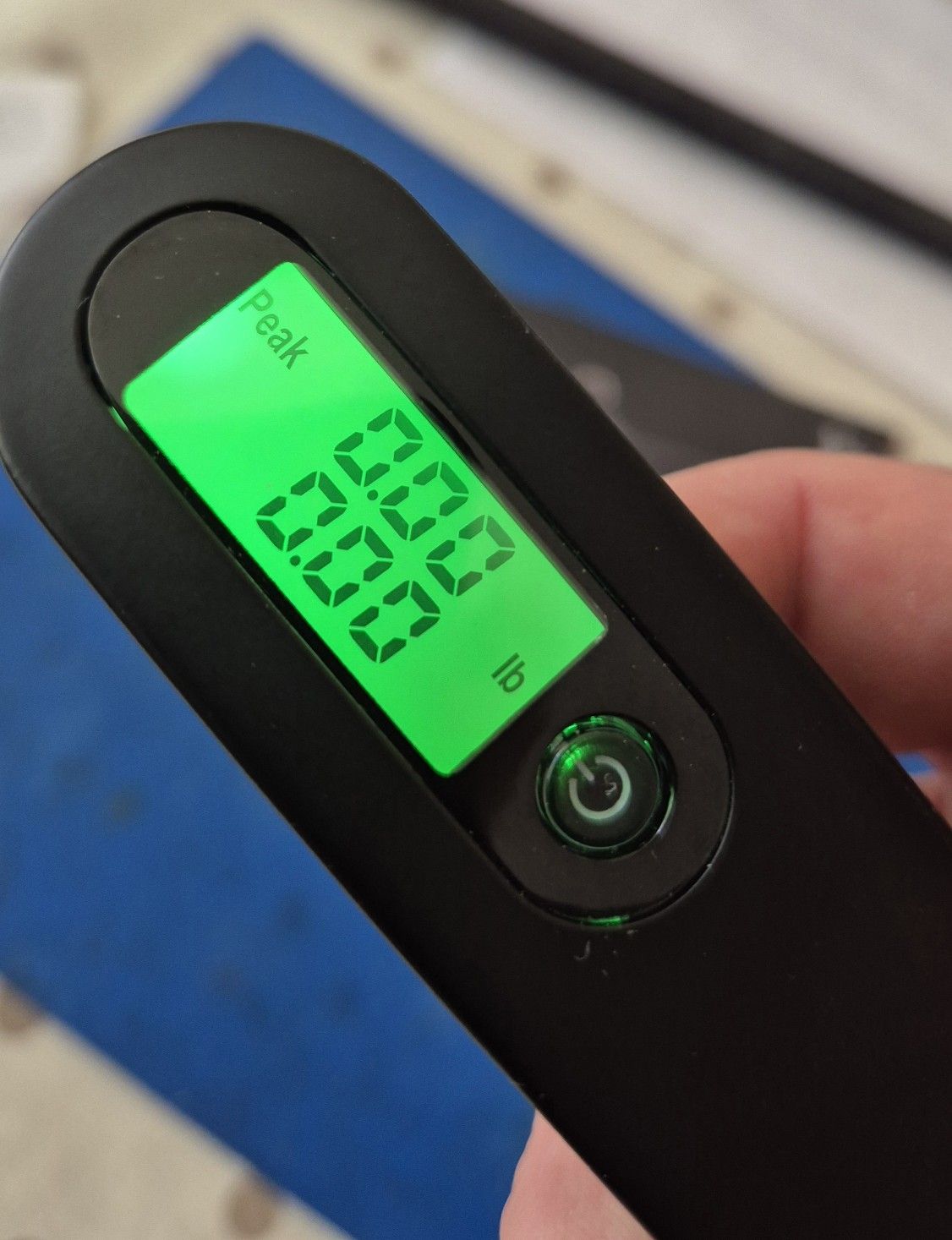
Display showing the digital scale switched on

The display is clear and shows both the Peak load and Holding weight. This is really useful in my view as I know there are some archers who, in their draw sequence, draw past their anchor point and then settle back down to their anchor. This means it can show the maximum draw weight and the weight you are holding on your fingers at anchor.

Display showing the Peak load and Hold Load

The hook on the back of the device is designed to loop around your bowstring. Personally, I’d like to have something like a lock on this so there is no chance of drawing back and string slipping out (Something highly unlikely to happen but better safe than sorry in my view).
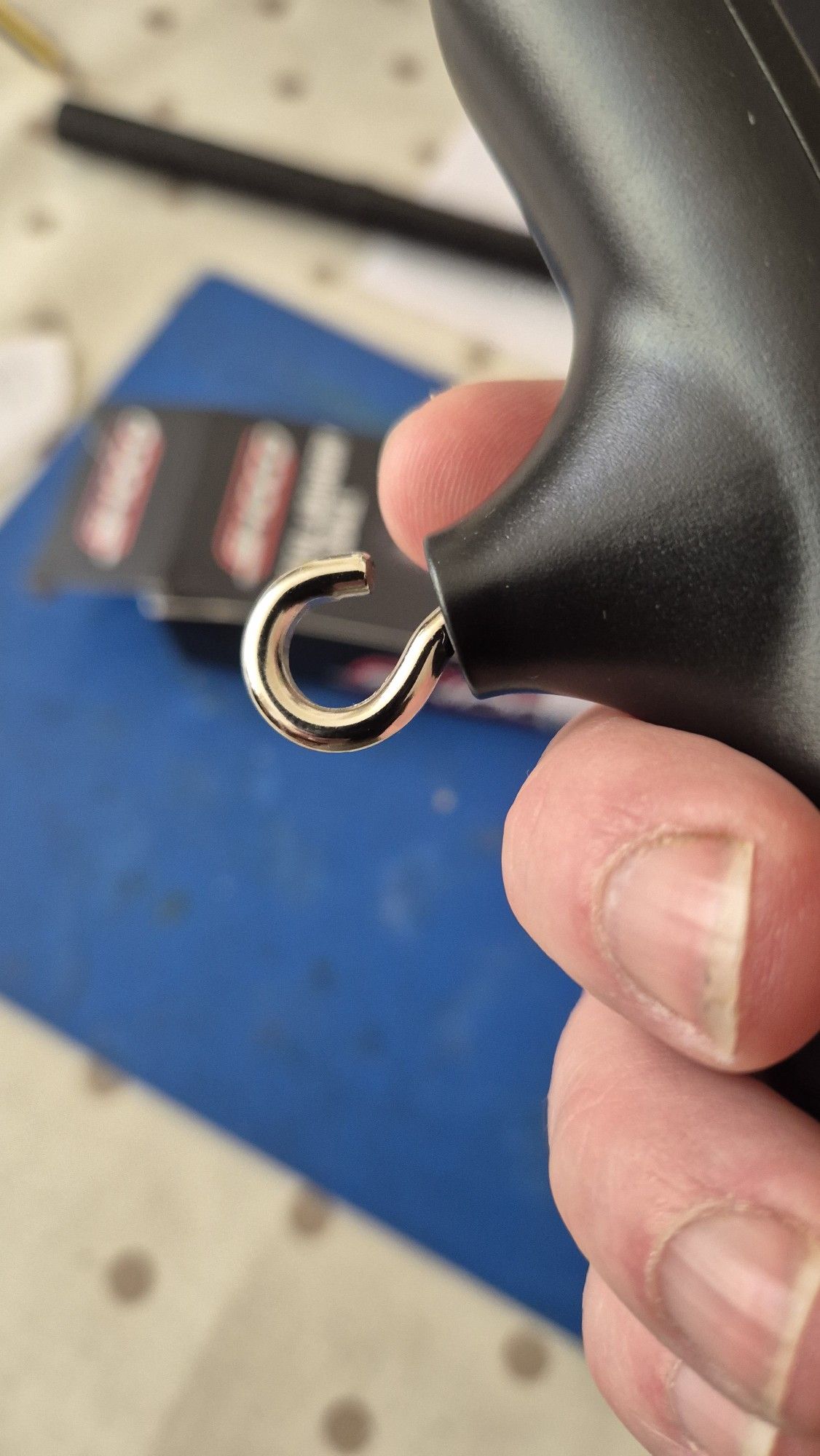
The Shocq Digital archery scale close up on the hook attachment
Hook attachment of the Shocq Digital archery scale

You will need to think carefully when you draw up using this. If you draw up to your anchor point with the analyser in hand, chances are you will effectively be short drawing.

Why? Chances are you will draw and stop when your hand reaches your face when in reality you need to draw a little further back so the string is actually at your normal anchor point.

I’ve recorded my thoughts on the digital scale, you can view here or on YouTube channel )if you find it useful hit the Like button)

In summary, it’s an inexpensive addition to my coaching kit that has already paid dividends in helping archers I’ve been coaching recently.

When I have the time, I plan to go through all mine and club coaching bows to check their actual draw weights.

This is the first in a series of equipment reviews I’m producing for this site and podcast.

Thanks for reading.

Episode 112 cover

Episode 112 – coaching, course laying, skiing and interview

The latest podcast episode is now live for you to wrap your ears round. Though it is a short episode I manage to cover quite a few things as I seem to have been pretty busy over the past few weeks, including doing some coaching, helping with the course laying, getting away for a skiing holiday with family. While still trying to get rid of this persistent cough.

I thoughts I’d share a few photos from the holiday as we are keeping the new course under wraps for now.

If you want to see me in front of the camera you can check out me chatting with Rich from Archery_Geek_Outdoors in the last post.

I hope you enjoy it.

Episode 94 – Listen to the feedback, don’t block it out

Over Easter I was lucky enough to get up to North Wales to spend some time with my family. While there I managed to record this episode whilst sat outside in the garden. I was wanting to try out the new Lavaller microphones I mentioned on Instagram a few weeks ago.
wireless microphone
New wireless microphone

Let me know what you think of the sound quality as I’ve been quite impressed. I do wonder off topic a bit and talk about the wildlife that’s surrounding me.
Sorry it’s taken so long to be posted but unfortunately my heaths taken a hit as you might be able to tell in the recording and I’ve been laid up for several days as it triggered my Asthma.

Feedback and Feed Blocks

Onto the topic of this session which, is focusing on acting on the feedback you receive from your body and brain when going through your shot sequence.

In the episode I talk about feedback and what I call feed blocks. These are points in your shot sequence where you have the opportunity to receive feedback from the process. It provides an opportunity for you to either go yes feedback is positive so move on or stop before you make a mistake or error in judgement.
Feed blocks are when you, as an archer decide to ignore this feedback your body is giving you. You block the input you are receiving thats’ telling you something is wrong and push through. You continue with the shot. This can be a bad idea, as the results can vary and are often not what you want. Yes, you might be lucky and the arrow. Hitting where you are aiming but chances are it won’t, leaving you annoyed at yourself. The larger problem is the impact this can have long term as you begin to believe you can push through and still make a shot.

You need to be able to listen to the feedback and act on it correctly, whether this is positive feedback or negative.
Whether you are an instinctive archer or a process based shooter you need to have points in your draw and shooting sequence where you can take a moment and decide whether you should or should not be moving forward to the next step.
Remember just because you draw up, doesn’t mean you have to take the shot. It is something I cover in a past article on this site The hardest lesson

Enjoy your shooting and as always thanks for reading.