stream running through valley

Field archers are a lucky bunch of people

stream running through valley

Stream running through valley

I just want to share a quick thought with you. I have come to the conclusion that we field archers are in many ways a lucky bunch of people. Why?

Well we get to walk round some wonderful woodland across the country, whether this is at a local clubs ground or at a championships. Not only that we also get to shoot bows in woodland. How cool is that!
Okay so the latter makes us sound a bit like big kids, which granted some of us are. In fact one reader of this blog commented that to me at the Paget shoot a few weeks back. He said how if he was having a bad day he’d just remind himself he’s in a wood shooting a bow, like a big kid.
But to be serious for a moment, that connection to nature should not be forgotten as it is too easy to overlook in an era where the majority of use work 9-5 in offices, and have lives packed full of different stresses or when we are having a bad few shots.
A course - 3d deer panorama

A course – 3d deer panorama

To highlight this just think about this fact and you’ll realise how lucky we are.
Much of the woodland that is used for the NFAS championships over the years have been privately owned woodland, or parts of country estates which are out of bounds to the general public normally. Yet we’ve been lucky enough to see it and wonder round enjoying it. This is not half due to the hard work and considerable effort of the organising committee of the society who work long hours at finding suitable venues.
View of the field surrounding Y course

View of the field surrounding Y course

So when you have a bad day at a shoot, stop and have a look round. Try to enjoy the scenery, you might not get the chance to see it again. Taking that moment can really  help. I know at least one very capable archer, who when they are on the shooting peg, tries to tune into the sounds around them (no not the chatting of the group) but the sound of the birds or wind in the leaves. Its’ a way they use to calm themselves before making the shot.
It can be a bad shot, but not a bad life being a field archer.
Thanks for reading.

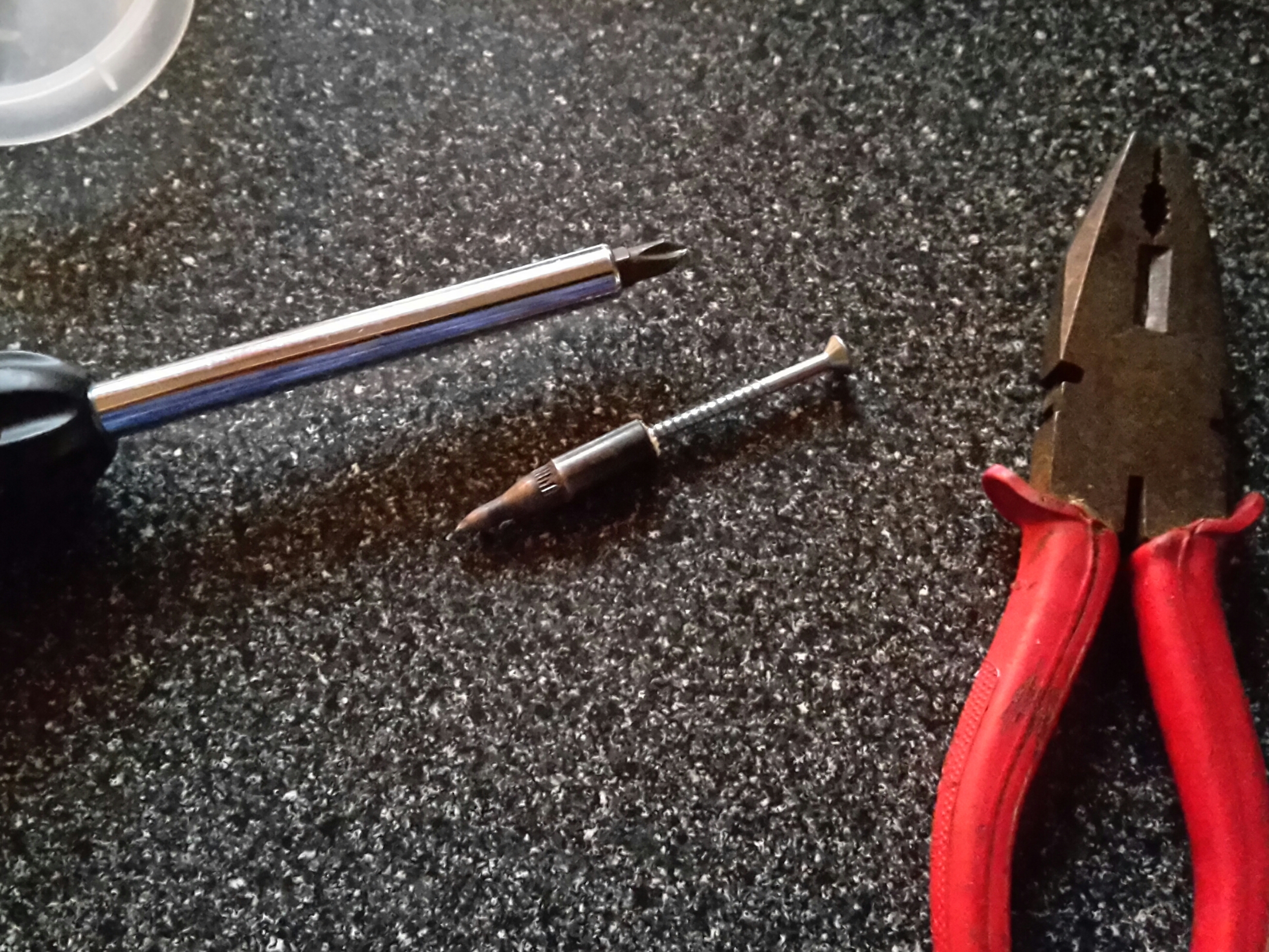
Removing broken wood tip from inside pile

Thought those of you, who like me shoot wooden arrows and sometimes have the misfortune to break the pile off might find this a useful tip. No pun intended.

Quite often I find my arrows break directly behind the pile, leaving a small piece of wood inside the pile which can be difficult to remove especially if you want to reuse the pile.
I know some people drill the wood out and others simply throw away the pile.
Well I thought I would show how I remove the broken piece of wood.

Tools required

Tools required

The tools required are
1 x long wood screw 2 1/2″ is ideal (cross head)
1 x screwdriver
1 x gas stove or gas ring
1-2 x pliers
1 x small pot or basin of water
Step 1
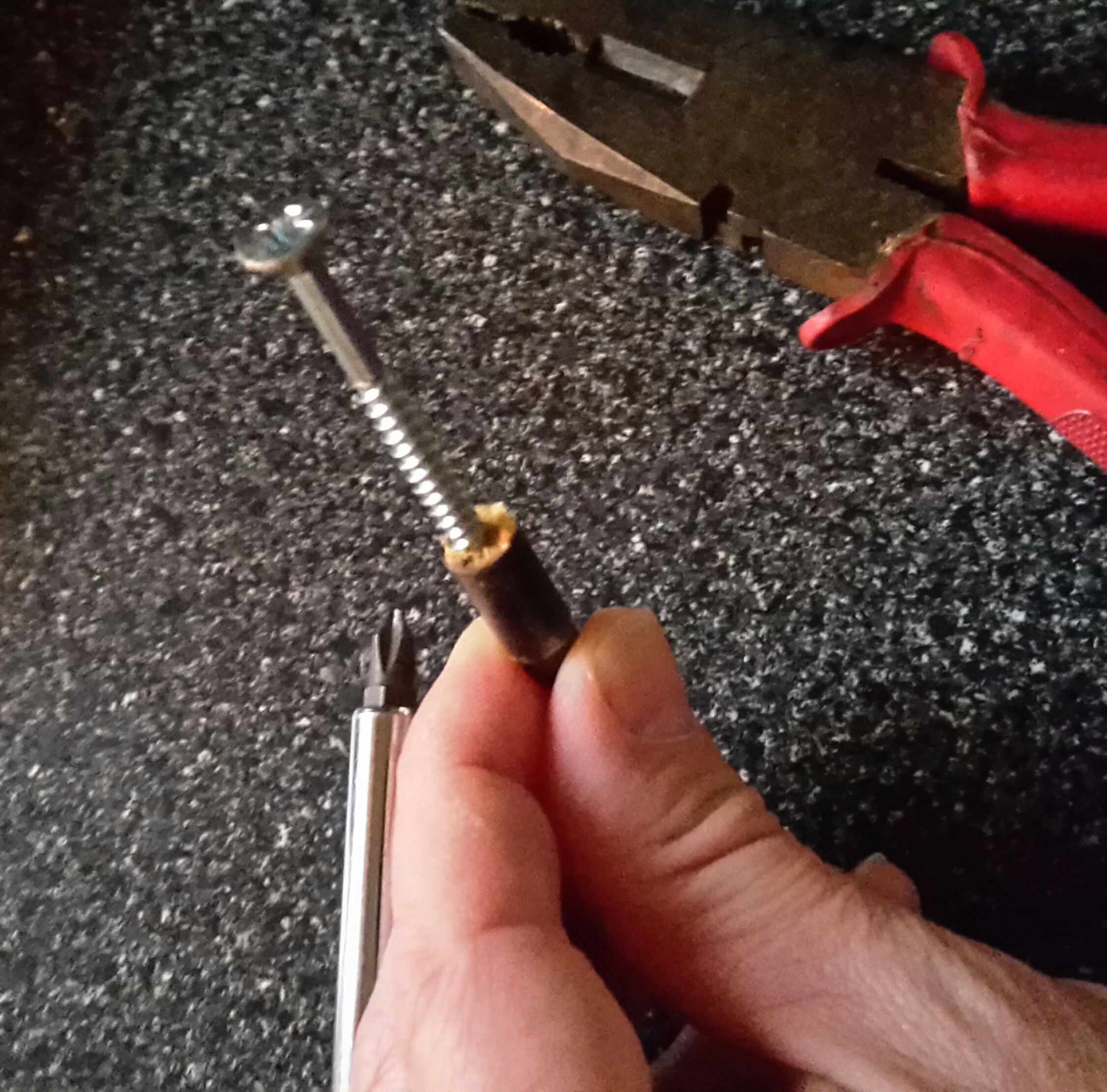
First stage is to carefully take the screw and screw it into the wood still in the pile.
Screw into wood

Screw into wood

Step 2 
Once the screw is secured in the wood, you need to heat the pile up as this breaks down the glue securing the wood to the pile.
Holding it by the screw you can heat the pile using the gas ring. It should only take 10-20 seconds.
Word of warning here. 
I usually use screw on piles, but if you have taper fit or parrell fit you can have the piles pop off as the glue and gases in the glue expand under the heat.
The reason I mention this is on one occasion when removing a pile I left it in the ring to heat up too long as I worked on another. I heard a loud pop and saw the pile shoot across the kitchen towards the window and the screw and wood went in another direction. Fortunately no one was  injured and nothing was broken (otherwise I think Sharon might have injured me)
Heating the pile

Heating the pile

The other thing to be careful of is to not let the wood burn as this will not only smoke the kitchen out possibly triggering a smoke detector but also make it harder to remove the wood.
It’s worth doing this in a well ventilated room as the glue can stinks, especially the two part epoxy I use. How long you keep it in the flame will vary depending on the glue. Hot melt, melts quickly whilst some epoxy ones might take 20 seconds. It’s a bit of trial and error here.

Step 3
Holding the now heated pile  in the pliers (don’t grab it with your hand as it will be hot) take the screw driver and continue to screw the screw into the wood.
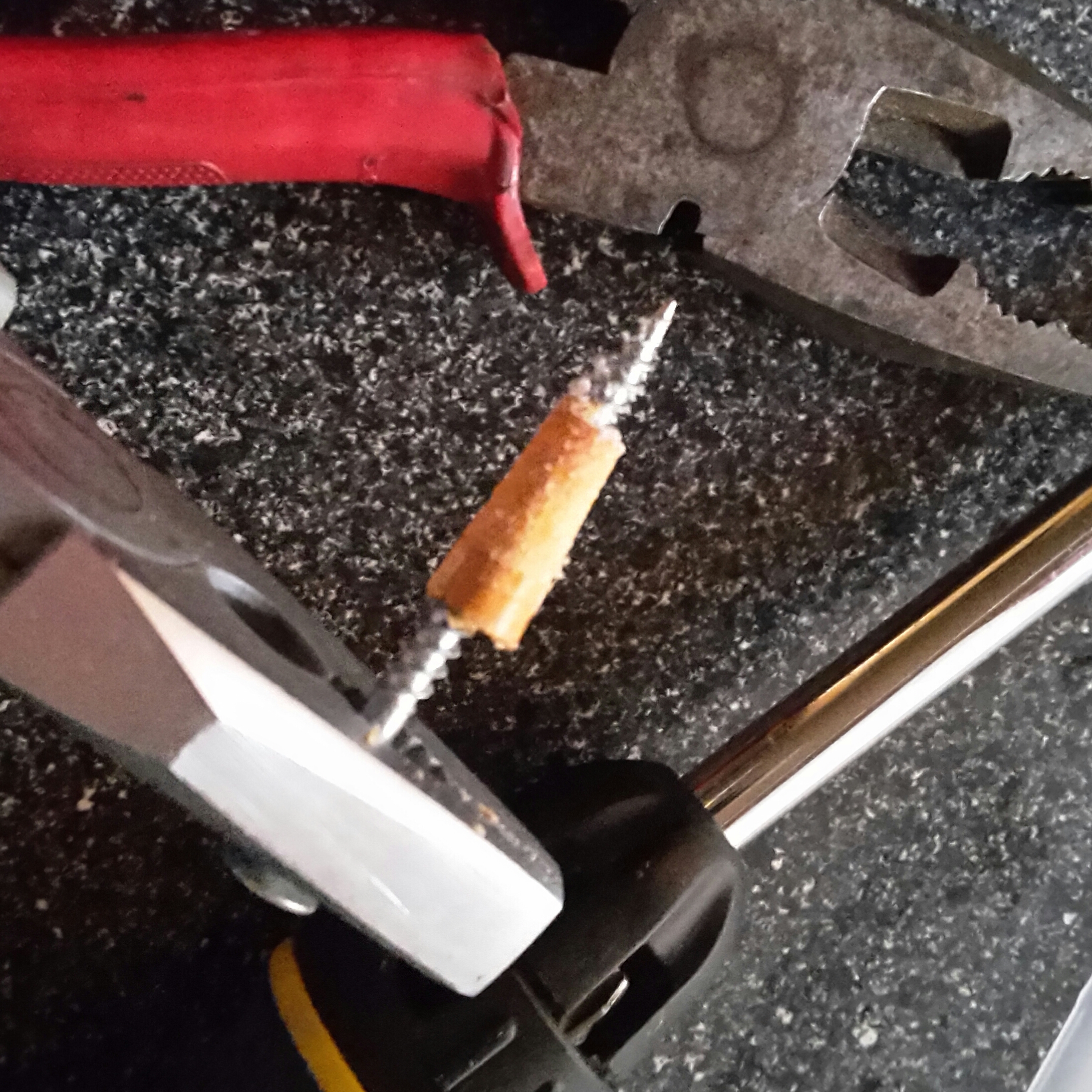
You should find that because the glue has melted and lost adhesion to the pile the screw will force the wood free. Resulting in the wood remaining on the screw and free of the pile.

Wood remains on pile

Wood remains on pile

Step 4 
Drop the pile and screw into a pot of cold water to cool.  Once cool you can dry the pile.
You might need to clean out the inside of the pile of glue residue with a bit of wire wool or I find an old shaft tapered down and screwed in and out a couple of times works well to dislodge any residue.
The easiest way to remove the wood from the screw is to hold the wood in the pliers and then using the screw driver “unscrew” it.
Hope you find this useful.
Thanks for reading.

Equipment part 4 – Failure and damage – Arrows

Damage can occur

No matter how careful you are equipment will get damaged over time and it is very important that you take the time to check your archery equipment to ensure you can spot issues before they become dangerous.

I’m going to concentrate on arrows in this section and write another one on bows in a week or so.

If you are a coach it is worth showing students and other archers the type of damage that can occur to their equipment.

One piece of valuable advice I’ve seen on a couple of sites is never assume an arrow is safe, even if it is brand new. Likewise expensive arrows can also be damaged in transit or manufacture, so always check them each time you shoot or retrieve them.

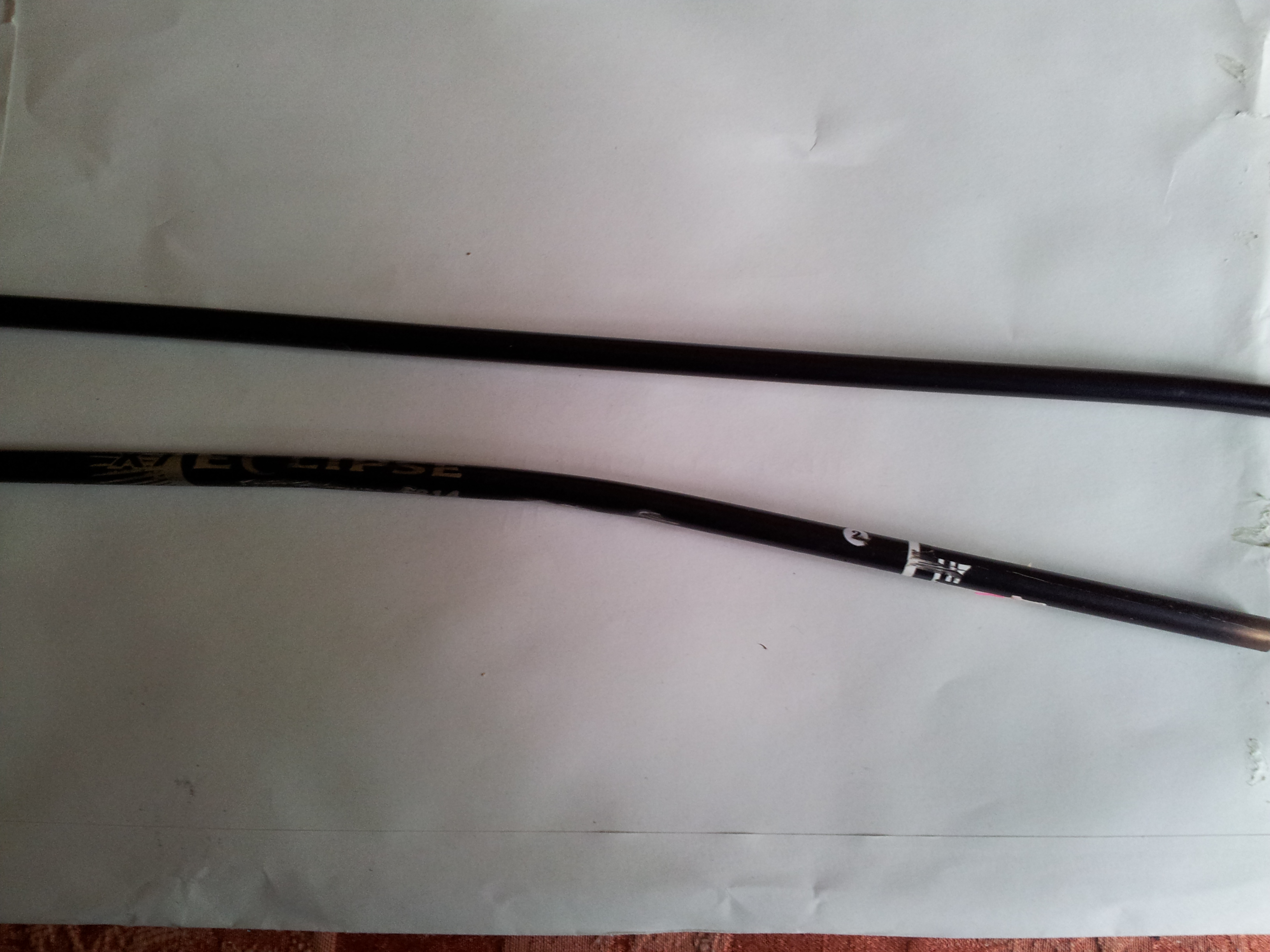
Here is a close up of an unusual style of arrow break.

arrow damage

split shaft close up

Another photo of  the same arrow shaft, you can see how it has split down its length.

split shaft full length

split shaft full length

Below image shows what happens when a wooden arrow impacts a wall  and the pile is flattened. Notice how the wooden shaft has snapped and then been forced into itself.

Arrow Damage

Compression break of wooden arrow

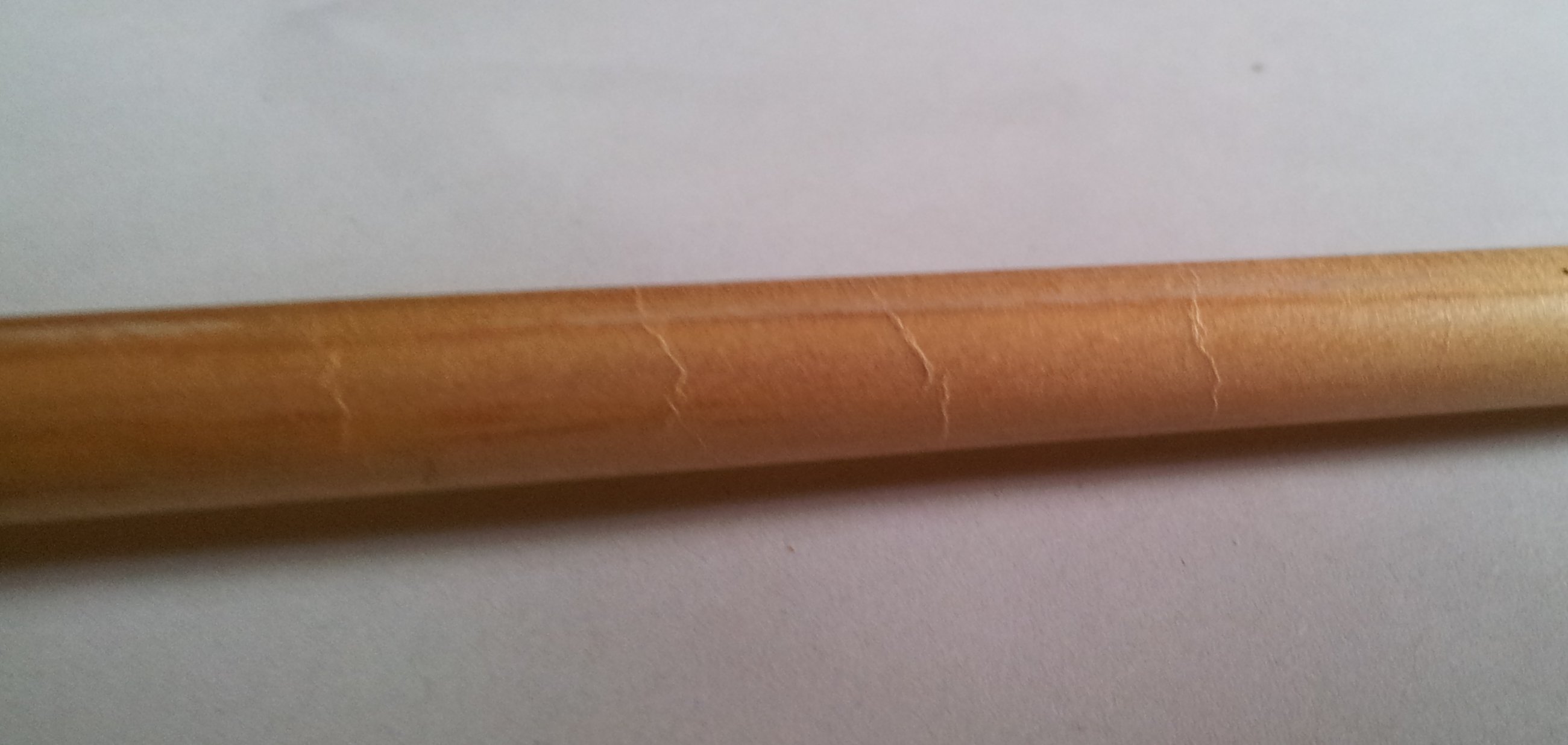
Sometime you can spot damage before it becomes a critical failure, below is a close up shot of a wooden arrow shaft that is showing signs of failure. You can see vertical crack lines across the arrow shaft. This will eventually result in the arrow bending or breaking.

damage to wooden arrow

Damage to wooden arrow

It’s not just wooden arrows that can fail and become damaged.

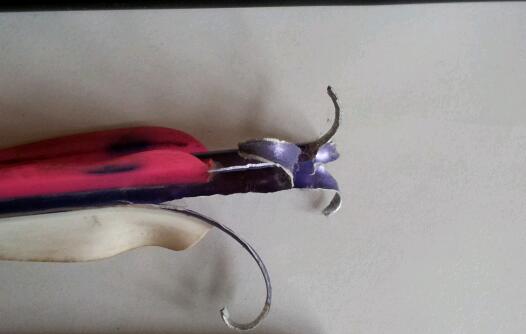
The photograph below shows what can happen to aluminium arrows . The archer had managed to hit their own nock with another arrow (great grouping in the target). The nock has shattered and the metal arrow has peeled back like a banana. This is sometimes called a Robin Hood Shot.

A Robin Hood shot

A Robin Hood shot

Obviously this arrow is no longer usable, but there are times when you will not have such a critical failure or damage. When your aluminium arrow might be only slightly bent and it can be possible to straighten them but it takes time, a level or expertise and correct straightening jig. Below shows a “slightly” bent arrow, following contact with a tree.

Bent arrows

Bent arrows

Carbon arrows also need checking regularly as they can split or worse still shatter. I’ve seen a compound shooter at a championships, release their arrow and it shatter into a million pieces, showering her and those around with carbon splinters. Fortunately no one was hurt and even more amazingly the bow was undamaged!

I know some archers now wear a Kevlar glove on their bow arm to protect them from any possible arrow failures.

It is not only at the bow end problems can occur, there are times when you are drawing arrows that the arrow may break, so it’s always worth either wearing a glove or using an arrow puller to give a cleaner and stronger grip. I’ve had to patch up a few people over the years who have cut themselves when drawing arrows that have split.

Also be aware of carbon splinters in targets. this often happens when the arrow pile has been forced into the shaft following a hard impact and resulting in the carbon shards breaking off.

A good way to test you carbon arrows is to flex the arrow, if you hear cracking or see splintering then dispose of  them. Also be aware that if you use arrow wraps, cracks can appear under these and are not always noticed.

Here are a couple of good sites and articles on testing arrows, be warned though there are a couple of graphic scenes of what can happen when an arrow fails.

http://www.huntersfriend.com/arrow-safety-warning.htm

http://www.youtube.com/watch?v=k6nIbvrMTbE

Tip – if you have a carbon arrow splinter on a shoot or when practising, don’t drop it into your quiver as it will leave splinters in the quiver. Take some tape and tape over the splintered section, this will stop loose pieces breaking off and fulling your quiver with razor-sharp splinters ( I always carry a roll of micropore tape in my first aid kit that is ideal for this.) You can then drop it into your quiver and dispose of it when you get home.

As always thanks for reading and I hope you’ve found this of use.