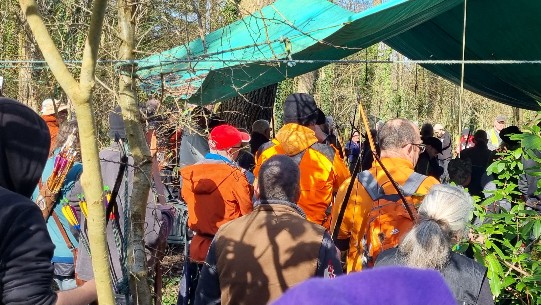
The trip to Thornbury would prove to be an early start for us. The drive on a good Sunday is well over an hour. Unfortunately, we were aware of several patches of road works on the motorway. In addition to the estimated travel time, Thornbury had promoted an early start to the shooting of 9.30 am. Ironically they had to delay the start of the competition for some late attendees to arrive.
If you are interested you can read a shoot report from an earlier visit to this club. The good news was we enjoyed good weather for an early spring day with only a slight chill in the air.
The course would consist of 40 3D targets, (to be more accurate there were 42 targets out. I’ll get to that later in the write-up). We would be joined by Mark shooting traditional bowhunter. Mark would prove to be a great sport and companion throughout the day.
Thornbury is another club that set out wasp pegs, but not on every shot. They also have all compound classes shoot from these wasp pegs, not just sighted ones. I would rather see wasp pegs on all shots if they are to be used, even if they are next to the red peg.
Those of you who have shot at Thornbury or read one of my previous posts will know the course has a tall tower shot which is probably one of their signature shots. This time, adults would shoot at a large grizzly 3D and Juniors at a 3D turkey at the tower’s base. I enjoy that shot, simply for the opportunity to shoot something like that. The only downside is I shot all three arrows as I couldn’t see where my arrows had landed. The sound of the impact made us think I was hitting the boss behind. I was in with my first. Guess I need to go to Specsavers for new glasses.
There were some nicely placed targets, designed to catch you out. Maybe it is me not shooting as much but I did feel that some of the targets were a long way for the red peg and maybe moving some of the junior pegs forward would also help. I wonder whether clubs are having to increase the distance to offer a challenge to the compound classes. I don’t know. It could equally be me not being used to shooting as much as I used to.
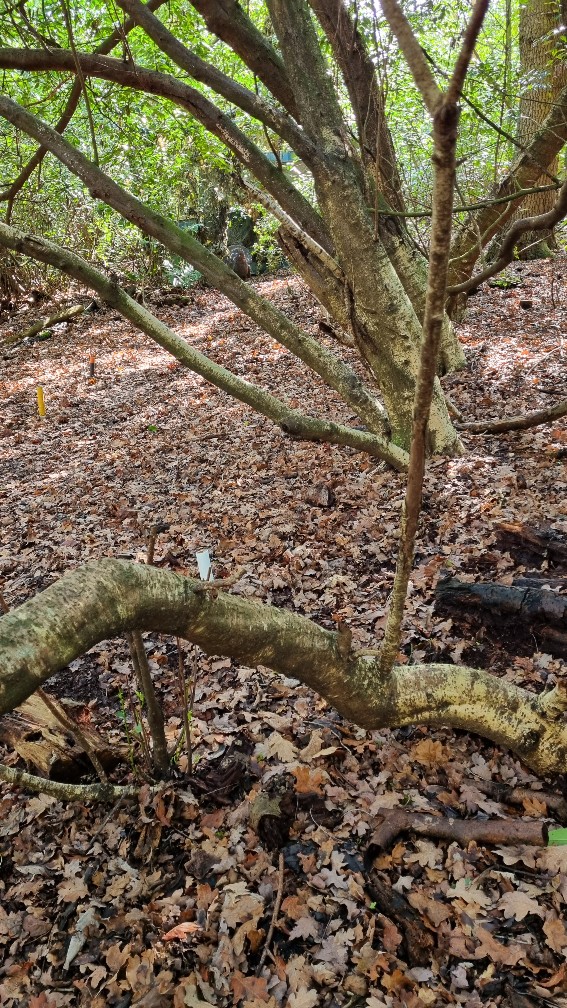

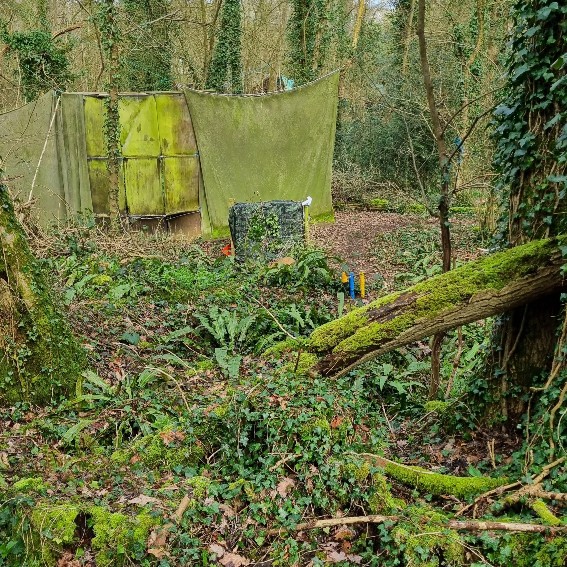


There were several shots requiring you to up your game and focus, such as the standing bear 3D between tree trunks, there was a clever use of a large legless 3D dear or elk making it look like a bedded deer.
Another particularly challenging shot, at first sight, was the standing hare 3D through a hollow tree trunk. I know a couple of people I spoke to commented on some of the 3ds being quartered, making them a greater challenge.

The woodland the club occupies is a mix of open woodland allowing for longer shots to quite dense areas making for darker shots, through the undergrowth. There was only one area where I mentioned to the marshals I thought was a bit tight on space and I think this might have been due to a recent tree fall.
The day flowed quite well in the morning especially, though there was a bit of confusion at food stops. The organisers had decided to allow jumping.
Jumping
Here is a quick definition of jumping for those who have not heard the term before. Normally when you get to food stops, you check to see who is in the group in front of you and wait for them to have their food. Following them out after you’ve given them time to clear the next target. This also gives you time to eat and rest, the group behind you waiting for you to have your break and so on. You note when the group in front of you goes off to the next peg and leave them time to shoot it, score and clear that before you set off. The group behind you doing the same.
Jumping is when a group behind you doesn’t want to wait for you when you stop and instead goes straight to the next peg. Hence the term, as they jump past you. The advantage is that faster archers can jump past slower groups. The disadvantage is if archers at the end of the shoot are helping by bringing in the targets, you could have 3D targets removed before everyone has shot them. Another disadvantage is you can have archers finishing earlier because they have jumped several times and then want to walk off the course while several other groups of archers are still shooting. Since Thornbury had said there was nothing to bring in they were allowing archers to jump. This made it a little confusing when at food stops as you weren’t sure who was in front of you.
Overall, it wasn’t a big problem just a little confusing for those who have been jumped.
Very sociable gathering
It was great to catch up with some archers I haven’t seen for a while, especially Patrick who was marshalling on the day. Patrick and I have known each other since doing our coaching course over 10 years ago. Speaking of marshals, I have to say how friendly they all were, chatting and walking with us as we went around the course. They really seemed to make an effort to help archers enjoy themselves.
Special shot
As I mentioned the organisers had designed a special shot as part of the course, which was in fact 3 shots. You had 1 minute from standing on the 1st peg to take a shot, then walk to the next peg identify where the 3d target was, and shoot it. You then move on to find the 3rd and final peg, identifying the target and shoot it. The third target was very cleverly set, hanging upside down under a fallen log across the stream, back the way you’d walked. So not that obvious to spot or gauge, being in shadow.
I wasn’t sure about this or how well it would work when initially explained at the start of the shoot. As it was it would be one of our last shots of the day.
I felt it worked very well, offering a different form of challenge with cleverly placed 3D targets. The distance between pegs worked well as did the selection of targets. Well done, Thornbury course layers on introducing something different.
Personal performance.
I shot better than I was expecting, with this being partly down to my current mindset or outlook when it comes to archery. I know I haven’t been shooting often and went with no expectations of doing well. I blanked one target on the course but I worked at not letting that get to me. Reminding myself that I hadn’t been shooting much and should not expect to hit things. I was feeling tired for the last 6 or 7 shots, as it was a long day.
I was able to try out my new hoodie I picked up from Northern Movement stand at the Outdoor Expo show at the NEC the day before. It was very comfortable to shoot in, large enough as to not offer any restrictions to movement, but fitted enough to keep you warm.
In summary, it was an enjoyable day but a long day. We were all glad to get home.
Thanks for reading.



 My Archery Experiences