Winter Shooting

I think I’m more a winter person than a hot weather person. I prefer winter sports like skiing to sitting on a beach slowly turning into a lobster 😉

This means i shoot throughout the year. But it does mean I have to wrap up which can make archery challenging.

winter shooting

winter shooting, yes that is snow on the arrow.

As yet we’ve not had any snow but we have had lots of rain. Many of you will have seen the news footage of flooding effecting large parts of UK. Here is one from one of our old clubs in Derbyshire, the boss is not meant to be under water. In fact there’s not meant to be any water there, the stream running down the side of the course had flooded.
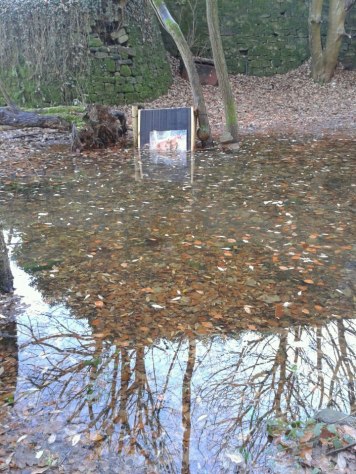
Flooded target

Flooded target

We’ve had a few hard frosts, but so long as we can get to the woods it doesn’t stop us

Sharon shooting in the snow

Sharon shooting in the snow

Good cold weather gear is vital. So I thought I might share my experiences and thoughts.Like when skiing i work on the layering approach. Billy Connolly I think once said on one of his TV shows  “there is no such thing as bad weather just wrong clothing

  • Base layer of icebreaker Marino wool i have found to be perfect. It keeps you warm when you need to be and doesn’t develop that synthetic feel other base layers do. Sadly they aren’t cheap but well worth it.
  • Disposable hand warmer are useful to carry in a pocket
  • Decent waterproof boots are essential
  • Decent windproof / water proof  breathable gore-tex jacket that you can move and shoot in.
  • Don’t wear jeans. If they get wet, heat will leach out of you as they take an eternity to dry. I use a pair of Craghopper Kiwi lined trousers and when very cold a base layer below.
  • Fleece shirt and body warmer (Ideally windproof).
  • Warm hat and neck scarf or ideally neck buff will keep you warm. One thing I’ve not mentioned are gloves. Flip over mittens work well. These are finger less gloves with a loop of fabric that fits over the fingers so making them into mittens.
  • Snacks energy bars and liquid ideally a warm flask. I tend to have a mug flask with hot fruit cordial on my belt and a flask of spicy soap in car.

Don’t get too hot. may sound strange but if you get too warm and start to sweat you can very easily catch cold and that can lead to hypothermia.  It doesn’t have to be 3 ft snow to catch hypothermia, it can set in at above freezing point as it is based on your body temperature dropping. so please take care.

Last thing is to consider of how you are getting home. I’ve been to a number of shoots where the biggest problem is leaving. Tracks have been churned up by cars or snow has changed to hard packed ice. I carry a towrope, small spade, length of old carpet and jump leads just in case and I’ve used them all at shoots.

There is a layer of compacted snow into sheet ice

There is a layer of compacted snow into sheet ice

I also keep a change of shoes and a few blankets in the car just in case.

So if you have any tips or advice please add them here. As always thanks for reading and Happy Christmas

Friday Funny videos

Its Friday so I thought time for a funny video. Think what makes this funny is that you can see some of the characteristic in people you know.

Love the drawing arrows from back quiver.

Enjoy

Buying equipment – more bits and pieces part 3

Ok so this is the third part to buying equipment etc. I hope you’ve found the other posts useful.

Hopefully you or your students have bought the basic bits and bow mentioned in the previous posting. What I want to cover now are things to consider after you have your bow and some advice on keeping it in good working order.

When you get it and afterwards.

Once you have your bow there are a few things worth remembering. Check the bow for damage – may sound strange but just because its new doesn’t mean it hasn’t been damaged in transit. If you have taken my advice you will have gone to an archery shop and tried a few out and they will have shown you how to set it up etc

Check the bow for damage – may sound strange but just because its new doesn’t mean it hasn’t been damaged in transit. Below shows a wooden riser that split after a couple of weeks of shooting.

Damaged riser

Damaged riser

Use your phone camera – yes technology can help here. A camera phone is a great tool for monitoring bracing height, nocking points, possible damage etc.

Protection – bow bag or cases. These come in lots of different sizes and shapes. Hard plastic cases, soft carry all style bags and backpack variants. What ever you choose get one that holds your bow and offers it protection. I have a simple soft case for my trainer bow, but for my competitive recurve I have a hard case with foam padding that holds my bow securely whilst in transit.

When putting your bow away make sure it is dry. I shoot all year round and in all weathers from baking heat to snow (there have been times I’ve shot an arrow and by the time I’ve walked up to draw it, there’s a layer of snow on it) But when you are putting your bow away dry any excess water off before putting it in the case. Then when you get it home open the case and double-check it is dry.

I use a Bazooka case, it’s a case originally designed for fishing rods, but is extendable up to 7 ft, for my flat bow. It means it doesn’t get knocked about in the car.

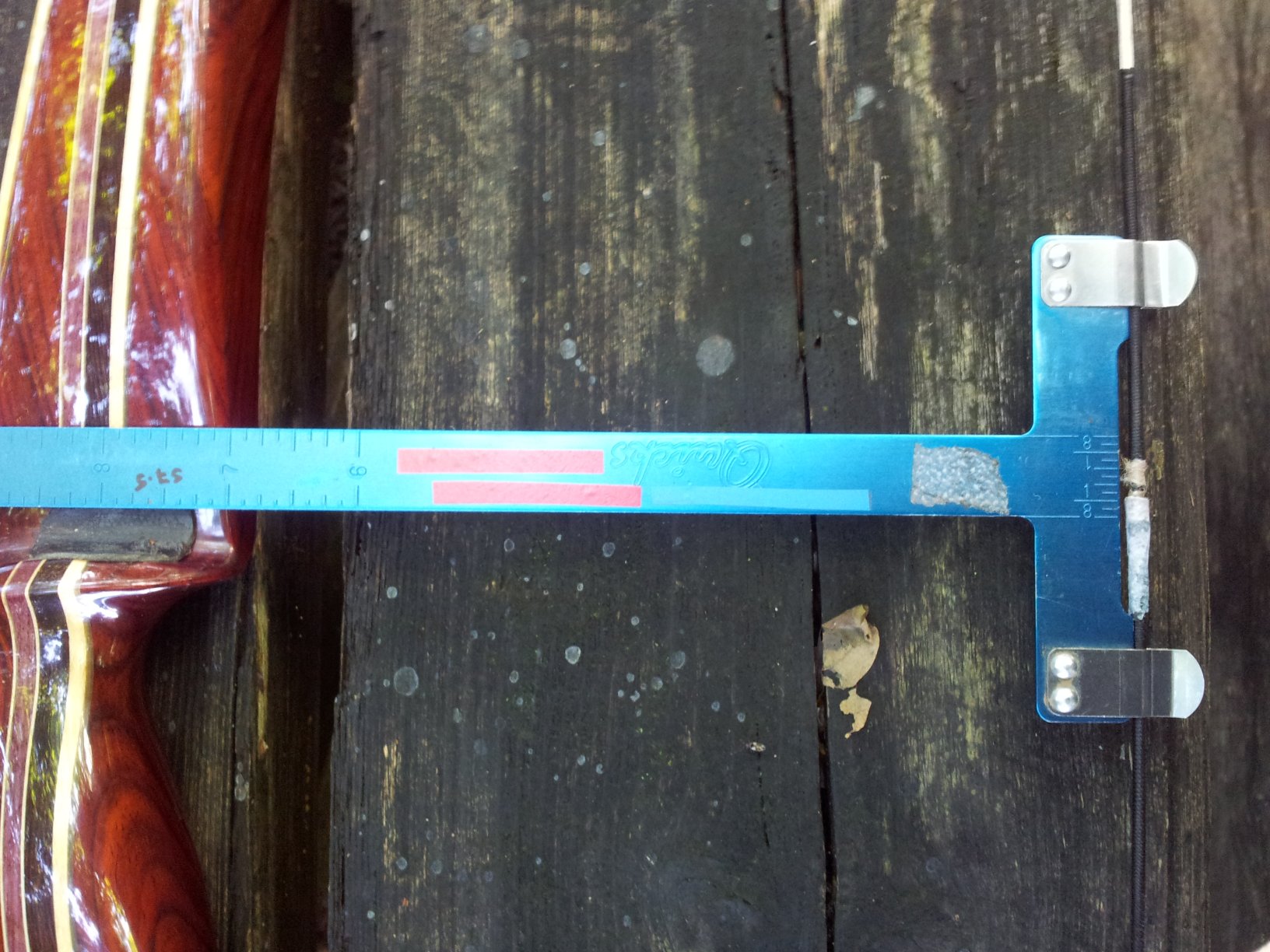
Bracing Height – Check your bracing height for the bow. This can vary depending on the style of bow, limbs etc.  and may change over time as the string stretches slightly, so you will need to monitor it.

Another advantage of getting it from an archery shop is they should check and set this for you when you get it. Make a note of it and better still a photo so you know exactly what it is. Get a bracing rule / gauge.

Bracing on bow

Bracing on bow

String – make sure you get the right length string and some string wax. String wax is often forgotten in the excitement of buying your bow, but is very important as it protects your string and binds the strands together. I wax the string every other time I shoot.

String loops

check for wear and wax

Limbs – Another area that can see wear are the limb pockets.

Limb pocket and bolt

Limb pocket and bolt

It is not uncommon for archers to be a little over enthusiastic when fitting in the limbs and over tightening the bolts or cross threading them.

Limb fitted into pocket

Limb fitted into pocket

This is something to look out for if you are buying a bow second hand. Check the limb pockets aren’t warn or the bolt damaged. Also check the limbs for any scratches or signs of damage along their edge. A good way of doing this is to run a cloth duster down the llimb edge. If it snags on anything then it might show damage on the limb edge such as a split or splinter.

Check for wear

Check for wear

Also check the limb string grooves for any sharp edges or signs of wear.

Ok that will have to do for now. I hope you have found this useful, My plan is do write another one shortly on arrows.

As always, thanks for reading.and let me know what you think