Equipment Reviews – Finger protectors

We recently ran a couple of sessions introducing archery at a local school and wanted to make things as easy as possible for ourselves and the archers,  so we bought some finger protectors to go on the junior bows rather than worrying about issuing out finger tabs.
For those not familiar these devices, let me give you a quick description of what they are. There purpose is to protect the archers fingers when drawing back and releasing the string. Anyone who has shot a bow several times with no finger protection knows full well how sore your fingers can become, even if only using a bow with a light poundage draw weight.
These protectors remove the need for the archer to use a tab or shooting glove. This makes them great for taster sessions or have-a-go events. They fit over the bow string serving at the nocking point.
Whilst they are a great addition, they are a pain to fit on the string so I thought I would offer these thoughts as a review.
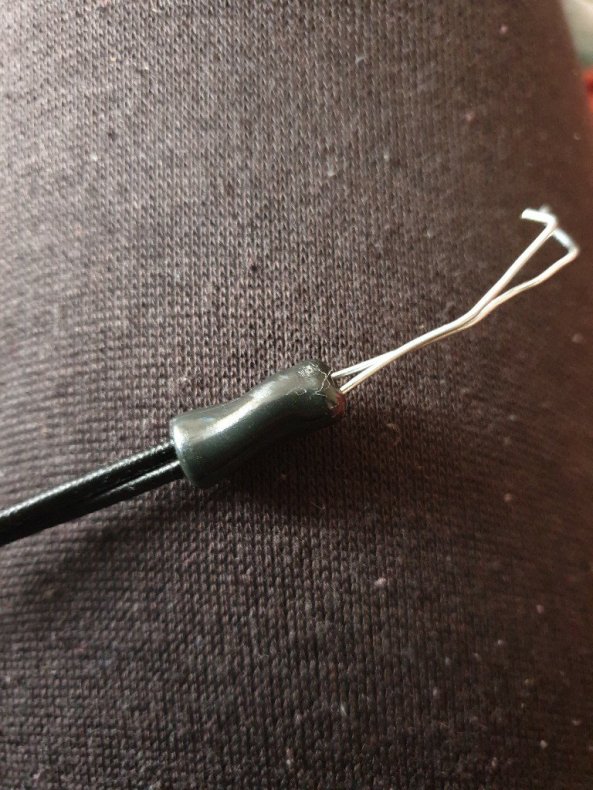
Since they have to slide over the string, getting them over the string loop isn’t an easy task. Trying to thread the bow string through the small hole in the protectors is near impossible. I tried using thin thread, even wire to help give me purchasse to pull the string through as you can’t push it through the hole.
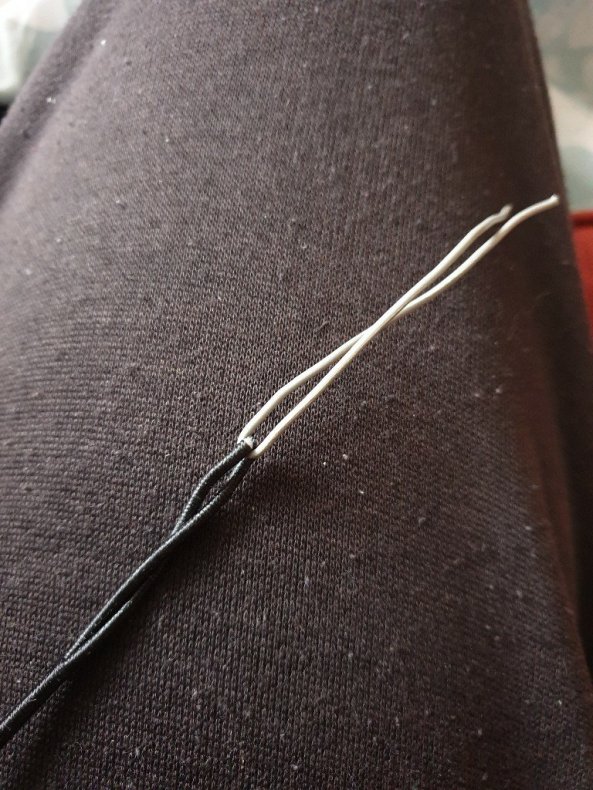
Wire on string loop.

You have to be particularly careful not to damage the bow string by using wire or other thin string, as you run the chance of damaging or worse cutting the bow string threads. In the above image you can see the serving thread opening up.
I also found that thin wire snapped easily. I ended up using a cable tie I normally use for my mobile charging cable.
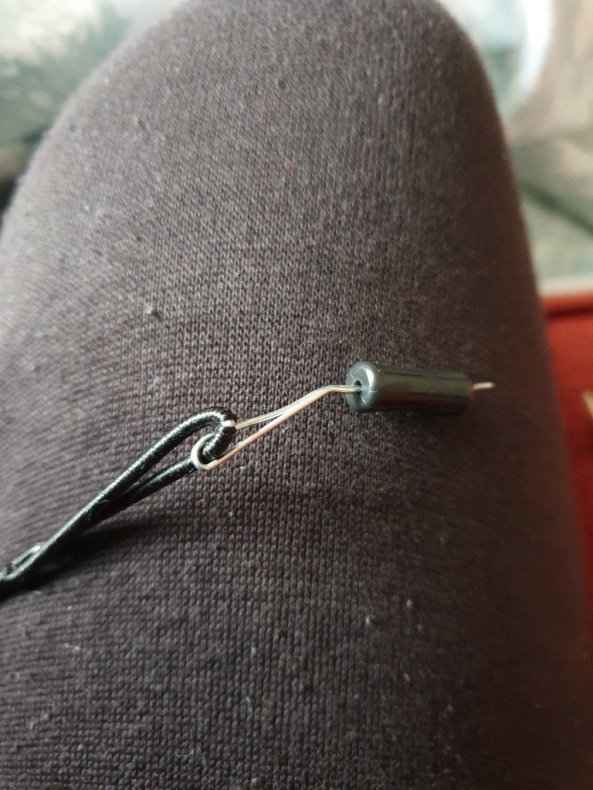
Threading wire through

Make sure you are working from one end of the string so you get the two pieces in the right spot.
I found once i had threaded the wire through, I could use a pair of pliers to grip the wire and pull the bow string.
Pulling string through

We have noticed they do move a little on the string when being used,, so you might want to monitor this. You could add a loop of spare serving at the bottom of the protectors on the string to stop it moving.
Warming in cup

Warming the plastic in a cup of hot water.

Top tip –  I found dropping the protectors into hot water prior to fitting them on the string made them slightly more malleable. This was a trick I picked up when fighting to fit different attachments to garden hoses. I found warming the hose made it more flexible so I tried it with the protectors and it worked.

Where did we get them?

They are available from most archery shops and we bought ours from Merlin Archery.
N.B. There are two types, one solid one large enough for those shooting three fingers under and a type which comes in two parts for those wanting to set up for splint finger or Med lose.

How much do they cost?

The ones we bought were £2.36 for a pack of 4. There are others available from different manufacturers.
Nusensei has a great YouTube on fitting these if you are thinking of using them.
Overall I think they work really well for have-a-go sessions or for junior bows. Since they are a pain to fit we bought spare strings and fitted them to these. This meant for each of our junior bows we have two strings, one with, one without.
One last point about doing this. Take your time. I rushed doing this as had four to do. This resulted in me fitting one set perfectly, but to the wrong string!
Thanks for reading and stay safe.

Bow weights for beginners and Juniors

At a recent coaching course I was co-running, the question of bow draw weights for beginners and junior archers was raised. This is both a very important question and a complex one, with no easy answer.
The true answer is partly dependent on what age the archer is when they start along with their physical development. Everyone is different and trying to standardise and prescribe anything in stone simply doesn’t work. So here are some points to consider to help you decide.
  • If you start with too high a poundage in draw weight  for the newbie they can become fatigued quickly and their form will suffer as the archer struggles to cope.
  • Too heavy a mass weight can tire the arms of young archers, resulting in dropping their arm.
  • Another factor that is worth considering is how some young archers develop in height earlier than others but this does not mean they have muscle development for longer draws.
There are other elements that play a part here too, such as peer pressure which can occur when coaching a group or even a family if there are two siblings that try to compete with one another. Peer pressure can cause anxiety and increased stress associated with being watched and not doing as well as others or drawing the same poundage as their fellow archers.
I was lucky enough to be shown the specifications that the scouting organisation in the UK use which provides some good guidance on potential draw weights for different age ranges.
Age Range Maximum bow weight at start of course Maximum draw weight by end of the course
Up to 12 yrs old 14 lbs 16 lbs
13-14 16 lbs 18 lbs
15-16 18 lbs 22 lbs
17-18 20 lbs 24 lbs
19+ 20 lbs 24 lbs

I have to say I am a fan of using small “jelly bows” that are very low draw weight and light in hand. Ideal for under 10 year old. We bought a couple of these from Merlin Archery (https://www.merlinarchery.co.uk/ek-crusader-bow-kit.html) though we don’t use the arrows provided.

On take down recurves I start low 10lb or 12lb and let them see how it feels. We have a selection of limbs which we can swap out and have found this of great benefit. Again we bought some bows from Merlin – the Core Pulse in both 54 inch and 64 inch.
When I get the opportunity I will write up a review of these bows in the near future.
The best advice I can give anyone is start with a low draw weight and light bow. If they aren’t having to fight the bow or struggle holding the mass weight they are more likely to learn and in turn succeed.
Thanks for reading.
Bows, bows and more bows

What bow is good for a beginner archer?

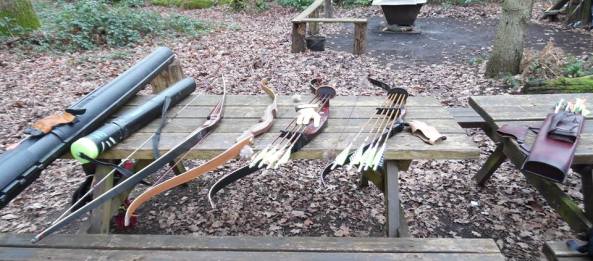
Selection of bows

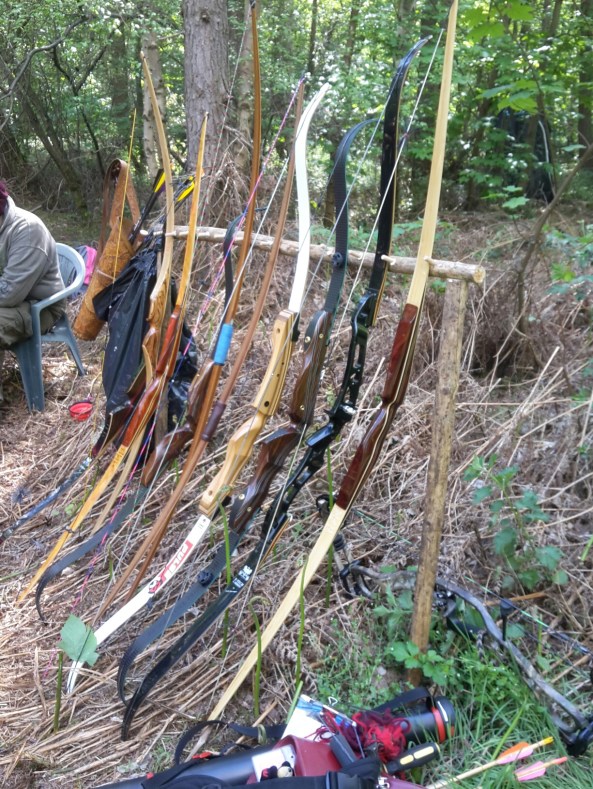
Selection of bows

This is a question that most archery coaches are asked at some point by their students.
What bow should I should get?
Like all good answers it is both simple and at the same time complex. In simple answer terms, it should be a bow that works for you. Knowing what works for you is the difficult part. So here are a few thoughts that might help, I hope you find them useful.
Buying your first bow is such a personal decision for anyone to make,  it is very hard for me to say buy this bow over another. Each of us is different, for that reason I have to say it is up to the archer which bow they choose. But, yes there is a but, I will  try and give some advice on what to look out for and to consider when buying the bow.
When I can I tend to go with my students to the archery shop when they want to buy their bow, so they can ask advice or my opinion. Also it is so I can be sure they get good service, not something that is a problem with good archery shops.
So for your first bow I would suggest you go with something that will develop with you and give you the opportunity to develop and not restrict you. Ideally you are looking for something that is not too heavy a draw weight so you aren’t over-bowed and not too heavy in the hand that you you struggle to hold it.
You want to have a bow that can support your development.  Sadly too often I have seen new archers who have bought a bow and then found it to be too heavy a draw weight, too demanding to shoot or even the wrong hand.
sharon - old bow

Sharon – shooting her first bow

For this reason I would tend to point archers to a basic take down recurve bow initially. Why?
Well I believe there are a number of advantages of this type of bow for a beginner.
  • Entry level take down recurves are relatively inexpensive as bows go, being about £65 to £85 depending where you get them.
  • You can up bow draw weights if you want too as your muscles develop. On this point I’d like to say you need to watch the draw weight though, so you don’t buy too light a limb and have to change them within a few weeks, but then don’t go to heavy that you strain. A good coach or shop will advise you as specifics vary for individuals. My students have ranged from 18lbs to 28lbs. My first bow was 32lbs but I had been shooting around that weight of club bow for several weeks and knew it was comfortable.
  • One piece bow or take down recurve. You can’t change the limbs with a one piece bow unless you buy a whole new bow so buying a one piece might not be the best investment for a starting archer.
  • Take down recurves tend to be pretty easy to shoot allowing the archer to develop an understanding of what is involved in archery  and bow set up.
  • It  is worth mentioning entry level  take down recurve bow maintenance is pretty straight forward too and allows a new archer to learn how to maintain their bow.
  • It also allows them to  develop good form as pretty easy bow to shoot compared with flatbows or British longbows.
Swapping limbs
It is worth remembering that not all manufacturers limbs fit all other manufacturer bow risers and it is something that can be an issue when looking to upgrade limbs. The limbs can be too wide or the screw thread alignment might be different.Unless they are ILF limbs and riser (i’ll cover that later)
A piece of advice I give some is not to trade in your old lighter limbs when you upgrade to a heavier draw weight. Some shops offer a discount if you do this but I would suggest you keep them as sparer, which you can go back too should you need too. Say after a break from archery due to holiday,work pressure or I’ll health.
Limb pocket and bolt

Limb pocket and bolt

So what is ILF?
ILF – stands for international limb fitting. ILF limbs are a standard design which bow manufacturers produce to. This allows ILF bows risers and ILF limbs to be quickly and easily swamped between bows so you could have KAP limbs on a Samick riser. Or Samick limbs on a Sebastian flute riser and so on.
By the way, for those interested there is something called a Warf bow. Nothing to do with the character from Star Trek, he was Worf.
A Warf bow is one made from a compound riser, but been modified to house ILF limbs.
There are some downside of these beginner bows.
  • The limb weights tend to be limited from about 18lbs to 32lbs.
  • The basic take down bows limb performance is limited as the limbs aren’t that high performance, tending to be made of wood, rather than carbon fibre etc so they don’t have the same speed.

So this is a brief overview of a few things to consider. I hope this proves helpful and as always thanks for reading.