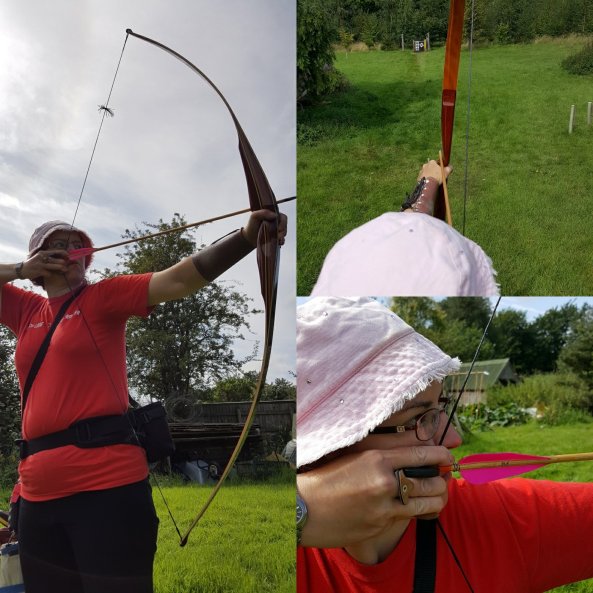
Cover photo

Literature Review – Controlled Process Shooting – Joel Turner

It’s been a while, in fact, it’s been far too long since I have added anything to this site, for which I apologise. My attention has been focussed on developing the podcasts (https://anchor.fm/off-the-arrow-shelf) at the expense of the written word. So with only one minor delay to say Happy New year and I hope everyone reading this is well, let’s get on to this book review.

Cover photo
Cover Photo

Those of you who are familiar with field archery in the United States or other areas of the world for that matter may well have heard of Joel Turner. I have mentioned him a few times on this site and on my podcasts. He is a highly respected archer and coach, appearing in countless podcasts, videos and articles.

Joel has also authored Controlled Process Shooting – the science of target panic which is going to be the focus of this review. ISBN 9781981346431

Onto the first impressions, well these may not be positive for some people as pages per buck or pound are not high. It is quite a skinny pocket-size book rather than a huge encyclopaedia. The flip side of this is it gets to the point quickly, being quite focussed. It runs to 58 pages and I bought my copy online but it is available from several archery shops.

One thing that I really like is the way the book has been constructed with empty notes pages, where you are encouraged to add your own notes as you practise the processes outlined in the sections. I often end up with post-it notes stuck in books with my scrawl all over them as I don’t want to deface the book itself. I was actually talking about this very topic with Simon Thomas at the weekend, who also has the book.

Photo of inside cover

If you have ever watched any of Joel’s videos on YouTube or listened to a podcast, when he was discussing the principles of shooting, then you will be familiar with his style of presentation. The book is written in the same style as he speaks.

My advice would be for you to read it, then go back and read it again to make sure you understand what Joel is saying and the messages he is trying to get across. Then read it a third time to confirm this.

The section on mechanical releases is less relevant to my style of shooting as I shoot off the fingers, normally split-finger so I won’t comment on that chapter.

Some aspects of shooting a bow can be subconscious in the execution, but I still believe you need them to feel right. Maybe that is the way an instinctive archer has a closed-loop shot.

I found elements of the book interesting as Joel talks of a blueprint of a shot, which is effectively the same idea just different wording to how I describe a template of a shot to my students.

I am not sure that his style will suit everyone, in fact I would go as far as to say that it probably won’t suit everyone’s style of shooting or rather their mindset. That is just a fact of life as everyone is different and comes to archery via different life experiences.
Another chapter
Another chapter

I feel you will get out of this book as much as you choose to invest in working through his ideas. So, don’t expect to read it and that be it. You will get more if you read and work with it over time.

Like owning a pair of walking boots. You need to wear them to bed them in. You need to work with this book to get the most from it.

It reads like a training manual for archers wanting to gain control of their shooting, with the option for you to annotate with your own notes and thoughts throughout the book. Hence the blank ruled pages for you to add your own notes and thoughts. I think this is an important part of how to use this book, as it is something for you to work with. Not just read, but work with. That work will take time and commitment.

This is something I try to get across to all my students when I am working with them on improvements to their shooting. They have to work for it. There is no magic arrow. Money spent on top-level equipment will only go so far. “All the gear and no idea” is a phrase I have heard about many sports including archery.

For that reason, you need to read this book, give yourself time to process what is being said and then practise the ideas Joel mentions.

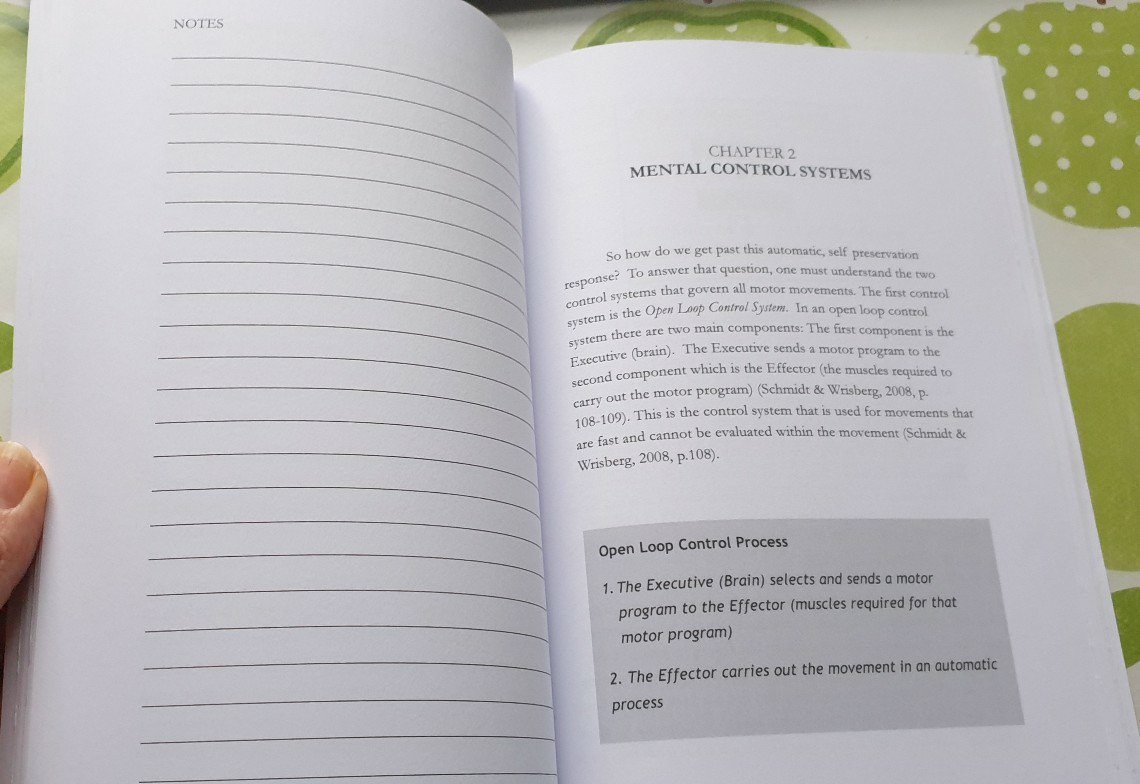
I am a fan of the open and closed-loop process, though not sure that fan is quite the right word to use. I can see what Joel is alluding too when he discusses it. I use a phrase of feedback and feed blocks when I am explaining it to students, but the concepts are very similar.

A long time ago I learnt the importance of listening to the feedback your body is providing you. It is one of the reasons that I spend so much time teaching my students the importance of coming down or drawing down if the shot doesn’t feel right or controlled.

I know some traditional archers are not a fan on his shot control and feel things should be more fluid or instinctive. that’s fine, that is their perspective and opinion. It is so important to recognise that what suits one person is not necessarily going to fit with another person opinion or style. After all, archery is a very diverse discipline and opinions do vary.

I can understand why some who purchase this book may be disappointed when it arrives, possibly because they expect a large document or weighty tome. I think they may fail to understand the purpose of it. I see it as a training guide for your improvement. Like all training material, whether it be learning to drive, brain training or DIY, you have to apply it. many will want to rush out and apply what is read straight away, which is great. My only comment is that you need to give yourself time to adjust to these ideas.

I believe some people will feel this is overpriced for such a small book, but I feel they might be missing the point. It is not a text you simply read, it is a guide for you to work with, or at least that is how it came across to me.

Stay safe, stay well and thanks for reading.

Old wolf

Original rule of 6 had nothing to do with COVID-19

Old wolf

old wolf – just because I like the photo

It was a concept I think I heard of years ago and think it was north American Indian culture from memory. though I may well be wrong. It was concerning looking at something, a problem or concept and identifying 6 possible reasons, outcomes or possible rationales for actions. Effectively expanding your understanding and perception of the activities

So, if you take this onboard I have found it very useful when looking at computer systems, working processes and from coaching. Some of the ideas might be pretty straight forward or sensible others might be more out of the box, but it is a good exercise to broaden your perspective.

To give you an example of what I mean let’s look at why someone might post something on Facebook or a blog

  1. To share their thoughts / experiences – we are social creatures and some like to share ideas, concerns and thoughts.
  2. To be seen as knowledgeable in an area – possibly when talking about specific topics or theories, often something seen in work places.
  3. To building their fan base – you see this with internet social influencers, they wish to boost their own presence or perceived standing online or in the specific area, whether they have knowledge in the area or not.
  4. They might be trying to build self-confidence – COVID-19 has seen an impact on the mental health of many and some might find posting on social media or other sites help boost confidence.
  5. Doom bringers – some come across as always wanting to be negative and pull everyone down, destroy ideas.
  6. Like to hear own voice – possible gregarious and like talking and expressing views on everything.

As I have said I have a tendency of doing this, I would say almost naturally in that I do try and look at things from multiple angles, I think partly due to my struggles with health and education over the years, from childhood and onward. I have found this approach useful when coaching archery and in my working life.

So why am I talking about this?

The last few months have not been easy for many people and the new restrictions of group sizes due to arrive on the 14th of September in the UK, local lockdowns, return to office work after working from home, and more  is affecting lots of people so my example 4 of self-confidence is possibly even more important.

Lots of people are struggling with their stress levels, physical and more importantly mental health. I know personally I have been and am struggling a bit, probably more than a bit, if I am truly honest. I miss being out and about in woods. I really miss the coaching and social interactions that come with helping people. I think that was one of the instigators of me starting the podcasts in an attempt to reach out and support people.

I started this site and more recently podcasts to share thoughts and experiences, not to be seen as knowledgeable or expert,  as the one thing I have learnt is the more you learn, the more there is to know. I have no interest in being a social influencer and despite what some think I don’t want to be negative or enjoy hearing my own voice. Yes, I often see the possible problems but this is because I want to be aware of them and have counter measures, plans or ideas to overcome them. A problem shared is sometimes a problem halved as others contribute to the solution or offer support.

So, next time when you read something, hear something or have a problem to solve, take a moment and try to note down 6 options. You might not be able to come up with 6 initially, but over time you will find you broaden your perspective. You never know it might help.

Stay safe, stay well and thanks for reading.


Coaching and Covid19

Challenges of coaching with social distancing

Coaching from a “safe” distance is something many of us are trying to figure out given current circumstances. Many archery clubs or organisations have put a stop on all coaching until further notice due to the risks of COVID-19 and the difficultly of coaching and remaining within government guidelines for social distancing are considerable.
So what are the alternatives available for coaches and archers? From my perspective, I see three options
  • Face-to-face
  • Virtual face-to-face
  • Filming
I don’t think any coach or archery student would argue that face-to-face coaching is in many ways the ideal option when helping archers develop their skills. But, this option is not necessarily practical at present, when you factor in elements such as, social distancing guidance, limitations on numbers who can attend, locations capacity and how many can meet up. Some coaches may feel they can coach effectively in the current climate and that is there call. I will admit I have struggled to coach effectively or as fluidly given these restrictions.
What I want to suggest here are other options, such as remote coaching?

Virtual face-to-face

Coaching live via conferencing tools such as Zoom, WhatsApp, Microsoft Teams etc is practical in some ways or rather circumstances. It is an option if the coach or student is presenting information, though harder if trying to demonstrate shooting or some practical skills. The advantage of these modes of communication is the ability to have a live discussion with students about ideas and allows a virtual face to face chat. So if either has questions they can ask there and then and not have to wait for email responses etc. I know we have been using these technologies for the past few months extensively in a work context. The one technical downside is the quality of connection speeds of your internet provider.
Whilst talking about communication technology you could also consider social media for sharing recordings of shooting, from short snippets in Instagram to uploading longer recordings to YouTube. The downside of sharing the content on these platforms is that you are likely to get a lot of comments, some of which may not be that constructive or accurate as you would like. Everyone likes to offer comments, some for genuine reason in the hope to help, others simply because they believe they know best. So remember some people prefer to criticise rather than offer constructive comments. It’s their way or the highway so to speak. So whichever option you choose, be aware of the possible negative reactions you may get.

Filming

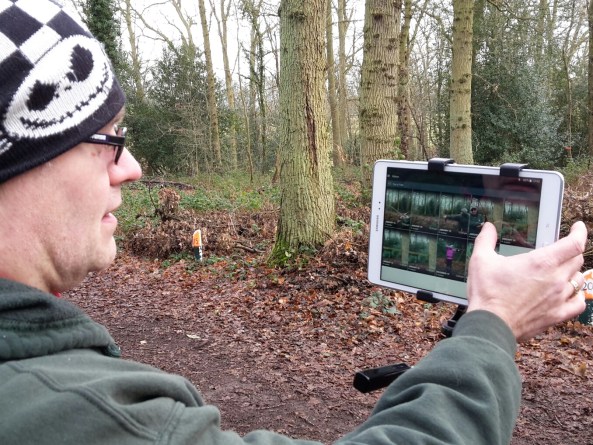
There is no doubt that cameras and recordings can be very powerful tools for coaches to use, as they offer the ability to capture, rewind, review and replay in slow motion actions that might be too fast for the naked eye to accurately see. I can’t speak for other coaches but I often use my tablet or phone to capture footage of archers as they are shooting.
From a safeguarding perspective, you need to be very careful when filming children and young people. Before you record anyone you really should always ask permission of the individual and or parents/guardians.
Because of this, I would like to offer one word of caution when it comes to filming. If you have someone recording your shooting then consider their safety.
Where will they be standing when you are shooting? 
How close will they be? 
There has been more than one occasion where I have had to stop an enthusiastic parent wandering into a danger zone as they search for the ideal angle.

Coaching at a distance, what angle to go for?

Coaching at a distance, what angle to go for?

It is very easy to get carried away when behind a camera, wanting to get the best angle for the photo. Slowly moving around, whilst focused on the small screen you can quickly lose track of your physical surroundings.
The cameraman or women should never be in front of the archer or in any location where they make the archer uncomfortable or offer a distraction to them shooting, as this can lead to problems or dangers.
It is also worth remembering that some people become quite nervous when they think they are being filmed, changing their natural shooting process, so you might need to take a few recordings for them to settle down.

Provides easy playback

Fellow coach showing ease of playback

There are a couple of Apps available which coaches or any archers may find useful, these being Coaches Eye and Technique. I use Technique quite a bit to record archers shooting and playing it back to them in sessions on the tablet.
I have a tablet mounting on my tripod that allows me to position the camera in a location where a camera person could be.

Tablet mounting

Tablet mounted on tripod

The advantage I find with using Technique over just recording video on the native mobile phone are numerous
  1. It is very easy to use as I can record within the app or import video shot on another device into it.
  2. I can slow the footage down to 1/8th speed if I want to, which allows me to analyse the smallest movements in release or bow arm.
  3. I can zoom in on areas of the screen and show exactly how an archer is gripping the bow or releasing the string. Especially useful on the larger screen of my tablet.
  4. The top thing with the app is I can annotate it. So I can have the archer shoot three arrows at the same point on the target. Then overlay each arrow on the screen with a coloured line showing exactly the arrow or bow alignment. (the stable platform offered by the tripod helps hugely when doing this).

another view of tablet on tripod

another view of tablet on tripod

Once you have the footage, you will want to share it with your coach there are a few options. You could use something like Google Drive or Dropbox to share it. YouTube offers users the ability to upload content and to have it unlisted so you access it via a link the author sends out. I’ve used YouTube in the past to share content in this way.
I hope this has given you all some ideas. If anyone has other suggestions feel free to share them here by adding a comment.
Thanks for reading, stay safe.