Shoot report – Centaura Archers – March 2014

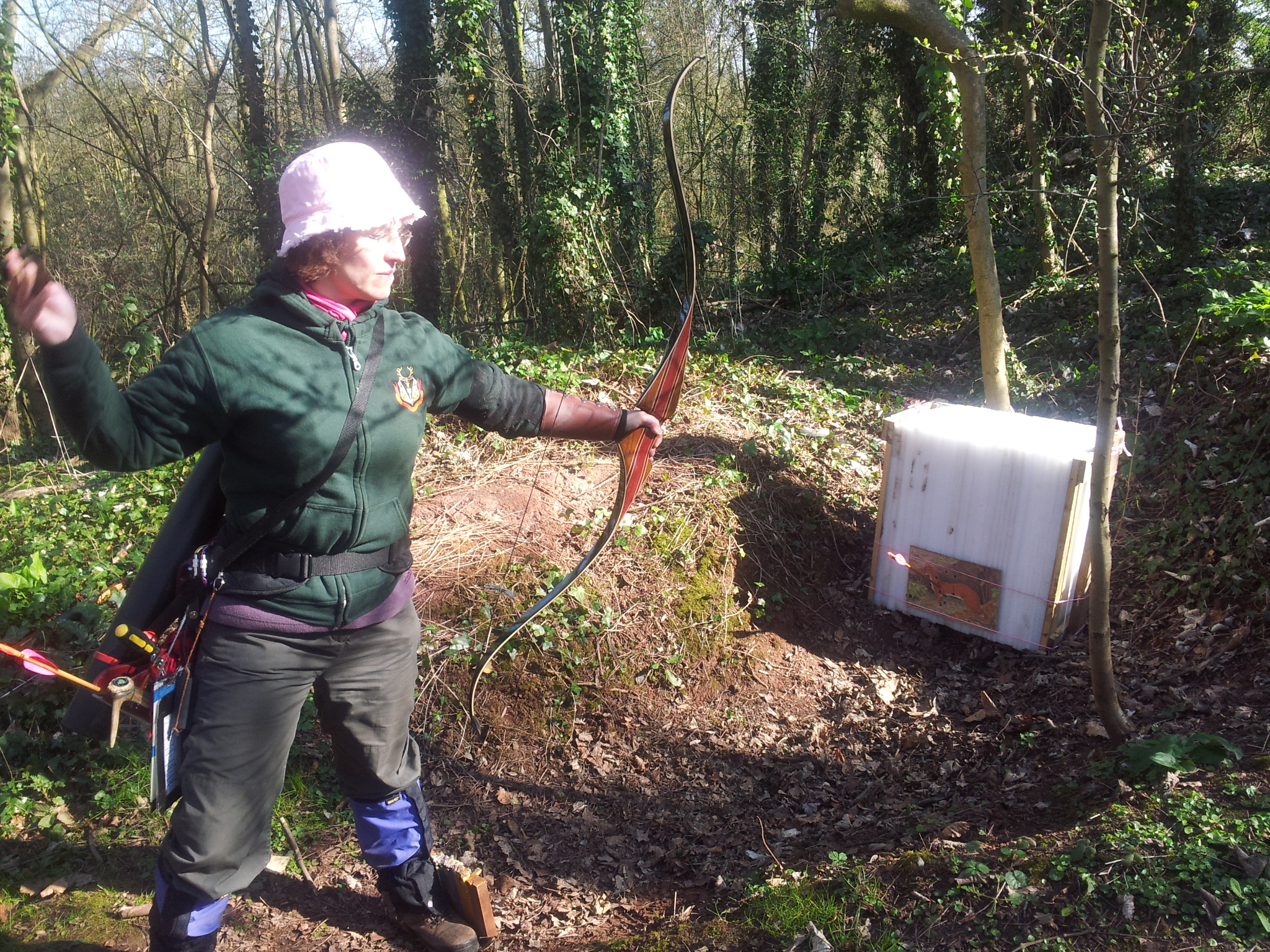
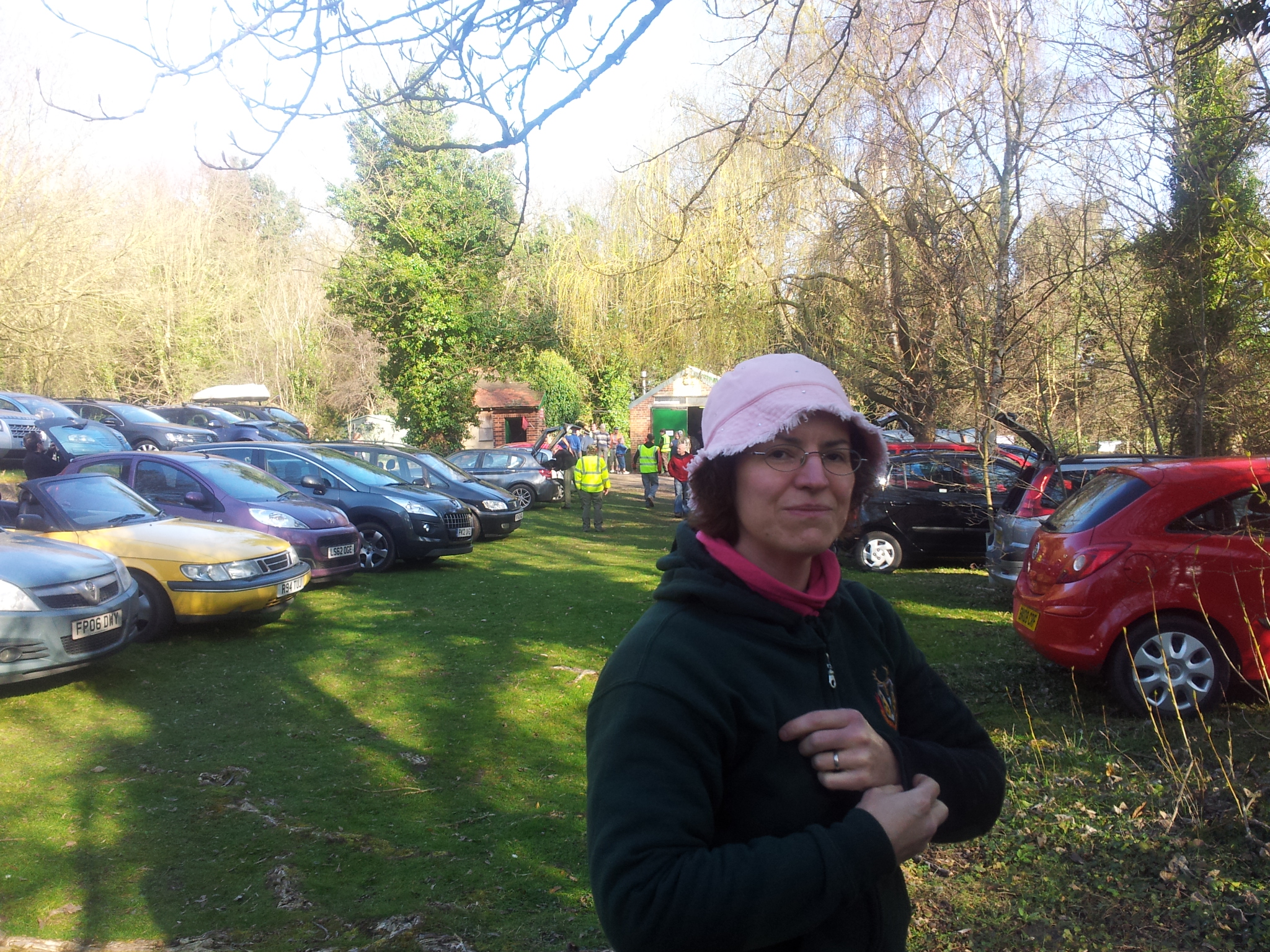
Sharon getting ready for shoot

Sharon getting ready for the shoot

This last weekend we took a break from sorting the garden and on Sunday we headed north to just outside of Derby for a return to the Centaura Field Bowmen grounds. It had been a couple of years since we had last shot this ground and not since Pete Bates had passed away. Pete had been a very well known character on the field archery circuit in the Midlands and had been the driving force behind Centaura for years.
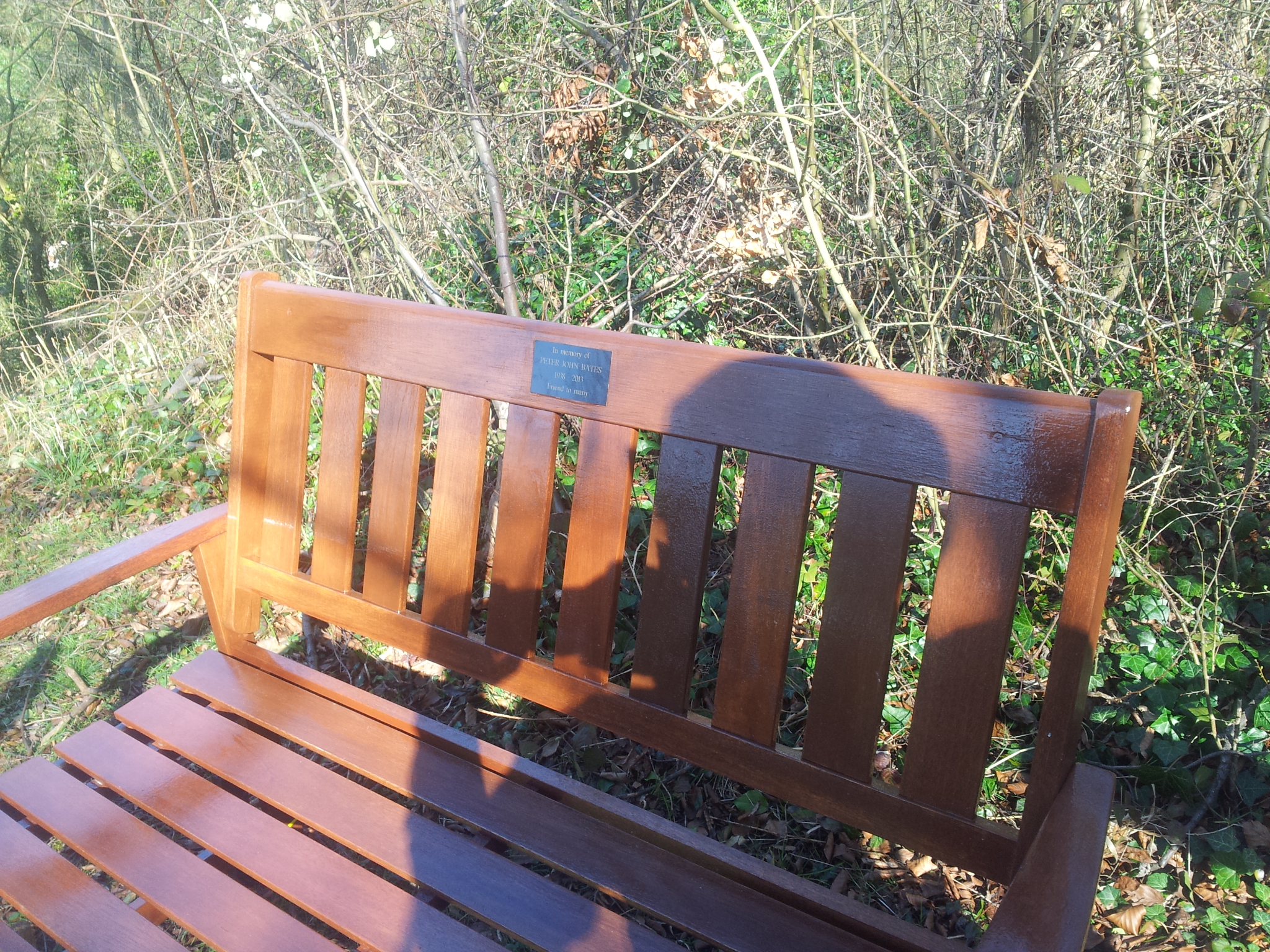
Bench donated to the club in memory of Pete

Bench donated to the club in memory of Pete

Considering the very wet winter weather we have endured in the UK, Sunday  was an absolutely lovely early spring day. Bright sunshine and blue skies all day, with our temperature gauge in the car showing 15 degrees when we left to head home late afternoon. Pub beer garden weather or better still shooting weather.
Practise bosses before the start

Practise bosses before the start

The shoot was to be a wooden arrow only shoot, with the course being a 36 target, mix of 3D and paper faces. Normally wooden arrow only shoots have a low turnout but there were over 100 archers split across the different classes of longbow American flat bow and hunting tackle attending the event.

Great Atmosphere

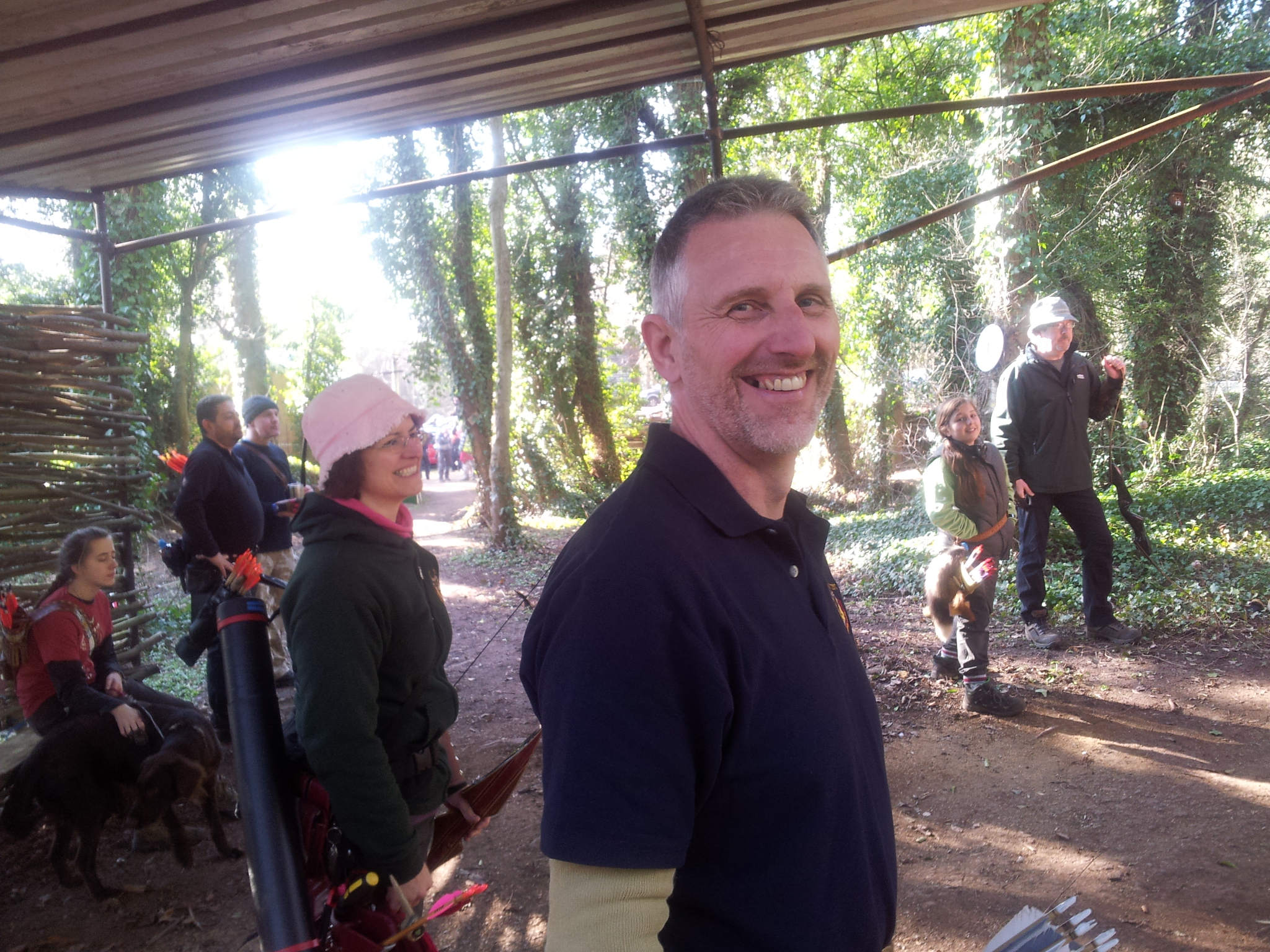
I think it would fair to say  that the shoot was probably one of the most relaxed and laid back shoots I have been on for a very long time. Everyone was smiling and relaxed with very few hold ups on the course.
There was a brief lunch break between 12:30 -1:15 which was necessary as the club ground doesn’t really make for a shoot through.
Post lunch break

Post lunch break

Woodland regeneration

The club is presently working with the local council on a 10 year project of woodland management to rejuvenate the woodland. It’s very obvious how much work has started with clearing and felling of some trees which has opened up areas.

The course

As I’ve said earlier the 36 target course felt split into two main sections one part having the shorter more technical shots dictated by the terrain.

Polo shot

Polo shot

We started on peg 11 which I will call the polo shot. A hole had been cut into a foam boss with a second boss positioned some  5 yards or so behind. You had to shoot through the hole to hit the target, a paper raccoon.

Starting Peg with Sharon, Dave and Graham

Starting Peg with Sharon, Dave and Graham

We were delighted to see Dave and Graham waiting on the peg, longbow archers we’d shot with before.  Our day was filled with jokes and laughter with little consideration of the competition and more about having a good fun day shooting with friends. Thanks guys.
There were some challenging shots out there though an Ermin at 3 yards and low to the ground. Sharon nailed this with a near perfect shot. In fact she nailed the 2 smallest targets on the course,  scoring 24 points on each.

Sharon as she shot the ermin

Sharon as she shot the ermin

There were a couple of predator prey shots one being a crocodile 3d with a 3D goose in its mouth.
There was also a deceptively difficult little 3d fox which caught a few people out.

Graham on 3D fox

Graham on 3D fox

Another was a nice herd shot of 3 3Ds all deer of different sizes and distances.

It was good to catch up with so many old friends who we hadn’t seen since moving house 18 months ago. SVYF came away with a few placings Chris Harley came second in longbow and Sharon and I managed to come away with firsts in Ladies and Gents Hunting Tackle.

I’m sure that with the work the club has already undertaken and are planning it will go from strength to strength.
As always thanks for reading.

Course and Target laying – Target code ARROWS

First view from Red peg

First view from Red peg

When I started trying to setup targets and shots I realised there was a lot to remember, from setting up the target, to how you get the archers to the shooting peg, whilst not forgetting about the overshoot for the shot and always remembering the safety elements.
For this reason I tried to analyse the process and come up with something that would help me remember all of these steps. My answer to this was using an acronym  ARROWS – somehow this seemed appropriate. So these are my thoughts on target positioning and locations . Please remember I’m no expert at laying courses or targets but I hope you find it useful.

Before starting here are a few things to familiarise yourself with. Consider your society rules. Do you have to have clear shooting lanes, marked or unmarked distances.

Style or Class of bow. Are you setting for an open where any and every bow styles might compete or maybe a wooden Arrow only.
Useful Tip – When scouting for a new shot I will often use my camera phone to record the view or angel of prospective shots so I can discuss it with others. I know others have used a gps system to track the target position on to a map of the course.
Anyway back to the acronym.

A – You can read this as approach or arrival at the first shooting peg.  It covers the  route to the first shooting peg and standing area when there. Is the route clear? Where possible at no point should the archer walk forward of the shooting peg as this might give them an advantage in distance judgement.  What do the archers see as they arrive? Is there space for a group or maybe two to stand safely without endangering themselves or causing distraction to other archers. Are the paths to the peg clear of obstructions? Brambles are a course layers worst enemy and  I’m sure the wood elves go out at night and lay bramble trip hazards across every path.
The idea is that as they approach they shouldn’t get a clue as to distances etc from peg to target.

View from the red peg

View from the red peg

R-Red peg (the first shooting peg for an adult in NFAS field archery courses)- but really this covers all the  other peg positions too. We have mentioned the approach to the first peg but archers will need to get from one peg to another.
Think of the route they will have to take. A straight path to the  boss makes a corridor for distance judgement or do you set a twisted path so harder to judge distance?
Pegs need to be driven in well as longbow and afb archers won’t thank you if their lower limbs catch the peg.
R – range – not just ranges to boss from each peg, but range of height of archers,  range of bow weight and dynamics.
Longbows need overhead clearance of branches etc.
Think target size here too. Don’t spoil a shot by putting too small a target face on. Remember juniors pegs too, if placed too close to the target boss they run the risk of bounce back.
First view from Red peg

Consider the tree cover and branches

O – overshoot – What is behind the target location or to the side etc in the event of a glance off from trees.
Do you need a back stop or netting? Are there trees or bushes behind the target that arrows could bury themselves in?
Please remember that simply putting up safety netting does NOT make an unsafe shot safe! 
Over shoot with netting

Over shoot with netting

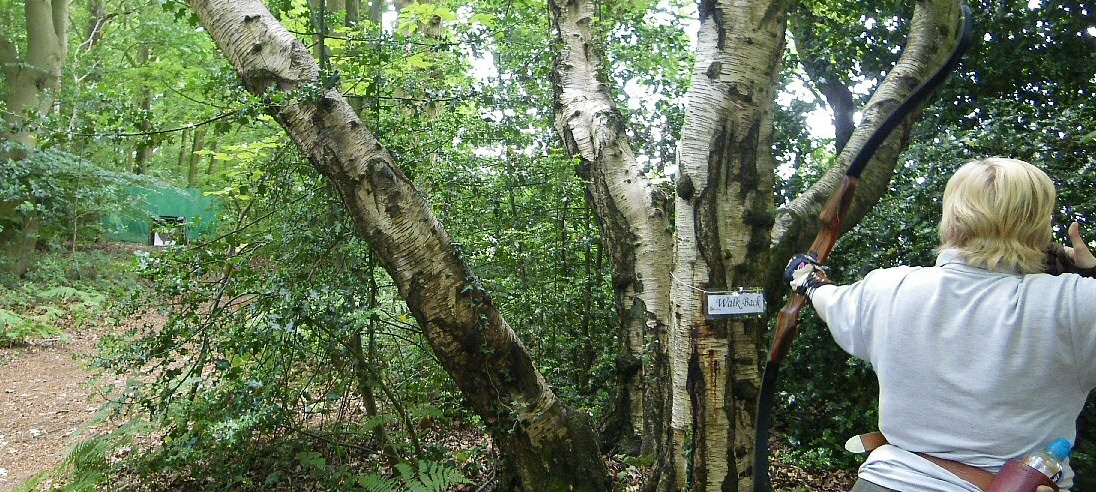
W – walk off – safe route out. When the archers have collected their arrows how do they leave the boss and make their way to the next target?
Is it a walk back  to the original shooting pegs or heading to a path. Is it clear to see navigation or are direction arrows needed?

S – Safety – last but not least. Review the shot completely and in respect of the entire course. There are times when a shot can look perfect but when looked at in respect to the entire course safety issues could appear with overshoot, waiting groups or access.
Foot paths for the general public. Are there any bridal paths or public rights of way that effect the shot or the course. In the NFAS you can’t place any shot that is considered to be close to or has an overshoot towards a footpath.
Do you need special signs on the course or possibly on the course boundaries for the general public?
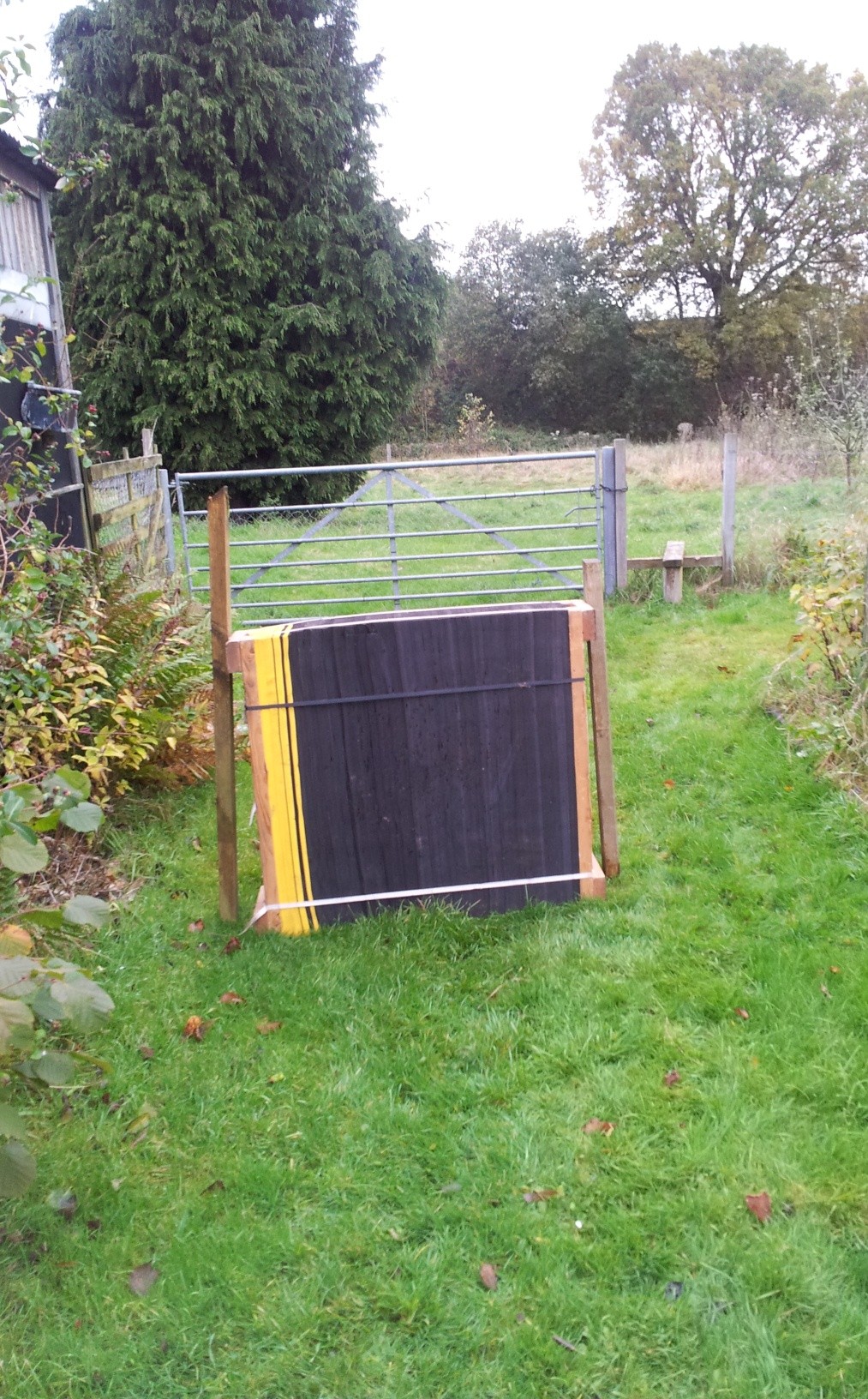
Target Boss

Target Boss

Some target bosses have strip binding and care must be taken with the metal fastening. These metal bindings should never face the archer as if arrow hits them it is likely to bounce back and has the potential of causing injury. (See setting up a target boss)

Once this is done for one target you need to repeat the process for all the remaining ones.  A normal nfas course is 36 or 40 targets.
Hope you find this of use and as always thanks for reading.
Club meeting and photo shoot

Severn Valley Team photo

Severn Valley Team photo

Last week saw our clubs annual general meeting where the organising committee feedbacks to members and members have an opportunity to pose questions and raise concerns, elections taking place etc. If you are a member of all club I think it is important to attend these meetings to hear the discussions.

It also gives you the opportunity to raise questions and understand the work that goes on behind the scene.

Like last year the event was well attended with over 60 club members making the effort to attend.

The meeting also provided the opportunity for a photo session. As some readers will know at last year’s NFAS national championships the Severn Valley Yeoman Foresters club won a few trophies and this meeting provided the perfect opportunity for team members group photo.

So below is the bare bow team photo.

Bare Bow Team

Bare Bow Team

The other photo is of the 3 team trophies, the instinctive, bare bow and longbow with corresponding team members. Well done to all involved.

Thanks for reading.