So for the first of the “Hardest lessons to learn in Archery” articles I promised I am going to go with one of the most popular topics drawing down, sometimes called coming down from a shot. These articles are designed to help archers and are based on a survey and poll I posted on Facebook and Tumblr, where I asked what archers found the hardest.
So drawing down is when you have drawn up to your target, ready to release, but know something is wrong. for one reason or another it doesn’t feel right, but you still take the shot usually with negative results of a miss and knowing you shouldn’t have taken the shot. For some reason you can’t hit that reset button, finding it impossible to draw down your bow and start again.
So why is it so hard? Why can’t we just hit the magic reset button and draw down?
You do it as a beginner when you first start.
Well think of it from this point of view, taking a shot is part physical part mental. Your muscles know what to do but your head is different. You’ve got yourself psyched up to take that shot and then at the last stage, you have to admit something is wrong or doesn’t feel right. That can feel like a big hit to your confidence, especially if people are watching.
Why might you need to draw down?
when we start down our archery path, it’s not uncommon for us to flick the arrow off the rest, normally because we are twisting the string. As we progress and skills develop this happens less often, but maybe other things happen.
You might see movement behind the target, that catches your eye, distracting you from the shot.
When drawing up to take your shot, there is the programming in your head or maybe I should say the expectation to release the arrow. In back of your mind you don’t want to admit that something is wrong or that you may have done something wrong.
One way you can try to overcome this problem is to condition yourself to draw down, or rather condition your head to accept that each time you draw up you don’t have to shoot.
So what can you do?
One way of trying to overcome this mental block is to start programming your brain that the action of drawing down is normal. An effective way of doing this s to train yourself when practising to not to take each shot, i.e. every time you draw up does not result in a taking a shoot.
So when you are on the practise bosses, try this addition to your normal program, don’t shot your 3rd arrow immediately.
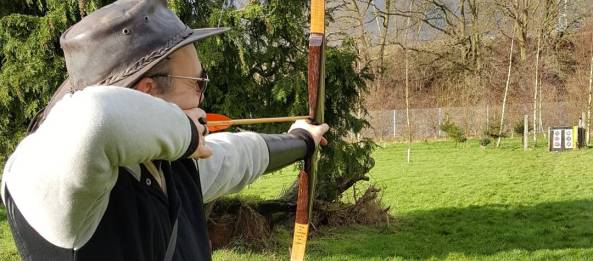
Allow me to explain, when you get to shoot the 3rd arrow draw up as normal, anchor, settle aim and at the point you would normally release the string, don’t.
Instead draw down, go back to your ready position. Take you hand off the string and relax. Take a couple of breaths and then draw up and if it feels right take the shot. So why do this?
Well it starts to condition your mind into that mind set that when you draw up it does not mean you will have to always take the shot. Effectively retraining your brain.
This may sound strange but builds your muscle memory and gets your confidence, it helps to make you realise that you don’t always have to take the shot. It goes a long way to improve your control.
Don’t get me wrong as it won’t be easy. There are times you draw up and feel perfect, but if it is your third arrow come down and do it again. You might draw up 2 ,3, 4 or more times but over time you will get used to the feel and not let it effect you.
Try to remember just because you draw back doesn’t mean you have to take the shot.
It is a hard lesson to learn, but when it works and it will with practise, it feels great. It feels like you have retaken control of the shot and your archery.
Try the technique and let me know if it works for you or if you have something else that works. I sincerely hope this has helped, please let me know what you think.
As always Thanks for reading.