How do you track your progress

In this episode (episode 130) of the podcast, I do my best to answer a question from a follower. The question is about how you go about tracking your progress and monitoring your improvement in archery over time.

I break the process down into tracking progress when shooting at your home club grounds and when you venture out onto competitions. It’s a tactic I have used for several years and the process works well.

I’m not going to be giving advice on how you improve your archery in this episode, it’s solely about tracking your progress.

Home club

The difficulty with shooting the same course is you don’t always focus in the same way, you can become a little complacent resulting in a lack of focus in the same way. I’ve used this phrase in the past ” You learn to shoot the coach and targets, you don’t learn to read the shot.”

In NFAS the goal is to shoot as few arrows as possible when at a competition, as your first arrow will score the highest being 24 pts / 20 pts / 16 pts. If you take a second arrow this will score 14 pts / 10 pts, with a third arrow scoring 8 pts or 4 pts. Remember in the most commonly used course round in NFAS, the Big game round you only get to shoot a max of 3 arrows. If you miss with the third and final arrow you blank the target i.e. score 0 points.

There are other rounds but the Big Game round is by far the most commonly used.

The first thing you will be wanting to track are the number of blanks you have when you are shooting. Chances are when you are starting out you will be getting quite a few of these. As I explained earlier a blank is when you shoot all 3 arrows but fail to score. You obviously want to try to reduce the number of blanks and over time as your skill improves you will, replacing them with a successful hit.

The next this you will want to track are the number of 3rd arrows which are scoring. Note down what you scored, was it a 4 or an 8. Ideally an 8 means you have learnt from the 2 previous misses, compensated and produced a good shot.

You also want to track the number of 2nd arrows and what you scored, was it a 10 pts or 14pts . A 14 normally means you have been able to correct you mistake or misjudgement, nailing it the second time.

The final step is to track the number of 1st arrows and what you scored, was it a 16, 20 or a 24. You goal is to increase the number of first shots that hit.

Over time you will see your arrow count reduce and scores gradually improve, but it may take time. So please be patient with yourself and kind to yourself. Its also worth noting any other variables, like different arrows, or if the weather such as strong winds or rain impacted your shooting.

At open competition

When you start going out to competitions you still want to continue to track your blanks, 1st, 2nd and 3rd arrows as a point of reference as this can indicate how things are progressing over time.

The other method of tracking progress is to identify a base line as a comparison. The thing to remember is that NFAS courses can vary greatly, this means no 36 or 40 target course can be identical to another. Even if you shoot the same clubs course on multiple occasions chances are there will be differences, whether that be 3d targets used, peg positions or even the weather.

Therefore, it’s a good tactic to identify someone act as a baseline. Ideally the person chosen should be someone who shoots consistently. Not like me who have good or bad days. If you can track their scores and compare it to yours you will be able to judge how challenging the course would have been.

Lets say the you scored 400 and your baseline person Mr Smith scored 600, a difference of 200. Next time you shoot you get 350 and Mr Smith gets 550, still a difference of 200 you know it was probably a more challenging course.

Then on the following course you score 500 and Mr Smith scored 600, you know you’ve probably improved.

I hope this helps and enjoy your archery.

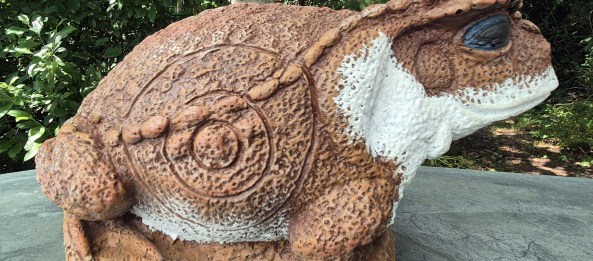
Episode 129 – Equipment Review – Wildcrete Cane Toad

We’ve been looking for group 4 3D target and I’d shot a Wildcrete cane toad at an NFAS shoot a few months back and thought it was worth investing in.

With the club having, recently bought this target from Merlin Archery( Please remember I’m not sponsored by Merlin in any way) I thought it about time to record this review on what it’s like and how well it stands up to being shot.

It was used at the clubs open NFAS shoot in July, with over 100 archers attending and trying to hit it. Overall, it worked really well, though light poundage kid bows struggled to penetrate it a couple of times due to the density of the foam.

My only criticism is the use of metal tubes rather than plastic as metal tubes are now friendly on arrows.

If you have found this useful, let me know. In the meantime, enjoy your shooting and as always thanks for listening, watching and supporting this site.

Episode 128 – Equipment review – Push Alpha pack quiver

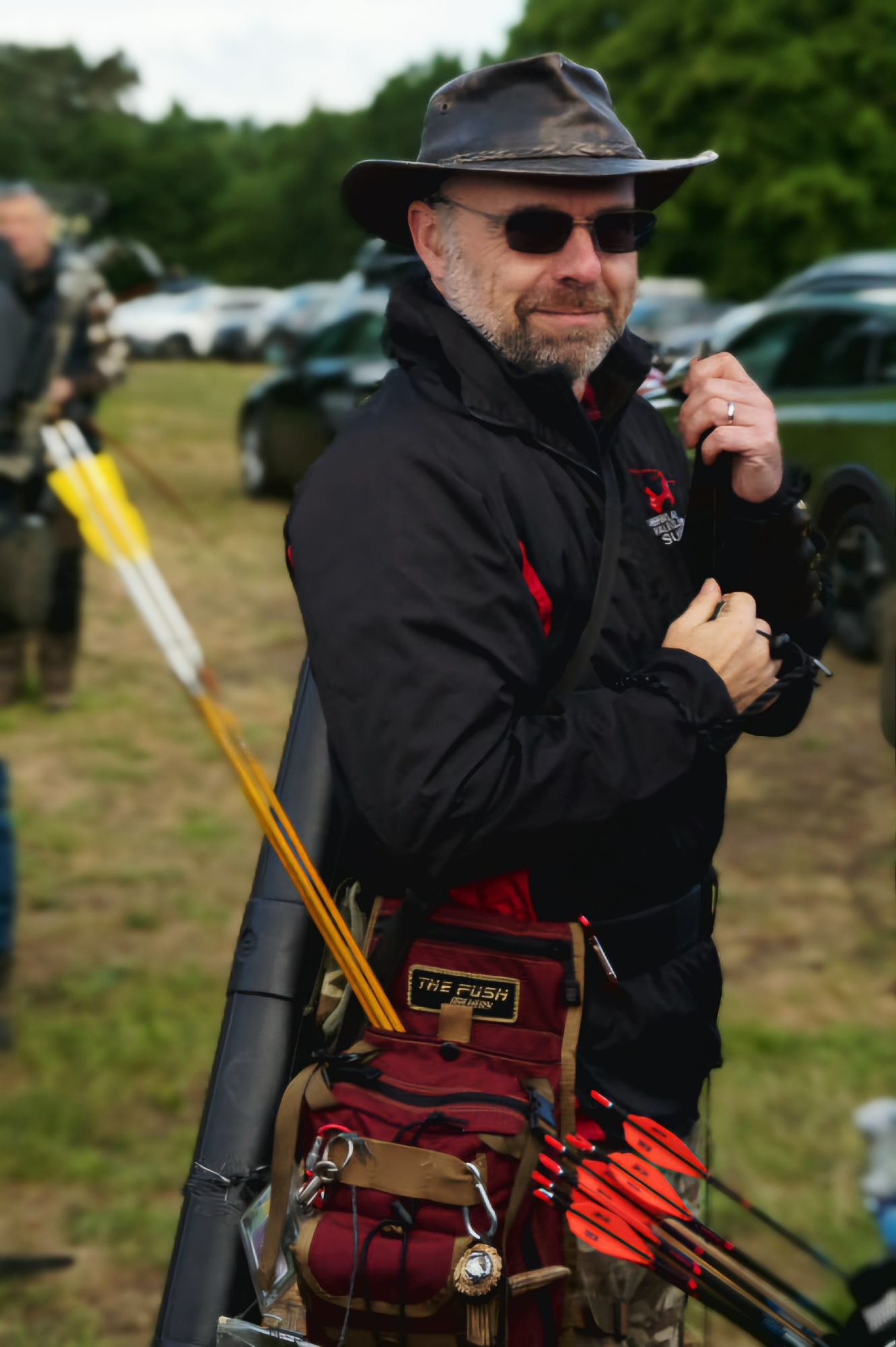
I know this is a review that many of my followers have been waiting for ever since I announced I had bought one of the Push Alpha packs a few months back. I said then I would do an honest review of the quiver and having used it now for several months I think I am in a position to do just that.  

You can read the full review below and check out the video.

Like many I have traditionally used a large leather field quiver for years and whilst it has worked well, it’s now showing its age. It’s been patched a few times where the stitching has gone and now the zip for main pouch is broken.  Whilst quivers like these are great for the number of arrows they can hold as well as looking good. The upside of the size is also a downside of the quiver, as it’s size and weight can make it quite tiring to carry over a full day or two of shooting a field course.

In contrast the Alpha pack is considerably lighter and appears quite small in comparison, but looks can prove deceiving.

So, what were my first impressions?

It is really well made, with strong double stitching throughout. It comes in a variety of colours, mine being red or wine I think is the official definition. I do love the colour (being Welsh that not surprising I like the red. If you don’t know the Welsh flag is a red dragon).

It’s worth noting there are some similar quivers on the market and I know a few people who have modified motorcycle leg pouches to do a similar job. This would imply that the core design must work well and based on my experiences with the Alpha pack I have to agree.

Second thing I noticed was how much it can hold. I was surprised at how much the pack can carry considering how small it appeared. It can carry lots without you feeling encumbered.

One concern I had was how well it would sit on the leg, but once you have adjusted your belt and leg strap it proved surprisingly comfortably.

Shooting at NFAS 3D championships

Another thing about the design is it’s very clever as it does not matter if you are a righthanded or lefthanded archer as you can wear it on the left or right leg easily. Unlike other quiver designs, you don’t have to have a left- or right-hand model.

One thing I have not been able to test is its waterproofness. I can’t testify to how water proof or water resistant it is as the UK has been encountering a warmer and dryer Spring and Summer, with temperatures in the high 20s and low 30s and little if no rain to speak of for several weeks.

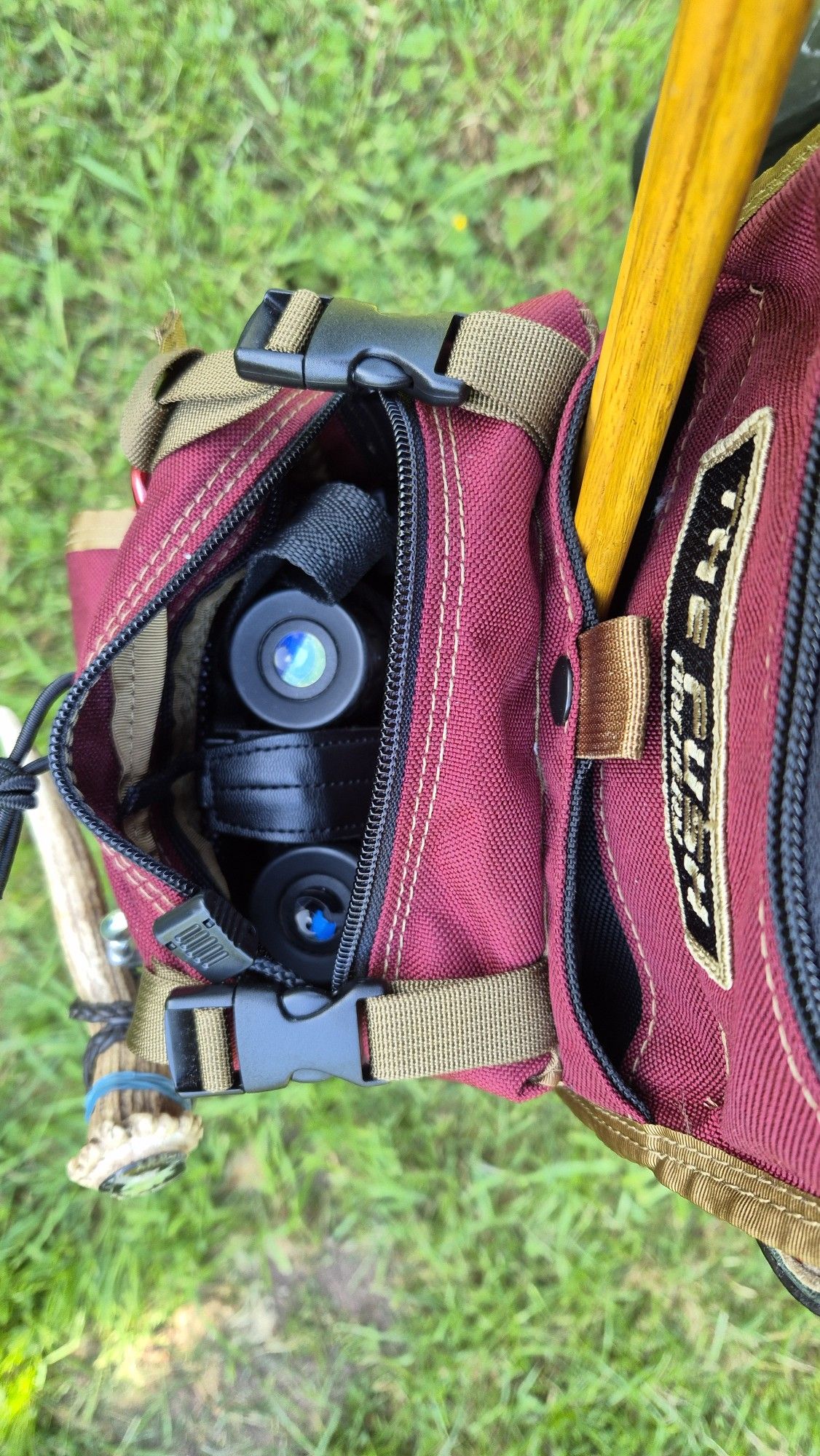
Quiver fully open
Quiver fully open

I like the fact I can open the quiver up completely. Inside there is one large zip net pouch and 2 smaller pouches. You might notice a green box in the video as this is curtesy of one of my club members Sam, who has made a 3D printed box that fits perfectly in one of the smaller pouches. In this box I keep spare points, string etc. I’ll do a review of these boxes later, as he has created several boxes of different sizes that work incredibly well.

2 smaller inner pouches

One thing I have taken to do is leaving the quiver open slightly so I can easily reach in and grab the binoculars if I need them. To ensure the zip doesn’t accidentally open further, I’ve looped the cord loops through the pack’s top straps. This prevents the zip moving.

One modification I am looking at is some form of flap to go over the back to cover the large zip opening and could be easily lifted or rolled up when not in use. As I said earlier I tend to leave the zip open for ease of access to my binoculars and want to ensure the content is kept dry.

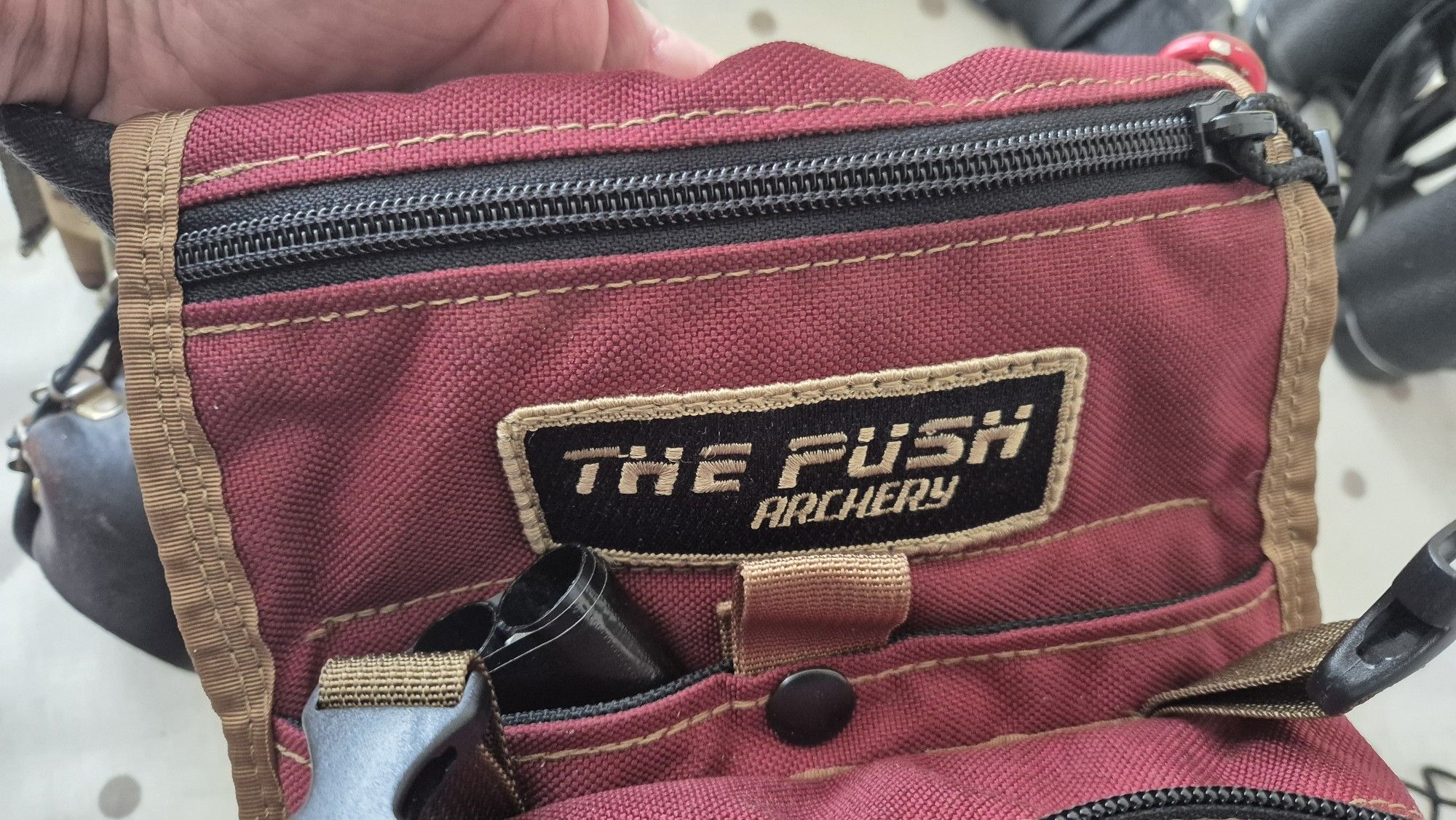
close up showing arrow tubes

I’ve made an arrow holder out of some plastic tubes, (shown in the above photo), so I can easily store my first, second and third arrow, it also makes it easier in selecting them.

I only carry the 3 arrows in the quiver, the rest are held in an arrow tube on my back as this keeps them out of the way and as I use feather fletching dry. I’ve used an arrow tube on my back for years. This isn’t to say the quiver can’t carry more arrows, as before I made the holding tubes I had 6 of the carbon legacy fit in. The only hassle was turning to pick the right arrow in sequence.

How does it cope in the field and woods?

Simple answer is really, really well. Once you have the leg strap adjusted to you, it sits really well and is comfortable on your leg and waist. Being quite a short quiver compared to my old one it doesn’t catch on undergrowth while walking round through the wood.

The only downside I’ve found is if I find any missing arrows or if collecting them the target for the rest of the group, I have to hold them in my hand as don’t fit easier in quiver, partly due to me fitting the narrow tubes in the quiver that only hold one 11/32 wooden shaft in each. That’s not a fault of the quiver design.

Price and shipping

I will be honest I was nervous about spending that much on a quiver I had not been able to get my hands on physically to look at and try on, but it was to be a present to myself following redundancy. It retails for £109 on the Push site plus postage.

From ordering it online from the Push store to it arriving, took only 10 days, yes 10 days to get across the Atlantic and to my door, which I was really impressed with, especially when you consider there was a UK public holiday included in the midst of this. I’ve had packages from the UK take longer.

In summary what would I say of the Alpha pack?

One thing I am a little disappointed in is I’ve not had the 10% increase in accuracy that Maddy on Instagram assured me would come with the Alpha pack. Then again maybe I just need a bit more time with it and a lot more practice. All joking aside let’s carry on with the review.

It’s fair to say I hate it, plain and simple. Why?  It’s a love hate relationship, as I both hate it and love it at the same time. Well I don’t truly hate the quiver, I hate the fact I didn’t buy one far earlier in my archery career.

For the same reason I love having it and using it. It works really well for me and in my view and experience so far it is well worth the money. So it is most definitely a more Love than hate relationship.

Would I recommend it to other field archers?

YES, I would definitely. I’ve had several club members ask what my opinion is on it and I have to say it’s great. The build quality is excellent and it stores loads, while remaining comfortable to wear.

I feel I must give it a 10 out of 10 based on my experiences so far.

The other thing is I feel proud to wear it. This may seem strange thing to say about a quiver, but The Push podcasts and material they have produced over the years has been a huge help to me both as an archer and coach. By buying this not only have I got a great quiver, but I’ve also been able to help them continue producing material for the trad community both in the USA and here in the UK. Thanks

As always thanks for reading.