Some thoughts on the first bits and pieces a new archer should buy

Quick break from my series on target panic to revisit a topic which I think will be of interest to many.

Several years ago I wrote a post offering advice on what equipment newbies should consider purchasing, before buying their first bow. Since I have been working with several new archers in the recent months I thought it a good time to revisit this post and update it where necessary.

As a coach I often get asked by my students about buying a bow. How much do they cost? What should I got for?  Where do you recommend I go?  I’ve seen one on E-Bay is it any good? I always reply by saying wait a few weeks or even a couple of months before you buy one. In that time use the club equipment for until you have a better idea of what is suitable for you.
But sooner or later your students will want to purchase their own bow (which is great don’t get me wrong) but there are a few things that might be worth getting first. So I have put this post together to offer some thoughts.

First things for any new archer to buy (before a bow) should be
Whistle – What a whistle? What’s that got to do with archery? Well put simply it’s for safety calls and is a necessity for insurance on some club sites including ours. All members of the NFAS should have a whistle on them so they can signal if necessary.

A tab or glove of their own. Normally I recommend a beginner starts with using a tab to protect their fingers. As they progress I have them trying both a tab and glove, along with trying different sizes and shapes until they find something they prefer. Recently I’ve found several students opting for a glove which I think is partly due to the colder weather.

This is the single thickness tab

This is the single thickness tab


Personally I think a tab is best, though it took me ages to find one that I was completely comfortable with. I feel tabs are easier on their fingers and promotes good finger position on the string.

Quiver, you can pay a small fortune for some quivers, but when you are starting out go for something simple. So long as it will hold 4-6 arrows and is comfortable to carry on your belt it’s a winner. Quick note about back quivers here. I’ve tried back quivers, several in fact and never found one I was happy with so have stuck with a field quiver. I know some people  love them but for your first quiver, keep it simple.

simple quiver image

simple quiver

Some quivers will have a pocket or pouch on them which can very be useful for holder a whistle, stringer, spare string.

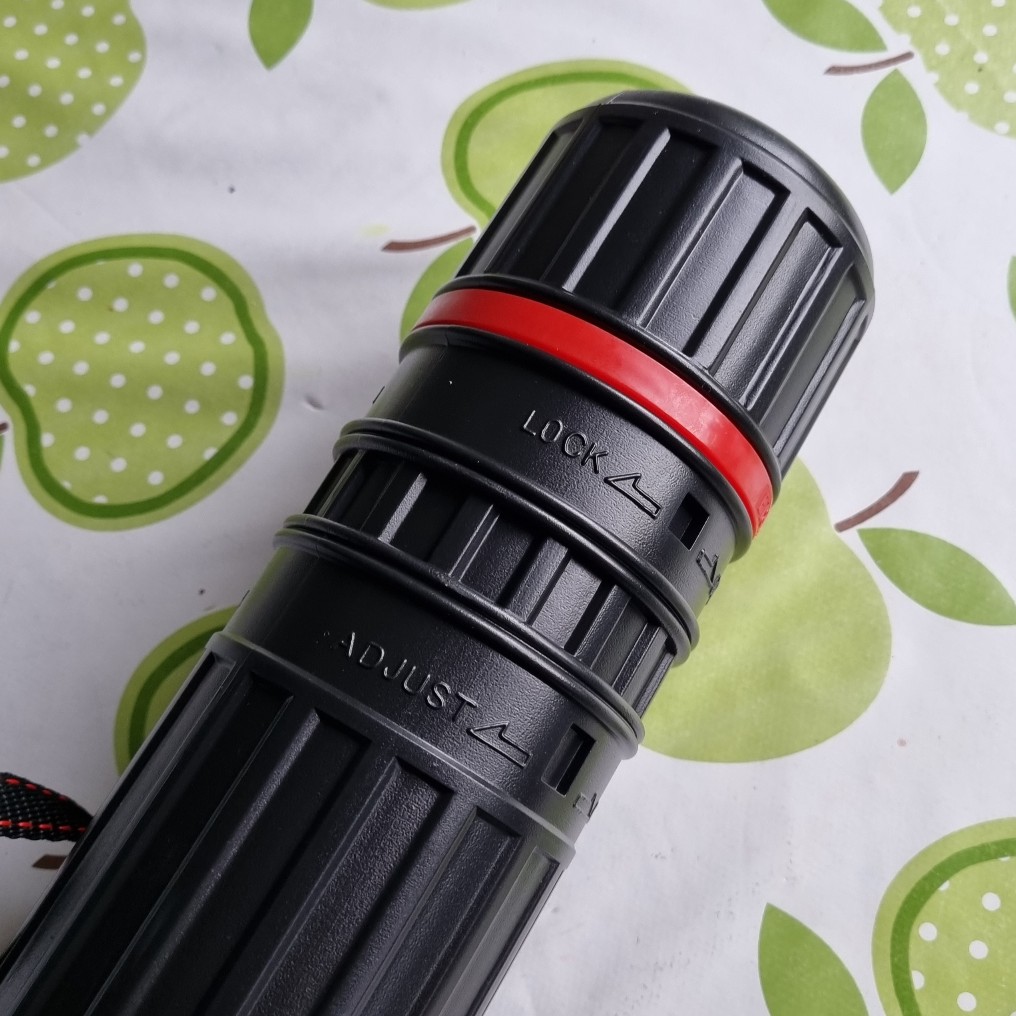
Top Top – pick up an arrow tube to store arrows when not in quiver. I carry 3 or 4 arrows in my quiver and the rest are in an arrow tube on my back. Safe, dry and there if I need them. You can use an extendable poster tube, which are cheaper, just make sure you drop some foam in the bottom of the tube to protect it and stop arrows puncturing the plastic. 

Rob trying to judge distance to a shot

Rob trying to judge distance to a shot

An arm bracer or arm guard that fits. What I mean is it doesn’t fall down the arm or is so tight it cuts off circulation to your arm. Like quivers there are loads of different designs, some that go all the way up the arm, others that only cover the forearm. Some are plain others are covered in intricate designs carved into the leather. At the end of the day function is more important, so get one that fits, works and you like.

Arrow puller, while not the most glamorous of archery elements they do makes life easier for drawing arrows, allowing you to grip the shaft more easily, especially on cold days.
Arrow rake – no matter how good you are, sooner or later you will be needing one for finding those arrows that fall short (a cheap decorating roller can be used, once modified for the purpose )

What kind of bow should I buy?

I will cover this in more detail in a separate post but what I will say is in my opinion for a first bow the most sensible option is the take down recurve practise bow.
They are relatively cheap (£55-£75 depending on where you get them), so if they don’t stick with the hobby it’s not such a huge investment. Also you might be able to pick one up from club member who has progressed. The advantage of a takedown is the limbs can be upgraded to heavier poundage as archer develop their strength and skill (I did this after a few months myself, with some shops giving a discount if you trade your old limbs in). Worth noting that not all limbs fit all bows, but I will go into more details in a future post about fittings and ILF bows (International Limb Fittings).
I have found the bows are forgiving to use which is what you want as a beginner.
Such bows come in a vast variety of sizes, shapes, poundage so good for all abilities, heights, draw lengths etc. so are easy to find one suitable for all shapes and sizes of archer.
As I said I will cover this in more details in the next post.

Thanks for reading

Equipment Review – Hawke 400 rangefinder

Those who follow me on Instagram will know I have recently bought a range finder.
Now many of you might think this a strange thing for someone who has always said they are an instinctive archer at heart. Why purchase one if you don’t gap or use sights? Also why buy one when the NFAS is the home of unmarked distances?
Well this purchase is more to do with course laying than my own shooting.

I have found that when you are setting a course, whether 3D or using bosses it is beneficial to be able to range each shot accurately. This helps to both ensure a good mix of distances but also aids safety, as you can use it to check distances of overshoots etc.

Having done some research or rather that should read lots of research on numerous Google searches and a few postings on different sites asking for advise and guidance I was pretty sure of a couple of things.
The mix of different options was huge.

The prices ranged from £50 to £300 plus

I was fortunate to have a couple of fellow archers who were kind enough to lend me theirs to have a play with and the entry level ones seem to work pretty well. Quite often archers will use a golf range finder as opposed to one designed for shooting, as shooting ones tend to range over hundreds of yards at times.

I also popped down to our local gun shop to ask their advice and to see what options they had. (Shooting Supplies Limited http://shootingsuppliesltd.co.uk/ ) I have to say they incredibly helpful going through the different options and what’s available, along with practical advice, thanks guys.

I ended up buying a Hawke 400 from the shop in question and it was a choice between the Hunter and Professional unit. As it was I went for the Professional in the end as it was only slightly more expensive and offered a couple of features I thought might prove useful, more on these later.

Taken from the Hawke website

First impressions are very positive

The unit is light and easy to carry, though the only criticism I have so far is the carrying pouch which is a little small, making it difficult to stow and retrieve easily. I have managed to get the lanyard caught in the pouch zipper a couple of times. The unit measures approximately 3 inches high x 4.5 inches long and 2 inches thick so small enough to store in my jacket pocket.

The unit can be set for measuring in yards or metres, through the instructions don’t explain how to change between them. I had to Google it.! Where would we be without Google. Maybe including this in the user manual and if it is already then making it more obvious for fools like me.
Clarity through the viewfinder is pretty good making it fairly easy to locate targets. It has a x6 magnification through the unit and ways only 180g / 6.3oz so nothing really. Full manufactures breakdown can be found here https://uk.hawkeoptics.com/laser-range-finder-pro-400.html
Like many range finders the unit displays details through the viewfinder such as yardage. this is shown in black text over the image so it’s a little hard to view with a dark background.
I am yet to check the accuracy against a measured distances. Distances I have used it on so far are from 5 yards to 90, but I need to check the calibration.

Update – I have now tried this on my range finding it very useful and more importantly accurate. Distance wise it matches the long measuring tape I have and the marked distances on my range, which is 40 yards, however if I factor in my garden I can easily got back over 60 yards and I’ve tested it at this distance too.
One thing that this unit has already helped me with is the judgement on height difference. I knew the range was on a slight incline and with the Pro 400 I have bene able to identify the incline over 20 / 40 / 60 yards.
Hawke state there is +/- 1 m and I think that is true as I have found ranging in on the top of the boss and then at the bottom can sometimes give a difference of a yard.

The different modes are described by the manufacturer as

“Beeline mode measures the horizontal distance to a target.

Height mode measures how high the target is in relation to the range finder.
Angle mode measures the angle of projection. It will be measured to the nearest half a degree.”
One feature the unit offers over the Hunter is in giving you the angle to target. This was one of the reasons I went for the Professional over the Hunter. I wanted to know the elevation to or from targets to the shooting peg, something that I felt would be very useful if you are setting shots on hillsides or across dips and valleys.

Having used this now to range in targets on uneven terrain I can confirm it is very helpful when setting shots or for your own shooting. The only thing I have not tried is using it in wet weather so I can’t testify to how water resistant or accurate it is on a rainy day, though knowing the UK I expect this will be tested at sometime in the summer.

Overall I think it is a great bit of kit, useful for all archers who want to improve their distance judgement or like myself want to continue to develop their skills in course laying. I’d give it a 9.5 out of 10. The only reason it’s not a 10 is the pouch and I haven’t tried it in the rain.

Thanks for reading.
Bit dark, but purple shaft with bat wing fletching

Equipment review – Batwing feather fletchings

Rob Shooting

Rob Shooting

Okay, so for the past several months I have been trying out a new flethching profile on my arrow set up. In the past I have always stuck with the shield profile, with Sharon preferring a parabolic profile on her arrows. I feel that a lot of the time it is personal preference, but I’ve found a 4 or 5 inch shield to work well on my flatbows and a 3 inch has always been my preferred choice on my recurves.

These new fletching are a completely different profile called Batwing and being produced by Gateway (https://www.gatewayfeathers.com/ ). So would they prove to be a Joker in the deck or a hidden ace? Sorry had to include some kind of Batman related joke. You can partly blame Sharon for the joke as she’s nicknamed this batch of arrows the Jokers due to the colour scheme resemblimg the colours of the Jokers suit from Batman. Then again it might be nothing to do with colours and more to do with how I shoot them.

So why those colours?  Well I went with bright yellow fletchings and green nocks in the hope I would be able to see them in the target against the purple cresting.

Batwing fletching

Batwing fletching

The purple was partly because of it being club colours and a follow on from testing out the paints Lee had provided me for the Goblin Snot paint review a few months back. If you haven’t seen the review I was quite impressed by the paints.

Back to this review, the fletschings come in three sizes, 2 inch, 3 ½ inch and 4 ½ inch. Though I have all three sizes I’ve only tried out the latter two sizes on my flatbow. Of these two, I found that for my flatbow setup the 4 ½ inch have proved best. I know a couple of compound archers have tried the smaller size on their arrows with some success too.

For reference I normally shoot a 5 inch shield fletching. Whilst the 3 ½ worked ok, I found that they weren’t as forgiving when I had a poor release.

I’ve found the 4 1/2 inch offer stability in flight which is comparable to the larger five inch fletchings.

As I know some of you will be wondering about arrows speed and having put the arrows through a chrono the arrows are coming in at 176-180 Feet Per Second. That may not sound very fast but remember I’m not shooting carbon arrows, but wood ones. For those interested the arrows weigh between 455 and 465 grains, with a 80 grain pile up front and measuring 29 ½ inches being made from port orford cedar.

I wanted to wait before writing up this review so I could test them in a variety of conditions, which I think I have now managed. For those of you who shoot field, you know what it can be like shooting in a wood with variable cross winds between trees. One thing I have noticed with shooting these over the last few months  is they don’t appear to be as adversely affected by wind as my previous choice of five inch shield.

Wet weather, yes it is something that we as field archers have to encounter and despite having one of the warmest and driest summers on record in the UK we did get some rainy days. Wet weather has a huge effect on feather fletchings, often resulting in the feathers profile flattening down and offering very little stability. I was curious to see how these would cope in wet weather and whether the shape would make a difference. I have to report they don’t appear to have the same problem as normal shield that collapse and flatten.

I was a bit worried that their shape might result in them not coping with the occasional foray into the undergrowth which can happen when I miss the target, but so far so good. They don’t seem to have a problem with returning

I bought mine from Merlin Archery in Loughborough

https://www.youtube.com/watch?v=sgYQlcB7yww

So overall I think they work pretty well and look quite cool too.

Thanks for reading.