Making and doing archery madness

I firmly believe that a successful club is more than just a field or wood and group of people who shoot there.
A good club supports its members, nurturing and developing their skills and interests. I believe it should also be somewhat of a social gathering.

It is very easy for a newbie archer to get lost and confused with friendly offers of advice or to be too nervous or embarrassed to ask for help. Ideally you want new members to be intimidated as little as possible but not everyone has the confidence to ask questions or seek advice.

Learn from the past
Many years ago, I was a member of the Black Arrow club in Derby. In fact it was the  first ever archery club we joined. Kevin the club chairman and Cherrie the Secretary organised a making and doing session for all the new members who had joined. It gave all present the opportunity to learn the basics of arrow making, string making and how to serve strings. It proved a great success being both instructional and social with Cherrie and Pete (her partner) providing food for all.
Over the Christmas holiday of 2014 Sharon and I organised a similar event at our house, with the objective of giving a few of the newbies some guidance on making or repairing arrows and a variety of other topics.
It proved to be a very sociable afternoon  and evening, helped by the contributions of everyone who came and Sharon’s expert cooking. Yes, not only is she a cracking shot but also a great cook.

Nigel showing his expertise on straightening wooden arrows.

Nigel showing his expertise on straightening wooden arrows.

We covered topics of how to make wooden arrows including fletching arrows, attaching piles and nocks. Having a number of experienced archers there proved really useful as each explained how their technique was slightly different from each other enabling a great spectrum of knowledge to be displayed and discussed.  The discussion on whether to varnish the arrow prior to fletching or fletch then varnish was one hotly debated topic. An equally debated topic was the merits of different glues for attaching piles to wooden shafts with some preferring  hot melt over epoxy glues. All the advice and comments were provided freely and in a relaxed atmosphere.
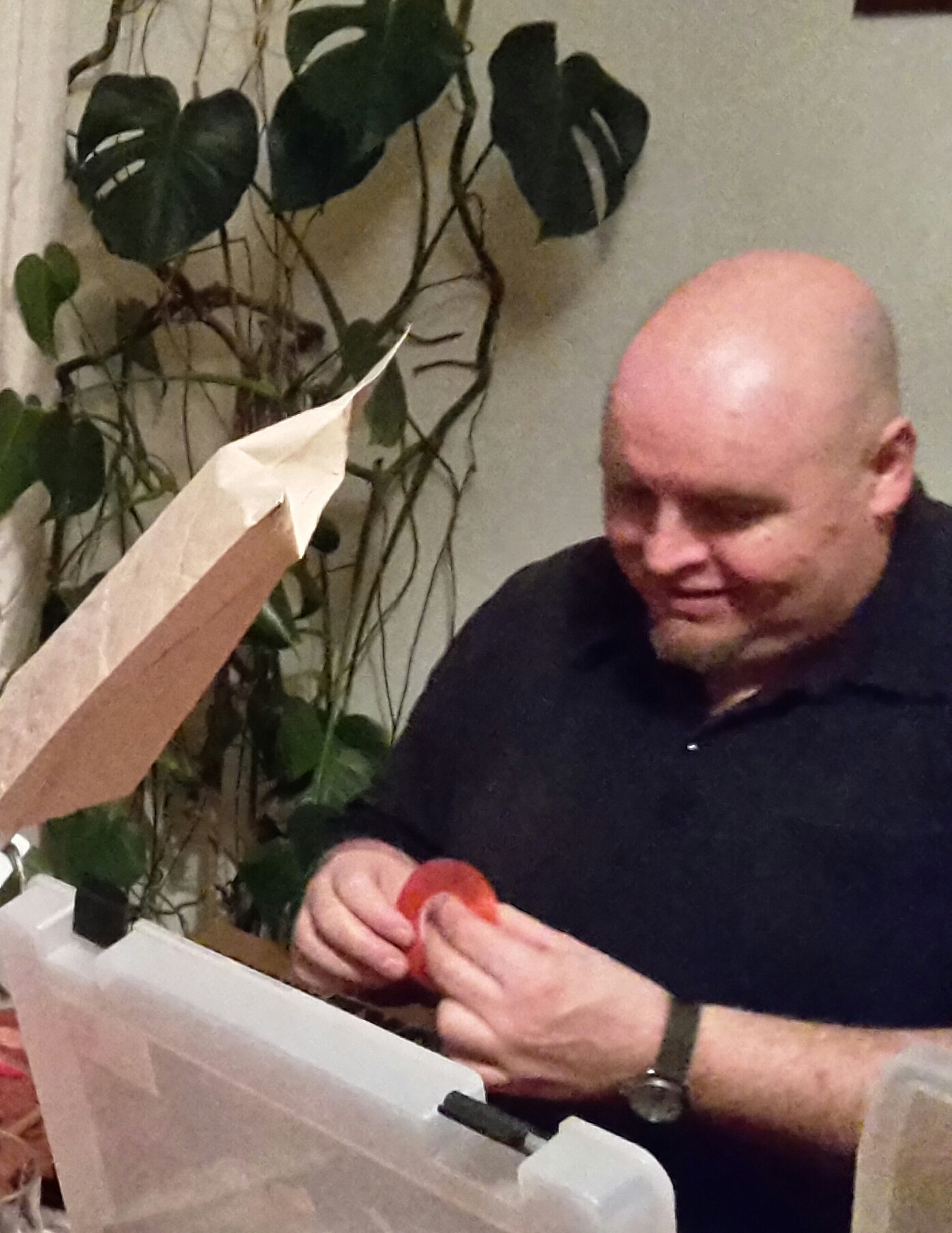
Jason showing how to use fletching tape

Jason showing how to use fletching tape

Whilst arrow making was going on in one room, arrow straightening of aluminium arrows using our straightening jig was being demonstrated in another. There was also just enough space to demonstrate applying serving to a bow string.

Discussions went on long into the night on different techniques and it was a very sociable evening. Our thanks to all who contributed their time and advice.

Greta making her first arrows

Greta making her first arrows

With everyone at the wood the following day even more discussions took place, this time with archers showing off their arrows they had made previously and again citing the merits of varnishing first or other such topics.

So if you have the opportunity to run something similar to this at your club go for it. It doesn’t take much planning and benefits can be huge.

Thanks for reading and to all those that attended. Special thanks to Kevin and Cherrie who set the bar so high all those years ago.
Oh, Kevin if you are reading this remember the glue.

What you see is what you hit?

First view from Red peg

First view from Red peg

In the NFAS archers are not allowed to use any spotting scopes or binoculars before or after they have shot. Some classes are allowed sights on their bows but no binoculars or spotting scopes.
In the upcoming AGM this is going to be discussed as there is a proposal for sighted classes to be allowed to use binos but lose the option of target cards (small book showing target faces which they allowed to review prior to shooting).
The topic is being hotly debated in club houses, forums and on the Facebook site by some so I thought it worth putting a few views across and invite readers thoughts.

Firstly some brief history

To my knowledge binoculars have never been allowed as an aid to the archer. Marshalls have used them when assisting on a course but not the archers.
A few years ago there had been a similar proposal put forward to the membership to allow binos for all classes. The membership voted against this following some very vocal and active negative campaigning run by some members who opposed the idea. I was one of the cosigners on this proposal as I believed the issue had been discussed and argued so many times I thought it fair for the membership to decide.
Now it has been proposed for only the sighted archers classes (crossbow compound limited, unlimited and freestyle) Only those that shoot these classes can vote on the proposal as it affects their style and it is therefore a style rule change and not a general rule change. So it’s not an open vote for all members this time.

Back to the main topic of this post. I’m going to try and give a positive and negative perspective for each argument so here goes. Jump in and have your say by all means.

Why do some not want binos?

Concerns about their use slowing down the day as there is a belief by some that archers will want to check each arrow and spend time analysing it before taking their next shot.
The counter argument to this could be that it might speed the day as archers wouldn’t have to shoot a second or third arrow if they could identify they were in with an earlier arrow.

Range finding

There have been comments on how binos can be used for range finding. In the NFAS archers shoot over unmarked distances with any use of range finding technology being against the rules.
An archer I know uses his thumb to judge distances to target hopefully they won’t want to chop his thumb off ☺(yes that is an attempt at humour)

Know your target

There is an argument that archers should learn the faces and 3ds, memorising the scoring zones of each.
Well there are a lot of faces on the market with more appearing constantly with some clubs drawing on or highlighting specific ones. This means what might be used in one shoot could be different on the next, especially a factor when it comes to repaired 3D targets.

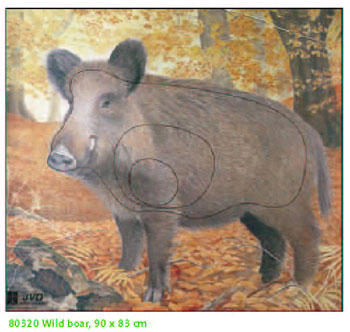
This is the target face from the earlier picture.

JVD Boar

JVD Boar

Animals in the wild don’t have scoring zones

Some say that animals don’t have scoring zones on when hunting so why should they be easily identified for archery targets ?
Archers would traditionally have to have learned where to aim and yes that might be true but wouldn’t these same newbie hunters be taught by experienced archers and told where to aim?

Just for fun

Some say they shoot for fun and don’t need to know where the 24s are, fair enough.
I’ve heard others say that because they shoot traditional or wooden arrows it doesn’t matter. Well I shoot traditional with wooden arrows and I still like to know what I’m shooting at and where to aim for on the target and know others who feel the same.

As it is this proposal is only for sighted classes so wouldn’t affect me.

So let’s hear what you think?
Thanks for reading.