Firstly a huge thank you to all who have offered feedback on the first shooting style video. Taking onboard this feedback I’ve produced another video on an NFAS shooting style. This time it focusses on Barebow class.
You might recall back in November I released the first of these on Traditional Bowhunter
If you enjoy the content, please hit the Like button and consider subscribing to the channel.
Most of all remember to enjoy your shooting and as always thanks for listening, watching and supporting.
As always thanks for reading, listening and support this site. Enjoy your archery.
I have a very special guest in this episode of the podcast. I am delighted to have Oliver Lewis the owner of Hemlock Archery.
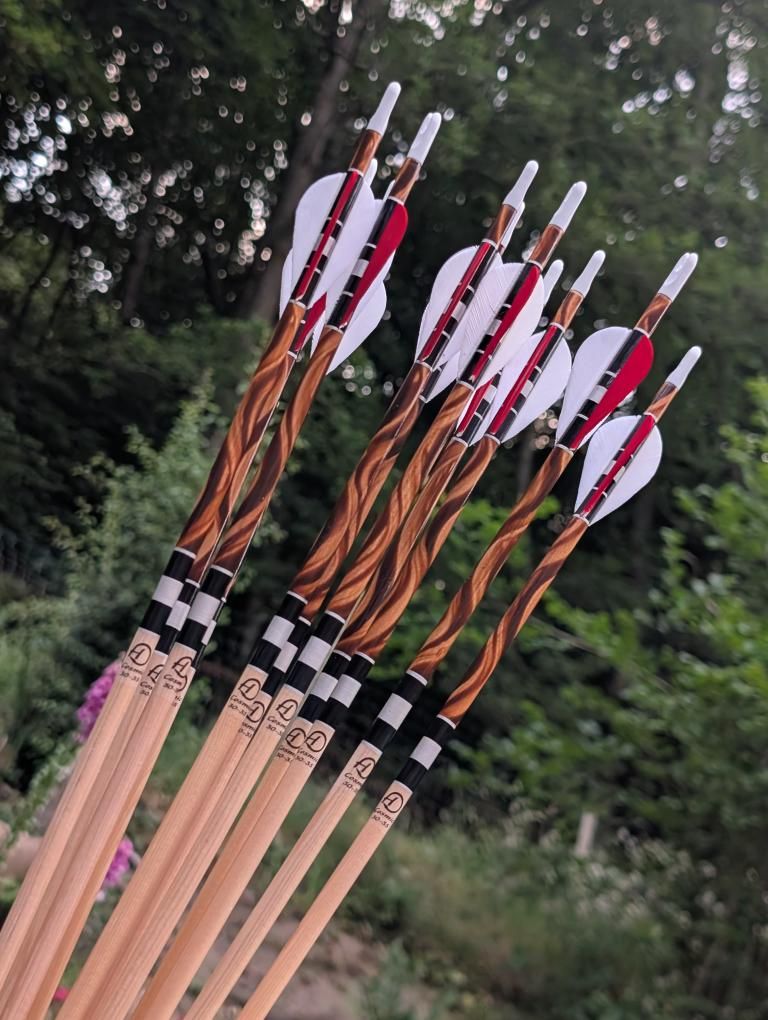
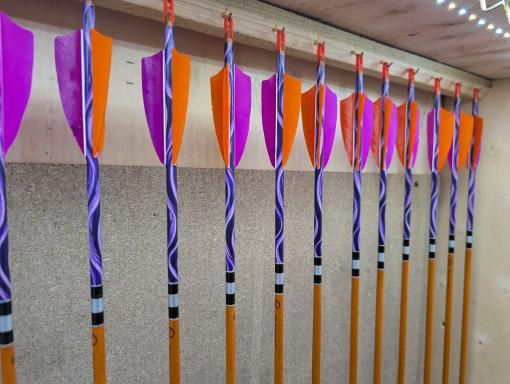
For those of you who don’t know of Hemlock Archery, they are a UK based business selling a variety of archery related products but most noticeably Hemlock wooden arrows.
In the episode we talk about topics from, how it all started, to why Hemlock wood as his wood of choice for arrow shafts. With Oliver offering his top tip is for any wooden arrow shooting archery out there.
As always you can listen to the episode on Spotify or Amazon music
I suggest you take some time and check out Hemlock Archery website and see some of the amazing wooden arrows Oliver produces. They really are quite amazing and below you can see a small selection.
As always thanks for reading and I hope you enjoy the episode. I have a couple more guests lined up for future episodes.
In this episode (episode 130) of the podcast, I do my best to answer a question from a follower. The question is about how you go about tracking your progress and monitoring your improvement in archery over time.
I break the process down into tracking progress when shooting at your home club grounds and when you venture out onto competitions. It’s a tactic I have used for several years and the process works well.
I’m not going to be giving advice on how you improve your archery in this episode, it’s solely about tracking your progress.
Home club
The difficulty with shooting the same course is you don’t always focus in the same way, you can become a little complacent resulting in a lack of focus in the same way. I’ve used this phrase in the past ” You learn to shoot the coach and targets, you don’t learn to read the shot.”
In NFAS the goal is to shoot as few arrows as possible when at a competition, as your first arrow will score the highest being 24 pts / 20 pts / 16 pts. If you take a second arrow this will score 14 pts / 10 pts, with a third arrow scoring 8 pts or 4 pts. Remember in the most commonly used course round in NFAS, the Big game round you only get to shoot a max of 3 arrows. If you miss with the third and final arrow you blank the target i.e. score 0 points.
There are other rounds but the Big Game round is by far the most commonly used.
The first thing you will be wanting to track are the number of blanks you have when you are shooting. Chances are when you are starting out you will be getting quite a few of these. As I explained earlier a blank is when you shoot all 3 arrows but fail to score. You obviously want to try to reduce the number of blanks and over time as your skill improves you will, replacing them with a successful hit.
The next this you will want to track are the number of 3rd arrows which are scoring. Note down what you scored, was it a 4 or an 8. Ideally an 8 means you have learnt from the 2 previous misses, compensated and produced a good shot.
You also want to track the number of 2nd arrows and what you scored, was it a 10 pts or 14pts . A 14 normally means you have been able to correct you mistake or misjudgement, nailing it the second time.
The final step is to track the number of 1st arrows and what you scored, was it a 16, 20 or a 24. You goal is to increase the number of first shots that hit.
Over time you will see your arrow count reduce and scores gradually improve, but it may take time. So please be patient with yourself and kind to yourself. Its also worth noting any other variables, like different arrows, or if the weather such as strong winds or rain impacted your shooting.
At open competition
When you start going out to competitions you still want to continue to track your blanks, 1st, 2nd and 3rd arrows as a point of reference as this can indicate how things are progressing over time.
The other method of tracking progress is to identify a base line as a comparison. The thing to remember is that NFAS courses can vary greatly, this means no 36 or 40 target course can be identical to another. Even if you shoot the same clubs course on multiple occasions chances are there will be differences, whether that be 3d targets used, peg positions or even the weather.
Therefore, it’s a good tactic to identify someone act as a baseline. Ideally the person chosen should be someone who shoots consistently. Not like me who have good or bad days. If you can track their scores and compare it to yours you will be able to judge how challenging the course would have been.
Lets say the you scored 400 and your baseline person Mr Smith scored 600, a difference of 200. Next time you shoot you get 350 and Mr Smith gets 550, still a difference of 200 you know it was probably a more challenging course.
Then on the following course you score 500 and Mr Smith scored 600, you know you’ve probably improved.






 My Archery Experiences