What to do during winter months

First of all, Happy New year to all readers.

Okay, so the winter months are here, short days and long nights with not much chance of shooting.

If you are a gardener you could be reading seed catalogues for the next growing year, if you are a warm weather lover you could be looking at holiday brochures, but if you are an archer what do you do?

Well you could be practising indoors if you have the option and facilities.

or

You might be cross referencing the latest catalogues and internet sites to work out the best combination of carbon arrows for the bow (think this is the closest we get to checking seed catalogues). I know this is something Sharon is doing at present in her quest to find some carbon arrows for next season.

or

Something you might find useful to do is review targets?

What do I mean? Don’t they all look the same? After all a circular target is the same day in day out. Well yes, if you are shooting at a circular target.  But in the field archery I shoot you aren’t shooting circular targets. I’m shooting either 3D animal targets or animal paper faces.

How is it scored?

Well if you hit with your first arrow you can score 20 points for a kill shot and 16 points for wound (if you get an inner kit you score 24 points)

If you miss with your first arrow you are allowed to take another shot from the second peg.  If you hit, you can score 14 points for a kill shot and 10 points for wound (if you get an inner kit you score 14 points i.e. no difference now as the bonus points are only if you hit with first arrow).

If you miss with your second arrow you can take a third and final shot from the last peg. From there you can score 8 points for a kill shot and 4 points for wound (if you get an inner kit you score 8 points)
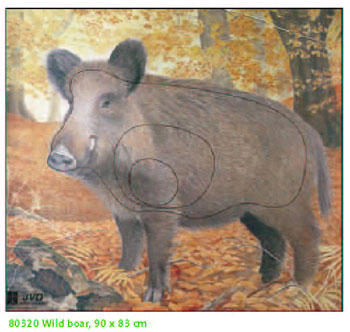
JVD Boar

JVD Boar

The image above shows clearly the 3 scoring zones. The outer most line is the wound line. The next in is the kill line and the smallest is the inner kill.

As you can see not all the animal scores on paper faces so if you hit a leg, you don’t get anything.

There are now hundreds of animal faces and 3D targets on the market (JVD, Martin, Delta and Maple Leaf to name a few)  and if a course is laid well you should never be faced with the same target face on a shoot.  Also new target faces are always arriving on the market,  Merlin Archery in the UK have recently produced some fantastic quality paper target faces.

Target face - merlin boar

Merlin Boar

Another good target they produce is their ram.

target face - merlin ram

Merlin Ram

The only downside I have found with these faces, is they tend to reflect light so be careful course layers and try to avoid putting them in direct sunlight. Think they are changing this in next batch.

The problem with having all these faces, is trying to remember them all and know where the key high scoring areas are. In the NFAS only a few bow classes can use memory aids  such as booklets of targets faces or phone apps. For the rest of us we have to try and remember.

I’ve lost track of how many different boar or deer faces are on the market at present. All slightly different in size and shape. Some are life size others are reduced.

Likewise there are hundreds of different 3D targets out there too.

3d javalina

3d Javalina

A good tip I have been given is to aim for the leg line when shooting a 3D target, as if you drop low you are still in the leg. Downside of this means you aren’t in the highest scoring areas, but at least you don’t blank the target.

3d Turkey

3d Turkey

Anyway it is something to do, whilst we wait for the longer days and the season to start

As always thanks for reading and good luck for 2013.

What arrows for beginner?

Early this week Sharon was asked by an archery friend what arrows she thought would be good for her brother. What an easy question to answer … NOT 😉

She asked me and my response was to suggest she found out some more information first

The type of arrow is dependent on numerous factors many of which I’ve covered but in short

  • Draw Length
  • Bow weight
  • Club rules
  • Bow Style – compound, recurve, longbow etc
  • Purpose – hunting/target/field etc

Shooting an arrow that is not matched to your draw length and poundage can be dangerous as it may snap under the pressure if the wrong poundage, or you might draw it off the arrow rest if too short. Beginners often find their draw length increases as they get more used to shooting, so make sure any arrows allow for this.

Likewise too light an arrow can damage your bow as there is insufficient strength and weight in the arrow to cope with the energy from the limbs, resulting in damaged limbs.

General rule of thumb is the longer the draw length and the heavier the bow draw weight you end up going for stronger arrows ie the numbers higher. This is explained best here, taken from the Easton Arrow site

The four-digit number refers to the outside diameter and wall thickness of the shaft. The first two numbers are the outside diameter in 64ths of an inch. The second two numbers are the wall thickness in thousands of an inch.

For example, a 2514 shaft would be 25/64th of an inch in diameter and .014 of an inch wall thickness. OD and wall thickness are the two variables in controlling spine for aluminum arrows.

http://www.eastonarchery.com/frequently-asked-questions

Quick point on club rules. Some clubs do not allow archers to use carbon arrows, others ban beginners from using them. Personally I am not a fan of beginners using carbon arrows simply because I prefer them to use alloys. Alloys are easier to find if lost, if they glance off a tree they might be slightly bent but can’t be straightened, they don’t break / shatter leaving carbon shards. This topic is covered in the recent stick and string podcast

For complete beginners I tend to use Easton Neo alloy shafts, they are 1618 and at full length 32 inches. They are great arrows for low poundage bows, up to about 24-26lb at 28″ above that they get a bit whippy.

Easton Neo

Easton Neo

Another good arrow for a slightly more experienced archer is the Easton Jazz.  They range from 14130  to 1916. I tend to find most beginners find the 1816 work well from their first bows that come in about 26lb-30lb.

Easton Jazz

Easton Jazz

Here is a link to Easton Arrows selection chart http://www.eastonarchery.com/uploads/files/52_target-sel-chart.pdf  this will help work out whats best for your bow.

As the archer progress good alloy arrows are the Easton x7  (think they are 1614 going from memory) which Sharon uses (recurve 38lbs and 26″, yes 26″ not 28″) and work well for the field archery we do. I’ve got some XX75 that are pretty robust too, but I tend to shoot wooden arrows more.

There are loads of really useful sites out there and a wealth of help in local clubs, so do a few searches and if you can try different arrows before you buy. Jordan Sequillion blog site covers this well as do others like Charlies

Please note I have no alliance or connection with any of the shops or manufacturers I mention here, other than being a customer. So I have no vested interest in this other that trying to help an offer my opinion.

I hope this is of interest and if you have any questions drop me a line. Always happy to help if I can. Thanks for reading.

Shoot report – Artemis October 2012

Artemis Shoot

Well it was a very tiring weekend but it was worth it.

Last weekend Sharon and I were camping in Derbyshire, helping at one of our old clubs (Artemis) in their annual shoot.

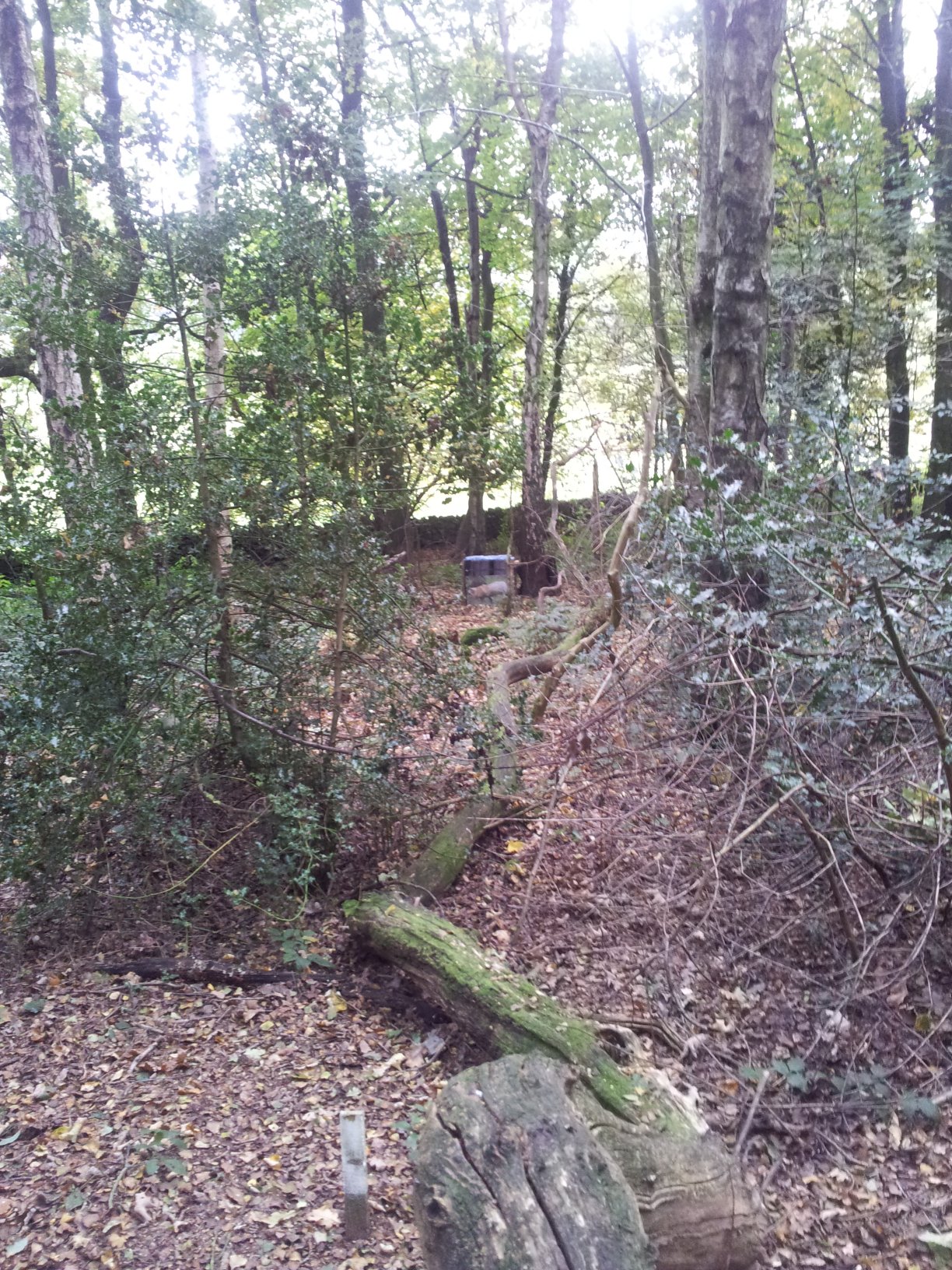
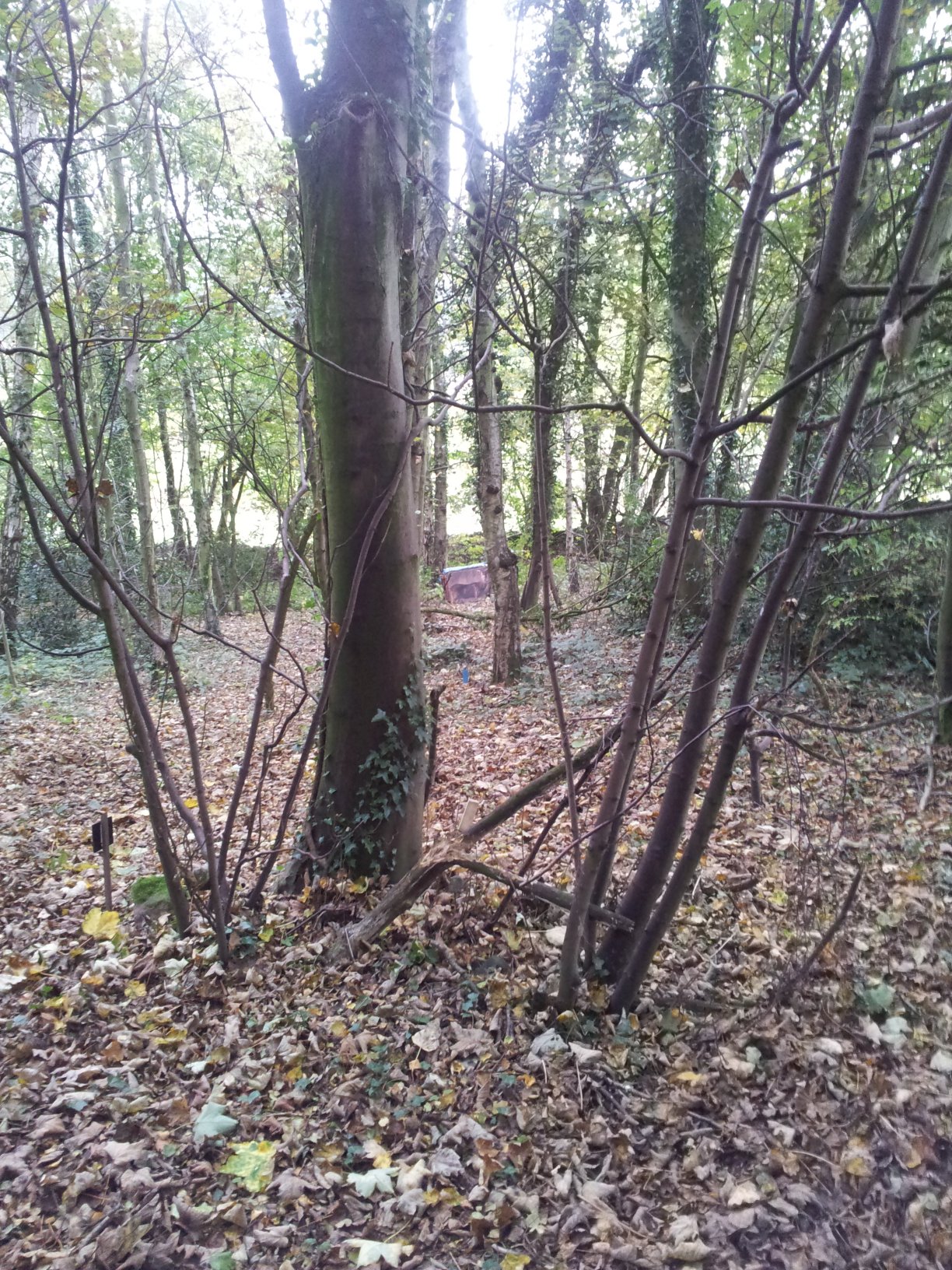
Artemis ground is in a large mixed leaf wooded hillside just outside Belper, with the course being made up of 36 targets. Due to the geography i.e. lots of rocks just under the leaf cover all but one target was a paper face.

Artemis is both an NFAS club and EFAA one, with a permanently set up EFAA course.

Setting up

Setting up the Artemis sign

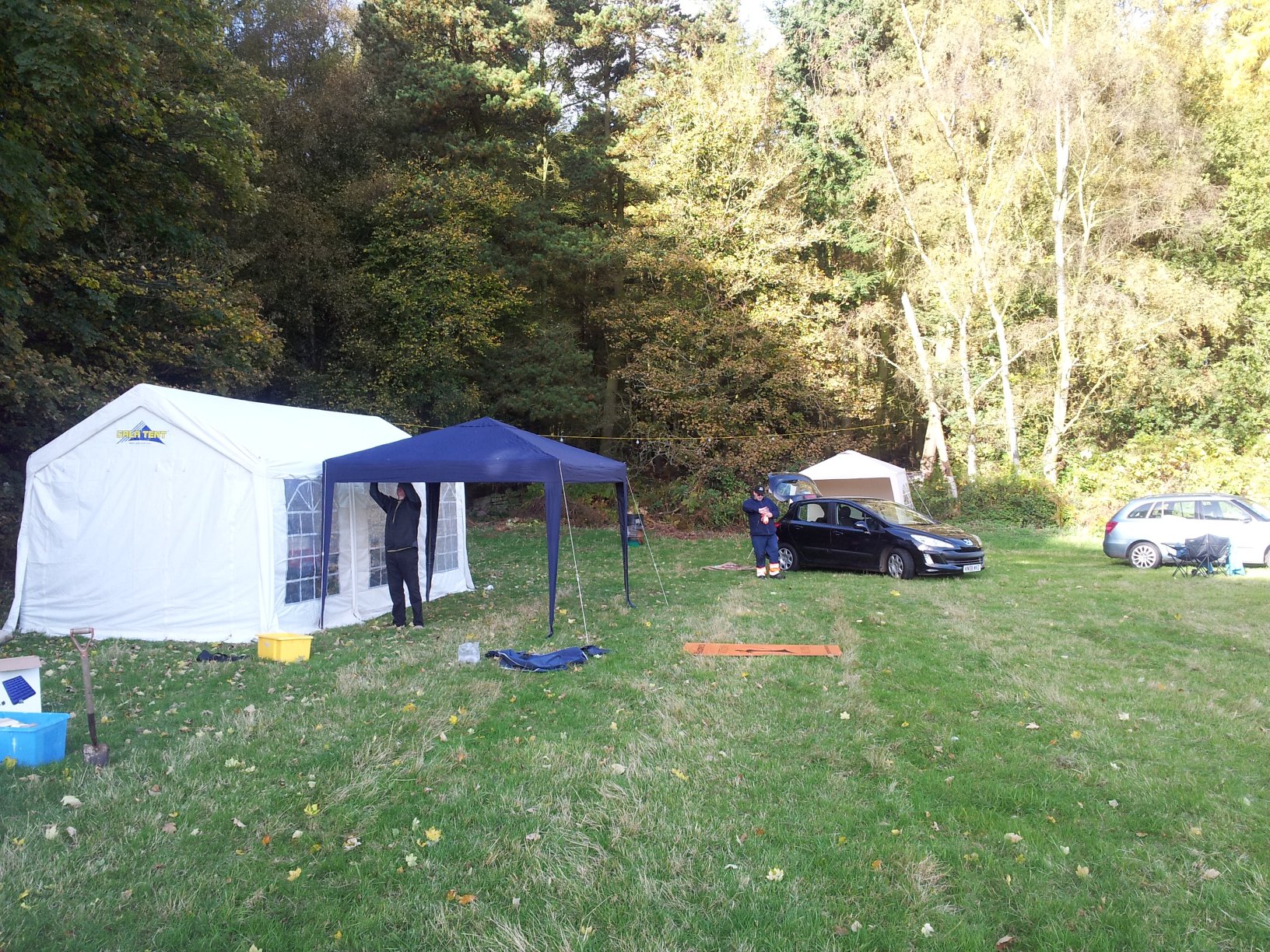
We arrived just after midday on Saturday, having been slightly delayed due to traffic and having to grab some batteries for the two-way radios.  The site was already very busy with people. The weather was clear, though there was a slight autumnal nip in the air. But most importantly it was dry which made finishing off the course, setting up tents and marquee much easier. A few of us were camping to provide security overnight on Saturday as sadly the site has seen vandalism and arson in the last few years.

Setting up for shoot

Setting up catering tent for shoot

As it was we enjoyed a moonlit night with clear skies, add to this was the campfire that kept the evening chill away, helped with an early supper in the form of some great fish and chips from local take away.

Whilst my fellow marshals enjoyed the warmth of the campfire I set off to patrol and am so glad I did. No, I didn’t find anybody, but I did hear something. So I settled myself down and waited.

As a child I used to go bird watching and knew that patience and silence would be key to spotting anything. I’d also positioned myself down wind and covered any visible flesh ( like many people who go hunting or wildlife watching, I knew exposed flesh would reflect in the moonlight). The result of all this patience was the opportunity to see a young badger trot in front of me, its stripped head reflecting in the moonlight. Sadly this was the only one I saw up close. Others I heard and only glimpsed from afar as they went about their nightly activity.

This is one of the things I love about field archery, it gives you the opportunity to see so much of the British countryside and sometimes wildlife.

After the encounter I headed back to my friends and settled down by the fire for a few hours before heading to bed. Sunday was going to be an early start and long day.

We were up by 7 am and patrolling again. Sadly, no sign of my 4 legged friends other than a few scrapes in the ground. Sharon dismantled the tent whilst I checked the first 18 targets putting the faces in place and ensuring no branches had come down overnight etc. there had been rain overnight and the forecast was predicting more in the afternoon.

Turkey shot

Turkey shot – target 10

Catering were up and running by the time I got back from patrolling, so I grabbed a quick bacon sandwich and it was time for a marshalling brief by Paul and Mark. Radios were issued, final checks and instructions issued to us where needed.

Then it was just enough time to take our marshalling gear up to our posts before doing the walk out with all the archers.

Paper face fox target

Paper face fox target

We had just over 120 archers on the day to shoot the course, a few had dropped out, I think due to the weather forecast.

Paper face deer through trees

Paper face deer through trees, think this was target 8

Unlike other shoots I had a static marshalling post at target 11, Sharon was covering targets 9-10.

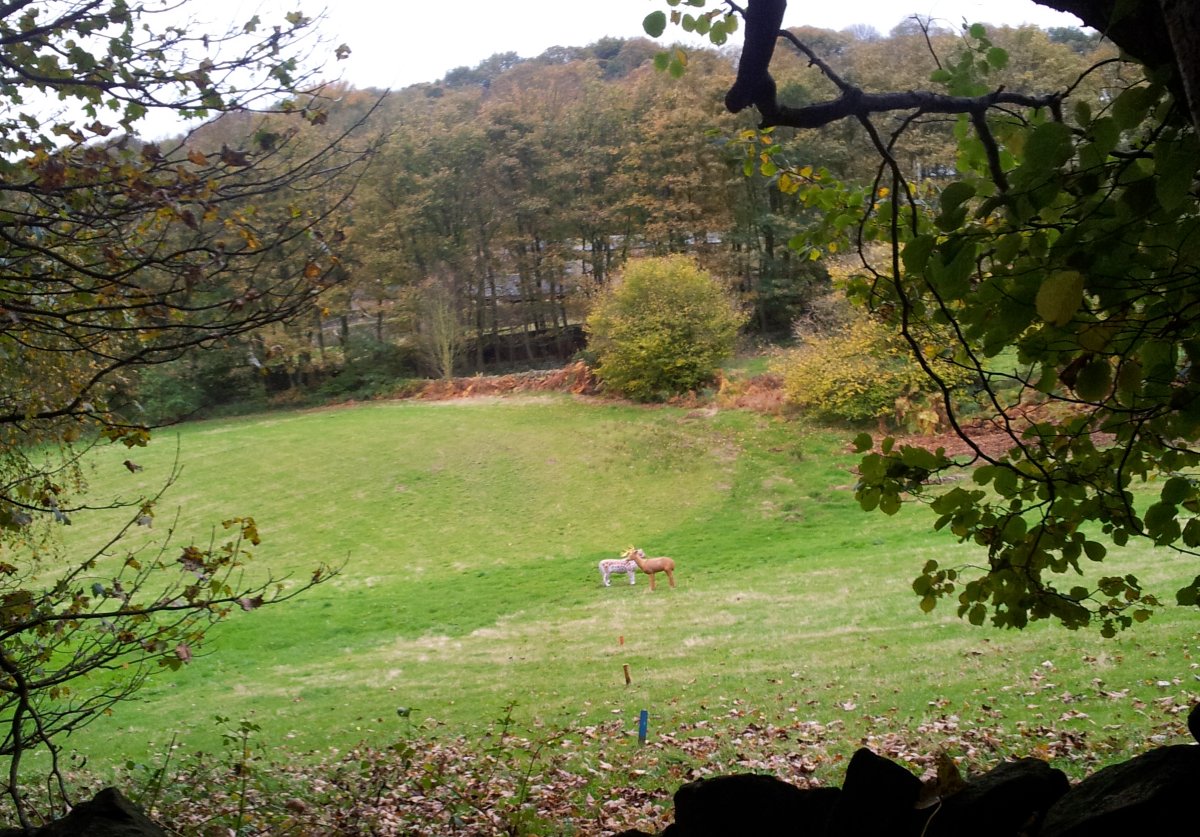
Target 11 was a  shot out of the woods, over a stone wall and into the field at a 3D deer or leopard (archers could choose which target they wanted to go for) The deer was slightly closer but smaller body, the cat about 4 feet further back but slightly larger.

3D target in field

3D target in field from red peg

There was much discussion between archers as which target they thought was easier. If you can judge distance well then the deer was closer and allowed for going for the leg line. If though you have a tendency of going offline (ie left ) then going for the cat was possibly a safer bet.

Those archers using scopes seem to struggle the most in the morning due to the contrast in light from inside wood and out. The weather also played a part as the wind picked up blowing across the targets after lunch. Well done Danny and the others for getting it, there weren’t many that hit it with first arrow.

This was the only 3D target on the course and we had to make sure we got all missing arrows in as the farmer was putting livestock into the field the following week.

3D target in field

3D target in field

It would be fair to say quite a few of the archers found this shot challenging. Judging the distance the targets were in the field wasn’t easy, with many going just over the top and burying their arrows into the ground.

Me at the target

Me at the target, before the rain came

Fortunately I’d brought my metal detector with me and this proved invaluable in finding arrows. Considering it was only a cheap model it managed to find the metal inserts in carbon arrows buried 2-3 inches into the ground. I’m glad to say that I found every missing arrow.

As predicted we had a light shower at about 12 and then the heavy rain came at about 3:30. As many of you know wet weather really affects archery, those using scopes struggle with water on the lens, traditional archers with feather fletching see their accuracy deteriorate, strings get wet and archers get cold.

Despite all the rain the feedback has been positive, and everyone got their cars off the field and away safely.

Who knows, maybe we will get to shoot it next time as we won’t be members. (Having moved house we are not renewing membership to Artemis due to the travelling distance involved)

Just need to dry all the camping gear and everything else out now.

Thanks for reading