Course and Target laying – Target code ARROWS

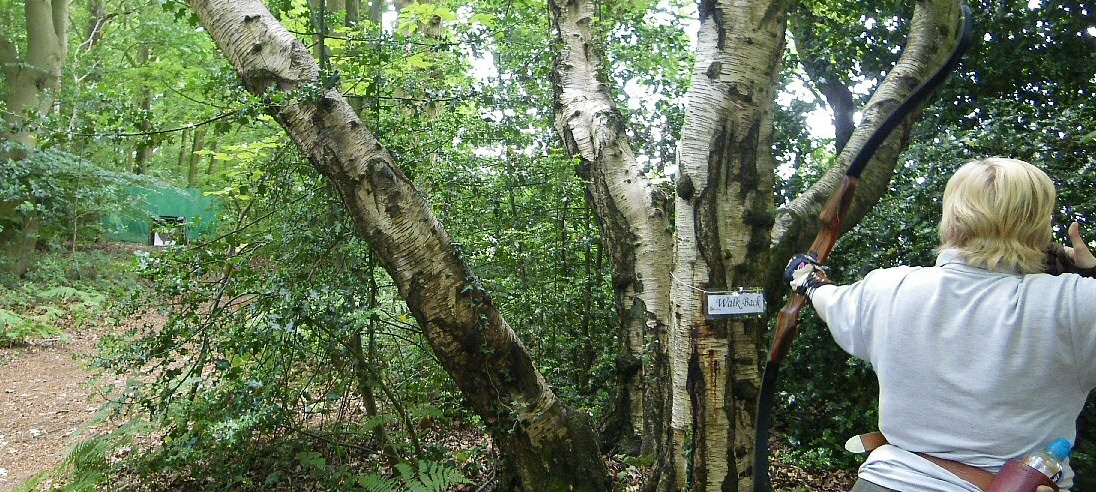
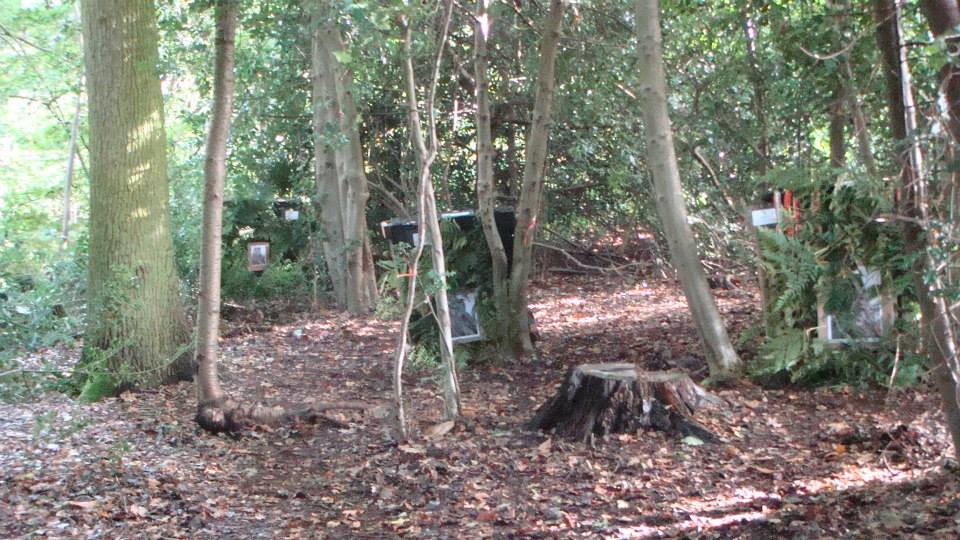
First view from Red peg

First view from Red peg

When I started trying to setup targets and shots I realised there was a lot to remember, from setting up the target, to how you get the archers to the shooting peg, whilst not forgetting about the overshoot for the shot and always remembering the safety elements.
For this reason I tried to analyse the process and come up with something that would help me remember all of these steps. My answer to this was using an acronym  ARROWS – somehow this seemed appropriate. So these are my thoughts on target positioning and locations . Please remember I’m no expert at laying courses or targets but I hope you find it useful.

Before starting here are a few things to familiarise yourself with. Consider your society rules. Do you have to have clear shooting lanes, marked or unmarked distances.

Style or Class of bow. Are you setting for an open where any and every bow styles might compete or maybe a wooden Arrow only.
Useful Tip – When scouting for a new shot I will often use my camera phone to record the view or angel of prospective shots so I can discuss it with others. I know others have used a gps system to track the target position on to a map of the course.
Anyway back to the acronym.

A – You can read this as approach or arrival at the first shooting peg.  It covers the  route to the first shooting peg and standing area when there. Is the route clear? Where possible at no point should the archer walk forward of the shooting peg as this might give them an advantage in distance judgement.  What do the archers see as they arrive? Is there space for a group or maybe two to stand safely without endangering themselves or causing distraction to other archers. Are the paths to the peg clear of obstructions? Brambles are a course layers worst enemy and  I’m sure the wood elves go out at night and lay bramble trip hazards across every path.
The idea is that as they approach they shouldn’t get a clue as to distances etc from peg to target.

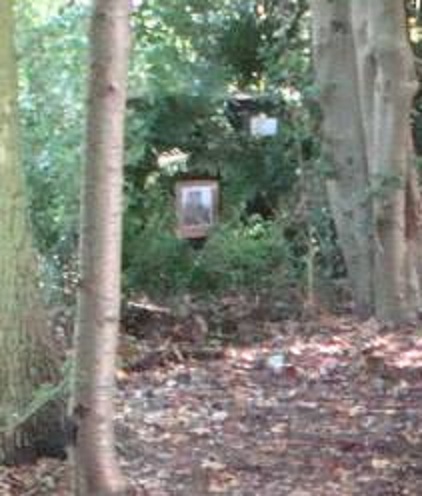
View from the red peg

View from the red peg

R-Red peg (the first shooting peg for an adult in NFAS field archery courses)- but really this covers all the  other peg positions too. We have mentioned the approach to the first peg but archers will need to get from one peg to another.
Think of the route they will have to take. A straight path to the  boss makes a corridor for distance judgement or do you set a twisted path so harder to judge distance?
Pegs need to be driven in well as longbow and afb archers won’t thank you if their lower limbs catch the peg.
R – range – not just ranges to boss from each peg, but range of height of archers,  range of bow weight and dynamics.
Longbows need overhead clearance of branches etc.
Think target size here too. Don’t spoil a shot by putting too small a target face on. Remember juniors pegs too, if placed too close to the target boss they run the risk of bounce back.
First view from Red peg

Consider the tree cover and branches

O – overshoot – What is behind the target location or to the side etc in the event of a glance off from trees.
Do you need a back stop or netting? Are there trees or bushes behind the target that arrows could bury themselves in?
Please remember that simply putting up safety netting does NOT make an unsafe shot safe! 
Over shoot with netting

Over shoot with netting

W – walk off – safe route out. When the archers have collected their arrows how do they leave the boss and make their way to the next target?
Is it a walk back  to the original shooting pegs or heading to a path. Is it clear to see navigation or are direction arrows needed?

S – Safety – last but not least. Review the shot completely and in respect of the entire course. There are times when a shot can look perfect but when looked at in respect to the entire course safety issues could appear with overshoot, waiting groups or access.
Foot paths for the general public. Are there any bridal paths or public rights of way that effect the shot or the course. In the NFAS you can’t place any shot that is considered to be close to or has an overshoot towards a footpath.
Do you need special signs on the course or possibly on the course boundaries for the general public?
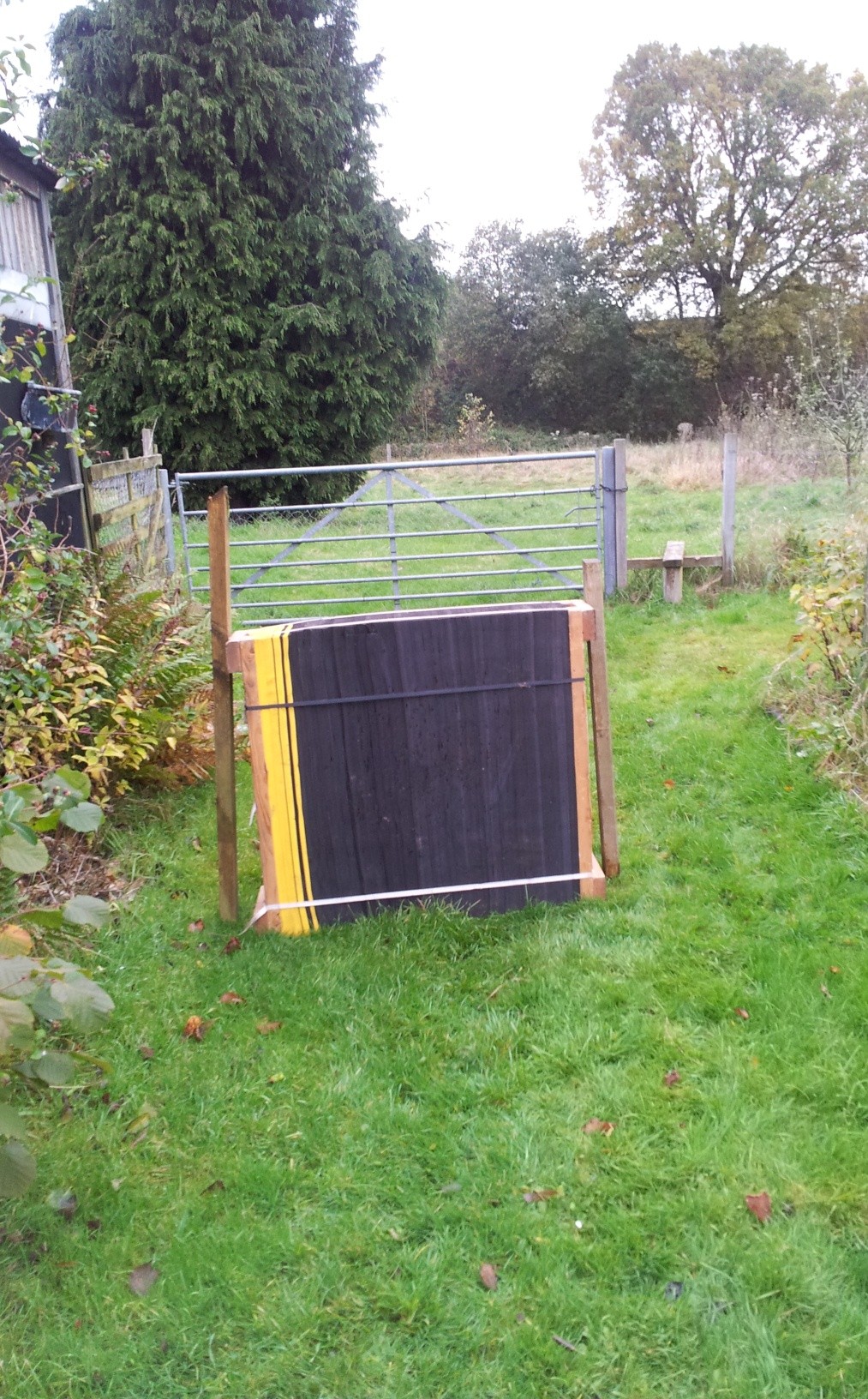
Target Boss

Target Boss

Some target bosses have strip binding and care must be taken with the metal fastening. These metal bindings should never face the archer as if arrow hits them it is likely to bounce back and has the potential of causing injury. (See setting up a target boss)

Once this is done for one target you need to repeat the process for all the remaining ones.  A normal nfas course is 36 or 40 targets.
Hope you find this of use and as always thanks for reading.

Course layers goals – some thoughts and comments

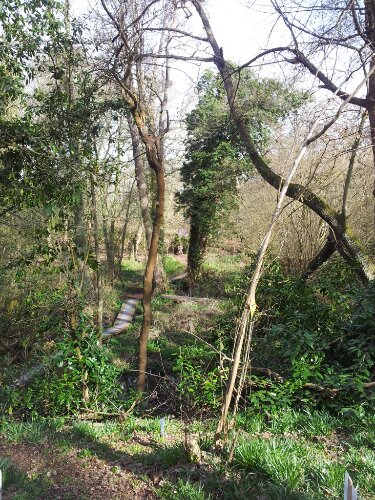
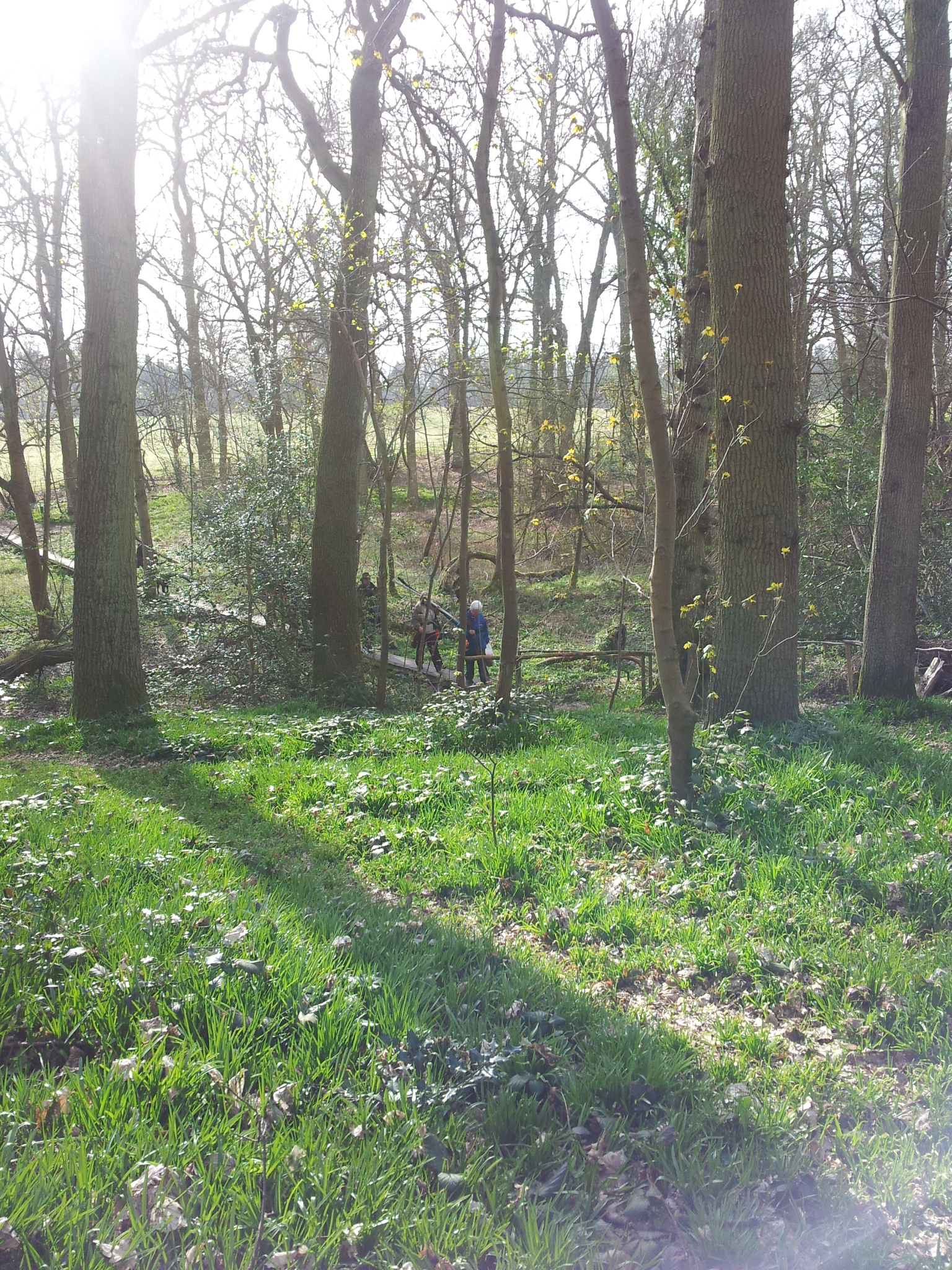
Spring in the woods
As a course layer you have a number of goals when setting out your targets on your field archery course. I’ve listed a few here you may want to consider. There are others but here is a starting point.
  • Safety
  • Keeping their interest
  • Returners
  • Fun 
It can prove to be a real challenge for course layers to try and reach some,  if not all these goals. Sometimes we succeed but not always, so here are a few thoughts on the subject. I hope you find them useful.

Safety, safety, safety

Obviously you want all people, archers,  marshals and other helpers to be safe and feel safe on the course. I’m not going to go into all the health a safety issues associated with archery (I mentioned some in a previous posting) but I am going to mention a couple of things which I think are sometimes overlooked.  I’m going to call it  Risk Management and cover the difference between Actual risk and Perceived risk.
Actual risk covers the potential dangers faced to attendees,  i.e. the real dangers but may not all be obvious e.g. you might be behind a bush not realising a target on other side of bush. Risks also include the environment, so be aware of slippery paths, bridges or broken branches hung up on trees which could come down in a gust of wind. You will be amazed at the number of times branches choose to fall just as you pass by. (Personally I recon it’s the squirrels bombing us.)

Clear overhanging trees

Clear overhanging trees

Perceived risk makes you feel endangered and this can come from the sound of an arrow hitting a nearby boss, or a path looking slippery, etc.
Perceived risk can have a great effect on people as if they don’t feel safe it might make them rush or anxious. The biggest thing here can be sound. The sound of an arrow hitting a boss near by or passing through a bush, you aren’t sure where it came from but “feel” or perceive its close.
Your imagination kicks in and you feel it is unsafe.

A  good tip is to have your club safety officer or a couple of experienced archers / course layers walk your course and provide advice. Those fresh set of eyes and ears might spot something you have missed.

Keep their interest

If you want the archers to remain engaged throughout the day you need to keep their interest throughout the day. If you make the shots too easy, people may lose interest. If you make it too hard the archers may become demorislised. Its a really fine balance to make it a challenge.
So What makes a shot challenging?
My personal view is there are several ways in which you can make a shot challenging. The art is combining one or two of them together to make a shot challenging without being too hard. In essence there is a fine balance between challenging and demoralising and as a course layer you need to judge this carefully.

In the next post I will look in more detail on factors like target size, elevation, distance etc. Watch this space.

 Feedback to the club

Whether it is positive or negative is very important to feedback to a club on how it is going.  Where possible give it to them on the day while it is  fresh in your mind.
Word of note here. There have been times I’ve chosen not to give feedback to clubs on the day. I am not going to identify the club or clubs in question.  So why the delay? Well, when you overhear marshals dismiss archers comments and concerns on the day in a very casual manner you question its worth.

talk to the marshals

talk to the marshals

If you put the effort in to designing a shot and course, it can be hard when you hear negative feedback, but people are entitled to their views. So listen, take note and review it. You might disagree and think they are wrong but then again when you think about it maybe they are right?
After all you want the archers  to return, don’t you?

You want archers to return

Archers will often vote with their feet. If they don’t enjoy the course there is the possibility they won’t return, which means your club suffers in loss of income and maybe bad press.

Archers arriving

Archers returning

So when you are setting a course it is worth keeping a couple of things in mind.
Remember beginners, we all started at some point.
It is very important to remember that not all archers attending your shoot will be experienced, it might be some archers first shoot. For this reason it is important to remember the newbies. If your setting up a course as preparation for a champion then advertise it as such so people are informed.
Remember the kids. They have light poundage bows and can struggle on distance judgement. One of the best compliments I ever had was from a couple of parents. They wanted to thank the course team for putting in a good course for adults and children.  We had set up the junior shots were still interesting for them and not just a stones throw from the target.

One safety note on junior peg positions. A few years back I was shooting we a junior and his dad. On one shot the child had their arrow bounce back towards them after it hit the target. The arrow did not stick in the boss. This startled the child and concerned the parent.
so why did it happen? This can happen for a number of reasons the boss is too hard for the arrow from the low poundage bow to penetrate or the peg is too close. Please take care not to position junior pegs too close to the target boss.
I was an adult when I started shooting, and I was glad not to blank 10 targets our of 36. But I did return because it was fun, which brings me on to the next topic.

Fun on the day

The vast majority of archers that attend a shot will never get placed or win a medal, but they are the ones that help fund the event and support the hobby. If they don’t enjoy it then they aren’t going to return, so when setting a course remember them and especially remember the kids. Children can get bored and disheartened a lot quicker than adults.
So when you are setting up targets think about the kids, and make sure the junior pegs are appropriate.  It is very important when you consider the children and junior archers. Happy children = happy parents.
So how do you do this isn’t entirely down to course laying. Talk to the archers as they are going round the course. Be friendly,  help them search for arrows find out if they’ve encountered any problems. I’ve marshalled shoots in the pouring rain, helping archers to search for their lost arrows.

Me at the target

Me at the target, before the rain came

At one recent shoot we discovered a branch had fallen obscuring part of a target. Thanks to talking to the archers we were able to clear it.
And remember to smile even if it is pouring with rain and blowing a gale. They have given up there time to travel to your ground so give them a smile. It doesn’t cost anything and might brighten their day.

Sorry this has ended up as bit of an epic tale. Thanks for reading.

Course & target laying – A different kind of shot

A different kind of shot

A different kind of shot

At a recent shoot the club hosted I came up with the idea of a different kind of shot to the traditional one. The idea was to give them something a little different and give the archer a choice.

There would be 3 targets, not the customarily one, with each target being set up at varying distances ranging from 18 yards down  to 9 yards. On each target boss I placed the same target face a picture of an owl I had taken a few years back, but with one crucial difference. The nearest was A3 in size (A3 =  280mm × 420mm)  the middle A4 (A4 = 210mm × 280mm) and the furthest A5 (A5 =  140mm × 210mm).

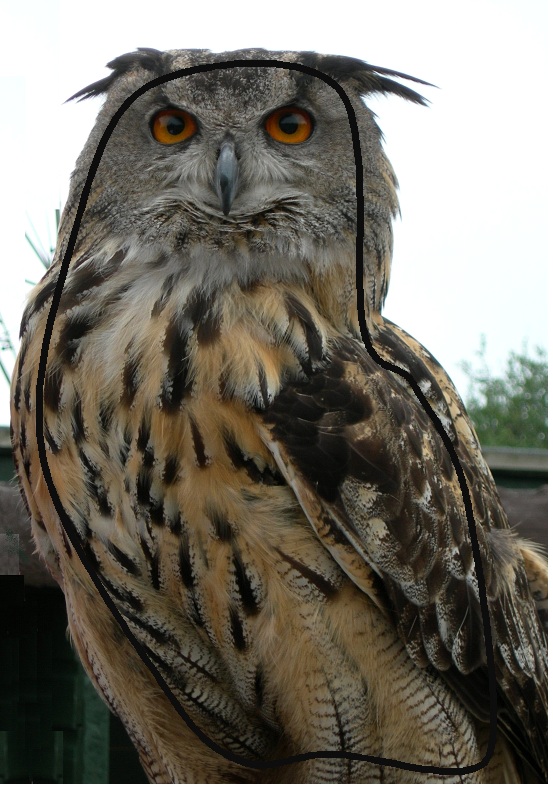
A scoring line was drawn just inside the animal but I didn’t bother with any inner markings as all they had to do was be within the line. This is the image I used. I didn’t want to use a face that people had seen before.

Target

Target face

Archers were told they were allowed only one arrow and had to choose which target they wanted to go for.

If they made the shot and hit within the line, they scored otherwise it would be a blank on their score card. They would not be allowed to shoot a second if they missed first time or third arrow if they missed on their second attempt.

The closest and largest target (A)would score them 16 points (the normal score for a first arrow outer or wound hit) the smallest (C) and furthest would score 24 points ( inner bull often described as either pro ring or inner kill) and the medium sized middle (B)  one 20 points (outer bull or outer kill).

Targets A & B were across clear ground allowing archers to judge the distance more easily, also target A & B had been positioned with little difference in the distance. This was deliberate as I wanted to encourage the slightly less confident archer to had a go and be rewarded with 20 points.   To make target C a little more challenging I tied some holly bush bows down a few feet in-front of the boss so it was harder to judge the distance.

Close up of Target C

Close up of Target C

All target bosses were covered in greenery to camouflage them.

So the archer could go for an easy 16 points or challenge themselves if they felt confident, it was their choice.

Archers reaction

It was interesting to observe the archers on the day trying to way up which to go for.

  • Many archers went for the easy 16 points, happy with just not blanking the target.
  • Many of the sighted archers went for the 24 thinking they had too to keep their score up, the result being some missed.
  • The remaining went for the 20 points (middle size target B).
  • The holly bush trick on Target C worked, as a few archers commented they thought it was closer or further than the target actually was.
  • Interestingly there  were those who said I’ll go for what they perceived as an easy shot. Either target A or B, only to miss  possibly due to lack of concentration?
  • Many archers selected their target, shooting it and because there wasn’t any queues of people waiting asked if it was okay to have a pop at the harder shot for fun.
  • Lastly I noticed lots of smiling faces and a few people have commented on it to be since the shoot.

Conclusion

As I said earlier the idea was to give them something a little different. This worked with a number of archers speaking to me afterwards about the shot and how they liked it. Importantly it didn’t slow the shoot down which had been a concern, in fact I would say the opposite as it was one of the quickest targets on the day with no waiting. People seemed to enjoy the difference.

One thing I would add is the importance of having clear instructions. For those interested these are the instructions we used to explain the shot to archers on the day. We laminated a couple of copies, attaching them to trees near the shooting peg for archers to read before taking the shot.

You only shoot 1 arrow.
No 2nd or 3rd arrows are shot.
If you hit anywhere within the scoring area of the animal you score points shown below otherwise you blank.
Choose target A, B or C.
If you hit your chosen target with your one arrow you score
16 points for hitting target A or blank if you miss.
20 points for hitting target B or blank if you miss.
24 points for hitting target C or blank if you miss.
No hit. No score.
No 2nd or 3rd arrows are shot.
Choose carefully and Good luck.

Future Posts

In the next few posts I will be looking at course laying and the factors as I see them that make a good shot and a great shot. Trying to give advice, thoughts and ideas. If you have any thoughts or comments please let me know.

As always thanks for reading.