Setting up a target boss – revisited

With recent worldwide developments concerning COVID-19 seeing more and people self isolating, working from home or simply having a lot more spare time on their hands, there has been quite a lot of posts on Facebook and other sites about home ranges, or practising at home.

I am going to highlight a few things you might need to consider. I am no expert and this is by no means a definitive list, but more of a starting point of things for you to consider.

  • What are you going to shoot at? What type of target or target boss? Will it be sturdy enough to stop your arrows at close range? Check out What target is best for me?
  • Can you safely shoot in your garden without endangering yourself or others? Think of pets, child, wildlife or even surrounding livestock? Consider also garden sheds, greenhouse and garages.
  • What of overshoots into neighbouring gardens, farmers fields etc?
  • Do you have insurance if anything goes wrong? Chances are your house insurance won’t cover you and you may have to take out some form of specific insurance.

Location, location, location

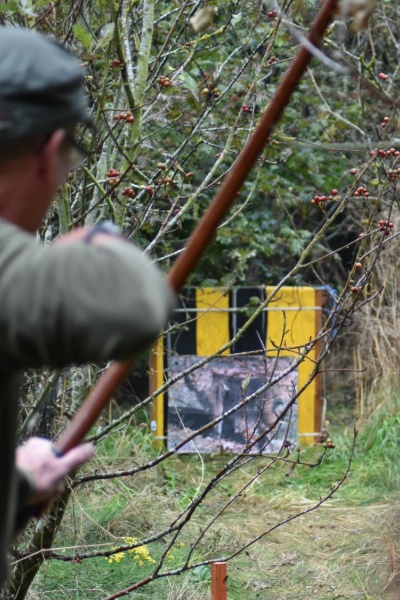
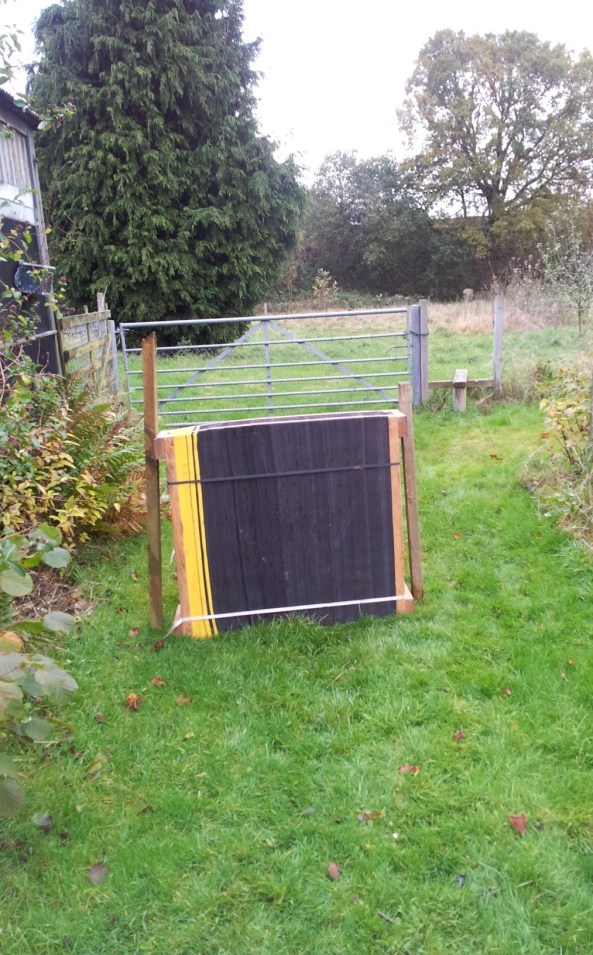
No I’m not talking about the TV property program commonly seen in the UK, but the physical location of your target boss. Look at the space surrounding the boss in the image below. What do you see?
Target Boss

Firstly there appears to be a stile behind and to the right of the boss. Does this mean there is a footpath behind the gate and we are likely to see people walking past?

What about the space behind the boss with regards to overshoot? Do you need to have something that will catch and stop a stray arrow? A safe over shoot area is vital for any target positioning. The metal gate seen behind this boss is also a risk. If an arrow misses the boss and hits the gate it is likely to deflect in any direction.

Did you spot the wall of the building to the left side of the target? You wouldn’t be able to see people approaching from that direction.

Securing the boss to the stakes is vital to ensure it doesn’t topple over when arrows are removed. It is worth considering whether the stakes need to be proud of the boss, unlike the image below. Also try to put them to the side or rear of the boss frame so as to avoid or limit the number of arrows hitting them.

One quick cautionary tale of a friend who set up a target boss in his garden. Unfortunately it was quite an old target boss and the arrow went through it, through the wooden shed wall behind and straight into his lawnmower! He wasn’t allowed to practise at home anymore.

Those are a few thoughts and topics to consider when positioning practise bosses. Have you got any further advice? If so why not add a comment below. Lets look at the orientation and securing of the target boss now.

Securing the boss

Setting up a boss is a common activity, but does require some thought and care to ensure it is done both correctly and safely, whether this be on an archery course or as in this example in the garden for a home practice range. Here you can see a boss having been erected ready for practise. Looks good? Can you spot any issues?closeup
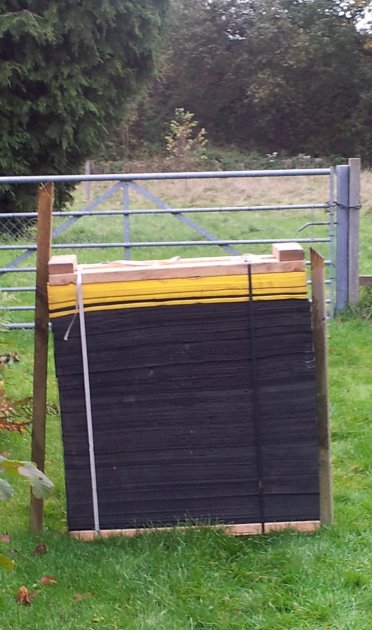
Well one commonly made mistake when setting up a boss of this nature is forgetting to check where the metal binding for the plastic strapping is located. These should always be on the back of the boss and never facing the direction of the shot.

Why? The binding clips used for banding can damage arrow tips if they are hit. I have also seen arrows shot from a compound bow hit one of these metal fastenings and bounce straight back some 15 yards, landing at the archers feet.

You should also ensure the wood frame of the boss is always to the side and not on top or bottom.

Why? If the arrow falls low, it will run the risk of hitting and embedding itself in the wooden frame, which is likely to  result in some work to extract. If the arrow impacts at the top of the boss it runs the risk of deflecting off in any direction . So rotate the boss to ensure the wood frames are on the side of the boss.

Target Boss

Insurance

Give some serious consideration when it comes to insurance. Some people believe that being members of a national archery society or club gives them cover to shoot at home, which isn’t necessarily true. I know this is something that has come up on the National Field Archery Society Facebook group and I expect it the subject has been raised on other sites too.

We have our own personal insurance that covers Sharon and myself when shooting on our home range, which we got through Gunplan (https://www.gunplan.co.uk/) . The field is also registered as one of the clubs sites as we use it for training sessions.

N.B. The target boss doesn’t normally sit there, it was simply positioned there for the photos for this post. It’s normally in the field beyond the gate. We are fortunate in owning the field at the rear of the property and know there is no public access or routes to it other than via our boundary. We have set up a 40 yard pegged range, with a 60ft over shoot before a backstop of old carpets at the fence line and then  30ft high earth embankment beyond.

I hope you find this article of interest and if you have any comments let me know. I’m putting a brief one together on the use of backstop nets too, when I get the chance. Thanks for reading and stay safe everyone.

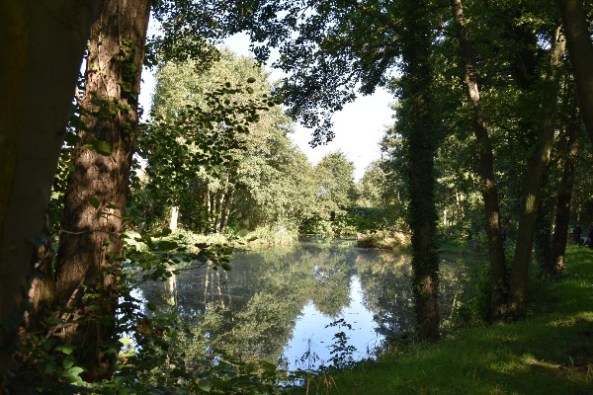
Beautiful lake

Shoot Report – NFAS National Championships

Beautiful lake

Beautiful lake

This shoot report is a little different to others, as though I did shoot this years NFAS National Championships in September,  it wasn’t with my bow, but with my camera. I was lucky enough to be one of the two official photographers for this years event.
This was a wonderful opportunity and allowed me to catch up with lots of friends, but to have a behind-the-scenes view on both courses over the two days.

Background

The National Field Archery Society hosts 2 championships each year, one in May which consists entirely of 3D targets and the National championships run over a weekend in mid September, where all targets are paper faces.
Archers  would compete on two courses, in their chosen style (there are eleven different shooting styles from longbow to sighted compound in the NFAS). Each course consists of 40 targets and as I said are  entirely paper-based, the selection of target faces is massive being  from a variety of suppliers.
This year the two courses were set by Duvelle Archers and a group of volunteers, with Duvelle setting A course and the volunteers B course.
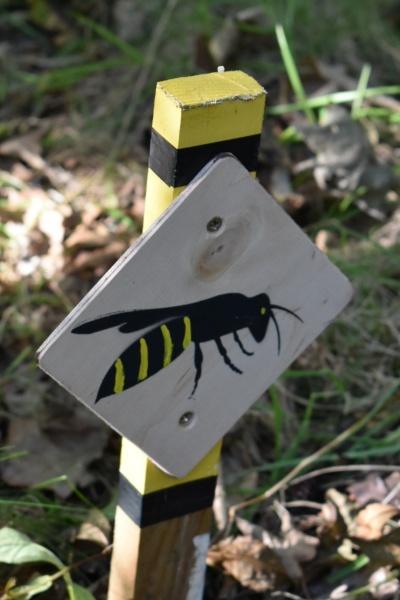
As a new challenge to archers WASP pegs were used for those adults shooting sighted recurves, sighted compounds and crossbows.
Preparation
Long before the archers arrive for the weekend a great deal of work goes in behind the scenes an I feel it only fair to recognise this.  From the entry administration as soon as booking start to arrive weeks before the event, registration on the weekend through to clearing up of the camping site at the end.
Behind the scenes admin team

Behind the scenes admin team

The sheer task of finding suitable woodland to house the event and camping is a massive challenge. Once the site is found, course layers need to be sourced and given access so they can scout out shoots the location, working out routes and paths between targets. The week prior to the event  everything kicks into high gear. The teams will be on site working to move target bosses, clear paths etc.
This year the hosts for the event would be Royle Farm Business Park, Drakelow, Burton upon Trent. This was a new venue to all and provided excellent camping and parking facilities for all attendees.
The grounds themselves were very flat, so the course layers had to work hard at times to make interesting shots. The advantage of this flat ground was to make it much easier to walk round. In addition, the woodlands is quite a young mixed plantation with access paths and open areas, which both course laying teams made use of with shots from the open areas into the darker woods or vice-a-versa.
Shot across the lake

Shot across the lake

A course set by Duvelle were fortunate enough to have a small water feature in the form of a lake which they used too great efficiency. I don’t  know about you but I find judging distance across water always challenging as I think others do. The flip side of this area was it was definitely the muddier part of the wood, especially on Sunday following the heavy rain.
Shoot through to the open

Shoot through to the open

B course on the other hand had more of the plantation aspect.  To their credit they worked hard to cut in a series of steps up to the shooting position for one shot on a steep slope.
Shot between the trees on B course

Shot between the trees on B course

I have to say I found it immensely enjoyable wandering around chatting to people and having the opportunity to take so many photographs. Long before I was into archery I enjoyed photography, something I started in my early teens and it was great to be able to  go round and just shoot more and more photos. I think I came off with about 600 photos of which over 300 are now on the NFAS website.
Compound archer relaxing

Compound archer relaxing – in fact he went on to win it

Back to the shoot report.  Compared to previous events this was quite small championships this year with just over 300 competitors. Past events have seen more than 400 archers and I wonder whether the timing of it, bring in mid-September is part of the problem. Many parents with children will have just seen them returned to school, others like myself who work at a university, struggle to have time off for that time of year.
There is also the fact that some people just don’t like shooting paper faces and prefer 3Ds.
The weather always plays a part in any outdoor event and I think we had everything from bright glorious sunshine of a late summer, early autumn day on Saturday, with archers in t-shirts. Contrasting with torrential downpours on Saturday night and at times Sunday.
Before the rain

Before the rain

The rain made getting round parts of A course a challenge, despite the best efforts of the marshals who put matting out and even built a bridge in one area.
After the rain

After the rain

As I said I saw behind the scenes a lot more this year. A few years ago I’d been fortunate enough to lead a group of volunteers who set a 3D championships course, which provided great sense of achievement. The thing being, we had to focus on one course, this year I got to see far more. With the early starts; I was out with my camera from just after 7 a.m. each day through until arches coming in 6:00 p.m. at night. Then back to the motorhome to grab some food, download the pictures, charge camera batteries oh and get some sleep.

Even the bows need a rest

Registration was from 8 am to 9 am Saturday and 7 am to 8 am Sunday, so pretty early starts on both days especially Sunday. To me there felt like there were fewer archers on Sunday, possibly due to the poor weather forecast or due to them not enjoying the first days shooting. Either way there were more than enough to make the event work, even in the heavy showers.
Open field shot on A course

Open field shot on A course

Saturday morning would see me walking round A course and then swapping to B course in the afternoon. Saturday was definitely the better day for photography and archery as it was warm and more importantly dry. Sunday I spent the day focusing on A course and trying to capture photos between the rain showers.
From my perspective the courses felt different with one having longer shots overall than the other. I’m aware that some archers voiced their concerns over some shots and I believe the course was modified on Saturday night by the course team.
It is very easy to criticise course layers by saying a shot is stretched or bad. A stretched shot being when the distance to the target from the shooting peg is felt to be too far for the size of the animal.
I think everyone, myself included could learn to provide more constructive criticism or constructive comments to courses layers rather than just saying it was poor or  bad shot.
Many of the shots were long and I think were good shots but personally I felt the choice of target face was inappropriate,  being possibly too small all for the distance. Then again it is something about my view of course laying and how I set shots compared to others. I prefer a shorter more technical shot  or closer shot where the top archers will get the 24s and the less able are likely to get a 16 or second arrow. I know on one course there were a lot of second and third arrows shot.
Please remember this is a personal view and and it’s up to you whether you agree, as at the end of the day I wasn’t shooting the course with a bow, l was out shooting with a camera.
One fun thing was spotting all the toy trolls that appeared on A course. I’m not sure how many there were but I know they just appeared from time to time watching us.
Trolls on A course

Trolls on A course

Being able to walk round, chat with people, take photos and generally engage with everyone was great. Also to have the opportunity to see the woodlands, not just as the archer see it when they’re walking through but having  the opportunity to stop for 10-15 minutes or longer in one location and see groups on A  course going through was a great privilege which I really really enjoyed.
Saturday I was able to get round most of both courses, taking advantage of the glorious late summer day. Sunday would see me mostly on A course.

WASP Pegs

I feel the use of wasp pegs or the introduction of them was a good idea. The execution of them or positioning of them didn’t always work. Having a shot with a wasp peg further back, doesn’t always make a more interesting shot or indeed a challenging shot. Greater challenge can be achieved by changing the angle or framing of the shot so the archer has a narrow window to view and shoot through.
Wasp pegs

Wasp pegs

Whether they will be used in future I don’t know I hope so and I think they offer the ability to to give some classes a greater challenge. At the club I shoot for Briar Rose, we use wasp pegs and I think in general we get them right. I hope other clubs will adopt this policy as it allows you to set a challenging shot for sighted compounds and crossbows, while keeping the red peg suitable for other styles.
Thats one thing we do different as we don’t have freestyle shoot from Wasp pegs.
I personally don’t believe that sighted recurve archers, i.e those shooting in the freestyle class should have to shoot from off wasp pegs, because at the end of the day their arrows do not have the same flat trajectory that compounds or crossbow do.
Pretty arrows

Pretty arrows

You can see the full set of photos that myself and Derek shot over the weekend at the NFAS site, along with a listing of the winners.
Congratulations to all those who were placed and who attended, some for the first time. I hope you enjoyed it and will be returning again.
If I had the opportunity to do it all again, I think I would do things a little differently but yes I would give it a go.
Thanks for reading.

How a couple of strips of tape can help your archery?

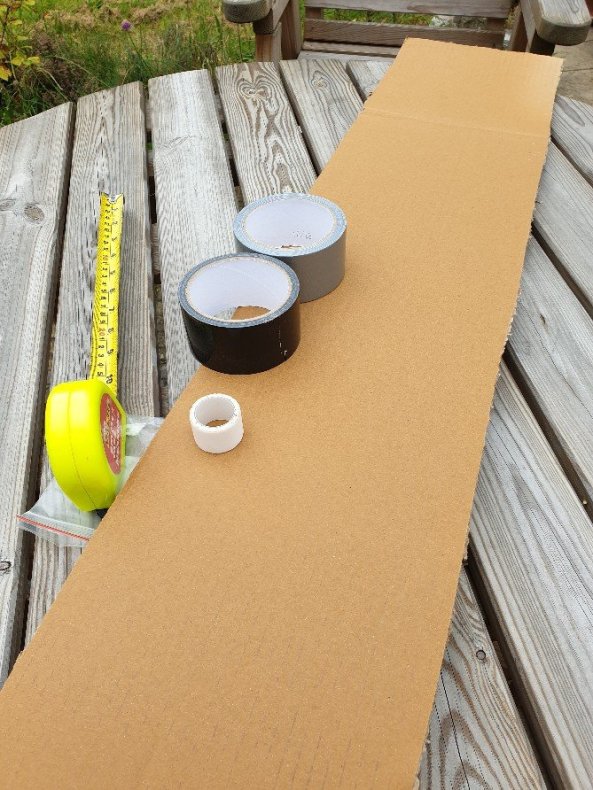
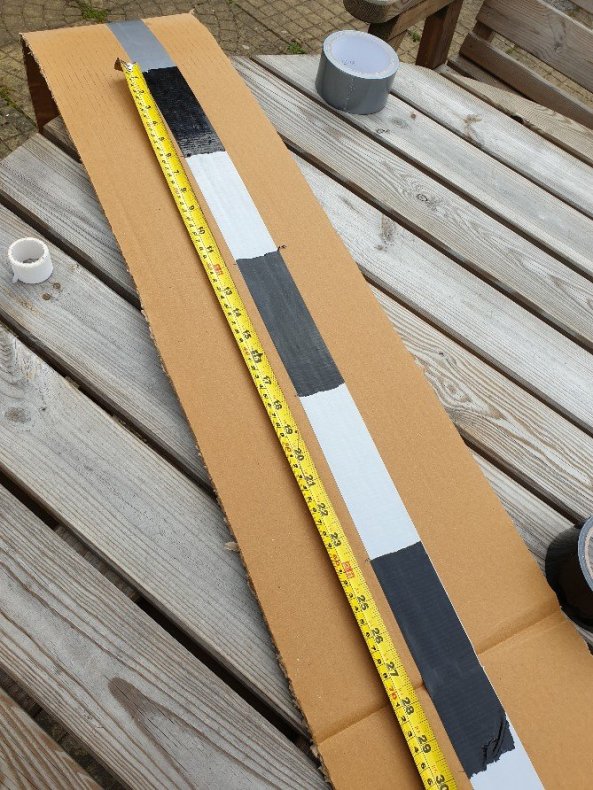
What you need is a length of card board about 3 foot 6 inches in length and about six inches wide. This may sound a little Blue Peter but it does work. (For anyone who was not raised in the UK, Blue Peter is a long running TV program famous for making stuff with double sided sticky tape, especially in the early 70s and 80s).

3 colours of tape and card board

The idea is similar to the concept I shared the other week with using a bamboo pole to help distance.

My practice bosses as 3ft tall so by making the card 6 inches longer I can attach the card on top of the boss.
In my example I applied a strip of grey tape down the centre of the cardboard along its length.

Grey tape

I then added 6 inch strips of black tape alternating so you had a strip of black then a 6 inch gap showing grey.

Marking out 6 inch sections

The idea being to alternate black and grey so the archer can us it to aid distance and aiming. Some might want to use 4 inch sections but I keep it to 6 so it ties into the bamboo cane method.

White tape

The last thing is to apply a strip of white tape down the centre of the black and grey tape. Cheap masking tape works perfectly for this.
The white tape is what you will be shooting at. The coloured tape is there to aid in distance judgement and to act as a contrast.

Card on the boss

So how do you use this?

Fix the target to the boss and then at 5 yards shoot a set of arrows. I normally shoot 4 arrows in a set when I’m practicing.
I start at lower part of the boss, bottom 6 inches and try and get my arrows in a vertical line gradually moving up the boss and in the white tape.
When I’ve reached the top of the boss I repeat the exercise but moving down from the top of the boss.
The focus is on you being able to put your arrows in the white tape consistently.
When that’s done I move back to my next distance and repeat. I’ll usually do this to about 15 yards or so. Reapplying white tape when needed.
Past 20 yards I focus on my arrows being in the silver or back tape. The way I look at it is if I am in the tape at this distance I’m hoping I should be in the highest score zone when shooting on a course.
The technique is not that dissimilar to one my first archery coach used to use where they would dangle a coloured ribbon down the boss and aim for that.
If you really want to challenge yourself try replacing the white tape with string and ensure each of your arrows are touching it.

So why do this?

Not all scoring zones are central to the boss. If you look at different target faces or 3Ds the height off the ground varies. You might be shooting a deer 3D where the kills 24 inches or more off the ground. With the next target being a 3D crocodile where the highest scoring zones inches off the ground.
I recall one championship where the paper face ermine was on ground level about 8ft away.

Paper Ermin

So this technique helps you focus on keeping your line and adjusting for height.

It also aids you in bending at the waste, sometimes called tea-potting. If you recall the children’s nursery rhyme “I’m a little teapot” that is where it gets it name from.

By the way the keen eyed among you will notice the target doesn’t have the white tape on it. This is because I took the photograph and then realised I hadn’t applied the tape. So I went back and applied it so you had a photograph of what it should look like.

Thanks for reading.