Equipment part 4 – Failure and damage – Arrows

Damage can occur

No matter how careful you are equipment will get damaged over time and it is very important that you take the time to check your archery equipment to ensure you can spot issues before they become dangerous.

I’m going to concentrate on arrows in this section and write another one on bows in a week or so.

If you are a coach it is worth showing students and other archers the type of damage that can occur to their equipment.

One piece of valuable advice I’ve seen on a couple of sites is never assume an arrow is safe, even if it is brand new. Likewise expensive arrows can also be damaged in transit or manufacture, so always check them each time you shoot or retrieve them.

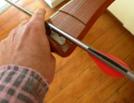
Here is a close up of an unusual style of arrow break.

arrow damage

split shaft close up

Another photo of  the same arrow shaft, you can see how it has split down its length.
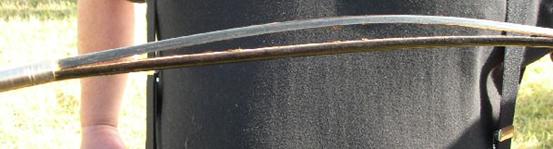
split shaft full length

split shaft full length

Below image shows what happens when a wooden arrow impacts a wall  and the pile is flattened. Notice how the wooden shaft has snapped and then been forced into itself.

Arrow Damage

Compression break of wooden arrow

Sometime you can spot damage before it becomes a critical failure, below is a close up shot of a wooden arrow shaft that is showing signs of failure. You can see vertical crack lines across the arrow shaft. This will eventually result in the arrow bending or breaking.
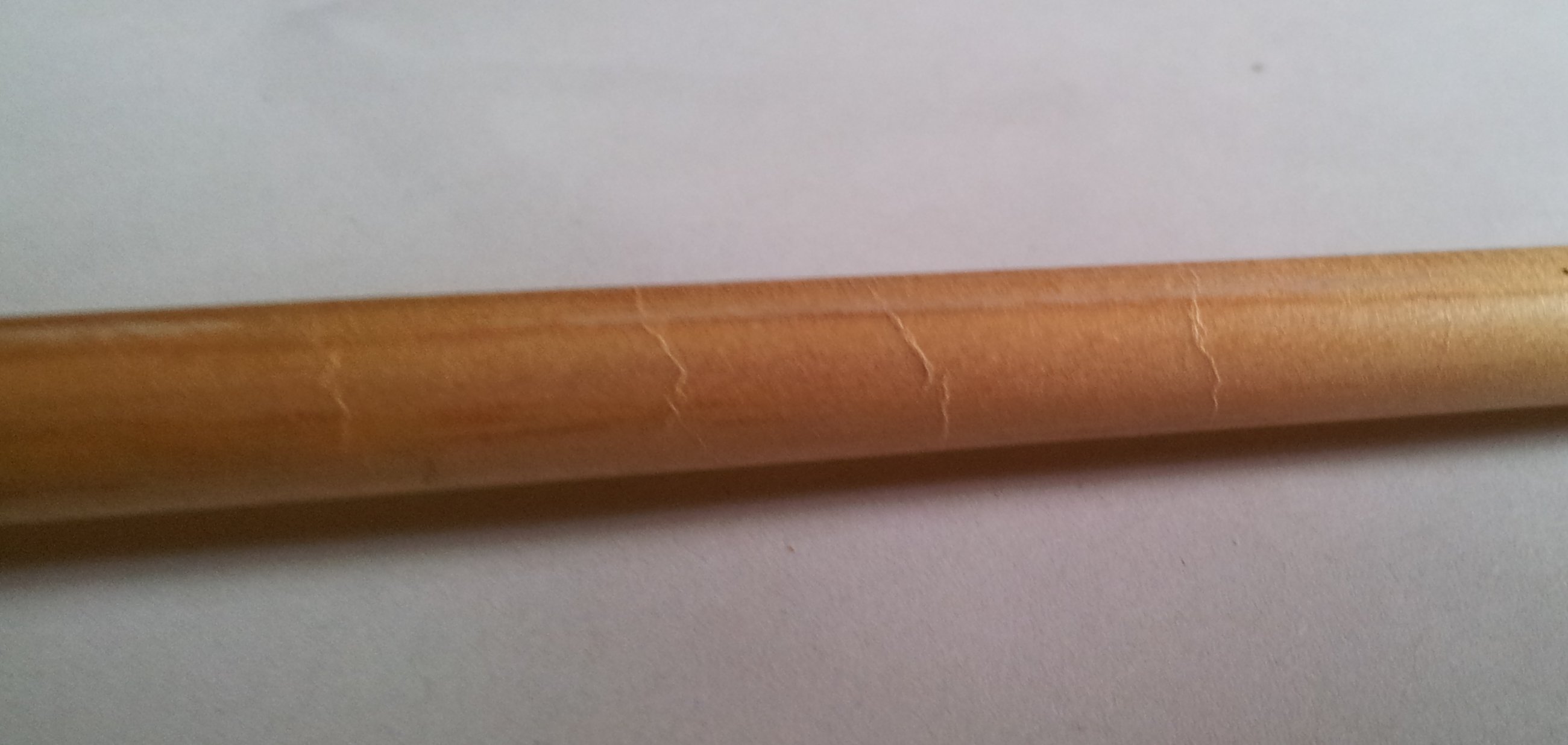
damage to wooden arrow

Damage to wooden arrow

It’s not just wooden arrows that can fail and become damaged.

The photograph below shows what can happen to aluminium arrows . The archer had managed to hit their own nock with another arrow (great grouping in the target). The nock has shattered and the metal arrow has peeled back like a banana. This is sometimes called a Robin Hood Shot.
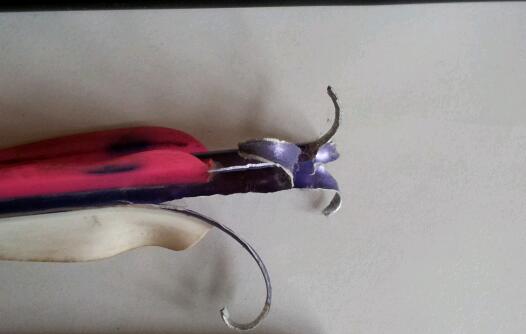
A Robin Hood shot

A Robin Hood shot

Obviously this arrow is no longer usable, but there are times when you will not have such a critical failure or damage. When your aluminium arrow might be only slightly bent and it can be possible to straighten them but it takes time, a level or expertise and correct straightening jig. Below shows a “slightly” bent arrow, following contact with a tree.
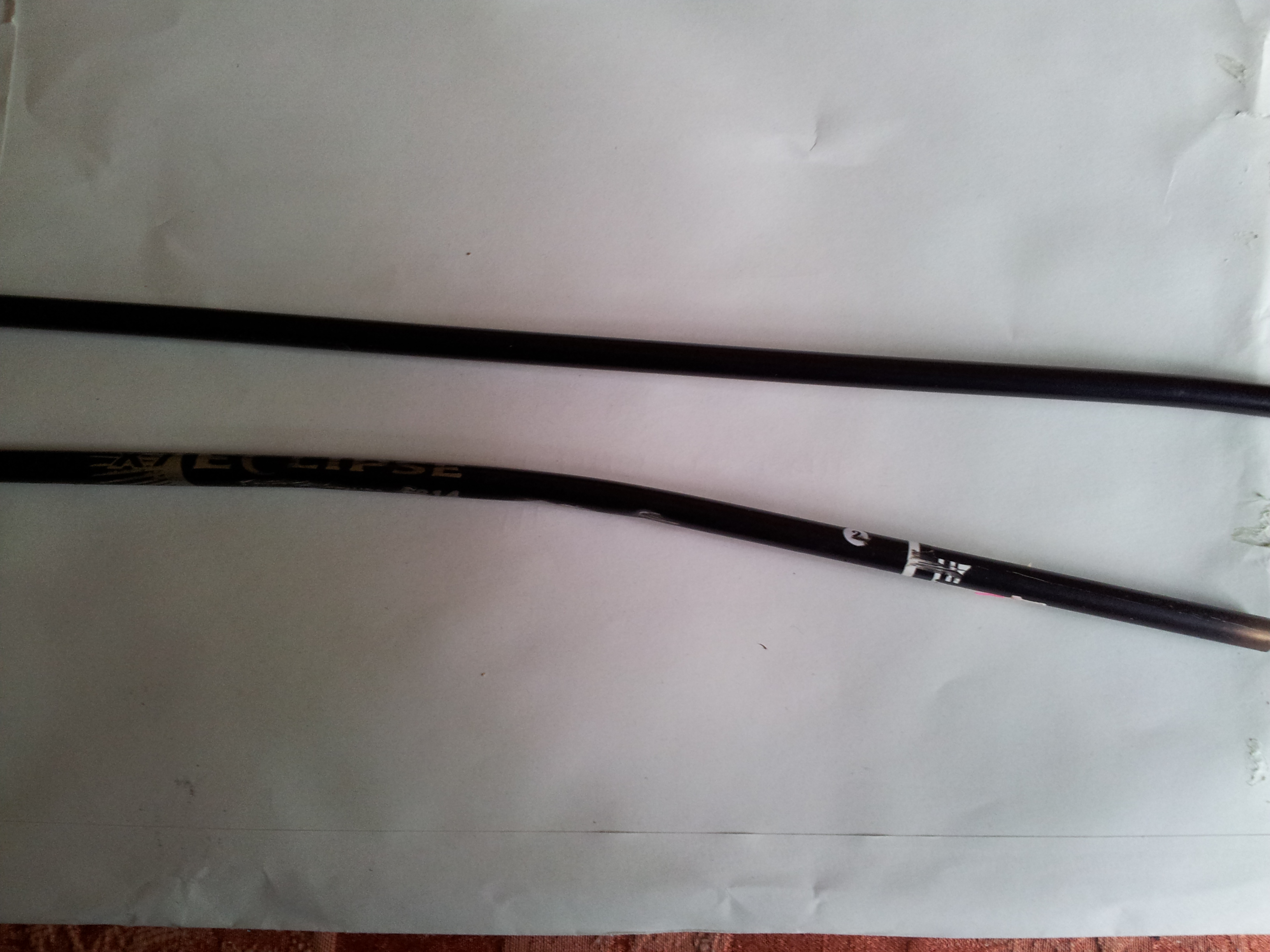
Bent arrows

Bent arrows

Carbon arrows also need checking regularly as they can split or worse still shatter. I’ve seen a compound shooter at a championships, release their arrow and it shatter into a million pieces, showering her and those around with carbon splinters. Fortunately no one was hurt and even more amazingly the bow was undamaged!

I know some archers now wear a Kevlar glove on their bow arm to protect them from any possible arrow failures.

It is not only at the bow end problems can occur, there are times when you are drawing arrows that the arrow may break, so it’s always worth either wearing a glove or using an arrow puller to give a cleaner and stronger grip. I’ve had to patch up a few people over the years who have cut themselves when drawing arrows that have split.

Also be aware of carbon splinters in targets. this often happens when the arrow pile has been forced into the shaft following a hard impact and resulting in the carbon shards breaking off.

A good way to test you carbon arrows is to flex the arrow, if you hear cracking or see splintering then dispose of  them. Also be aware that if you use arrow wraps, cracks can appear under these and are not always noticed.

Here are a couple of good sites and articles on testing arrows, be warned though there are a couple of graphic scenes of what can happen when an arrow fails.

http://www.huntersfriend.com/arrow-safety-warning.htm

http://www.youtube.com/watch?v=k6nIbvrMTbE

Tip – if you have a carbon arrow splinter on a shoot or when practising, don’t drop it into your quiver as it will leave splinters in the quiver. Take some tape and tape over the splintered section, this will stop loose pieces breaking off and fulling your quiver with razor-sharp splinters ( I always carry a roll of micropore tape in my first aid kit that is ideal for this.) You can then drop it into your quiver and dispose of it when you get home.

As always thanks for reading and I hope you’ve found this of use.

Buying equipment – more bits and pieces part 3

Ok so this is the third part to buying equipment etc. I hope you’ve found the other posts useful.

Hopefully you or your students have bought the basic bits and bow mentioned in the previous posting. What I want to cover now are things to consider after you have your bow and some advice on keeping it in good working order.

When you get it and afterwards.

Once you have your bow there are a few things worth remembering. Check the bow for damage – may sound strange but just because its new doesn’t mean it hasn’t been damaged in transit. If you have taken my advice you will have gone to an archery shop and tried a few out and they will have shown you how to set it up etc

Check the bow for damage – may sound strange but just because its new doesn’t mean it hasn’t been damaged in transit. Below shows a wooden riser that split after a couple of weeks of shooting.

Damaged riser

Damaged riser

Use your phone camera – yes technology can help here. A camera phone is a great tool for monitoring bracing height, nocking points, possible damage etc.

Protection – bow bag or cases. These come in lots of different sizes and shapes. Hard plastic cases, soft carry all style bags and backpack variants. What ever you choose get one that holds your bow and offers it protection. I have a simple soft case for my trainer bow, but for my competitive recurve I have a hard case with foam padding that holds my bow securely whilst in transit.

When putting your bow away make sure it is dry. I shoot all year round and in all weathers from baking heat to snow (there have been times I’ve shot an arrow and by the time I’ve walked up to draw it, there’s a layer of snow on it) But when you are putting your bow away dry any excess water off before putting it in the case. Then when you get it home open the case and double-check it is dry.

I use a Bazooka case, it’s a case originally designed for fishing rods, but is extendable up to 7 ft, for my flat bow. It means it doesn’t get knocked about in the car.

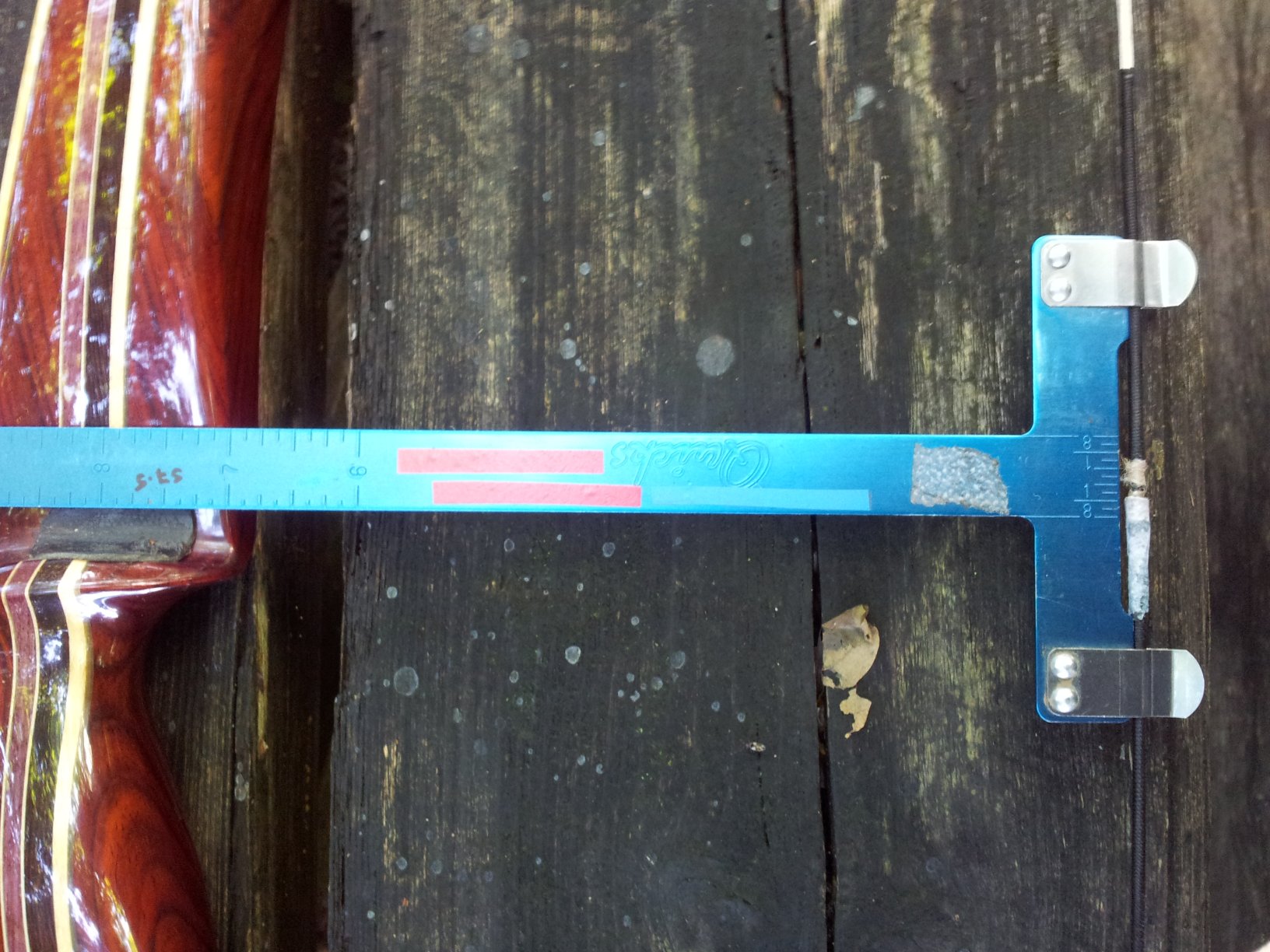
Bracing Height – Check your bracing height for the bow. This can vary depending on the style of bow, limbs etc.  and may change over time as the string stretches slightly, so you will need to monitor it.

Another advantage of getting it from an archery shop is they should check and set this for you when you get it. Make a note of it and better still a photo so you know exactly what it is. Get a bracing rule / gauge.

Bracing on bow

Bracing on bow

String – make sure you get the right length string and some string wax. String wax is often forgotten in the excitement of buying your bow, but is very important as it protects your string and binds the strands together. I wax the string every other time I shoot.

String loops

check for wear and wax

Limbs – Another area that can see wear are the limb pockets.

Limb pocket and bolt

Limb pocket and bolt

It is not uncommon for archers to be a little over enthusiastic when fitting in the limbs and over tightening the bolts or cross threading them.

Limb fitted into pocket

Limb fitted into pocket

This is something to look out for if you are buying a bow second hand. Check the limb pockets aren’t warn or the bolt damaged. Also check the limbs for any scratches or signs of damage along their edge. A good way of doing this is to run a cloth duster down the llimb edge. If it snags on anything then it might show damage on the limb edge such as a split or splinter.

Check for wear

Check for wear

Also check the limb string grooves for any sharp edges or signs of wear.

Ok that will have to do for now. I hope you have found this useful, My plan is do write another one shortly on arrows.

As always, thanks for reading.and let me know what you think

Buying equipment – more bits and pieces part 2

Ok so this is the second part to buying equipment etc

Hopefully you or your students have bought the basic bits mentioned in the previous posting and now you want to get yourself a bow.

 What kind of bow should I buy?

Hopefully you’ve had the chance to try a few different bows at your club and this might influence your choice. I’m not going to tell you to go out and buy “x” or manufacturer “y” as the choice should be yours based on your feelings. All I will do is give my views and thoughts. Hopefully it will help

I would always recommend a simple 3 part take down recurve to start with. My first bow was a Samick Polaris 3 part take down which was about 30lb in draw weight. After a few months I bought some new limbs and settled for 37lbs at my draw length.

sharon - old bow

Sharon – shooting her first bow

Why this bow? Well mainly for these reasons (many I have mentioned in previous post)

  • Relative cheap
  • Easy to maintain
  • I shoot field archery as do my students, so I’m not looking for a hunting bow. A simple recurve can work for target or field.
  • Can shoot it instinctive with wood or metal arrows for HT BB (sorry Hunting Tackle or Bare bow) or you can add sights.
  • Lots of people have experience of this type of bow so lots of advice out there.
  • Good to gain confidence with and return to potentially.

A friend (Adrian) from my old club Black Arrow shot one of these for years and got just outside the top 15 in the NFAS national championships. So don’t think that because they are entry level they aren’t any good.

It is also good to go back to if you develop bad habits or have an injury. I had a car accident a few years back and went back to light recurve to rebuild strength back.

 Comfort

 Hand grip – Bows will have different size hand grips and some you will like others you won’t. Some archers like a plastic grip others prefer the feel of wood (I’m a wood fan and have a wooden grip on the metal riser of my recurve)

When will you be shooting? Remember in winter months you may be wearing gloves, so you need to find the one that feels right in your hand.

Draw weight – don’t overdo things at this stage or over-bow yourself, go for something that is comfortable to draw and shoot. You can easily pick up some new limbs a few months down the line. (Over-bowing is when an archer has a bow of too high a draw weight and struggles to shoot it, developing bad habits or worse an injury)

Partly due to our sedentary life style these days too much tv and not enough exercise, many of the muscles you need to use in archer are under developed, so over bowing is a serious problem. In young archers it can have a negative effect as their bones are still growing and developing.

Also remember you might take a break from archery for a couple of weeks due to work commitments, holidays etc and it doesn’t take long to lose muscle tone.

Risers – Metal risers are heavier than wood, carbon are lighter than both. Problem is Carbon risers are very expensive (several hundred pounds for riser alone) and not ideal for a beginner, so give some thought to the physical weight of the bow assembled not just the draw weight.

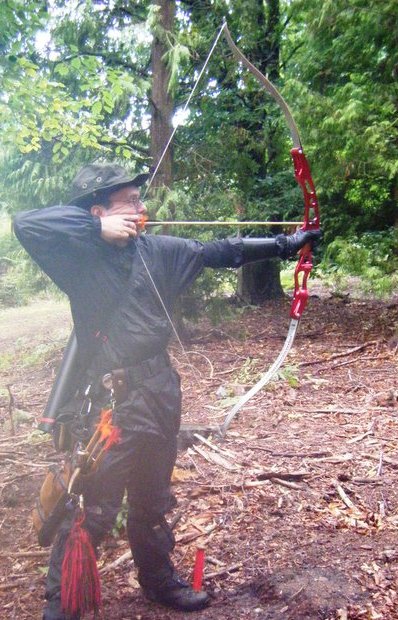
Me shooting my Samick Vision 1

Me shooting my Samick Vision 1 in the rain

Off the rest or the shelf – For a first bow you really want to shoot off an arrow rest. Don’t go for expensive one. Plastic Hoyt super rest works fine (in fact Sharon uses one on her competition bow.)

Hoyt rest

Hoyt rest Sharon’s old bow

 What I need to know?

Draw length is very important; in fact it’s vital as this will possibly restrict your choice of bows. If you have a long draw then short bows will not feel comfortable.

If draw over 28″ look at 64-66 at least in my view.

Budget – set yourself a budget you can afford and stick to it. It is very easy to spend more. (Another downside of ebay and getting caught up in excitement of bidding)

Club restrictions – may sound strange but some clubs don’t allow carbon arrows, or are longbow only for example. Some target clubs that share their shooting ground with sports clubs have a policy on using carbon arrows

What limbs to get?

Between manufacturers limbs will feel different even if they are the same draw weight, and will release energy differently depending on what they are made from.

Don’t go for the first ones offered try a couple of different lengths and weights

Don’t go for heavy draw weight limbs initially, you can always upgrade later.

Also get the limbs and bow weight checked when you buy it. Just because the limbs say 28lbs doesn’t mean they are 28lbs with that riser, so its worth checking (A few years back I bought a Solo flatbow, rated at 40lbs at 28 inches, when weighed it came in at 46lbs at 28 inches!!)

Ask for advice from the archery community – (Jordan Sequillion blog has run some very good blog entries on bows and poundage, also check out Charles’ Archery blog )

Couple of final points.

Bow length and stacking (stacking is the feeling of increased resistance in the smooth draw past a certain point)

Short bows tend to work for people with shorter draw lengths, Sharon loves small bows but her draw is only 26 inches. She shoots a custom made bow (Blackbrook bows by Andy Soars) this comes in at 38lbs at 26 inches.

Though the norm is to have bows rated at 28” draw, shorter bows often have a 26” rating too

If I were to try to draw Sharon’s I struggle to get past 26 inches as it stacks past 26” because it has been designed and built for the best performance at 26” My draw is just past 29 inches and all my bows are set so I can draw smoothly up to my full draw, with an even increase in draw weight.

Never draw a bow that has been designed for another archer without their permission.

If you have a long draw length then go for a longer bow 64 inches plus.

People will have had experience of bows, shops etc so its worth talking to others in your club. I tend to offer to go with any new student when they go to buy a bow.

I’ll try to put one last posting on what to consider after you have got your bow, maintenance or bow and string, bracing height and soemthing on arrows.

As always, thanks for reading.