Welcome to the last podcast of 2025. How crazy is it to think 2025 is almost over. It’s that strange time between Christmas and the New Year, where we lose track of which day of the week it is and its still festive but not Christmas.
In this episode, where I dare to be in front of the camera, rather than just a voice, I give a quick review of 2025 from Off the Arrow Shelf HQ, also known as my office come fletching room, but more importantly I get the opportunity to say thanks to all my followers, listeners and subscribers. I’ve uploaded it to YouTube, Spotify and it’s on Amazon music.
There is my YouTube channel where I have been uploading more content this year, both shorts and longer form recordings of 3D reviews, gear review and more. If you enjoy the content, please hit the Like button and consider subscribing to the channel.
Two videos that have seen a lot of feedback have the the breakdown of the NFAS shooting styles for Barebow and Traditional Bowhunter. I hope to do some more of these covering different shooting styles.
I have been very fortunate to have some fantastic guests this year from the world of archery, scouting and beyond.
I would also like to give a special thanks to my friends who have been amazing this year. A year that has been very emotional with the recent loss of of my Mam
As for 2026? I have a few ideas for some more 3D target reviews along with some coaching topics including how to use a range finder to aid your archery development, along with working on videos I mentioned earlier. I might even get to do some archery, if I can decide on which bow to shoot. In the meantime remember to enjoy your archery.
If you have any questions or queries you can drop me an email on or via this website
Most of all remember to enjoy your shooting and as always thanks for listening, watching and supporting me over the past year.
In this episode (episode 130) of the podcast, I do my best to answer a question from a follower. The question is about how you go about tracking your progress and monitoring your improvement in archery over time.
I break the process down into tracking progress when shooting at your home club grounds and when you venture out onto competitions. It’s a tactic I have used for several years and the process works well.
I’m not going to be giving advice on how you improve your archery in this episode, it’s solely about tracking your progress.
Home club
The difficulty with shooting the same course is you don’t always focus in the same way, you can become a little complacent resulting in a lack of focus in the same way. I’ve used this phrase in the past ” You learn to shoot the coach and targets, you don’t learn to read the shot.”
In NFAS the goal is to shoot as few arrows as possible when at a competition, as your first arrow will score the highest being 24 pts / 20 pts / 16 pts. If you take a second arrow this will score 14 pts / 10 pts, with a third arrow scoring 8 pts or 4 pts. Remember in the most commonly used course round in NFAS, the Big game round you only get to shoot a max of 3 arrows. If you miss with the third and final arrow you blank the target i.e. score 0 points.
There are other rounds but the Big Game round is by far the most commonly used.
The first thing you will be wanting to track are the number of blanks you have when you are shooting. Chances are when you are starting out you will be getting quite a few of these. As I explained earlier a blank is when you shoot all 3 arrows but fail to score. You obviously want to try to reduce the number of blanks and over time as your skill improves you will, replacing them with a successful hit.
The next this you will want to track are the number of 3rd arrows which are scoring. Note down what you scored, was it a 4 or an 8. Ideally an 8 means you have learnt from the 2 previous misses, compensated and produced a good shot.
You also want to track the number of 2nd arrows and what you scored, was it a 10 pts or 14pts . A 14 normally means you have been able to correct you mistake or misjudgement, nailing it the second time.
The final step is to track the number of 1st arrows and what you scored, was it a 16, 20 or a 24. You goal is to increase the number of first shots that hit.
Over time you will see your arrow count reduce and scores gradually improve, but it may take time. So please be patient with yourself and kind to yourself. Its also worth noting any other variables, like different arrows, or if the weather such as strong winds or rain impacted your shooting.
At open competition
When you start going out to competitions you still want to continue to track your blanks, 1st, 2nd and 3rd arrows as a point of reference as this can indicate how things are progressing over time.
The other method of tracking progress is to identify a base line as a comparison. The thing to remember is that NFAS courses can vary greatly, this means no 36 or 40 target course can be identical to another. Even if you shoot the same clubs course on multiple occasions chances are there will be differences, whether that be 3d targets used, peg positions or even the weather.
Therefore, it’s a good tactic to identify someone act as a baseline. Ideally the person chosen should be someone who shoots consistently. Not like me who have good or bad days. If you can track their scores and compare it to yours you will be able to judge how challenging the course would have been.
Lets say the you scored 400 and your baseline person Mr Smith scored 600, a difference of 200. Next time you shoot you get 350 and Mr Smith gets 550, still a difference of 200 you know it was probably a more challenging course.
Then on the following course you score 500 and Mr Smith scored 600, you know you’ve probably improved.
Yes you did read that correctly this shoot report, the first for 2025, is about the National Field Archery Society first ever indoor championships held in January 2025.
Some of you will be aware that I have recorded and released a couple of podcasts already providing an insight into the event. The first (109) gave my thoughts on the event setup, theme, targets and in the second (110) there was a more personal view of the anxiety I felt over the weekend. Links to both are shown below so please have a listen and let me know what you think.
I’m not going to repeat everything I said in the podcasts here, instead I going to try and give an overview or summary.
There are also a couple of videos on my YouTube channel of the first and second days.
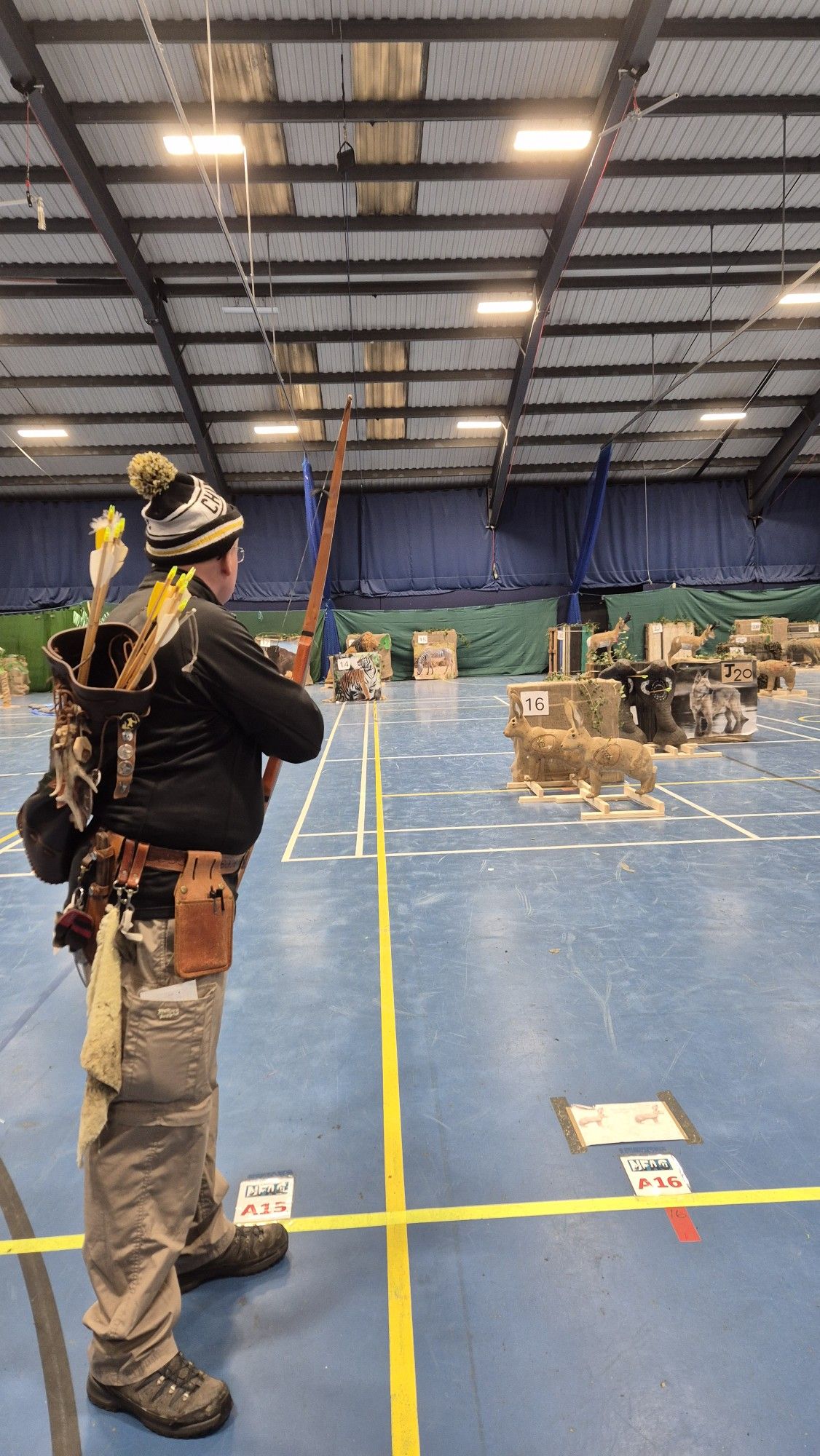
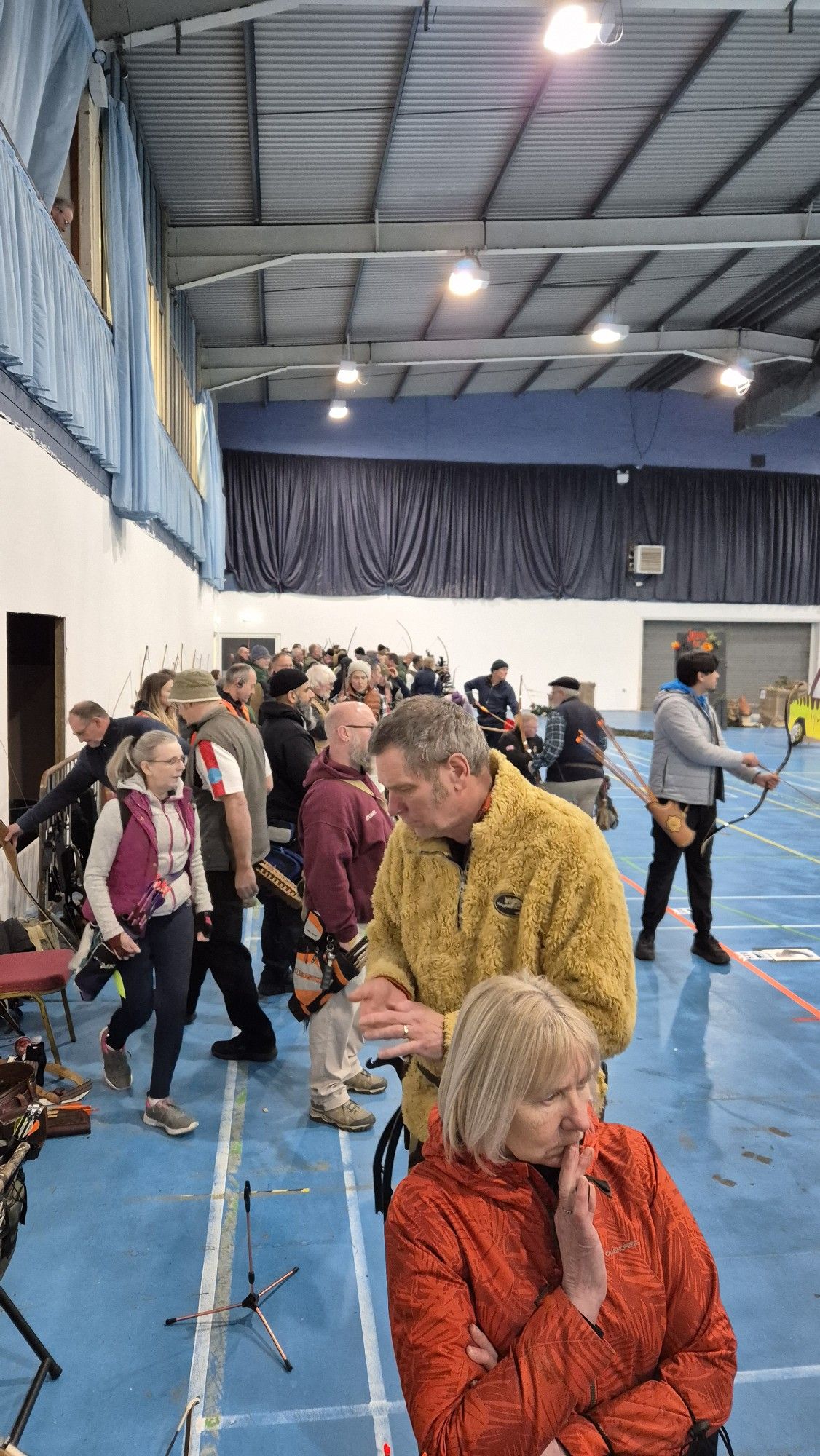
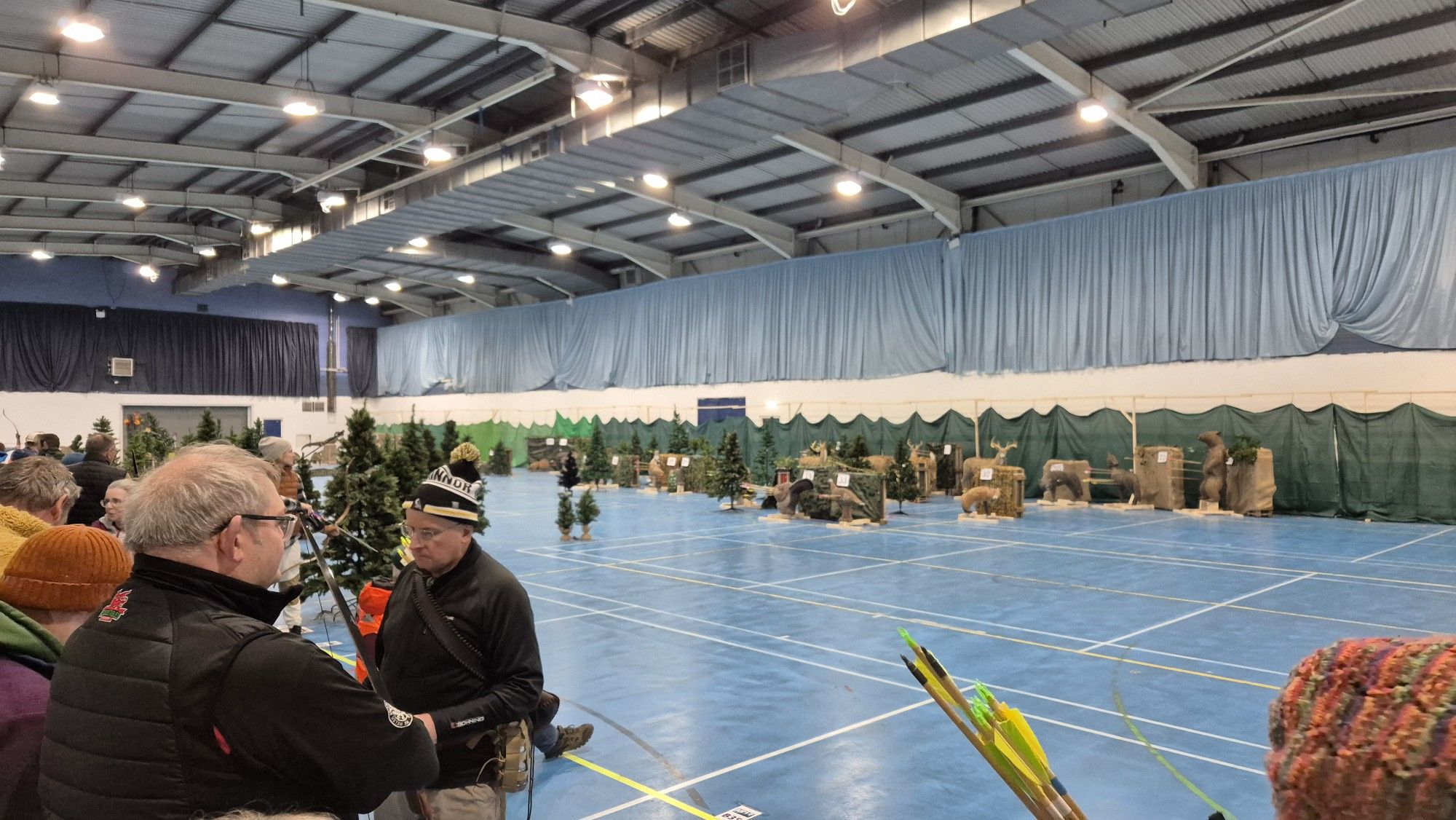
There is no doubt there was a huge amount of effort made by the organisers for the event which saw 2 sport halls filled with 40 targets each, the majority of which were 3Ds. All the 3Ds had some form of backstop target boss for wayward arrows, with hall B having a purpose built frame running the full length of the hall, on which were suspended nets. Added to this were the 300 plus archers filling the shooting pegs, it did get a little cramped at times.
core organising teamEven marshals need to eat
The competition was spread over a 2 day weekend, with competitors shooting one hall Saturday and the other Sunday. We were all shooting Hunting tackle so would shoot B hall Saturday and A hall Sunday.
Each hall was themed with Hall A being Jungle / Africa seeing crocodiles, zebra and other African themed targets, this gave way to a mountain region with polar bears, elk, mountain goats.
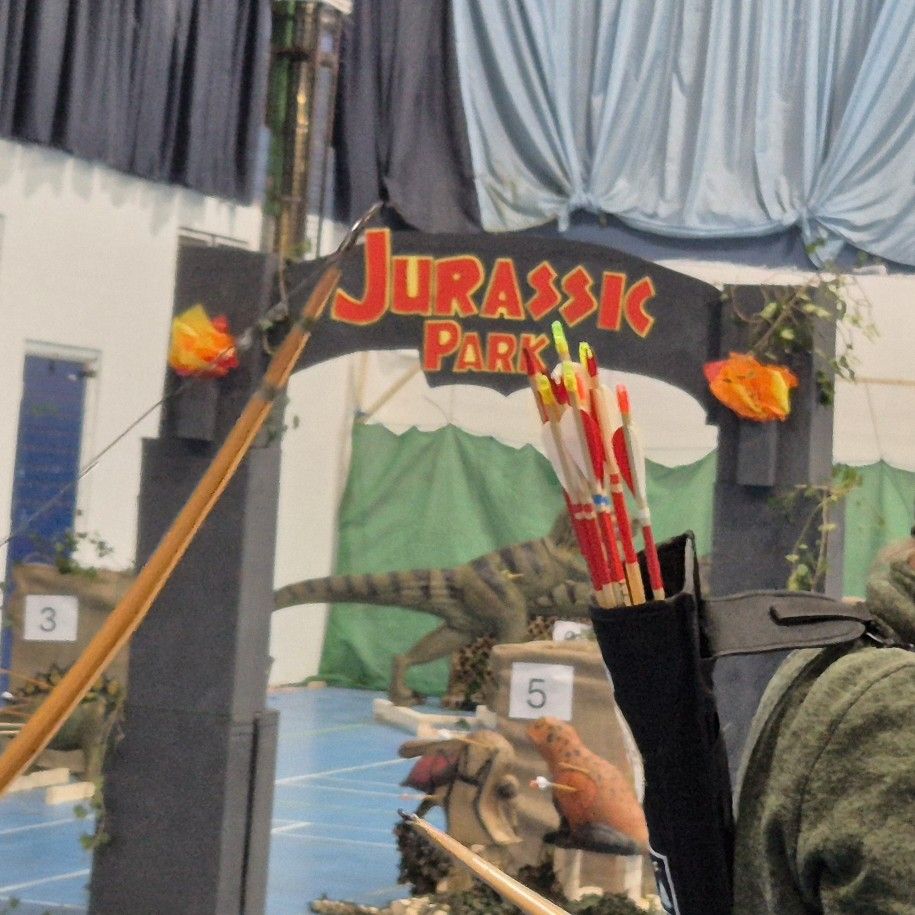
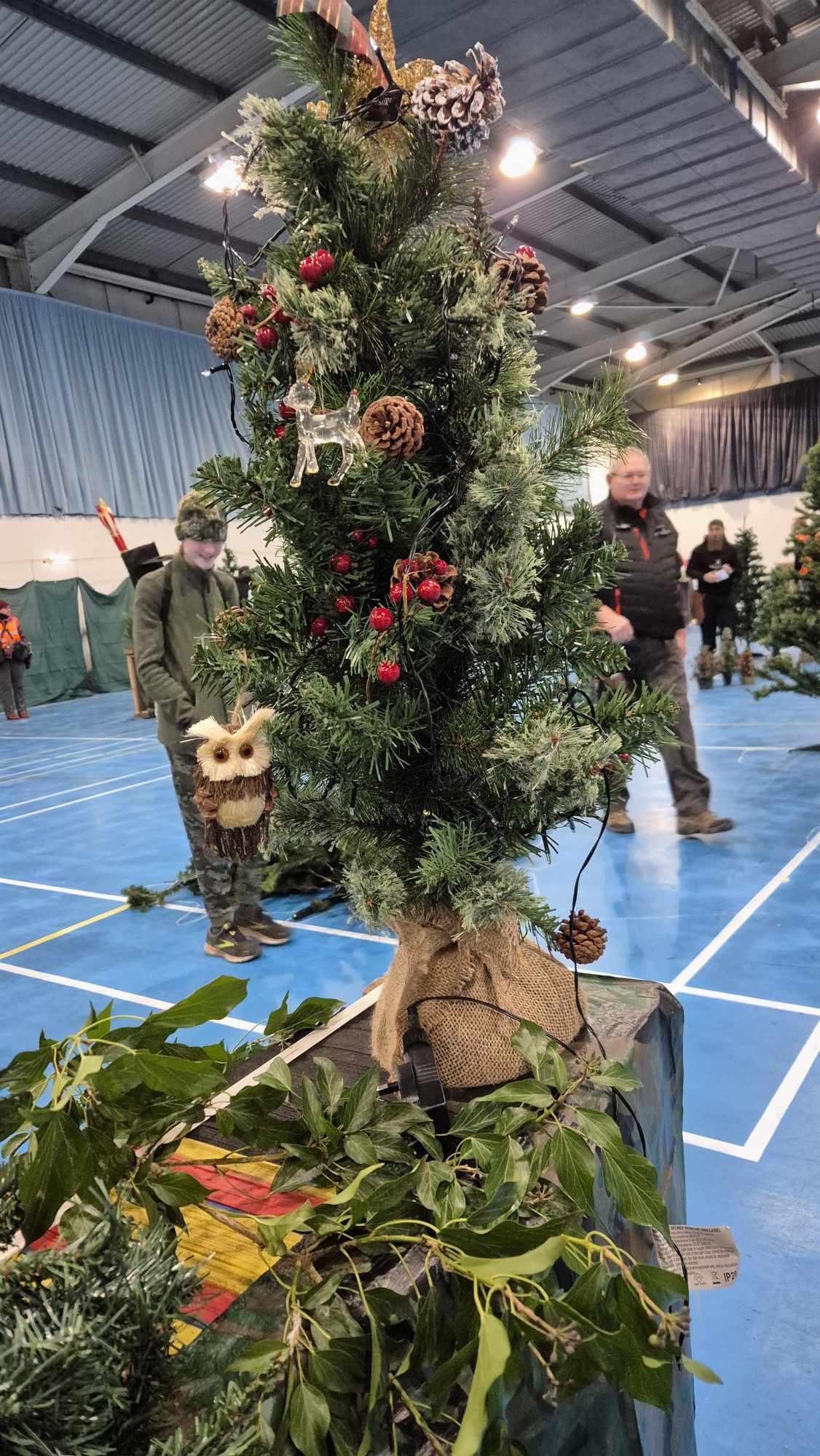
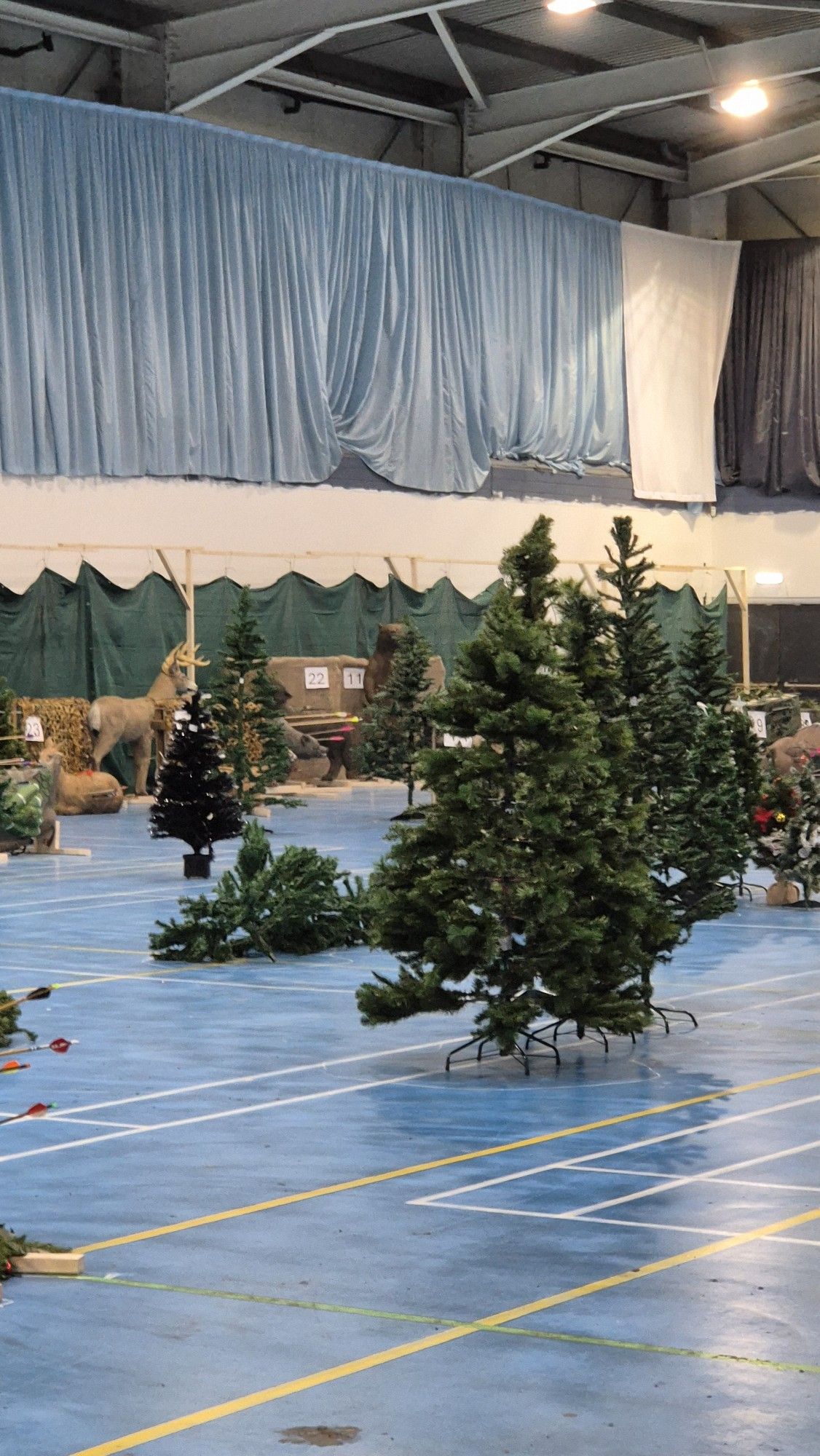
In hall B there was the Jurassic Park section with a variety of dinosaur targets, giving way to the woodland area where countless Christmas trees had been positioned, the final area being the ocean section with various fish, turtle and aquatic targets.
Arrow survived impact with wallOcean area
It was a very new experience for many of the archers present including myself. The closest I had come to shooting indoors was when I ran a “have a go session” at a local school several years ago. This was obviously something completely different, made obvious by the noise. When shooting a normal outdoor field course you will hear the sound of your group and maybe the group ahead or behind you. Inside its very different as you heard all 40 archers who were shooting on the line and the archers behind the shooting line. Especially loud if they missed the target in one hall and hit the wall as there was a very loud thump.
A couple of things I took from the event was firstly how amazingly friendly and cooperative everyone was, especially on the shooting line. This was really important as on the shooting line there were times when you had to take it in turn with the archer to your side to shoot.
Secondly, I would like to take this opportunity to thank all the archers there who helped support our young son in keeping his spirits up over the 2 days of competition, especially on the second day. He was getting very low at times and was really struggling with some of the distances he was expected to shoot. Thank you, it gave him the confidence to get through the 2 days.
On that note I personally feel that expecting a 7 year old to shoot some of the distances was unfair. Anything past 15 yards and his 16lb 54 inch recurve drawing 19 inches, struggled to be accurate at. There were shot after shots where his arrow would slide along the floor as it didn’t reach. Give him targets he could reach and he nailed them. Don’t get me wrong, they did put a couple of alternative targets out in each hall for some of the long shots, but only a couple. There were countless times he was still expected to shoot over 20 yards, the same distance as the adults.
Surely the society has enough funds to purchase target bosses to allow this. There were a couple of shots on Sunday he could not physically see due to positioning of other targets. I know this is sounding very negative but if the society wants to encourage young families and young archers then they need to consider this. If a child is put off going to such events then you don’t just lose them but also the parents, parents who might be coaches, club committee members or just active club members.
The marshalling and control of the shooting line was excellent on both days. They adapted the issues that occurred such as repositioning of catching bosses behind 3Ds when it became evident they weren’t catching the arrows.
For the event they had changed the normal scoring, meaning every archer had to shoot 2 arrows at every target. Each arrow would score 12 inner kill /10 kill / 8 wound. Since I had been struggling with my health since early December I decided to drop poundage and shoot my 40lb bow rather than 46lb, which was a I feel was a good call. Though it was not until the Friday before I was able to find some arrows from the forest of arrows I have that appeared to work well.
I’ve spoken to a few archers since the event and the ones I have spoken to preferred elements of B hall, possible down to the decorations of trees. Though B hall did see far more shooting at angles across the hall. This posed an interesting problem when at times you might be shooting at a 45 degree angle to your right and the archer to your right was shooting at a 45 degree angle to the left. I felt there were a lot of targets in hall A which were set at the back wall and maybe they could have staggered the distances more.
Despite being indoors, it was a cold event, partly due to poor heating in the venues halls and partly due to us not having much pace to move about. At an outdoor shoot you are walking between shooting pegs so more active. In contrast here you weren’t moving more than a few feet back off the line.
In contrast hall A didn’t have as many crossing shots but felt a lot more cramped on the shooting line at times, where you were very close (less than a couple of feet) to the person either side of you. This was very obvious on Sunday when a freestyle archer was to our side with side bars.
Saturday would prove to be a long day for arches. To be fare this was partly due to a marshal being taken ill and ambulance being called, which delayed the start in hall B until 11. Thankfully she was ok, though a little bruised after her fall and made an appearance on the Sunday. There was then a second stop when we were instructed to move our cars off the playing field by hall A due to an incident involving an arrow exiting the building (hall A ).
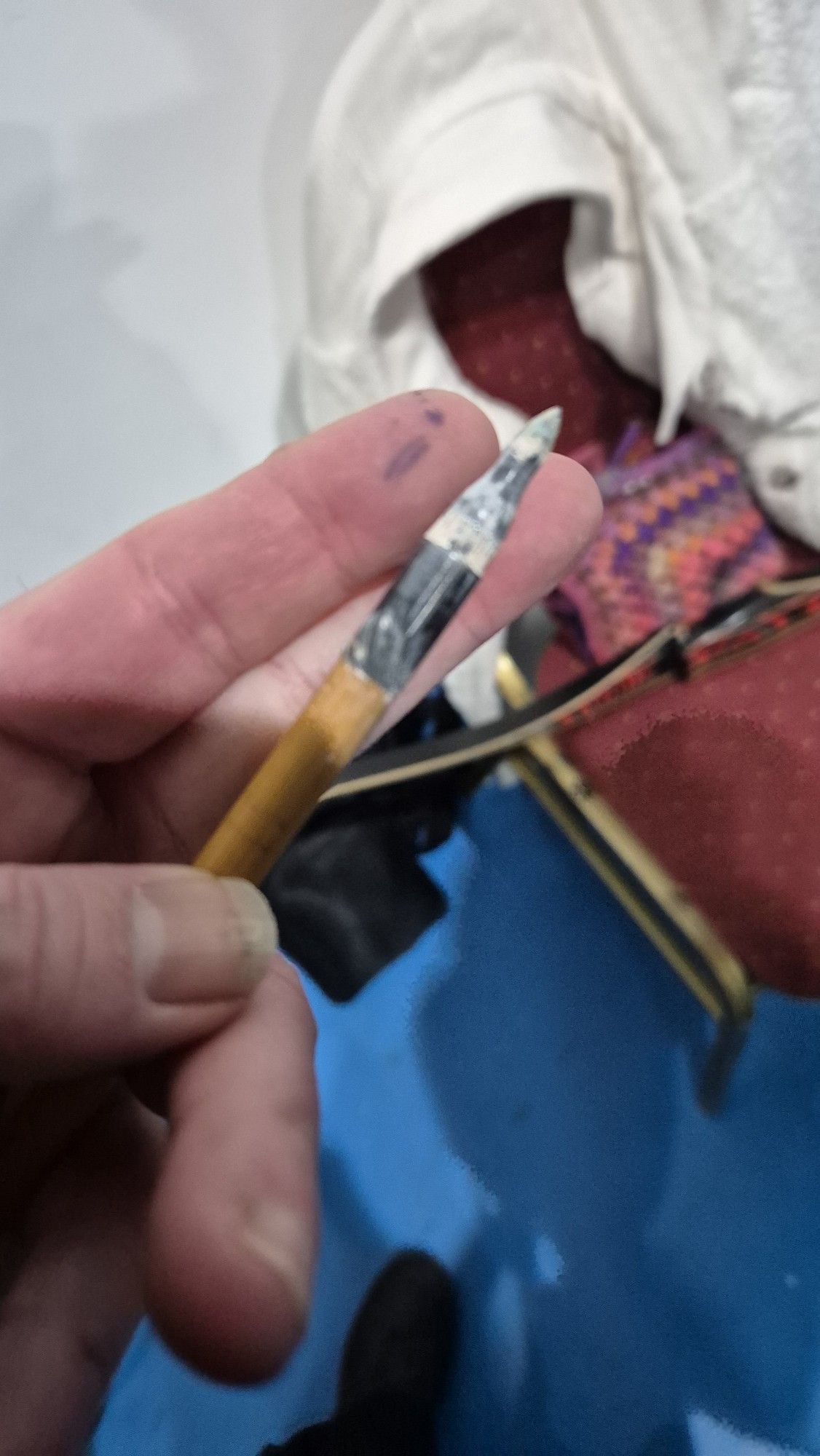
I was surprised at how well I coped with the pressure of so many people around me on the first day. I was able to control my anxiety of being watched and focus on my shot sequence, even though at times I was the last one to be shooting not only in my group but the hall. All this despite one of the first targets I shot I missed the 3D and stuck it in the wall , having gone through the archery net. It proved to be a tough arrow as I used it for the rest of the tournament.
All these delays meant I had not had the lunch break until 2.30 pm and we didn’t finish shooting until gone 6.30 pm. with nearly an hour drive home we opted for a fish and chips supper and early to bed. Sadly I didn’t have a restful night and Sunday was an earlier start for us as Admin was open 8-9 rather than 9-10 on Saturday. Add to this a motorway diversion we had to set off earlier to allow more time to get there. There were a few jokes as to whether there would be enough light to use the practise area which was outside the buildings.
It would be fair to say I was struggling more on Sunday and the second podcast explores this in more detail. I felt a great deal of anxiety and inability to focus. I know part of this was trying to keep my sons spirits up, but also I was not feeling at ease. In hindsight I think I felt less at ease and partly because I think I wanted to shoot well and repeat the first days shooting, but was considerably more tired. I think this was highlighted best by me blanking the last target of the day with both arrows. that mistake would cost me a placing.
As for whether it could be improved for the next time, then I think it is fair to say yes, there are a few things that the organisers might want to consider.
maybe less targets, say 36 rather than 40 which would give more space.
alternative targets for junior archers set closer, more reasonable distances
more space on the shooting line between archers, especially when shooting at an angle across one another.
target positioning so not shooting through others arrows.
as them to switch the heating earlier please.
I was asked if I would go again and I think I possibly would. Overall there were enjoyable elements and there was lots of effort made by the organisers team and attending archers who recognised this was a new style of event.
So how did we get on?
Sharon came away with a 3rd place in Hunting Tackle, our son shot both days and came away with first and me 4th. The full results are available on the NFAS website.
As always thanks for reading and if you want a full breakdown of my thoughts have a listen the podcasts.












 My Archery Experiences