Equipment part 4 – Failure and damage – Arrows

Damage can occur

No matter how careful you are equipment will get damaged over time and it is very important that you take the time to check your archery equipment to ensure you can spot issues before they become dangerous.

I’m going to concentrate on arrows in this section and write another one on bows in a week or so.

If you are a coach it is worth showing students and other archers the type of damage that can occur to their equipment.

One piece of valuable advice I’ve seen on a couple of sites is never assume an arrow is safe, even if it is brand new. Likewise expensive arrows can also be damaged in transit or manufacture, so always check them each time you shoot or retrieve them.

Here is a close up of an unusual style of arrow break.

arrow damage

split shaft close up

Another photo of  the same arrow shaft, you can see how it has split down its length.
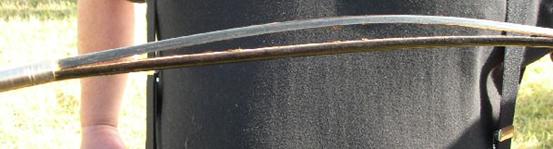
split shaft full length

split shaft full length

Below image shows what happens when a wooden arrow impacts a wall  and the pile is flattened. Notice how the wooden shaft has snapped and then been forced into itself.

Arrow Damage

Compression break of wooden arrow

Sometime you can spot damage before it becomes a critical failure, below is a close up shot of a wooden arrow shaft that is showing signs of failure. You can see vertical crack lines across the arrow shaft. This will eventually result in the arrow bending or breaking.
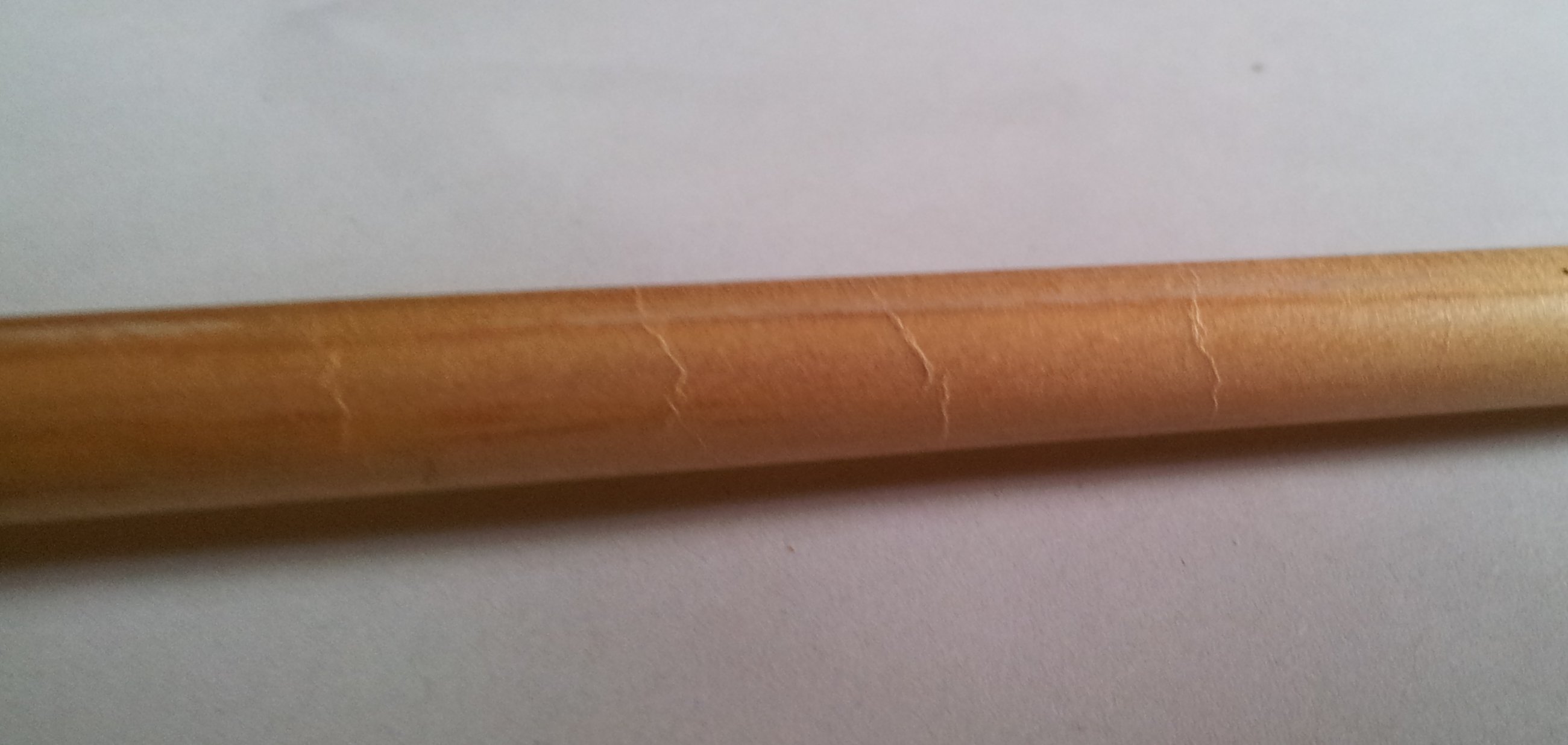
damage to wooden arrow

Damage to wooden arrow

It’s not just wooden arrows that can fail and become damaged.

The photograph below shows what can happen to aluminium arrows . The archer had managed to hit their own nock with another arrow (great grouping in the target). The nock has shattered and the metal arrow has peeled back like a banana. This is sometimes called a Robin Hood Shot.
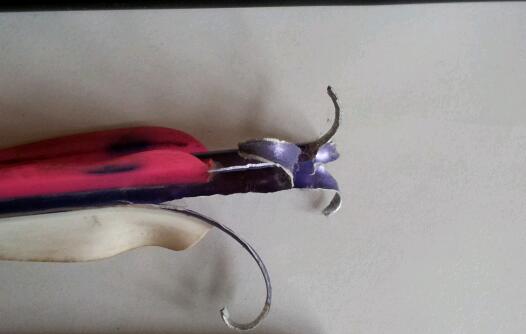
A Robin Hood shot

A Robin Hood shot

Obviously this arrow is no longer usable, but there are times when you will not have such a critical failure or damage. When your aluminium arrow might be only slightly bent and it can be possible to straighten them but it takes time, a level or expertise and correct straightening jig. Below shows a “slightly” bent arrow, following contact with a tree.
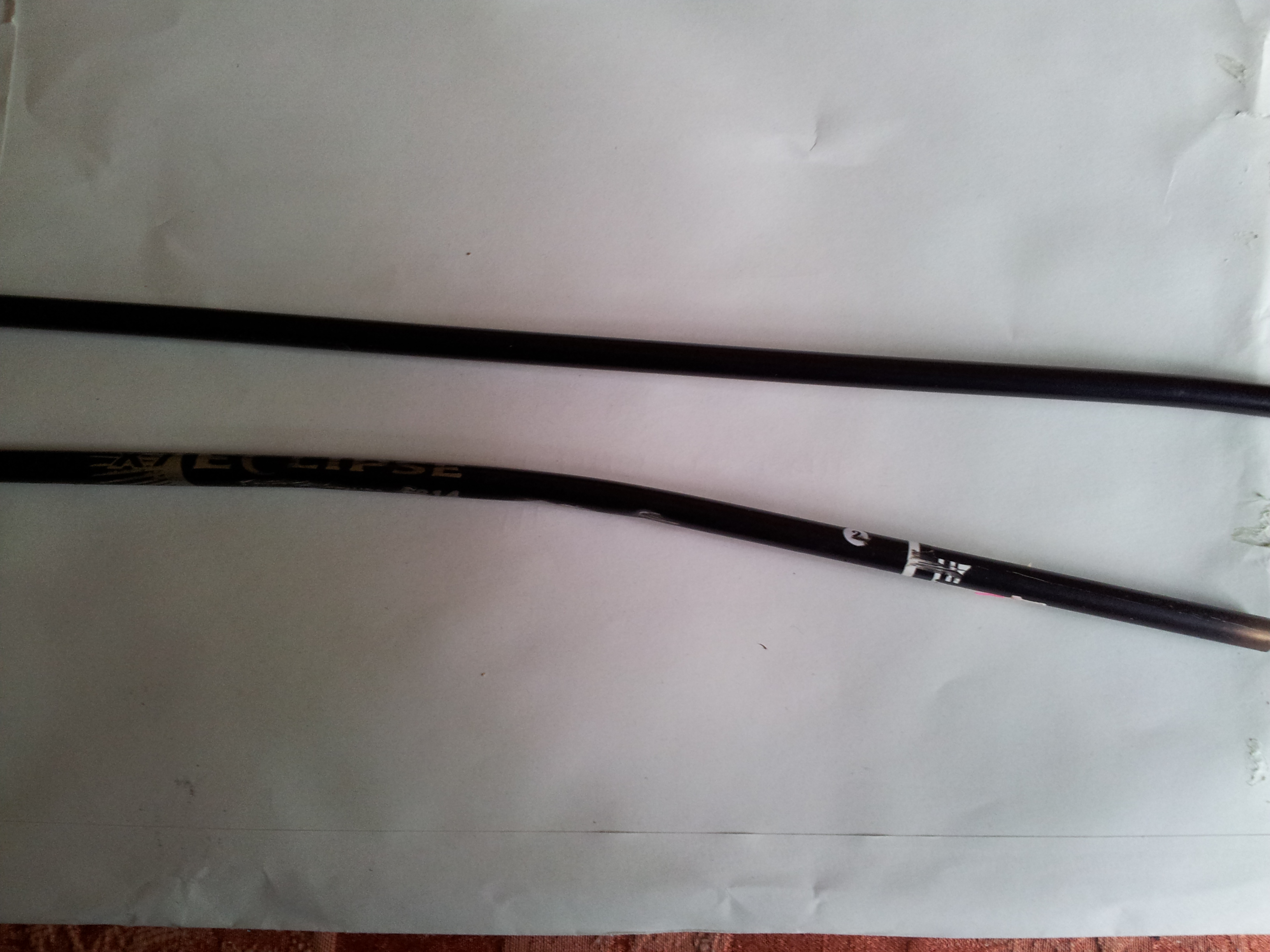
Bent arrows

Bent arrows

Carbon arrows also need checking regularly as they can split or worse still shatter. I’ve seen a compound shooter at a championships, release their arrow and it shatter into a million pieces, showering her and those around with carbon splinters. Fortunately no one was hurt and even more amazingly the bow was undamaged!

I know some archers now wear a Kevlar glove on their bow arm to protect them from any possible arrow failures.

It is not only at the bow end problems can occur, there are times when you are drawing arrows that the arrow may break, so it’s always worth either wearing a glove or using an arrow puller to give a cleaner and stronger grip. I’ve had to patch up a few people over the years who have cut themselves when drawing arrows that have split.

Also be aware of carbon splinters in targets. this often happens when the arrow pile has been forced into the shaft following a hard impact and resulting in the carbon shards breaking off.

A good way to test you carbon arrows is to flex the arrow, if you hear cracking or see splintering then dispose of  them. Also be aware that if you use arrow wraps, cracks can appear under these and are not always noticed.

Here are a couple of good sites and articles on testing arrows, be warned though there are a couple of graphic scenes of what can happen when an arrow fails.

http://www.huntersfriend.com/arrow-safety-warning.htm

http://www.youtube.com/watch?v=k6nIbvrMTbE

Tip – if you have a carbon arrow splinter on a shoot or when practising, don’t drop it into your quiver as it will leave splinters in the quiver. Take some tape and tape over the splintered section, this will stop loose pieces breaking off and fulling your quiver with razor-sharp splinters ( I always carry a roll of micropore tape in my first aid kit that is ideal for this.) You can then drop it into your quiver and dispose of it when you get home.

As always thanks for reading and I hope you’ve found this of use.

Shoot report – Doverdale September 2012

Last Sunday saw us travel 20 minutes down the road to Doverdale archery club. The last time we had shot there was over a year ago and a lot longer journey time.

Unlike last time the weather was great, bright sunshine and blue sky for most of the day. Numbers were down too, though there was a good turn out from SVFY with us shooting with Sue and Ian from the club. Due to the low numbers they opted for a lunch break from 1 – 1:45 rather than a shoot through. On that topic I would like to say thanks to the catering guys who slaved in a hot kitchen to make sure we had a hot meal. Thanks guys the food was great.

Doverdale bow stand

Doverdale bow stand

As for the course, this was a mix of 3d and paper faces, making a 40 target course in total (10 3ds and 30 paper).

The course was hard, not like Wolverine the previous week which used the terrain very well. Here it was small targets at longer distances than they need to be. Don’t know whether they set it up as a pre champs (National Field Archery Champs is next weekend), but think it was very tough, tougher than it needed to be.

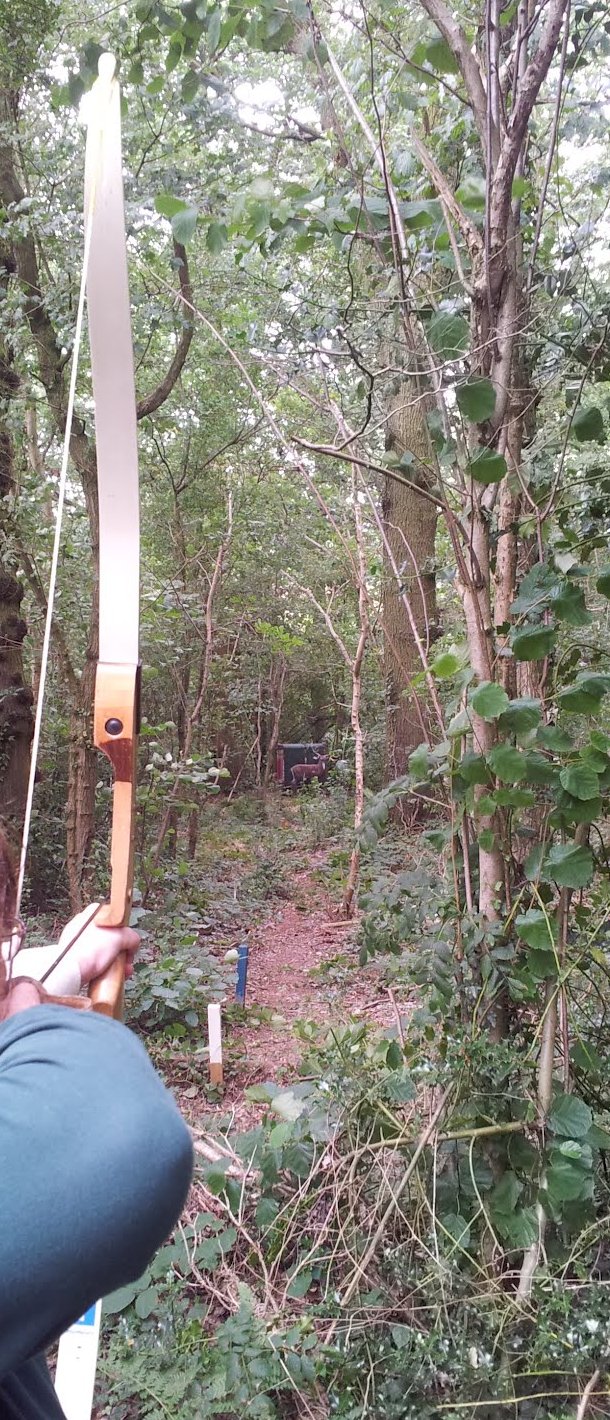
Second target on the day

Second target on the day

It’s a lovely large mature wood with lots of great opportunity for deceptive shots. For that reason I couldn’t work out why they would put a target out 3-10 yards further than it needed to be. I don’t believe this helps to make a shot a challenge, just stretched. This won’t affect the very good archers but gets demoralizing for us mere mortals.

There were also too many repeat target faces and a lot of archers commented on that. I think we shoot the same paper duck target face 4 times at different points in the wood, and standing hare a few times too. For a 40 target course where 10 targets being  3Ds,  having the same face 4 times is a bit much to say the least. Bit disappointing too when you consider the number of faces out there. (This is turning into a bit of a moan sorry readers.)

The other thing I would like to say is how much I hate the plastic legs on some of their 3d deer or on any 3D.

For those of you not familiar with these 3D targets I’ll explain. The body is the normal foam 3d but the legs from just below the body are hard plastic like the plastic used for heavy-duty plant pots or urns in garden centres. They aren’t very friendly for wooden arrows, I  snapped 1 arrow in them when trying to remove it. They tend to close round the piles. I know a couple of archers that joined me in losing piles or snapping arrows. Sue who was shooting a low poundage bow due to a shoulder injury had her arrow hit the leg and bounce back because they are so hard.

So why are they used? Price I guess, I think they are cheaper than having full 3D targets

Last target of the day

Last target of the day – deer with plastic legs

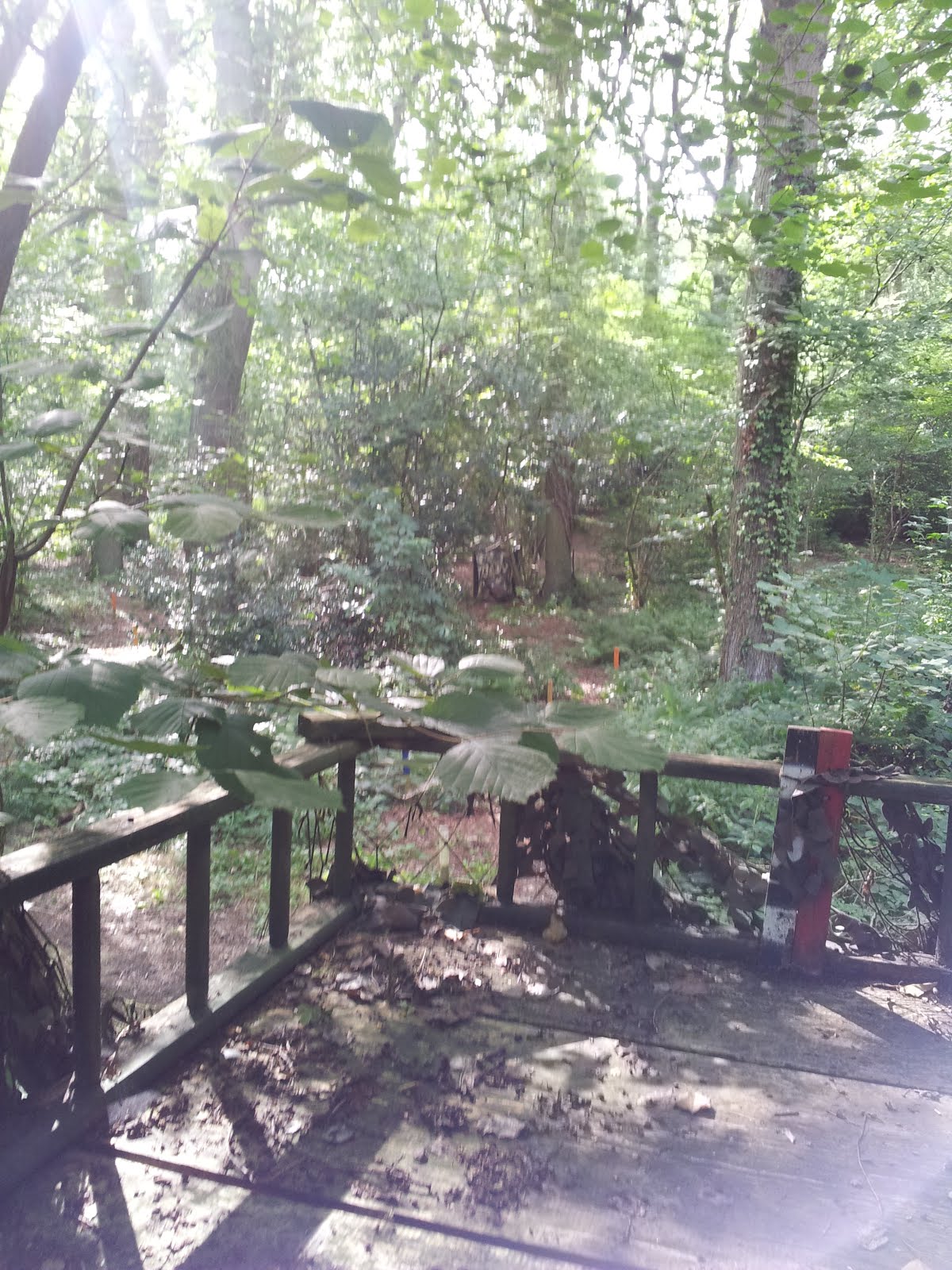
There were some nice shots one-off the raised platform, but even this was off-putting as the next peg was so close you had archers in front of you.

View from platform

View from platform

Sharon did well despite blanking one target she won first place in ladies Bare Bow.

In all I think I might return, not because it’s a great shoot but because it’s convenient, though I will take spare arrows.

As always thanks for reading.

Archers Paradox video

This last weekend down at the Wolverine shoot a few of us were discussing the importance of having the right spinning for your arrows. I think part of the reason for this was due to a couple of us having bought the tapering jig recently and Jim having got some arrows made up recently.

Whilst doing some research I came across this video on the Archers Paradox and dangers of using the wrong spinning of arrows.  I’ve posted a shorter version of this a few weeks back and I know a few other people have posted the link too.

The effects of too low a spinning is very evident, the arrows are almost like they are rubber bands! Also note the protective glove the archer wears when trying out low spine weights.

Thanks for reading