Walk out to Y course on Saturday
A few weeks ago there was the National Field Archery Society 3D championship which is one of the larger events in the NFAS calendar. This saw just under 700 archers attending the two day event, which this year would be held on the outskirts of Sherwood forest, Nottinghamshire. Somewhat appropriate don’t you think for an archery competition.
The two courses I would be shooting were Y and X course, set by Spirit of Sherwood and Pines Park respectively. Unlike at a normal shoot where you would be shooting with other archers in different disciplines in the same group e.g. barebow with longbows, compound with flat bows, these courses would be specifically set for wooden arrow shooters.
What are the championships?
For those not familiar with the process of the NFAS championship here is a quick run down.
The championships consist of 2 days of shooting 2 different courses. With all 40 targets being 3D targets of varying sizes and distances.
For those not familiar with the process of the NFAS championship here is a quick run down.
The championships consist of 2 days of shooting 2 different courses. With all 40 targets being 3D targets of varying sizes and distances.
A & B courses were for archers shooting compound bows, crossbows and barebow ie the metal/carbon arrow courses. X & Y were for longbows American flatbow, primitive and hunting tackle i.e. the wooden arrow courses. Normally Y and X are the classification for metal arrow courses, but for some reason the they changed it this year. Maybe it was to keep us on our toes. You are randomly allocated to a shooting group. With all archers in the same class shooting the same course on the same day.
You can check out the previous years reviews here for 2015. So I would shoot Y course Saturday with all other flatbow archers and X on Sunday.
Behind the scenes
There is a an awful lot of preperation work that goes on behind the scenes at events like this. Espeically in the case for Spirits course (Y) as the undergrowth and tree plantation needed a lot of clearing to make clear pathways and routes through. So well done guys.
Administration of shooting groups is also another headache and I know there was a delay on the Sunday due to a number of no shows on the metal arrows courses. So top marks to the administration team (Karen, Shirley and others) who, not only coped with last minute drop outs but also managed to get the final results out and on the websitea little over 24 hours after the end of the event.
There is a an awful lot of preperation work that goes on behind the scenes at events like this. Espeically in the case for Spirits course (Y) as the undergrowth and tree plantation needed a lot of clearing to make clear pathways and routes through. So well done guys.
Administration of shooting groups is also another headache and I know there was a delay on the Sunday due to a number of no shows on the metal arrows courses. So top marks to the administration team (Karen, Shirley and others) who, not only coped with last minute drop outs but also managed to get the final results out and on the websitea little over 24 hours after the end of the event.
I would also like to say how great it was to meet new people and old friends.
We’d decided against camping this year, and instead found a small pub about 3 miles from the site. Memories of heavy rain and wet tents always come to mind when people think of the 3Ds but this year it was to be a fine dry weekend.
One of the advantages of the 3D championships more so than other champs is the chance to catch up with old friends like Mark Taylor of Artemis. Mark took us to our first ever NFAS shoot so it was really great to catch up with him.
Day one

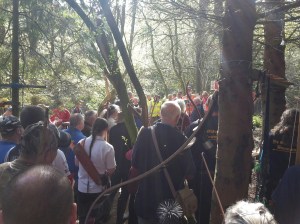
Y course announcements at Spirit of Sherwood
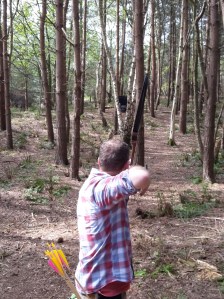
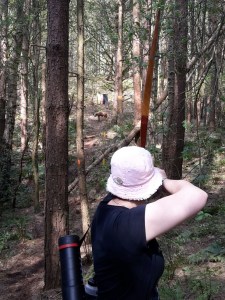
So I would start the 3d championships on Y course and peg 12 with 3 other archers, Brian and Amanda shooting longbow and Claude joining me on flatbow. The course was set by the Spirit of Sherwood club who in my view set some the best club courses on the nfas circuit.
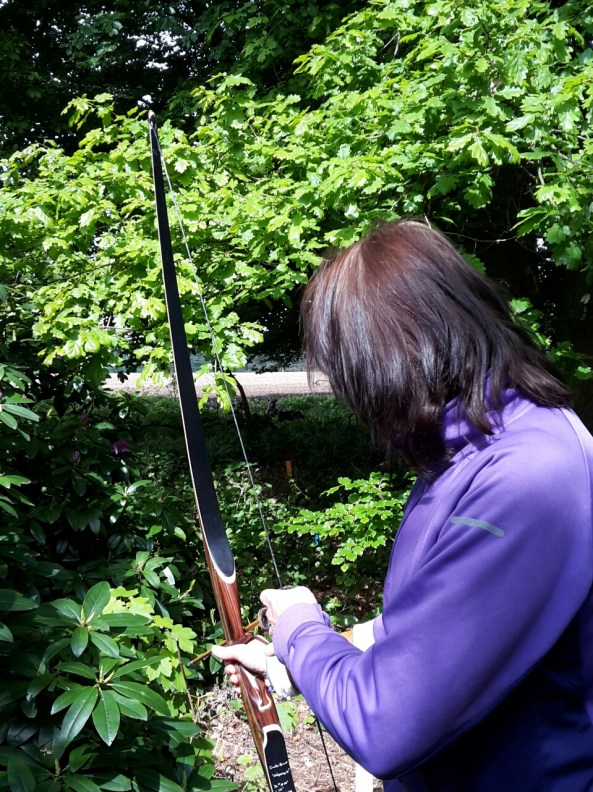
First target on Y course
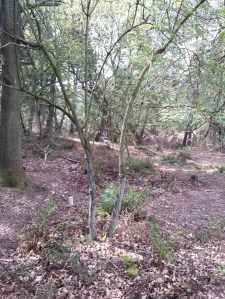
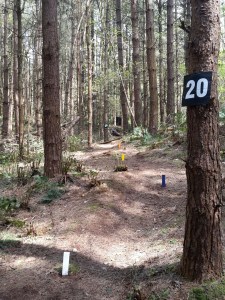
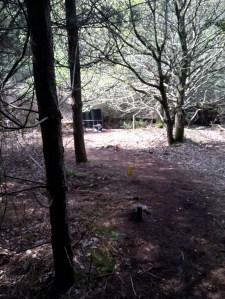
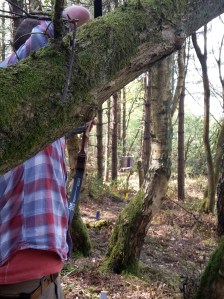
When you got out onto Y course and started moving through the woodland it was evident the sheer amount of work involved in setting up a course in this virgin woodland. I hate to think how much fuel must have been used in chainsaws and strimmer to cut through dense woodland section.

Y course after food break
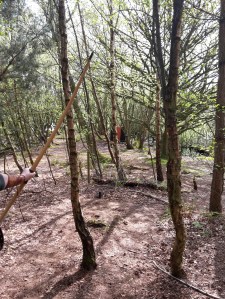
The terain did make for closer shots than expected, which in some ways made it more frustrating when you scored 16 points for what should have been an easy 20 or more. That lapse of concentration is the archers fault and I freely admit to being one of them.
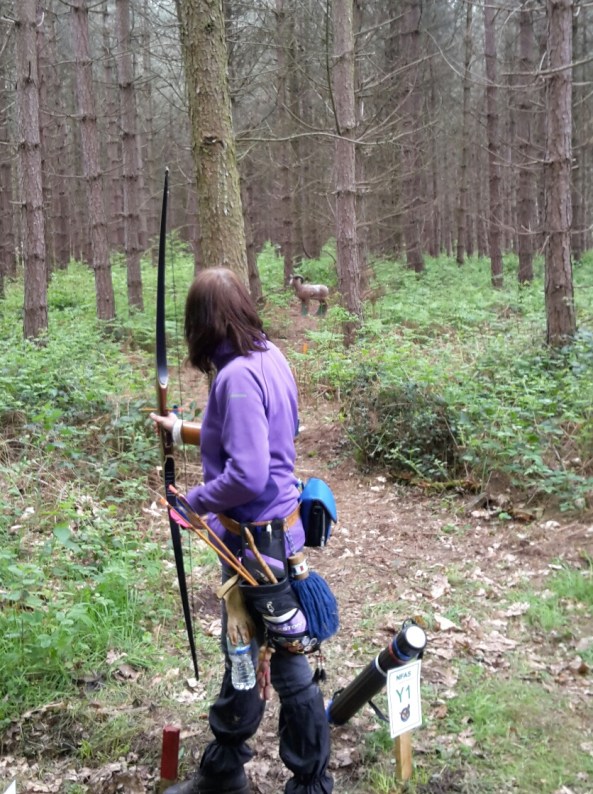
another 3d on Y course
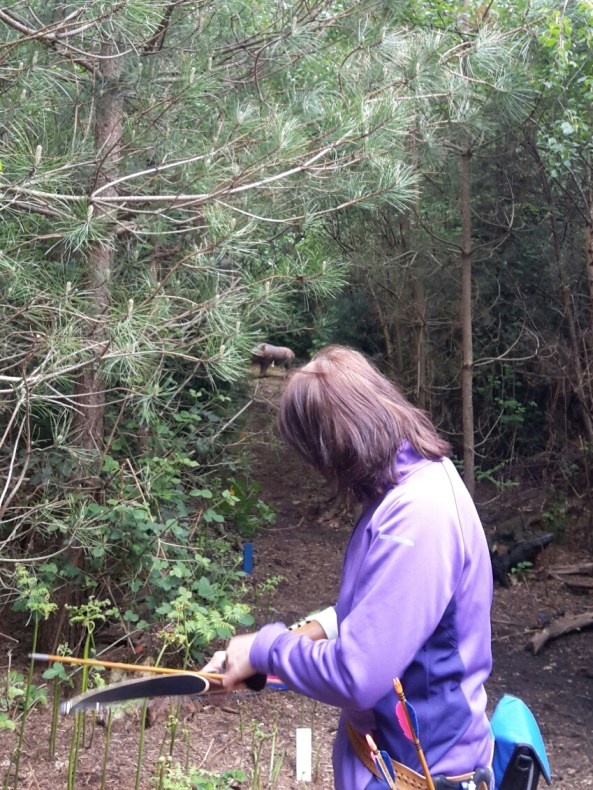
3D in the darkness
Others might say it was too easy, well I didn’t see any max scores recorded. The shorter distances also meant the lower poundage bows or the less experienced archers scored well.
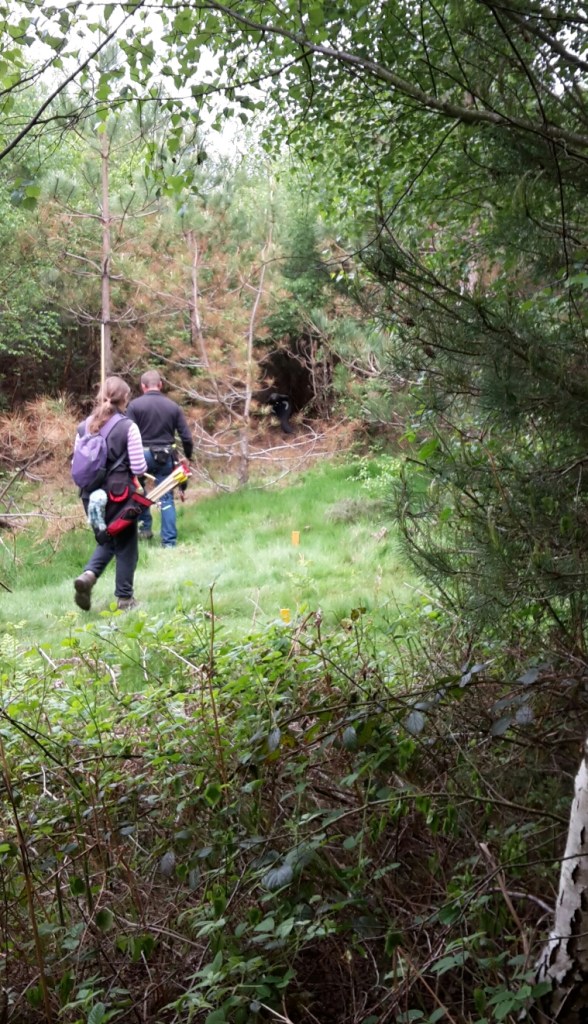
Cobra in the shadows on Y course
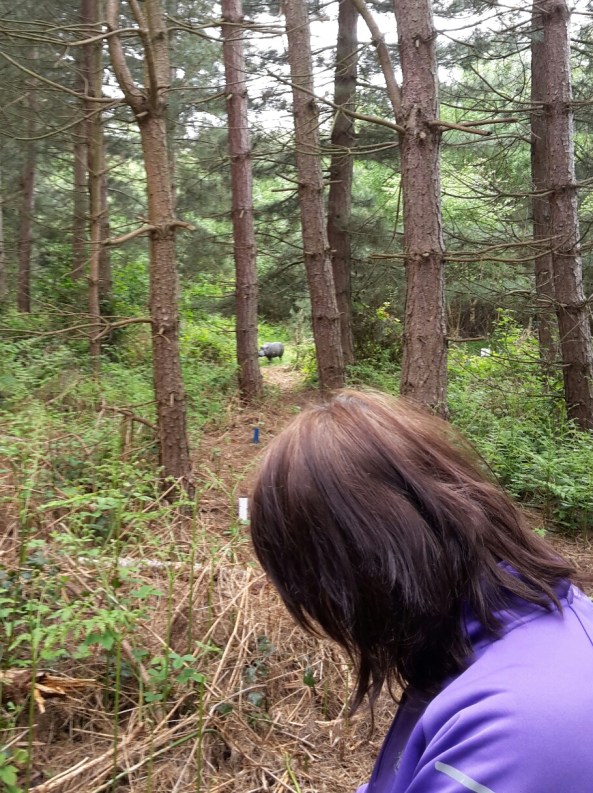
one of the longer shots on Y course
One thing I have not mentioned are the cakes. Spirit of Sherwood have a great cake stall and I would recommend their lemon drizzle cake to everyone. In fact I think I just have.

Last target of the day on Y course
So that was the of the first day and we headed back to our digs for some food and rest for the next day. Unlike in previous years the organisers did not post the first day results, so no-one knew where they were placed.
Thanks for reading, i’ll post the second days review shortly.