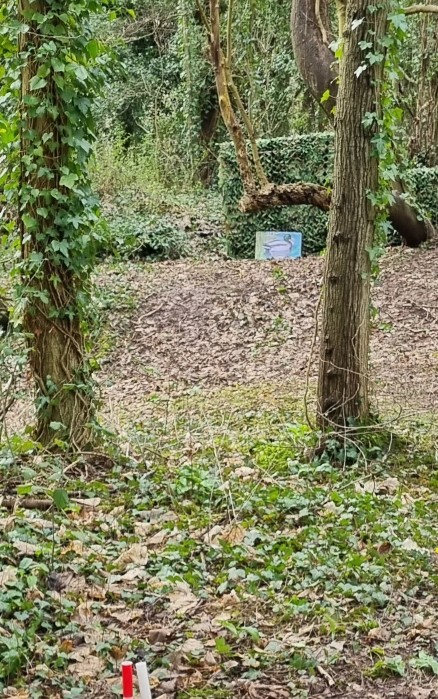
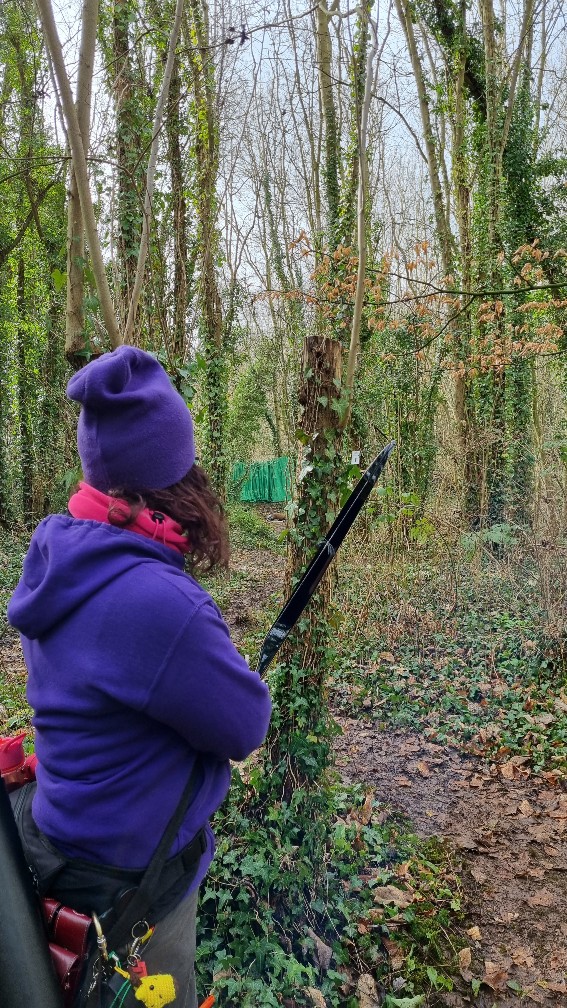
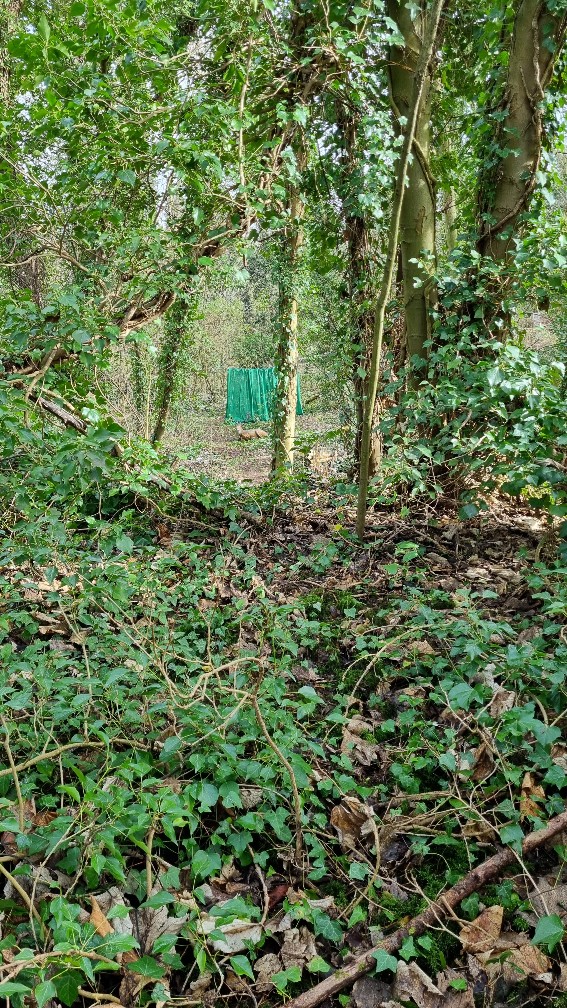
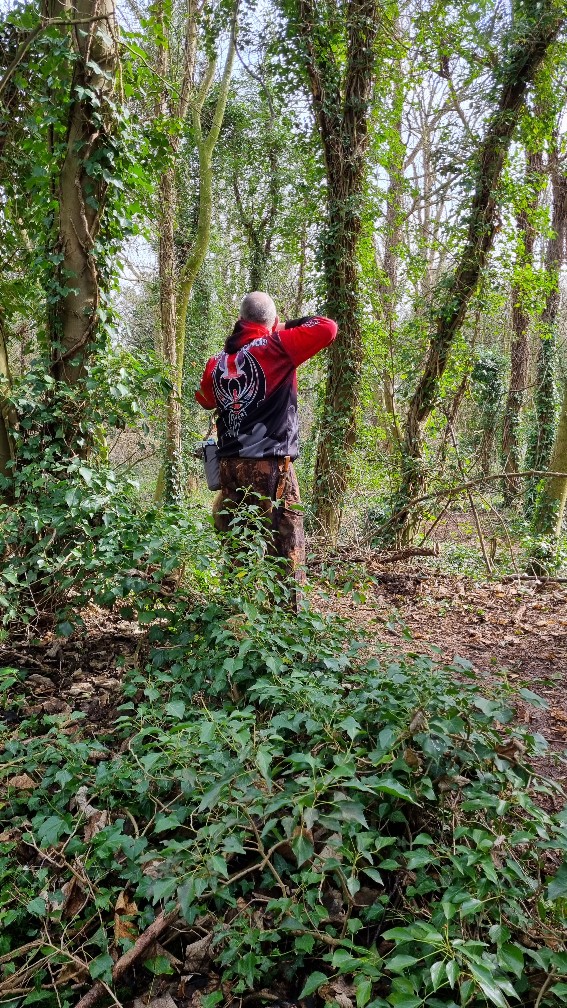
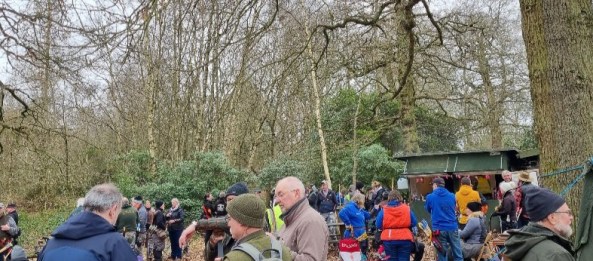
Photo of archers gathering before the start

Shoot Report – Harlequin Valentine Fun shoot – February 2023

Harlequin Valentines day shoot

This is the first shoot report I’ve written from the perspective of a competing archer in several years and to be honest I think I’m as rusty in writing this as I was in shooting Harlequins open course the other weekend.

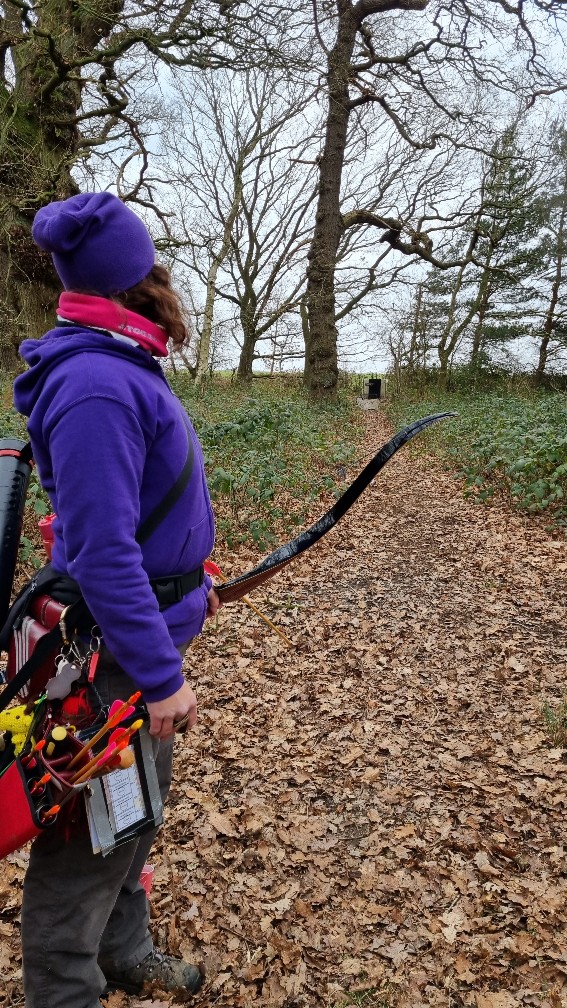
Joy preparing to shoot

Situated in the Midlands, Harlequin host several competition shoots throughout the year and this was to be their Valentine Day fun shoot. Initially the organisers had set this as a 36 target course, though this was increased to 40 targets due to the numbers wanting to book in.

Sharon preparing to shoot a 2D lynx

I’d forgotten how long a NFAS competition day it can be. We started shooting at 10.30 and were not finished shooting until 4.30 pm, leaving the site a little after 5.30pm.  Of course, the day started much earlier with us packing the car for the hour-long drive to get there just after 9. This allowed for registration, breakfast, warm up etc.

We started on target 19 with Joy, an old Briar Rose club member, joining us for the day.

Joy shooting 3D blue frog

Starting on target 19 meant we would shoot over 20 targets before stopping for lunch break when we got to target 40.

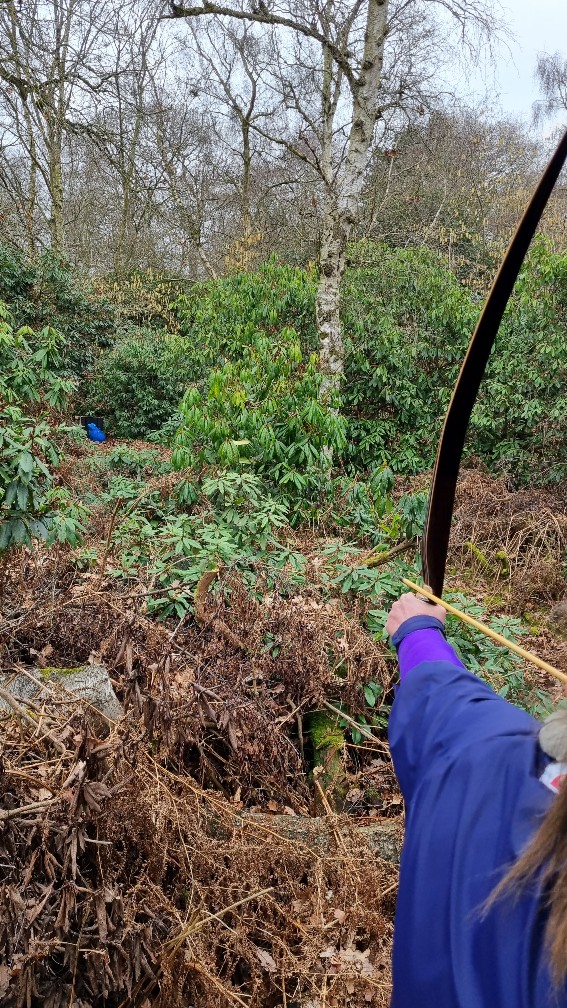
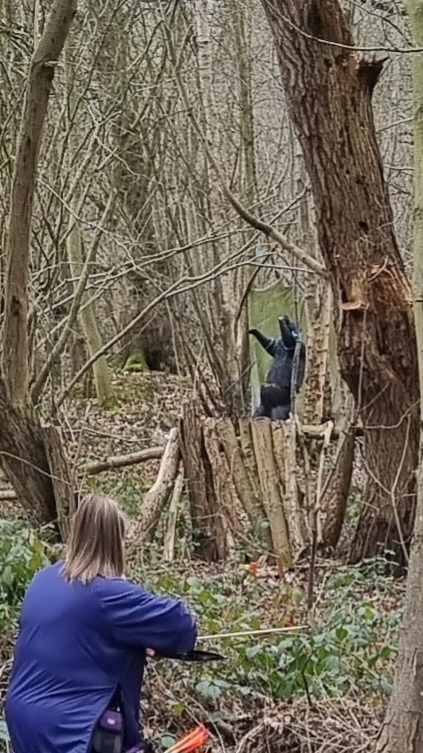
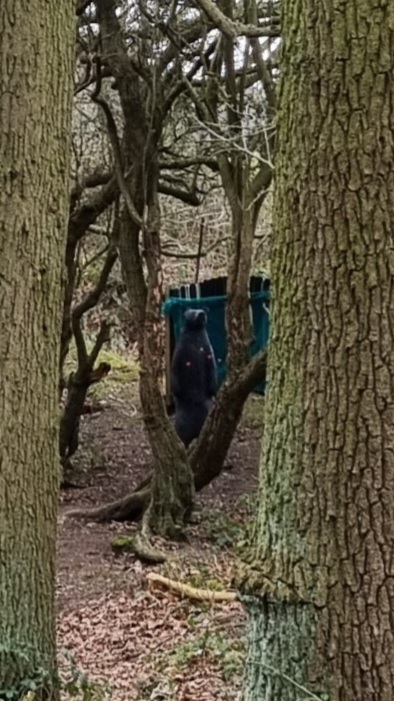
The Harlequin’s grounds are set in a mixed deciduous woodland, with areas of thick rhododendron bushes, which were used at times to hide distances of the shots. In fact, there was some really clever use of vegetation to create areas of dead ground on a few shots. All the targets were 3D or large 2D targets, though I think the standing bear could do with some TLC repairs.

View from red peg of large 3d bear between trees
Zoomed in on the large 3d bear between trees
Joy shooting from blue peg

To be honest I think this is likely to be something several clubs are going to have to be doing as prices of 3D targets are ever increasing.

I’ve shared this next observational feedback already with Harlequin organiser and it concerns their peg placements for cubs and junior archers. There were some shooting pegs set way too far back or worse still behind obstacles that adults could easily see over but anyone under 4ft tall couldn’t. It’s a simple oversight, especially if the club doesn’t have many junior or cub archers.

To be fair to Harlequin they are supportive of juniors as there was no entrance fee for them and all who attended received a Harlequin keyring, no matter what they scored.

Black bear 3D seen from the red peg
Showing Zoomed in photo of the bear between trees
Zoomed in on the bear between trees

As for other parts of the course, there were some cleverly framed shots between trees, though I do feel there were a few shots I felt were stretched like the 3d tortoise. A target little over 10 to 12 inches in height and width, set at a distance beyond 20 yards is pushing it in my view. Maybe that is just my inexperience talking, though Sharon broke an arrow on this as hit it and deflected off into boss, snapping in half.

They weren’t doing normal prizes, instead there were handmade couples trophies for sighted, unsighted and mixed pairs.

Wasp pegs – I’m a big fan of using wasp pegs for sighted compound and crossbow archers. When used correctly they offer the opportunity for the course layers to give archers in those classes a challenge, with smaller windows etc. Personally, I feel if a club is setting a course and using wasp pegs I think the pegs should be present for all targets. That way you get used to seeing them and not walking to red and then realise there is a wasp further back. Even if on some shots the wasp pegs are next to the red, it means you know they are on every target.

Personal performance or lack of.

Over recent weeks I’d worked hard to build strength back to enable me to shoot. The week prior to Harlequin I had been able to shoot my 38lb recurve for the first time in nearly 3 years and had chosen to shoot this for the competition in hunting tackle class. I think in hindsight I’d have been better shooting the 30lb flatbow. I kept misjudging distances and I think that’s partly down to good course laying on some shots and partly down to being an instinctive shooter who has not been shooting much with the bow. After all I was shooting a faster bow of different poundage so arrow flights are different. I know I need to spend more time and hone my instincts with shooting the bow. I don’t see that being a quick process and it’s fair to say it has given me a lot to process and think about over the next few weeks.

It was nice to see people again, many of whom I’ve lost touch with in recent years. Joy was great company all day, keeping our spirits up. It was only when speaking to a few, explaining how poorly I’ve been over last 12 months I realised how out of touch with people and things I am. As I said earlier, it’s given me a lot to think about.

Thanks for reading.
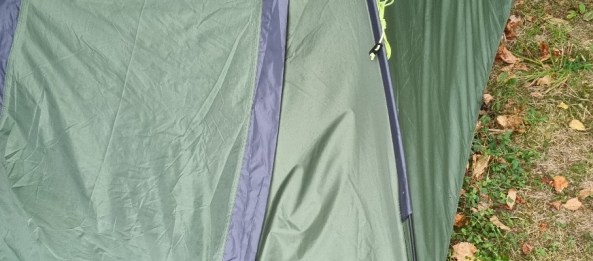
View of erected tent

Equipment review Eurohike Tamar 2

Eurohike tamar 2
Eurohike tamar 2

So, I know this is an archery-focused site and you would not normally expect to read a review for a tent. However, I know several followers are also keen outdoors types or involved in scouting groups. For this reason I thought I would write this review of our experiences following us purchasing a budget tent (around £50) which we have been using for the past few months.

Those of you who are regular readers know that I tend to write reviews after I’ve tested things multiple times, over several weeks or months and sometimes to point of destruction. This is no different.
The tent was bought on a whim when visiting a local Go Outdoors store. Sharon was after a tent for the scout camps she was organising and we saw this one whilst looking at others. We were also after one for the garden as a part play tent, part introduction to camping.
So here are some basics, the Tamar 2 weighs 2.73 kg, and the internal sleeping compartment is 1 metre in height 210 cm in length x 150 cm wide for the full dimensions please check out the image below. So it is not a huge tent and for the price not overly heavy.

Dimensions
Dimensions

We initially thought the tent would be up for a couple of weeks, in reality, it was up from late June to the first week of September. We would spend several nights over these weeks enjoying the outside. It was a bit of a cheat for us as it provided the opportunity to introduce the idea of overnight camping while still being close to home.
The tent is advertised as a two-man and you can get two people in it. Just be aware that there isn’t lots of space inside if you each have a backpack. We discovered on later camping nights that you could fit a Eurohike double airbed in it, though it doesn’t leave any spare space. So if you are thinking of using it for backpacking, you can probably get away with it but I don’t think there is a large amount of storage space for backpacks etc If it’s just you then no worries.

View of erected tent
View of tent up

Unlike some other tents, this has an outer layer to which you can pitch initially and then the inner sleeping compartment is attached. This is useful as it provides you with some shelter from the elements. There are two bright yellow guylines on each side to secure it down.
The entrance is a double zip style offering easy access and has a small storm area, large enough to store your boots but again space is limited. Could probably fit a backpack. The inner tent does open fully but it’s not like other tents with double zip.

So there are a couple of things I did to improve the tent.

As soon as it was up I waterproofed it with Nikwax waterproofing. It is rated at HH2000
Since the tent was going to be up for a few weeks I put some corflute plastic sheeting under it. It’s normally used to protect floors and I have found it works pretty well under a tent to help act as a barrier. A barrier not just for moisture but also to protect the sewn-in groundsheet from any sharp stones or twigs, that might otherwise puncture it.

Plastic mat I used under the tent

On top of these mats, I added 6 foam sheets shown in the picture. They are the sort used for play areas and the advantage these have is there are holes in them so it allows moisture to run away and not pool on top.

Foam playmats base
Foam playmats base

An important tip here is to make sure that any mat you put down is smaller than the tent’s footprint. this may initially sound strange but if you think about it for a moment it makes sense. if it was larger then it would jut out under the tent and potentially catch any rainwater flowing off the tent. By having it smaller it means it doesn’t catch the runoff and feed it under the tent.
For some extra protection , I threw a 3 x 2-metre tarpaulin over the top of the tent, partly to protect it from the wood pigeons defecating on the tent. It was erected under a tree to offer some shelter and shade. The Tarpaulin also offer an extra layer of waterproofing, as I wasn’t sure how good it would be. This had both an upside and a downside. The upside was it made the interior of the tent darker, so offering the occupiers more shelter from early morning sunlight, the downside was it reduced some of the airflows. The is something to consider that air flows not great, with a small top vent and one onside.
This summer has been warm and largely dry, though we have had some rain and the tents remained totally dry inside, which is good news
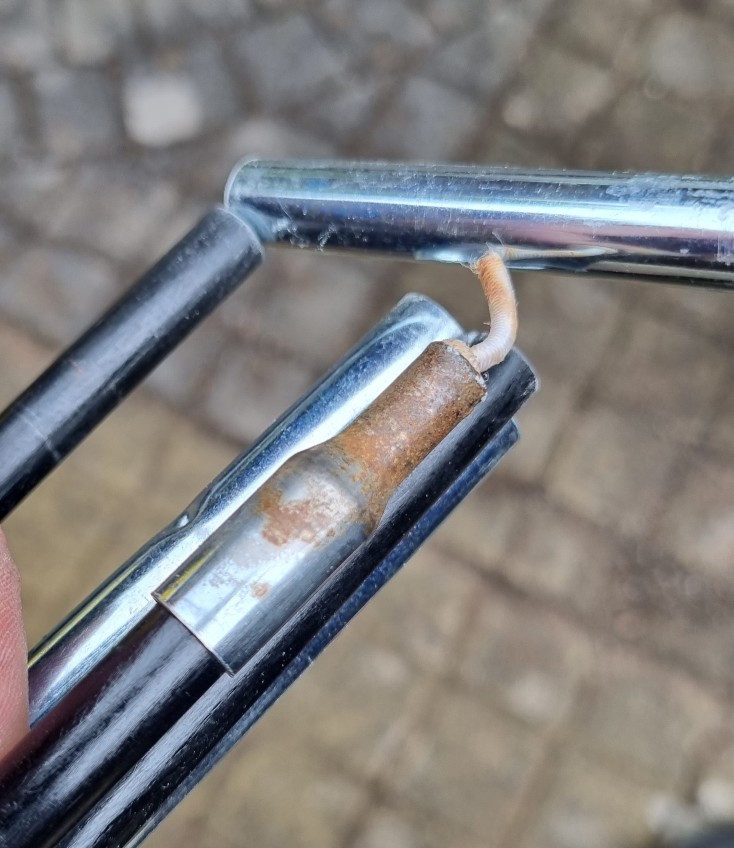
The tent poles ended up being a bit rusty on the ends and in fairness I’m not surprised as they were out in contact with the earth for several weeks. this was quickly resolved with the use of some wire wool.

End of tent poles before cleaning you can see they have rusted a little.
End of tent poles after cleaning
End of tent poles after cleaning wire wire wool

The tent has only two fibreglass poles making it pretty easy to erect the outer first and then the inner main part of the tent can be clipped in place.
Being an inexpensive tent it is plagued with cheaper tent pegs which wasn’t a problem for us, but something you might want to consider replacing. Having said that the groundsheet is pretty good and would be easy to patch if needs be.

Tent pegs
Tent pegs

More amazing though, was when it came to finally taking it down and packing it away. I managed to easily fit it all into the bag it came in. Yes, I know, I was shocked too.

End of tent poles before cleaning you can see they have rusted a little.
Tent all packed back into bag

So overall, for an inexpensive tent it works pretty well. I do think we were fortunate with both the weather and location but if you are looking for an occasional tent for the odd night away and don’t want to break the bank, it’s okay. Might be good for a festival or occasional scout camp. It could prove a good introduction to camping. So for under £50, I think it is good value for you money.
Thanks for reading.

shooting flatbow

Do you shoot Instinctively at all distances

I’ve tried to create this online survey for peoples thoughts on instinctive shooting and distance judgement. This is a follow up to earlier post on instinctive shooting on my Facebook page, where some commented that they shot instinctively up to a certain distance and then swapped to a more gap shooting approach.

Please feel free to share this with others and add comments below. It’s not overly scientific as there is only 1 question but it is a start.

Thanks for support on this

https://www.surveymonkey.co.uk/r/9FSQNZB