The Shocq Digital archery scale close up

Episode 121 – Equipment Review – Shocq Bow scales

What is your actual draw weight on your bow?

At first glance, this seems both an easy question to answer and a common question especially if you have a draw below or over 28 inches. The truth is that unless you have had the bow weight measured at the archery shop when you buy your bow, you can’t be guaranteed to know what the draw weight is at your draw length. Yes, I know all bows or limbs will have a draw weight shown on them, but this is always measured at a 28-inch draw and we all know that not all archers have a 28-inch draw.

There is a theory I have heard countless times that for every inch past 28 inches you draw, you add 2 pounds to the draw weight. This can provide a rough guide, but should only be considered an estimate, as the true figure will depend on the bow length, limb materials, limb and bow design etc. To provide an insight into what I mean I’ll give an example of when this doesn’t work. A couple of years ago I took a newly signed off archer to a local archery store to buy their first bow.  The archer has a 30 inch draw and we tested out four sets of limbs from different manufacturers. All showed 26lbs at 28 inches. With his 30-inch draw,  you’d expect a draw weight of approximately 30lbs. However when tested they ranged from 30lb to 37lbs.

For this reason, I decided it was time to buy a digital bow scale. There are several on the market and the one I opted for was the Shocq Digital Archery Scales. I purchased mine from Merlin Archery for £11.99.

The Shocq Digital archery scale close up
Close up of the Shocq Digital archery scale

It’s very easy to use with a single button acting as the on/off switch, the same switch is used as a reset.
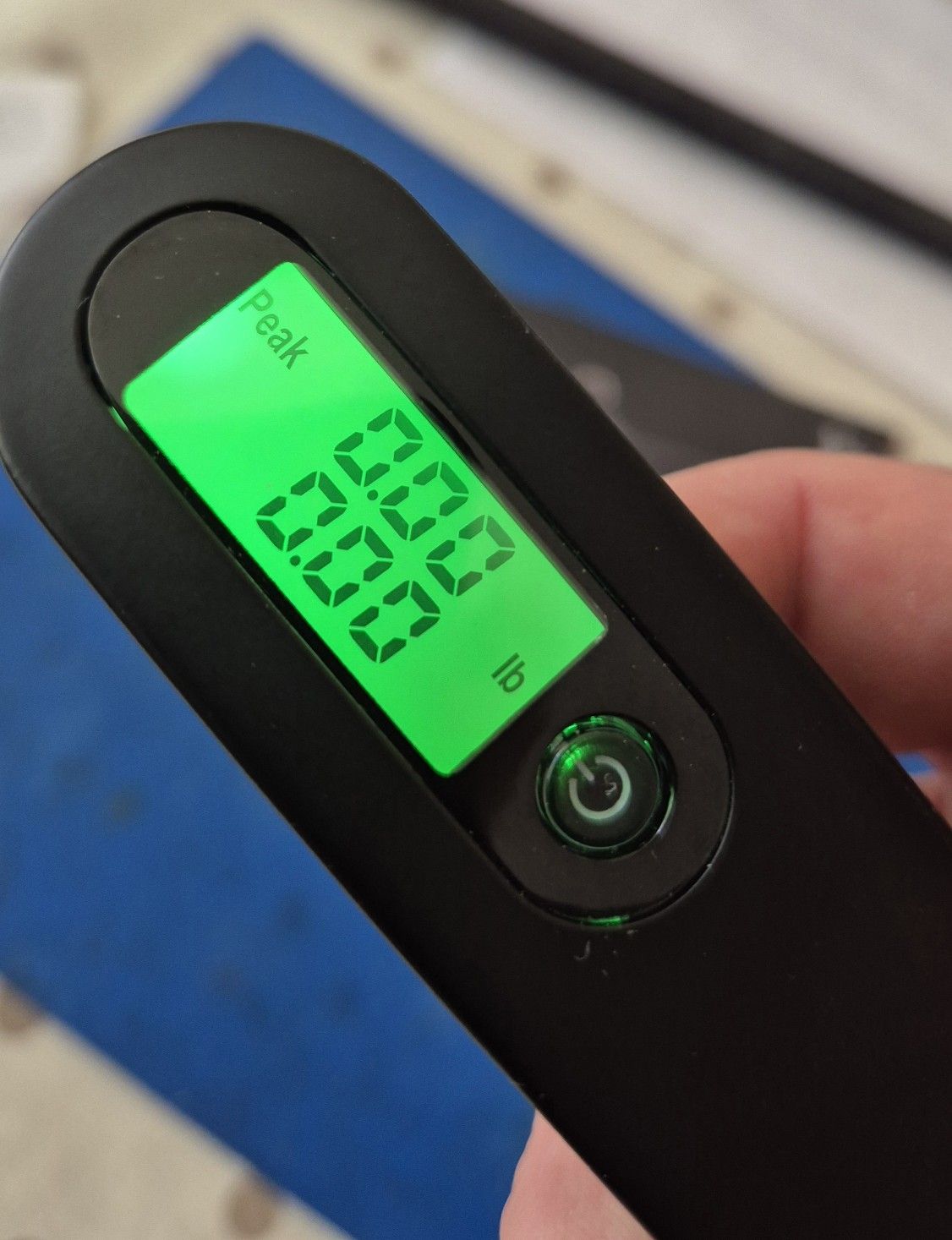
Display showing the digital scale switched on

The display is clear and shows both the Peak load and Holding weight. This is really useful in my view as I know there are some archers who, in their draw sequence, draw past their anchor point and then settle back down to their anchor. This means it can show the maximum draw weight and the weight you are holding on your fingers at anchor.

Display showing the Peak load and Hold Load

The hook on the back of the device is designed to loop around your bowstring. Personally, I’d like to have something like a lock on this so there is no chance of drawing back and string slipping out (Something highly unlikely to happen but better safe than sorry in my view).
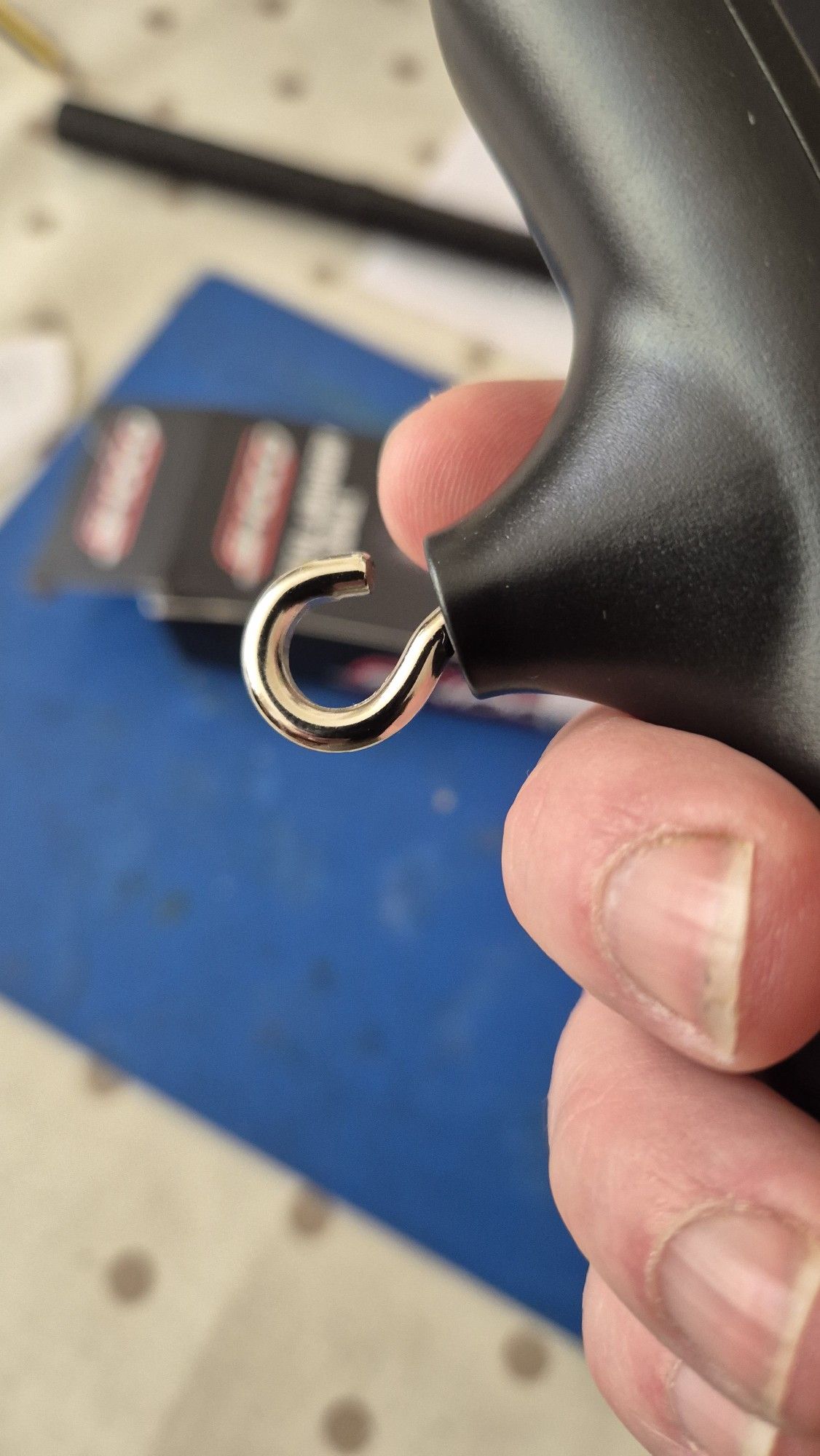
The Shocq Digital archery scale close up on the hook attachment
Hook attachment of the Shocq Digital archery scale

You will need to think carefully when you draw up using this. If you draw up to your anchor point with the analyser in hand, chances are you will effectively be short drawing.

Why? Chances are you will draw and stop when your hand reaches your face when in reality you need to draw a little further back so the string is actually at your normal anchor point.

I’ve recorded my thoughts on the digital scale, you can view here or on YouTube channel )if you find it useful hit the Like button)

In summary, it’s an inexpensive addition to my coaching kit that has already paid dividends in helping archers I’ve been coaching recently.

When I have the time, I plan to go through all mine and club coaching bows to check their actual draw weights.

This is the first in a series of equipment reviews I’m producing for this site and podcast.

Thanks for reading.

Bow weights for beginners and Juniors

At a recent coaching course I was co-running, the question of bow draw weights for beginners and junior archers was raised. This is both a very important question and a complex one, with no easy answer.
The true answer is partly dependent on what age the archer is when they start along with their physical development. Everyone is different and trying to standardise and prescribe anything in stone simply doesn’t work. So here are some points to consider to help you decide.
  • If you start with too high a poundage in draw weight  for the newbie they can become fatigued quickly and their form will suffer as the archer struggles to cope.
  • Too heavy a mass weight can tire the arms of young archers, resulting in dropping their arm.
  • Another factor that is worth considering is how some young archers develop in height earlier than others but this does not mean they have muscle development for longer draws.
There are other elements that play a part here too, such as peer pressure which can occur when coaching a group or even a family if there are two siblings that try to compete with one another. Peer pressure can cause anxiety and increased stress associated with being watched and not doing as well as others or drawing the same poundage as their fellow archers.
I was lucky enough to be shown the specifications that the scouting organisation in the UK use which provides some good guidance on potential draw weights for different age ranges.
Age Range Maximum bow weight at start of course Maximum draw weight by end of the course
Up to 12 yrs old 14 lbs 16 lbs
13-14 16 lbs 18 lbs
15-16 18 lbs 22 lbs
17-18 20 lbs 24 lbs
19+ 20 lbs 24 lbs

I have to say I am a fan of using small “jelly bows” that are very low draw weight and light in hand. Ideal for under 10 year old. We bought a couple of these from Merlin Archery (https://www.merlinarchery.co.uk/ek-crusader-bow-kit.html) though we don’t use the arrows provided.

On take down recurves I start low 10lb or 12lb and let them see how it feels. We have a selection of limbs which we can swap out and have found this of great benefit. Again we bought some bows from Merlin – the Core Pulse in both 54 inch and 64 inch.
When I get the opportunity I will write up a review of these bows in the near future.
The best advice I can give anyone is start with a low draw weight and light bow. If they aren’t having to fight the bow or struggle holding the mass weight they are more likely to learn and in turn succeed.
Thanks for reading.

The hardest lessons to learn in archery are…

I’ve had a great response to my question “What they feel is the hardest lesson to learn?” and for that I would like to thank all my followers and readers for their input.
I know that there are many people out there that will have your own opinion on what they feel is the hardest lesson to learn,but based on the responses, there are a few things coming up time and time again.
  • Aiming or rather, how do you aim whether you are a gap shooter or instinctive archer?
  • Stance and footing on a field shoot, where you might not be on level ground.
  • Coupled with aiming is distance judgement, which can be especially tough on a well set field course, where the course layer has used every trick inthe book to fool you.
  • I think the biggest one though has to be drawing down or coming down when you’ve drawn up on a target but feel you have to release, even though you know something is wrong.
  • I’m also working on a post about the importance of arrow weights and importance of not shooting too light an arrow.
  • Over bowing, being to identify when you are shooting too heavy a draw weight bow.
My hope is to create a post on each of these topics in the next few weeks.
I’m planning on covering aiming in a future article but for those interested check out one of the recent coaching podcasts from the guys at The Push, which covers instinctive and gap aiming.
Thanks for reading.