So you might have got a bow for Christmas and are wondering if you can get a target to do some practice. What works and what doesn’t? How much will they cost? How long do they last? Well all the answers to these questions are dependent on what you are shooting or wanting to accomplish. Archery targets come in all shapes and sizes. As with everything there are merits and flaws for all but I’m going to try and summarise my thoughts and offer some factors to consider if you are thinking of investing in one for yourself or club.
I’m going to look at 3 types of targets
-
Bag bosses
-
Layered foam bosses
-
3D targets
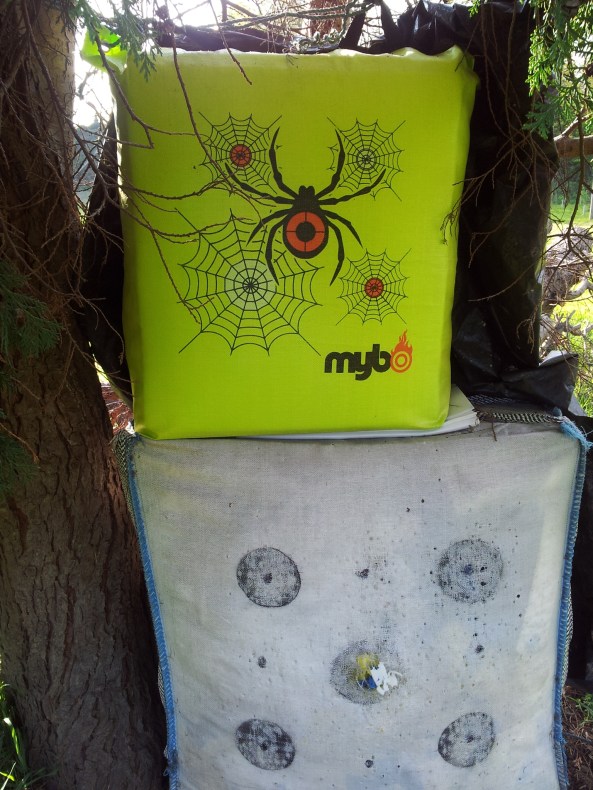
Mybo bag target
Bag bosses
These comprise of a bag made from a plastic weave similar to builders rubble bags and are packed with pieces of foam, fabric and plastic wrapping. They are normally the cheapest option and come in a couple of different sizes. I’ve had a couple of different ones of these over the years.
I’ve found they are good for low to medium poundage bows. I wouldn’t necessarily recommend them for compound or crossbow archers as the arrows would quickly wear them out.
This brings me to the downside which is the bag material itself can get shot out as you shoot the centre. The bag material can be replaced or patched as I’ve known a few clubs to use old builders rubble sacks for coverings. I wrote a review of the
Mybo bag boss a while back.
Being a boss you can pin different faces in them as required and this does help with spreading the wear and tare.
Overall they work pretty well for light usage and we’ve bought a couple for the club to use at have a go events and occasional use.
Layered foam bosses
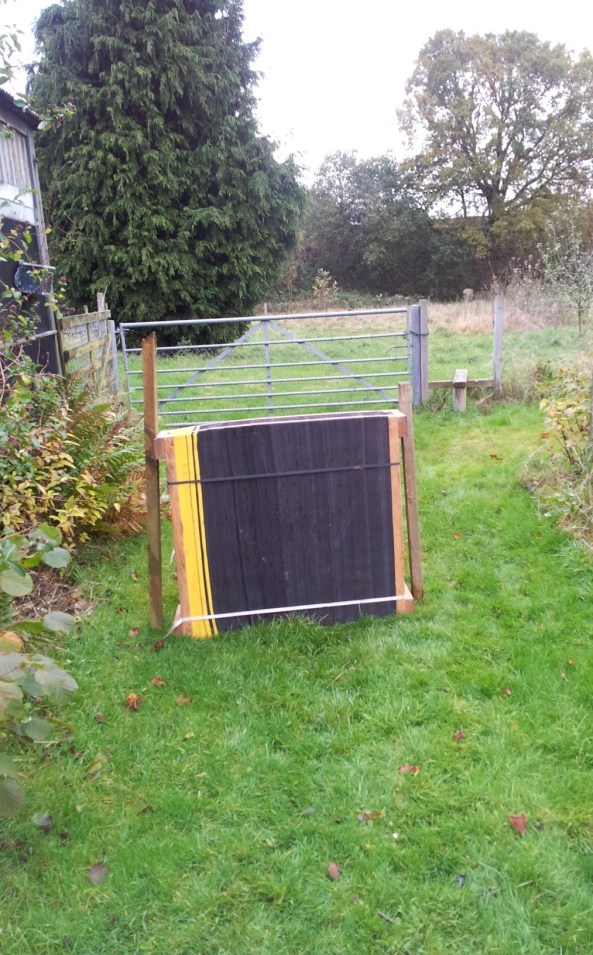
Target Boss
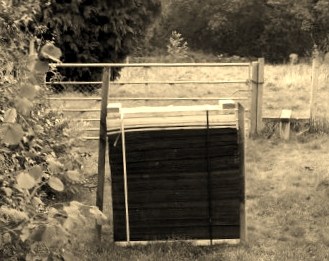
Layered foam bosses are very common on most field courses and consist of layers of thin foam with a wood frames on two of the long sides that are then bound together. Mine have been out for a couple of years and still work well.
While more expensive than bag bosses they do work for heavier poundage bows. Normal sizes are 90 x 90 cm or 130cm x 130cm.
The advantage of these is you can pin any target face on them, so this makes them versatile .
Things to consider are
- The wooden frames rotting over time as the wood is not always pressure treated. We’ve used fence preserver on ours to help them last longer and disguising or camouflaging the frames so they are less obvious.
- Try to avoid setting shots so arrows enter at an angle to the layers as this promotes the foam being torn or damaged more quickly.
- Over time the banding can slacken so you may need to re-tighten or replace the banding.
- The boss can get the heart shot out, with foam sheets tearing over time. A solution to this is to dismantle the target and move the torn sheets to the side and less damaged ones inward then rebind them.
- Make sure the wood frame is on the side of the boss and not top & bottom. You don’t want an arrow to glance off the wood and fly high.
Its a common practice to repair these bosses and sometimes you’ll find you might be repairing 2 or 3 of them at a time. The end result being two usable bosses and the damaged sheets being used to stuff bag bosses.
3D targets

3D target set up for shoot off
3D targets look great and can prove very useful if you are training for hunting or maybe a specific tournament. The downside is they can be expensive with a decent 3D deer costing a few hundred pounds. They are also pretty limited as unlike foam or bag bosses you can’t pin a different target face up and shoot that.
I feel that some of the smaller 3ds are not worth the money as they will get shot out quickly or are so hard lighter poundage bows struggle to penetrate.
Rinehart targets whilst expensive do provide the option of replacement centres which are sold separately. Not all manufacturers do this so.
Personally for my home range I have a couple of layered foam bosses which work well for practice and coaching. I’ve also got a couple of bag bosses but they need to be repaired.
Anyway I hope this has proved to be helpful. If you have any comments or feel I’ve missed something then let me know.
Thanks for reading





 My Archery Experiences