Course and Target laying – Target code ARROWS

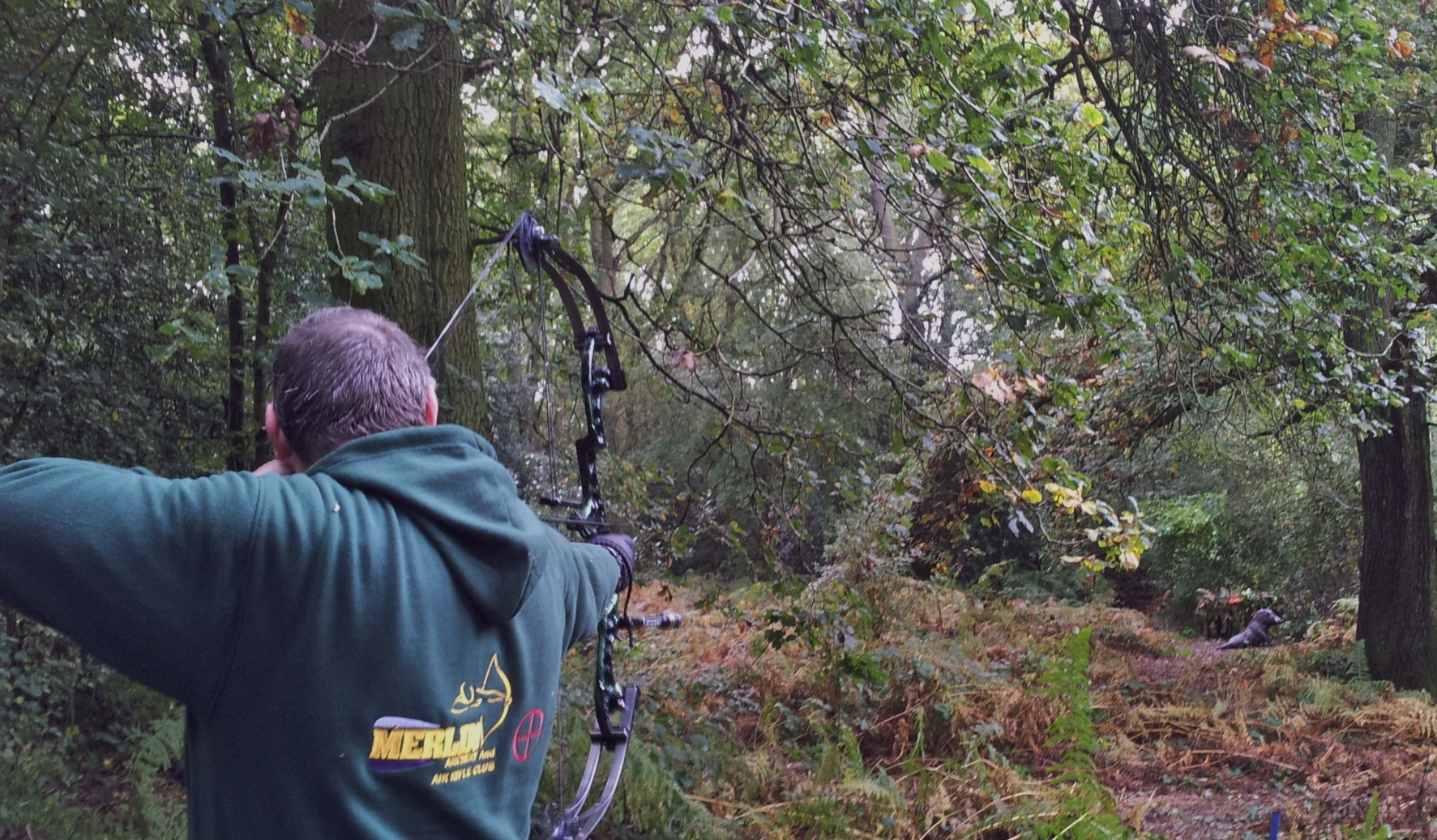
First view from Red peg

First view from Red peg

When I started trying to setup targets and shots I realised there was a lot to remember, from setting up the target, to how you get the archers to the shooting peg, whilst not forgetting about the overshoot for the shot and always remembering the safety elements.
For this reason I tried to analyse the process and come up with something that would help me remember all of these steps. My answer to this was using an acronym  ARROWS – somehow this seemed appropriate. So these are my thoughts on target positioning and locations . Please remember I’m no expert at laying courses or targets but I hope you find it useful.

Before starting here are a few things to familiarise yourself with. Consider your society rules. Do you have to have clear shooting lanes, marked or unmarked distances.

Style or Class of bow. Are you setting for an open where any and every bow styles might compete or maybe a wooden Arrow only.
Useful Tip – When scouting for a new shot I will often use my camera phone to record the view or angel of prospective shots so I can discuss it with others. I know others have used a gps system to track the target position on to a map of the course.
Anyway back to the acronym.

A – You can read this as approach or arrival at the first shooting peg.  It covers the  route to the first shooting peg and standing area when there. Is the route clear? Where possible at no point should the archer walk forward of the shooting peg as this might give them an advantage in distance judgement.  What do the archers see as they arrive? Is there space for a group or maybe two to stand safely without endangering themselves or causing distraction to other archers. Are the paths to the peg clear of obstructions? Brambles are a course layers worst enemy and  I’m sure the wood elves go out at night and lay bramble trip hazards across every path.
The idea is that as they approach they shouldn’t get a clue as to distances etc from peg to target.

View from the red peg

View from the red peg

R-Red peg (the first shooting peg for an adult in NFAS field archery courses)- but really this covers all the  other peg positions too. We have mentioned the approach to the first peg but archers will need to get from one peg to another.
Think of the route they will have to take. A straight path to the  boss makes a corridor for distance judgement or do you set a twisted path so harder to judge distance?
Pegs need to be driven in well as longbow and afb archers won’t thank you if their lower limbs catch the peg.
R – range – not just ranges to boss from each peg, but range of height of archers,  range of bow weight and dynamics.
Longbows need overhead clearance of branches etc.
Think target size here too. Don’t spoil a shot by putting too small a target face on. Remember juniors pegs too, if placed too close to the target boss they run the risk of bounce back.

First view from Red peg

Consider the tree cover and branches

O – overshoot – What is behind the target location or to the side etc in the event of a glance off from trees.
Do you need a back stop or netting? Are there trees or bushes behind the target that arrows could bury themselves in?
Please remember that simply putting up safety netting does NOT make an unsafe shot safe! 
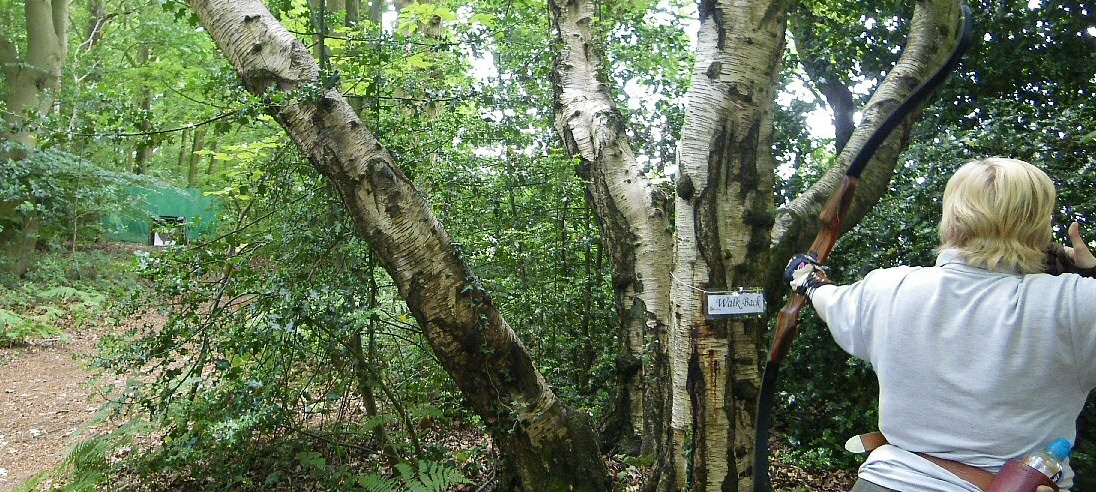
Over shoot with netting

Over shoot with netting

W – walk off – safe route out. When the archers have collected their arrows how do they leave the boss and make their way to the next target?
Is it a walk back  to the original shooting pegs or heading to a path. Is it clear to see navigation or are direction arrows needed?

S – Safety – last but not least. Review the shot completely and in respect of the entire course. There are times when a shot can look perfect but when looked at in respect to the entire course safety issues could appear with overshoot, waiting groups or access.
Foot paths for the general public. Are there any bridal paths or public rights of way that effect the shot or the course. In the NFAS you can’t place any shot that is considered to be close to or has an overshoot towards a footpath.
Do you need special signs on the course or possibly on the course boundaries for the general public?
Target Boss

Target Boss

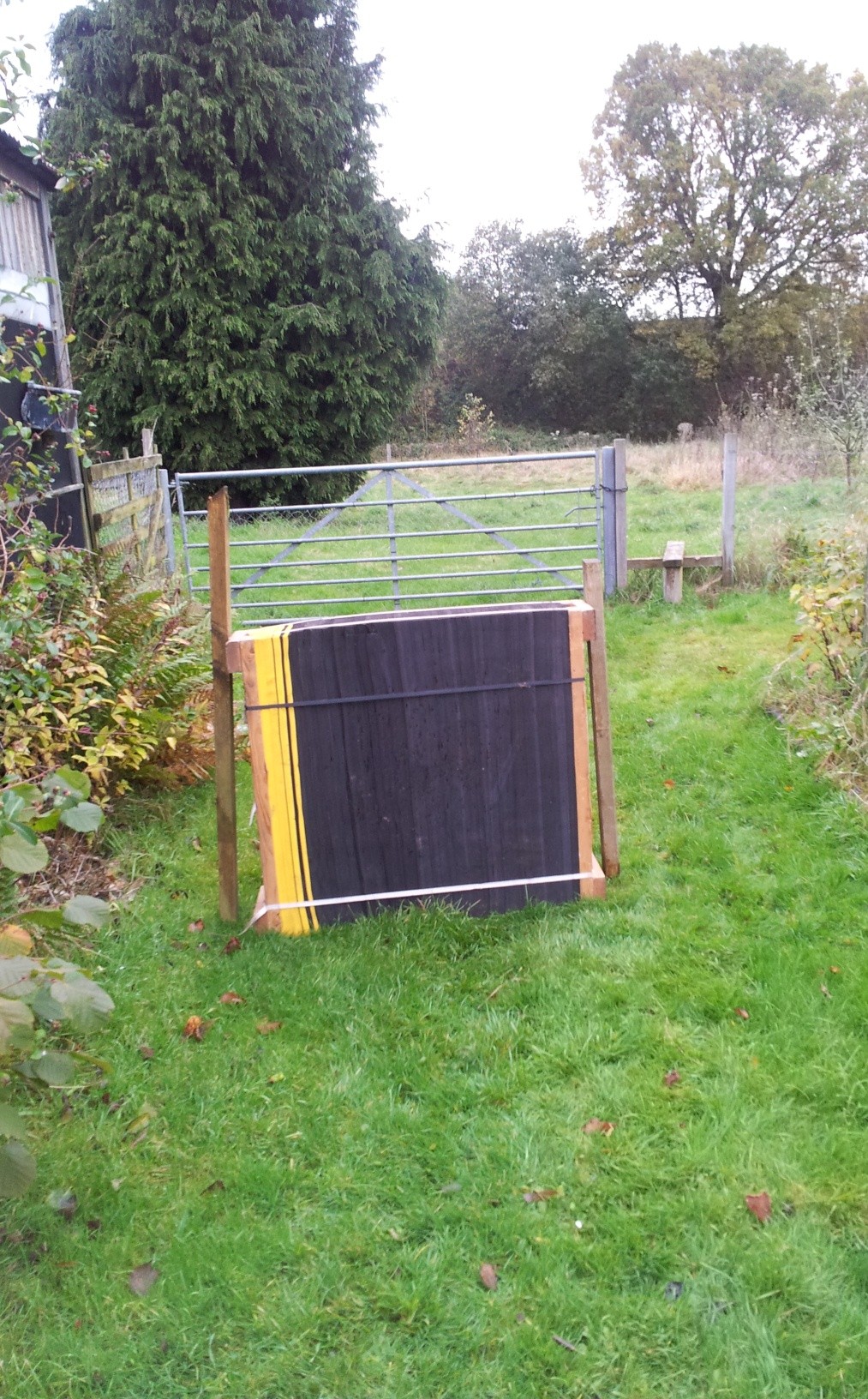
Some target bosses have strip binding and care must be taken with the metal fastening. These metal bindings should never face the archer as if arrow hits them it is likely to bounce back and has the potential of causing injury. (See setting up a target boss)

Once this is done for one target you need to repeat the process for all the remaining ones.  A normal nfas course is 36 or 40 targets.
Hope you find this of use and as always thanks for reading.

Wet weather and floods

As some of you maybe aware the UK has been hit over the last few weeks with heavy rain and high winds. Its been not so much white Christmas more wet and windy.

This has resulted in severe flooding in several areas with trees and numerous tree branches down across roads anf railways.

It has had a significant impact on the archery wood too. Numerous branches have come down with a few trees down in neighbouring fields.

As the wood has several overgrown ponds and collects the run off from local fields we are seeing a lot of brown coloured run off water flowing into the wood.

Flooded ponds

Flooded ponds

Several of the bridges that criss cross our woods small streams are nearly submerged. The photo shows one barely above the water.

Nearly under water

Nearly under water

I took this video from the bank behind our club house and normally there is a small stream at both ends of the bridge. As you can see it is hard to see where the stream starts.

More bad weather is forecast in the next few days, so our hopes and best wishes go out to all those families facing an uncertain future.

Thanks for reading.

Shoot report – Severn Valley – October 2013

or should this read 36 hours of madness!!

SVYF Shoot

SVYF Shoot

This past weekend saw SVYF host their Autumn shoot and it would prove to be one of the most challenging events for many. The shoot would be on Sunday and we had arranged to meet everyone early Saturday to start the long process of putting out 3D targets, safety nets etc. Here we encountered our first problem with the police closing the road leading from our house to the woods following a serious car accident, resulting in a detour down country lanes to find a way round. Once at the wood it was all hands on deck to get targets out which was mostly done by 4.

Sadly there was to be another problem that day. Two of the nicest archers in the nfas Chris and Keith Harley had their car broken into, with the rear passenger window smashed. They had booked in a local Holiday Inn so could be on site first thing on Sunday but had their overnight bags stolen. So they had to journey home and sort the insurance and replacement window.

So Sunday dawned and in the dark we headed off to the woods. The weather overnight had been heavy rain with strong gusts and we all feared it would be like that on the day of the shoot, but we were shocked and pleasantly surprised. Through the day we heard 2 loud thunder claps and had a brief heavy downpour that lasted only a few minutes.

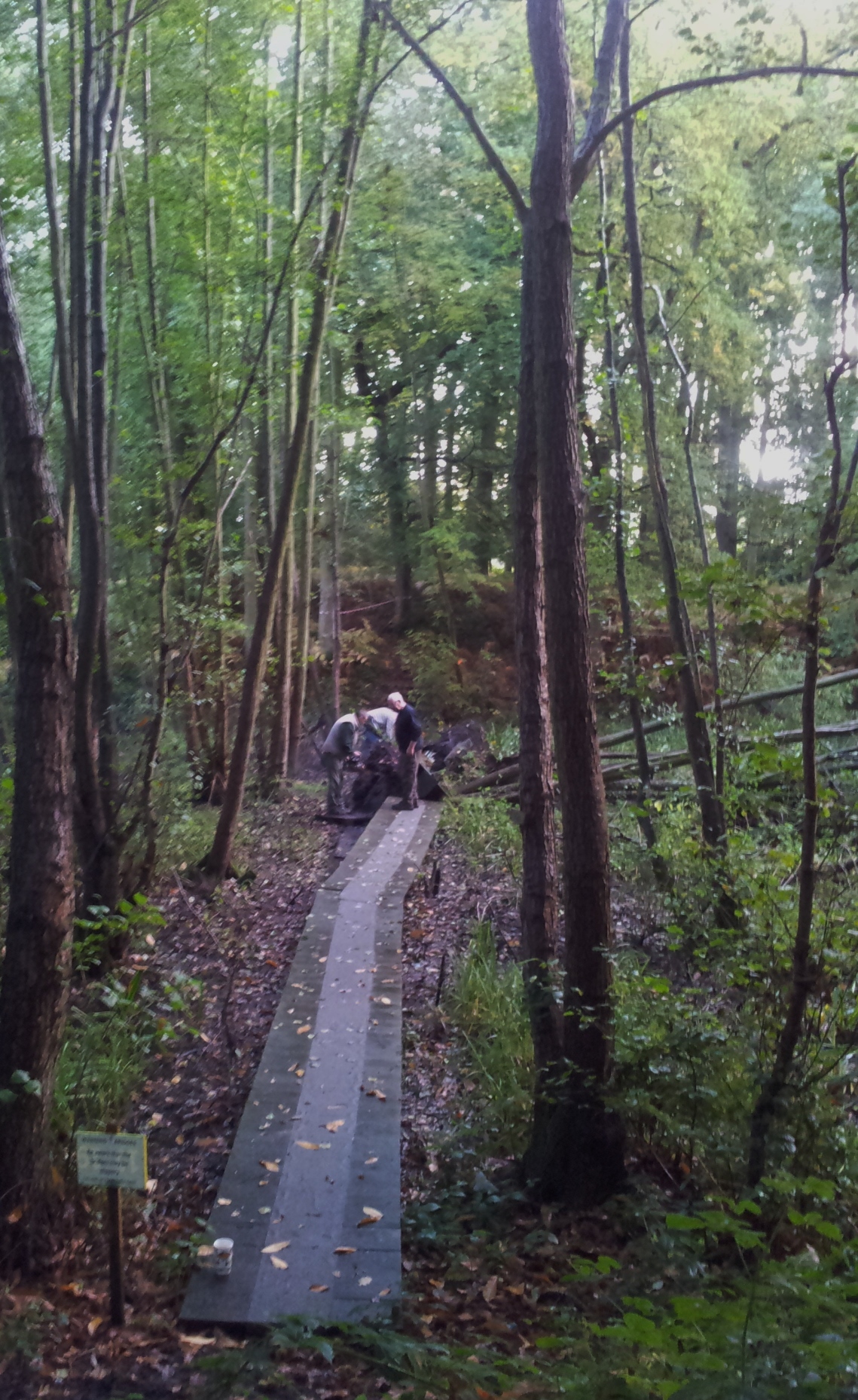
Arriving shortly after 7:30 we found everyone busy, which was expected. What wasn’t was the 60 foot tree that had come down in the night. The root-ball of which had twisted twenty foot of the bridge by 45 degrees and lifted the bridge four feet in the air.

Bridge half way repaired

Bridge half way repaired

A team of the strongest guys went to work with chainsaw, hammers and sheer brute strength. The one bit of luck was the original builder of the bridge Nigel was there and he had built this bridge in sections. Thirty minutes later we had a working bridge again. Though I think we will need to change its name from longbow bridge to horse bow I think as it’s no longer as straight as it was.

That wasn’t the only thing that happened. One of our safety officers was stung by a wasp and had to be rushed to hospital following an allergic reaction. He is okay but spent most of the day hooked up to a drip and having antihistamines pumped into him. He was discharged in the afternoon and is now at home recovering.

Admin had their work cut out for them too as 21 archers requested to change groups on the day to shoot with friends. All this delayed the start of the shoot.

archers in the woods

archers in the woods

Our new power generator stopped working plunging the kitchen into darkness just as the initial announcement started at 10:20. This would be an on going issue through the day resulting in us having to swap to the older smaller generator.

Note the lack of lights in hut!!

Note the lack of lights in hut!!

Problem with this is the club replaced it because it vibrates so energetically that it shakes the connecting cable out of its socket. This resulted in a periodic loss of power in the hut as someone would run round the back and reconnect the cables.

The clubs wood is surrounded by farm land but on the other side of the field there is a shooting club and as luck would have it they decided to re-enact a scene from the d-day landings or at least that what it sounded like, or as one archer stated sounded like the battle of El Alamein. This continued throughout the day.

Our Target 4 Paper face Rhino

Our Target 4 Paper face Rhino

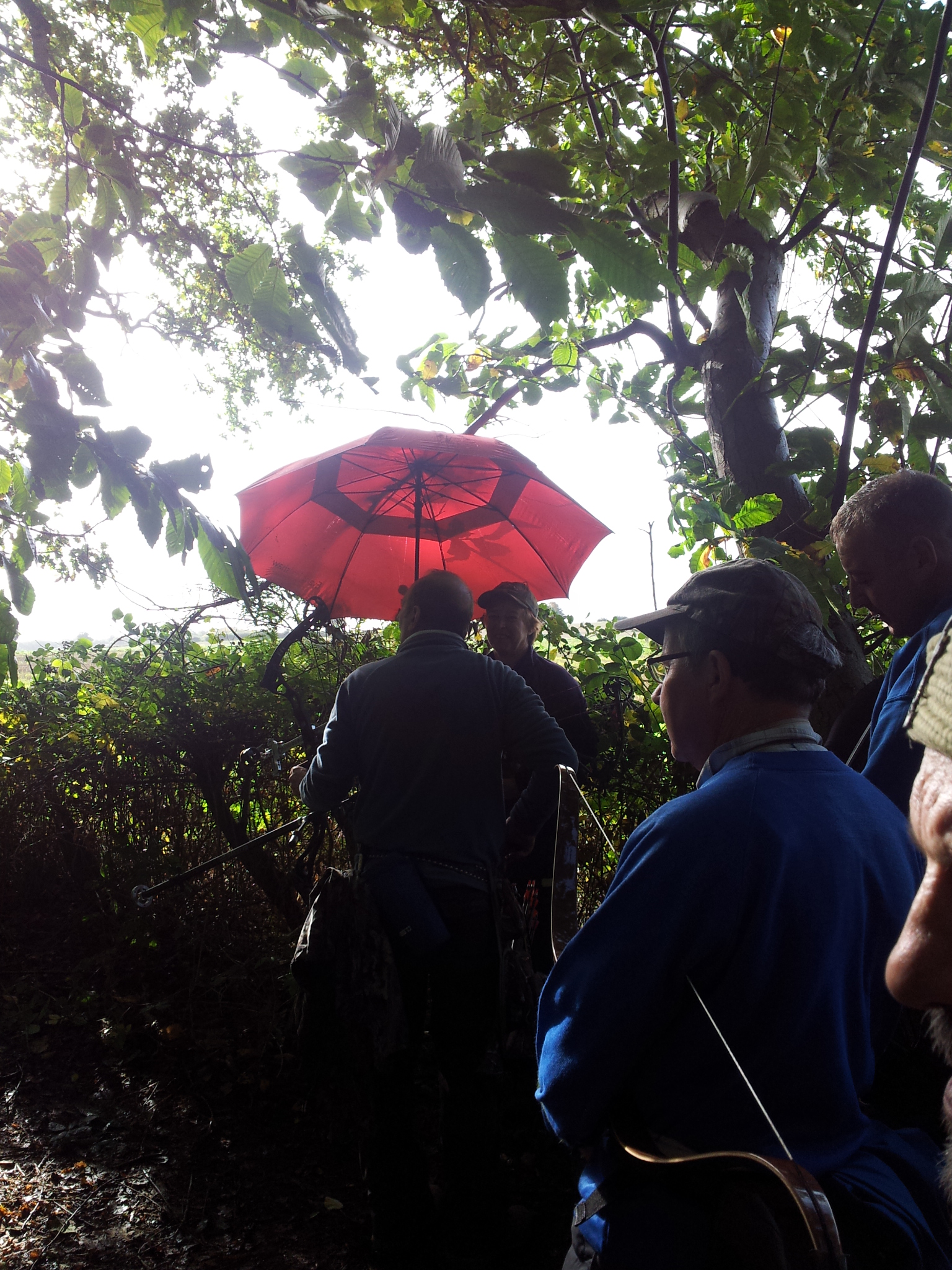
Ironically the brollies people brought for the rain were used as sun and wind shelters as we had a few exposed shots vulnerable to strong gusts.

Sun shade

Sun shade

The wind and occasional rain brought down branches and trees throughout the day so we were kept busy, clearing bridges and targets.

The course would be a 36 shot round with a mix of paper, 3D and Hessian targets, with over 160 archers attending the shoot.

The 3D tiger proved a great hit among the attendees and a challenge from the red peg.

3D tiger from red peg

3D tiger from red peg

In all the feedback received so far has been largely positive with only a couple of comments on things that could be improved in the future.

Thanks for reading.