Literature review – Shooting the Stickbow

Shooting the Stickbow

Finally got round to writing another one of these literature reviews, sorry for the delay. So this one will be on

Fellow archer and blogger (Charles’ Archery blog) has written a great review of this book too and you can find it here.

So why did I go for this book over others?

I bought this book following a recommendation from a fellow archer (Chris Smith) He had been lent a copy and had said how informative he found it. Chris is also a NFAS coach and we had both been reviewing different books for coaching tips and as a good all round resource. This book ticks many of these boxes.

It is a very comprehensive guide for archers, covering the basic very well, more importantly you will find it an easy read, not too technical or complex. On this point I would say it is more technical than many of my other reads, but it is still an easy read. It covers the basics well and what any archer needs to know to progress.
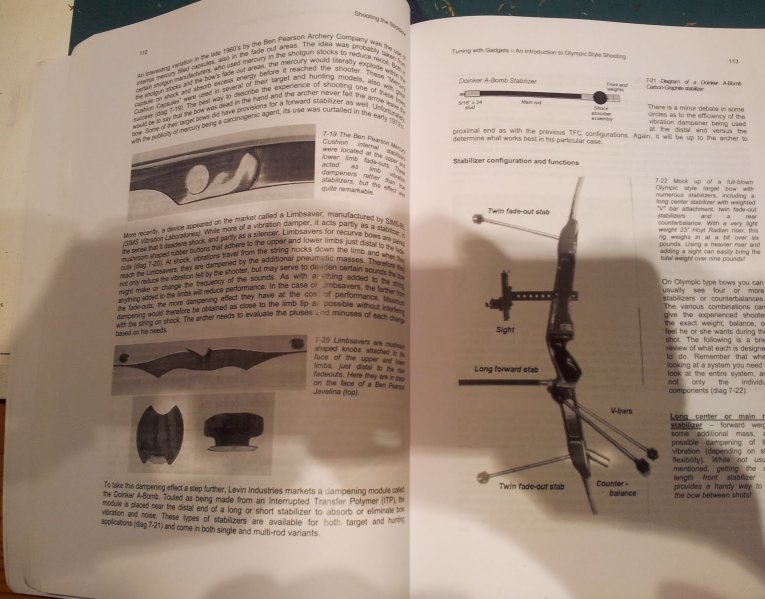
Shooting the stickbow - internal pages

Shooting the stickbow – internal pages

In short I think what makes it a good read is its chapter structure. It  enables you to pick up a copy and read a chapter or two and get something worth while out of it. So if you have a busy life style and find the time very limited it is ideal.

the book  is broken into 4 sections

  • Basic Shooting the Stickbow
  • Equipment – a detailed view
  • Making the shot – theories and practice
  • Memories and musings

Think it maybe of limited use for compound archers as it is aimed at those archers shooting recurve and afb, but I guess the clue is in the title “shooting the stick bow”. I’ve shown this to a number of other archers and everyone whether shooting barebow or longbow have found it of interest. I’ve also recommended it to anyone thinking of either becoming a coach or simply want to expand their knowledge.

Shooting the stickbow - internal pages

Shooting the stickbow – internal pages

Unlike some archery books I have which are pocket-size this is more of a tome, providing a wealth of information, experience and advice. I think it is a massive achievement of the author to produce such a weighty read but still make it easy to follow. The only downside I can give on the book is the quality of some of the photographs that are “showing their age”. Otherwise I would say its a 9 out of 10.

Here are the ISBN number etc I bought my copy from Amazon and received it within a couple of days.

Shooting the Stickbow” 2nd Edition, by Anthony Camera

Author : Anthony Camera
Paperback: 438 pages
Publisher: Virtualbookworm.com Publishing (13 Oct 2008)
Language: English
ISBN-10: 1602642443
ISBN-13: 978-1602642447

Thanks for reading and hope you find this of use.

Equipment part 4 – Failure and damage – Arrows

Damage can occur

No matter how careful you are equipment will get damaged over time and it is very important that you take the time to check your archery equipment to ensure you can spot issues before they become dangerous.

I’m going to concentrate on arrows in this section and write another one on bows in a week or so.

If you are a coach it is worth showing students and other archers the type of damage that can occur to their equipment.

One piece of valuable advice I’ve seen on a couple of sites is never assume an arrow is safe, even if it is brand new. Likewise expensive arrows can also be damaged in transit or manufacture, so always check them each time you shoot or retrieve them.

Here is a close up of an unusual style of arrow break.

arrow damage

split shaft close up

Another photo of  the same arrow shaft, you can see how it has split down its length.

split shaft full length

split shaft full length

Below image shows what happens when a wooden arrow impacts a wall  and the pile is flattened. Notice how the wooden shaft has snapped and then been forced into itself.

Arrow Damage

Compression break of wooden arrow

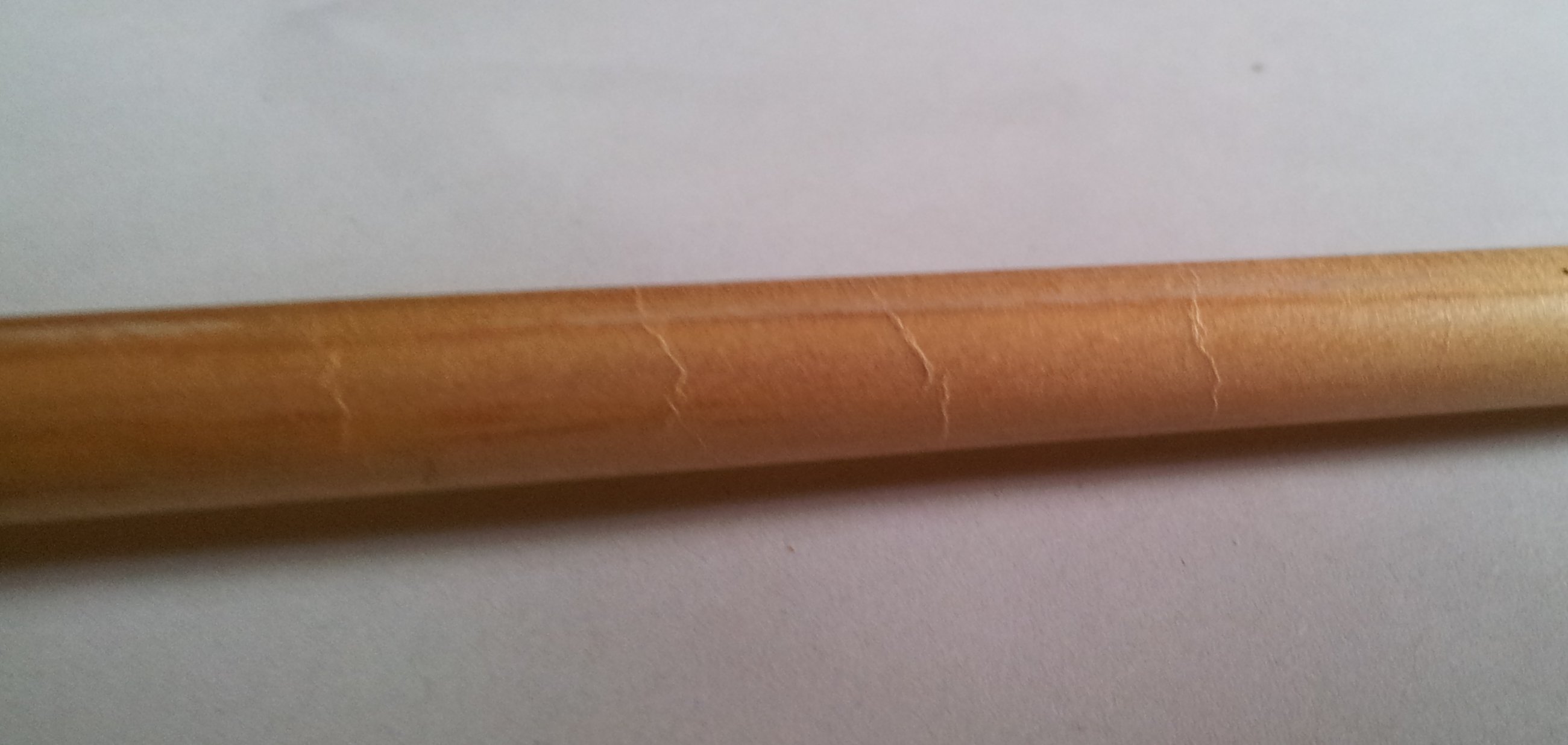
Sometime you can spot damage before it becomes a critical failure, below is a close up shot of a wooden arrow shaft that is showing signs of failure. You can see vertical crack lines across the arrow shaft. This will eventually result in the arrow bending or breaking.

damage to wooden arrow

Damage to wooden arrow

It’s not just wooden arrows that can fail and become damaged.

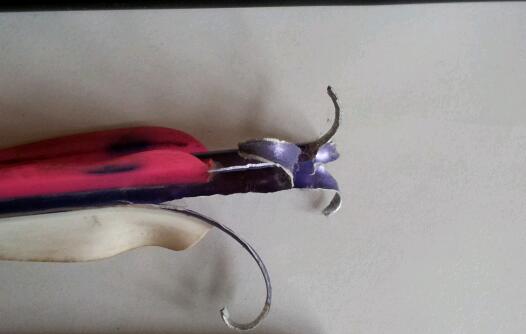
The photograph below shows what can happen to aluminium arrows . The archer had managed to hit their own nock with another arrow (great grouping in the target). The nock has shattered and the metal arrow has peeled back like a banana. This is sometimes called a Robin Hood Shot.

A Robin Hood shot

A Robin Hood shot

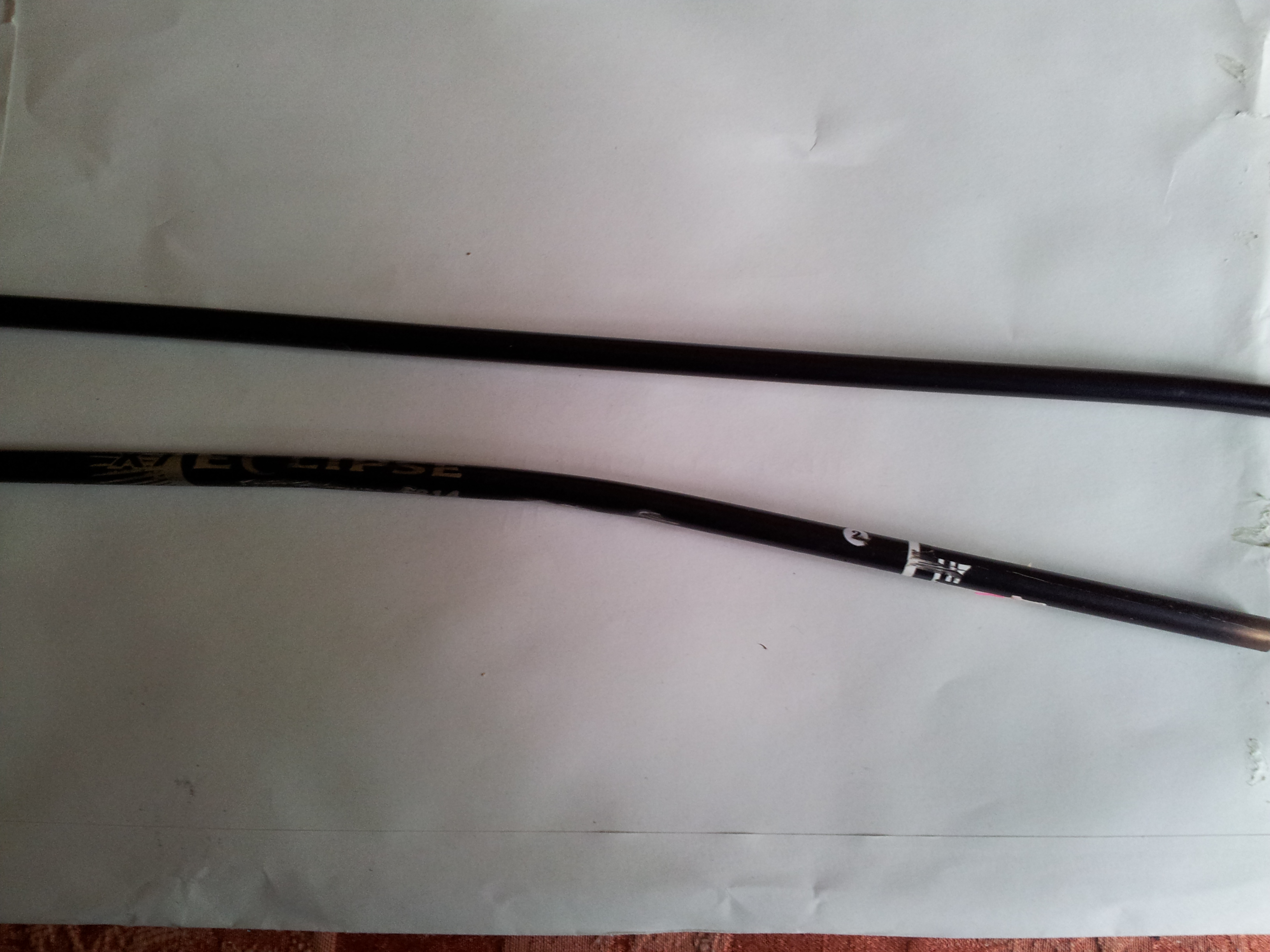
Obviously this arrow is no longer usable, but there are times when you will not have such a critical failure or damage. When your aluminium arrow might be only slightly bent and it can be possible to straighten them but it takes time, a level or expertise and correct straightening jig. Below shows a “slightly” bent arrow, following contact with a tree.

Bent arrows

Bent arrows

Carbon arrows also need checking regularly as they can split or worse still shatter. I’ve seen a compound shooter at a championships, release their arrow and it shatter into a million pieces, showering her and those around with carbon splinters. Fortunately no one was hurt and even more amazingly the bow was undamaged!

I know some archers now wear a Kevlar glove on their bow arm to protect them from any possible arrow failures.

It is not only at the bow end problems can occur, there are times when you are drawing arrows that the arrow may break, so it’s always worth either wearing a glove or using an arrow puller to give a cleaner and stronger grip. I’ve had to patch up a few people over the years who have cut themselves when drawing arrows that have split.

Also be aware of carbon splinters in targets. this often happens when the arrow pile has been forced into the shaft following a hard impact and resulting in the carbon shards breaking off.

A good way to test you carbon arrows is to flex the arrow, if you hear cracking or see splintering then dispose of  them. Also be aware that if you use arrow wraps, cracks can appear under these and are not always noticed.

Here are a couple of good sites and articles on testing arrows, be warned though there are a couple of graphic scenes of what can happen when an arrow fails.

http://www.huntersfriend.com/arrow-safety-warning.htm

http://www.youtube.com/watch?v=k6nIbvrMTbE

Tip – if you have a carbon arrow splinter on a shoot or when practising, don’t drop it into your quiver as it will leave splinters in the quiver. Take some tape and tape over the splintered section, this will stop loose pieces breaking off and fulling your quiver with razor-sharp splinters ( I always carry a roll of micropore tape in my first aid kit that is ideal for this.) You can then drop it into your quiver and dispose of it when you get home.

As always thanks for reading and I hope you’ve found this of use.