Scottish NFAS Championships

Auld Kirk Bowmen logo

Easter saw the NFAS Scottish Champs come round and this year it was to be a little different, with there being both a 3D course and a paper faces course.

Traditionally the champs have always been 2 paper faces courses so there was quite a bit of interest in how this might be organised, especially as the site is a disused quarry.
Having shot the site a couple of years ago, and not being able to make it last year we thought it worth the investment in time, fuel and potential arrows 😉 Also very aware of the weather, last time we ventured north it threw it down on the first day leaving us all soaked cold and wet
The first day would see me on the paper course (B) and second day on the all 3D course. Sharon would do A first and B on Sunday as she was now shooting in the Bare Bow class
This was my first target of Day 1
Scottish Champs - first target on first day
Sadly Saturday saw me shoot abysmally, scoring little over 400 on a 36 target round, just couldn’t get my head in it at all (think that was one of the worst scores I’ve had in years, having blanked 5 targets). Having said that I had a great group and the 3 of us didn’t stop laughing and joking all the way round the course.
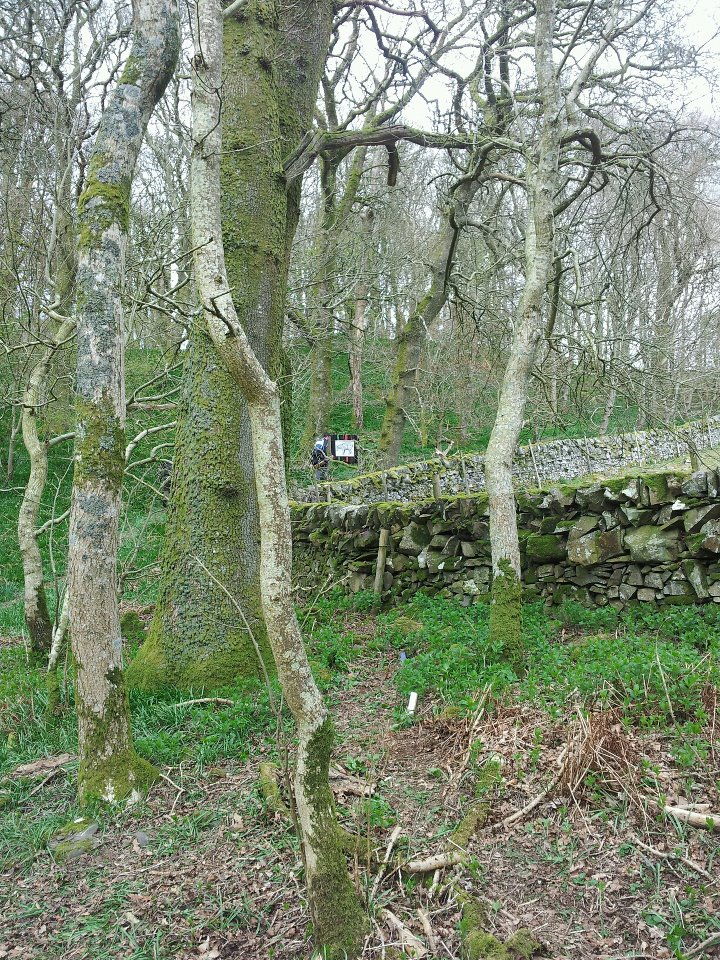
Scottish Champs - another  target on first day
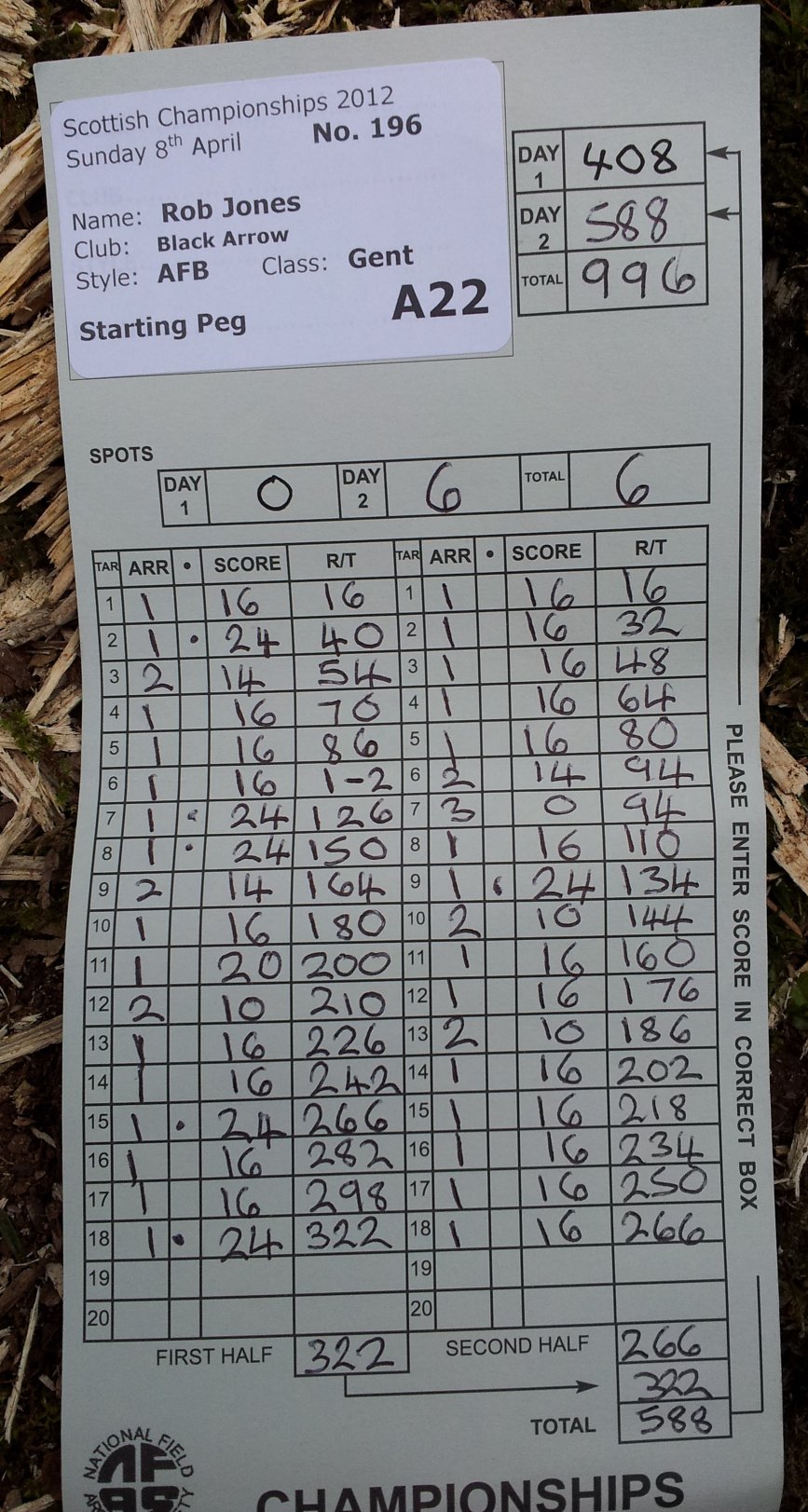
Really enjoyed the 3D course and thought it was well set to make use of the terrain with nothing stretched. The use of dead ground and the natural geography was done to complement the shots not to make them impossible. Came in with over 580 and only blanked one.
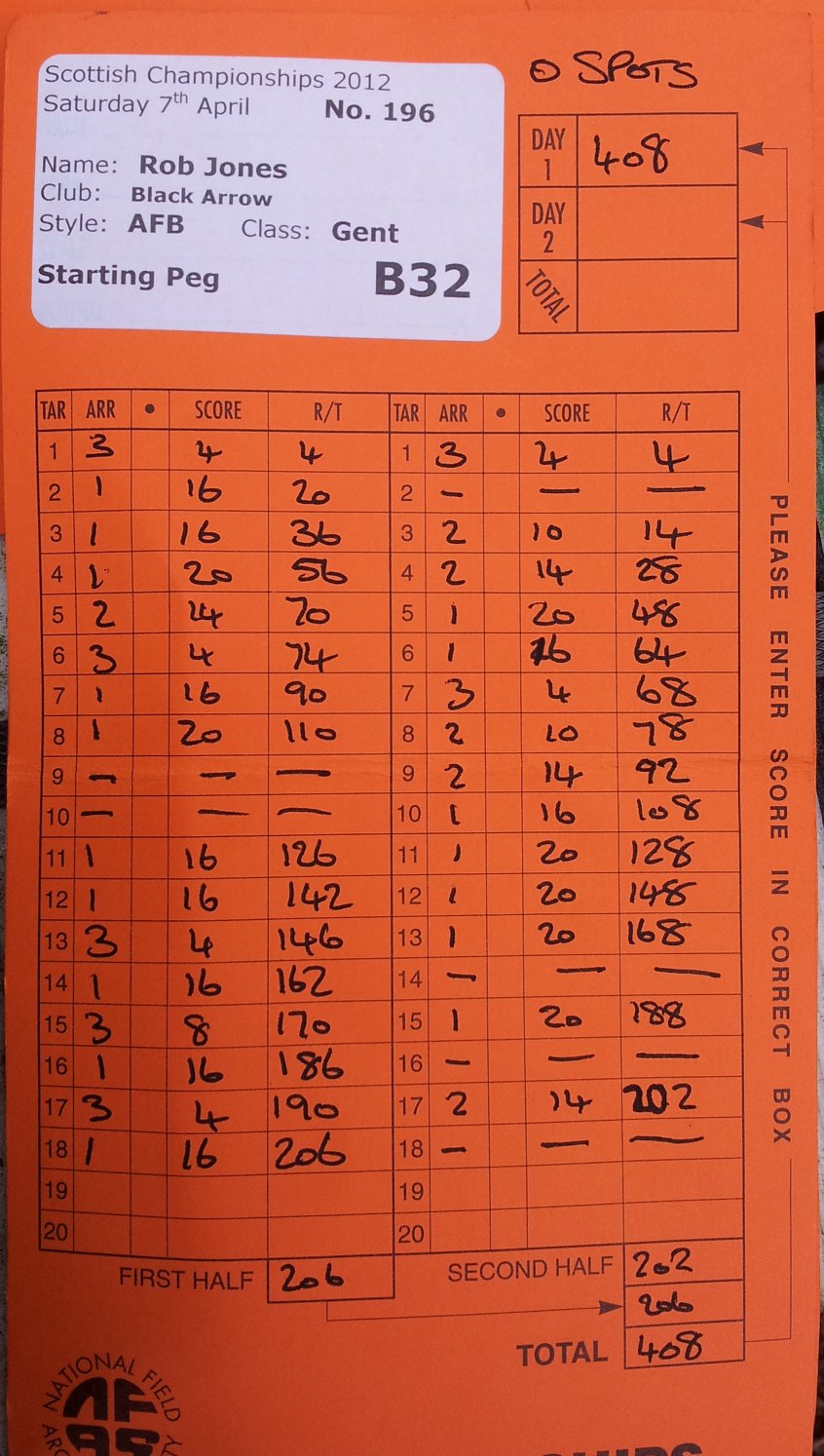
Score card from first day course
Score card from 3D course on second day
Speaking of the ground, there had been much talk and concern over the use of 3D targets in a disused quarry, can anyone say snap, oops another broken arrow. There were no backstops other than ground, which was liberally covered in very hard stones or trees. Having said that I only broke one arrow, though Sharon does have a very nicely bent one. I know a few people snapped arrows but it wasn’t as bad as it could have been.
Would have liked to have seen all archers in the same class shoot the same course on same day. Think it would give a fairer reflection on the difficulty of the courses.
We were also very lucky with the weather, with the rain only appearing late on Sunday.
Congrats to Sharon on getting 4th place. Not bad for only shooting the bow for less than 3 months
The full results are available from the Aulk Kirk Bowmen website

Archery tip – always carry tape

Always carry tape in your quiver or pouch on a shoot.
I have found that carrying micro pore tape to be incredibly useful and now always carry some with me.
I have used it not only to patch up fellow archers when they have cut themselves and required the wound dressing, but also useful for broken arrows, especially carbon ones
No I’m not suggesting using the tape to repair the arrow, that would be a really bad idea.
Time and time again I have seen archers who have splintered a carbon arrow simply drop it into their quiver, potentially resulting a quiver full of carbon splinters. A simple solution to this is to cover the tip in tape, this stops the arrow from splintering more and filling your quiver with splinters. Just be careful when applying the tape to avoid getting splinters in your fingers.
Any sticky tape will do and a good alternative is gaffa / duct tape, though carrying a roll of this on a shoot might be a little bulky

Literature review – Beginner’s guide to traditional archery

There are a wealth of books, magazines and websites out there offering the archery related advice and guidance.
So I thought it a good idea if I put down my thoughts down on such sites I’ve found.
The first of these is a book review.
Beginner’s guide to traditional archery by Brian J Sorrells ISBN 978-0-8117-3133-1 Stockpile Books
I’ve found this book covers the basics pretty well. It is very easy to read with simple clear explanations of the key points. I’ve taken to carrying this in my work bag to read on the train, as I have found I can pick it up and read a few pages or section easily.
I like the shooting exercise shown in the later chapters, these are particularly interesting as they mirrored many of my own practice methods. As a coach I’ve found that some of my pupils have also found these techniques worth while.
I think it works by giving an overview of archery for those interested in learning to shoot a traditional bow (recurve,  flatbow etc) but compound archers may find it less useful.
Beginner's guide to tradional archery
Overall I would say 9/10 as I really like the way it is written and find it an easy  read, along with something I go back to from time to time.
Thanks for reading