As many of you will know about 6 months ago I started producing podcasts having been inspired by others in the UK and beyond. Mine are aimed at supporting field archery in the UK. I now have a back catalogue of some recordings so I thought it a good time to start promoting them.
In the latest podcast I try and answer a followers question. Thanks for reading and listening
In the latest episode I am delighted to be joined by Dal of Dal archery, here in the UK where we completely nerd out on arrow building, different wood options and everything archery, especially building wooden arrows.We talk for over two and half hours on the podcast about howhe first started and how his passion for archery has developed over years to now encompass Dal Archery, his business which he has been running since 2019 supply quality arrow shafts to the community.It’s not all about arrow making but also coaching experiences,social pressures, passing on knowledge and lots more. Check out his social media linksWebsite – https://dalsarchery.co.uk/Instagram – https://www.instagram.com/dalsarchery/YouTube – https://www.youtube.com/@DalsArchery If you have any questions or queries you can drop me an emailon or via the website. If you enjoy this content then drop review or considerfollowing the podcast.If you have time check out my YouTube channel (https://www.youtube.com/@offthearrowshelf)Hopefully you will enjoy the content, and if you do, please hit the Like button and consider subscribing to the channel.Most of all remember to enjoy your shooting and as always thanks for listening, watching and supporting.#barebow #bow #bows #arrows #fieldarchery #archerycoaching #archery #archerypodcast #coachingtip #archerylife #archer #bowsandarrow #traditionalarchery#offthearrowshelf #bow #arrow #archeryfamily #tradarchery #traditionalarchery #flatbow #recurve #3Darchery #shooting #nfas #huntingtackle #longbow #ELB#englishlongbow #woodenarrow
It’s with great pleasure I get to introduce my next victim, I mean guest to off the arrow shelf. Sadly, due to the ongoing COVID-19 restrictions in the UK we have had to do this remotely but I’m sure you will still enjoy the banter.For the last 12 months it’s been nearly impossible for field archers to meet up in person, with the national society having to cancel it two main tournaments and countless local tournaments it’s been 12 months of challenges for Harry Boyce in his role as the president of the National Field Archery Society, so I’m very grateful for his time.
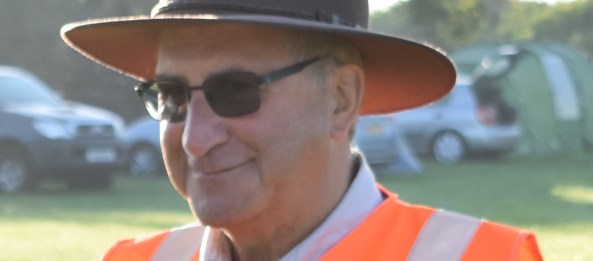
Harry Boyce at the champs
So, let’s get going. For easy my comments are in bold italics and Harry’s are in italics.
Rob – You are pretty well known to many on the archery circuit, thanks to your past successes in shooting and role as NFAS President, but how would you describe yourself?
Easy going & prepared to give anyone or everyone time to listen to their comments or problems.
Rob – Why did you first get into archery?
45 years ago, I was a youth club leader & along with another local youth club leader we organised an activities weekend for the members, part of which was archery by Friskney Bowmen. Having returned home & informed Terri what we had done over the weekend, she said “I have always wanted to try archery”. I took her along to Castle Bowmen to try it & told her this is your sport, I am not going to get involved with it. As I had always been into shooting rifles & shotguns from around 12 years of age, it didn’t take me long to get interested myself. The rest is history.
Rob – For those that don’t know Terri is Harrys’ other half and a very competent archer in her own right.
Harry and Terri
I’m sure others out there would be interested in knowing what you shoot, when you do get the opportunity to shoot round a course. So can you talk us through your kit set up?
As most NFAS members will know I shot barebow for over twenty years. My last barebow set up was a Bernadini riser with Hoyt carbon limbs 49lb at full draw, fastflight string & ACE 520 arrows with 70 grain piles.Fancying a change. I bought a L/H compound, went straight into Unlimited & I have been shooting that for about seven years.
Current set up is a Hoyt Nitrum 34, Fuse long rod with side rod, Hoyt Ultra rest, Black Eagle Challenger 400 arrows with 100 grain piles & Chocolate 3 finger release aid. I’m now going through the motions of thinking about having a go at Barebow again.
Rob – I think you have been shooting compound most of the time I have really known you. I do vaguely remember you shooting Barebow, when I was shooting Hunting Tackle.
How would you define the appeal of field archery and what makes it such a draw for you, as you have bene shooting for several years?
The appeal of field archery to me is twofold, being out in the countryside & the friendships you make on your journey through archery.Over the years of setting courses & competing at shoots I have seen wildlife that some people only read about or watch on the TV. The most memorable being at a World Champs in Australia when kangaroos came thundering through the course. I didn’t need telling twice to get out of the way.
What’s better than being out in the woods when everything is in leaf & in bloom with the birds singing. Field archery gives you the opportunity to meet a number of people that become friends for life. In the time we have been shooting, my wife & myself have made friends all over the world.It may have been a long time since you may have seen some of your friends, but when you do meet up again it’s like it was only a month ago & it’s nice to catch up again.
Rob – Can you explain what your love or passion is that drives your interest in archery?
All my life I have been an outdoor person & shot everything from catapults to rifles & shotguns. The love of it is being out in the countryside with friends. The passion is seeing people enjoying themselves, try to hit what you are aiming at & trying to improve each time you are out.
Harry Shooting
It’s hard to describe the feeling of hitting the target that the course builder set so deceivingly to try & make you miss. Introducing a beginner to archery & then watching them to go on to become a top archer in their own right is a very satisfying feeling. I have been mechanically minded since I was a kid & used to take my toys apart to see how they work. To me a bow & arrow (regardless of if it’s a longbow or compound) is just another mechanical devise, so I still get to tinker with the tools.
Rob – This year’s been challenging for so many people within the archery community and beyond. How has it affected you?
Over the last year I have been fortunate to still be in full time employment. As my work has continued to increase throughout the year it has helped to keep my mind occupied through these times. Like most people I have missed seeing family & friends, being out in the woods & socialising. But in doing that I realise that I have been more fortunate than some people or families & grateful to be able to still enjoy archery once things get back on a normal basis.
Harry behind the scenes
Rob – The global Pandemic has impacting our lives hugely. How are you coping with the lack of shooting?
Although there has been no shooting to speak of over the last year, I have still been working with the committee to ensure that once things are back to normal (whenever that may be) we still have a society that’s ready for us to continue shooting & enjoying our hobby.
It’s also helped to keep my mind off the lack of shooting with all the jobs that Terri has found to do around the house & in the garden.
Rob – Yes, I have seen some of the photos of garden projects Terri has shared. If ten years ago I’d told you where you’d be today, how do you think you’d have responded?
Ten years ago, I would have said that you were wrong (and possibly off your head), as having stepped down after serving 6 years in the position as President, I wanted to take a back seat & was not looking at taking up office again.Having said that, I have no regrets about returning to the job.
Rob – What would you say has been your biggest challenge you’ve encountered to date with your archery? How did you overcome this challenge?
The biggest challenge that I encountered was that less than perfect was acceptable. If I made a mistake in executing a shot, I used to get annoyed with myself because I knew I could have done better. It took me a while to realise we are all human (probably Tony Weston is the exception to that rule) & we all make mistakes. You cannot change what has happened, you can only change what is about to happen. Learn from your mistakes & carry on. I found that the more I relaxed, the more I enjoyed it & the more I enjoyed it the better the score.
Rob – I am always curious what people feel they can pass on to other archers, especially newbies. If you could reach every newbie archer out there with one single piece of advice what would it be?
When you look around at the archers consistently winning their class, remember that they too were just like you, a beginner at one time of day. The only thing that will stop you from doing the same is you. Learn as much as you can from everyone you can. Knowledge of how to shoot and become a top archer can be free. Once gained, knowledge cannot be taken from you.
Once again, I would like to say a huge thanks for your time Harry. It is very much appreciated.
It’s been a while, in fact, it’s been far too long since I have added anything to this site, for which I apologise. My attention has been focussed on developing the podcasts (https://anchor.fm/off-the-arrow-shelf) at the expense of the written word. So with only one minor delay to say Happy New year and I hope everyone reading this is well, let’s get on to this book review.
Cover Photo
Those of you who are familiar with field archery in the United States or other areas of the world for that matter may well have heard of Joel Turner. I have mentioned him a few times on this site and on my podcasts. He is a highly respected archer and coach, appearing in countless podcasts, videos and articles.
Joel has also authored Controlled Process Shooting – the science of target panic which is going to be the focus of this review. ISBN 9781981346431
Onto the first impressions, well these may not be positive for some people as pages per buck or pound are not high. It is quite a skinny pocket-size book rather than a huge encyclopaedia. The flip side of this is it gets to the point quickly, being quite focussed. It runs to 58 pages and I bought my copy online but it is available from several archery shops.
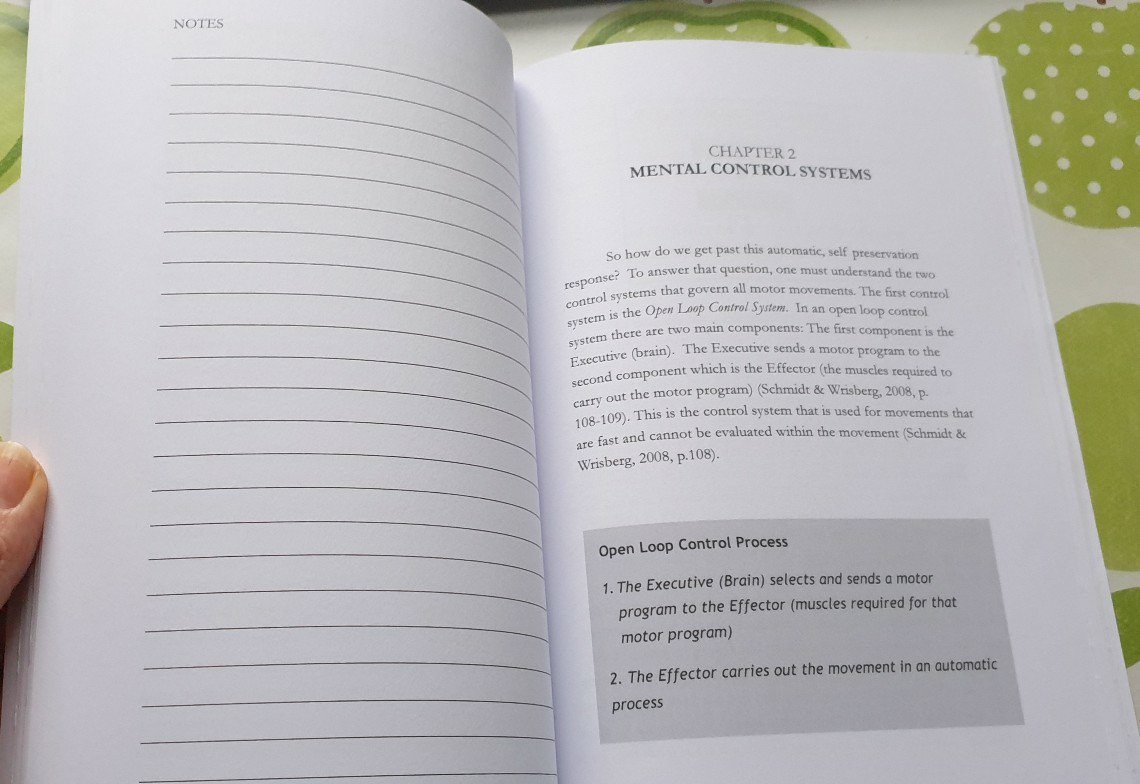
One thing that I really like is the way the book has been constructed with empty notes pages, where you are encouraged to add your own notes as you practise the processes outlined in the sections. I often end up with post-it notes stuck in books with my scrawl all over them as I don’t want to deface the book itself. I was actually talking about this very topic with Simon Thomas at the weekend, who also has the book.
Photo of inside cover
If you have ever watched any of Joel’s videos on YouTube or listened to a podcast, when he was discussing the principles of shooting, then you will be familiar with his style of presentation. The book is written in the same style as he speaks.
My advice would be for you to read it, then go back and read it again to make sure you understand what Joel is saying and the messages he is trying to get across. Then read it a third time to confirm this.
The section on mechanical releases is less relevant to my style of shooting as I shoot off the fingers, normally split-finger so I won’t comment on that chapter.
Some aspects of shooting a bow can be subconscious in the execution, but I still believe you need them to feel right. Maybe that is the way an instinctive archer has a closed-loop shot.
I found elements of the book interesting as Joel talks of a blueprint of a shot, which is effectively the same idea just different wording to how I describe a template of a shot to my students.
I am not sure that his style will suit everyone, in fact I would go as far as to say that it probably won’t suit everyone’s style of shooting or rather their mindset. That is just a fact of life as everyone is different and comes to archery via different life experiences.
Another chapter
I feel you will get out of this book as much as you choose to invest in working through his ideas. So, don’t expect to read it and that be it. You will get more if you read and work with it over time.
Like owning a pair of walking boots. You need to wear them to bed them in. You need to work with this book to get the most from it.
It reads like a training manual for archers wanting to gain control of their shooting, with the option for you to annotate with your own notes and thoughts throughout the book. Hence the blank ruled pages for you to add your own notes and thoughts. I think this is an important part of how to use this book, as it is something for you to work with. Not just read, but work with. That work will take time and commitment.
This is something I try to get across to all my students when I am working with them on improvements to their shooting. They have to work for it. There is no magic arrow. Money spent on top-level equipment will only go so far. “All the gear and no idea” is a phrase I have heard about many sports including archery.
For that reason, you need to read this book, give yourself time to process what is being said and then practise the ideas Joel mentions.
I am a fan of the open and closed-loop process, though not sure that fan is quite the right word to use. I can see what Joel is alluding too when he discusses it. I use a phrase of feedback and feed blocks when I am explaining it to students, but the concepts are very similar.
A long time ago I learnt the importance of listening to the feedback your body is providing you. It is one of the reasons that I spend so much time teaching my students the importance of coming down or drawing down if the shot doesn’t feel right or controlled.
I know some traditional archers are not a fan on his shot control and feel things should be more fluid or instinctive. that’s fine, that is their perspective and opinion. It is so important to recognise that what suits one person is not necessarily going to fit with another person opinion or style. After all, archery is a very diverse discipline and opinions do vary.
I can understand why some who purchase this book may be disappointed when it arrives, possibly because they expect a large document or weighty tome. I think they may fail to understand the purpose of it. I see it as a training guide for your improvement. Like all training material, whether it be learning to drive, brain training or DIY, you have to apply it. many will want to rush out and apply what is read straight away, which is great. My only comment is that you need to give yourself time to adjust to these ideas.
I believe some people will feel this is overpriced for such a small book, but I feel they might be missing the point. It is not a text you simply read, it is a guide for you to work with, or at least that is how it came across to me.





 My Archery Experiences