Course and Target Laying – A clear picture

So in the last post on course laying ideas I made reference to distances addressing a few things to possibly consider. In this post I’m going to look at target size and choice. I know in some societies they always shoot circular targets of varying sizes and over marked distances.

In the NFAS we shoot printed animal shapes and pictures, with marked scoring zones or 3D targets. Both over unmarked distances, so this is what I will cover in this post.

So it might seem obvious. Large target is easy to hit, right? Well maybe not, so lets see if I can debunk a couple of myths concerning target faces.

Myth number one – A large picture = large target

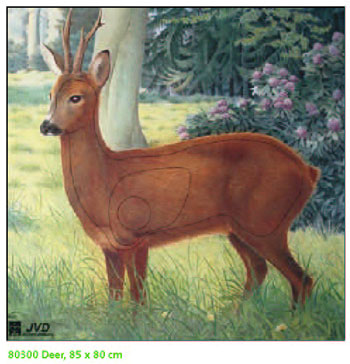
Not always, so to start here is a word of warning on target faces and face selection. Just because it is a large printed sheet of paper doesn’t mean the target is large or scoring zone is equally large. There are a few targets where the picture is large but the target animal itself in the picture or scoring zones in the animal aren’t. A good example of this is shown below and is what I tend to call the rhododendron deer because of the bush shown in the background.
Deer

Deer

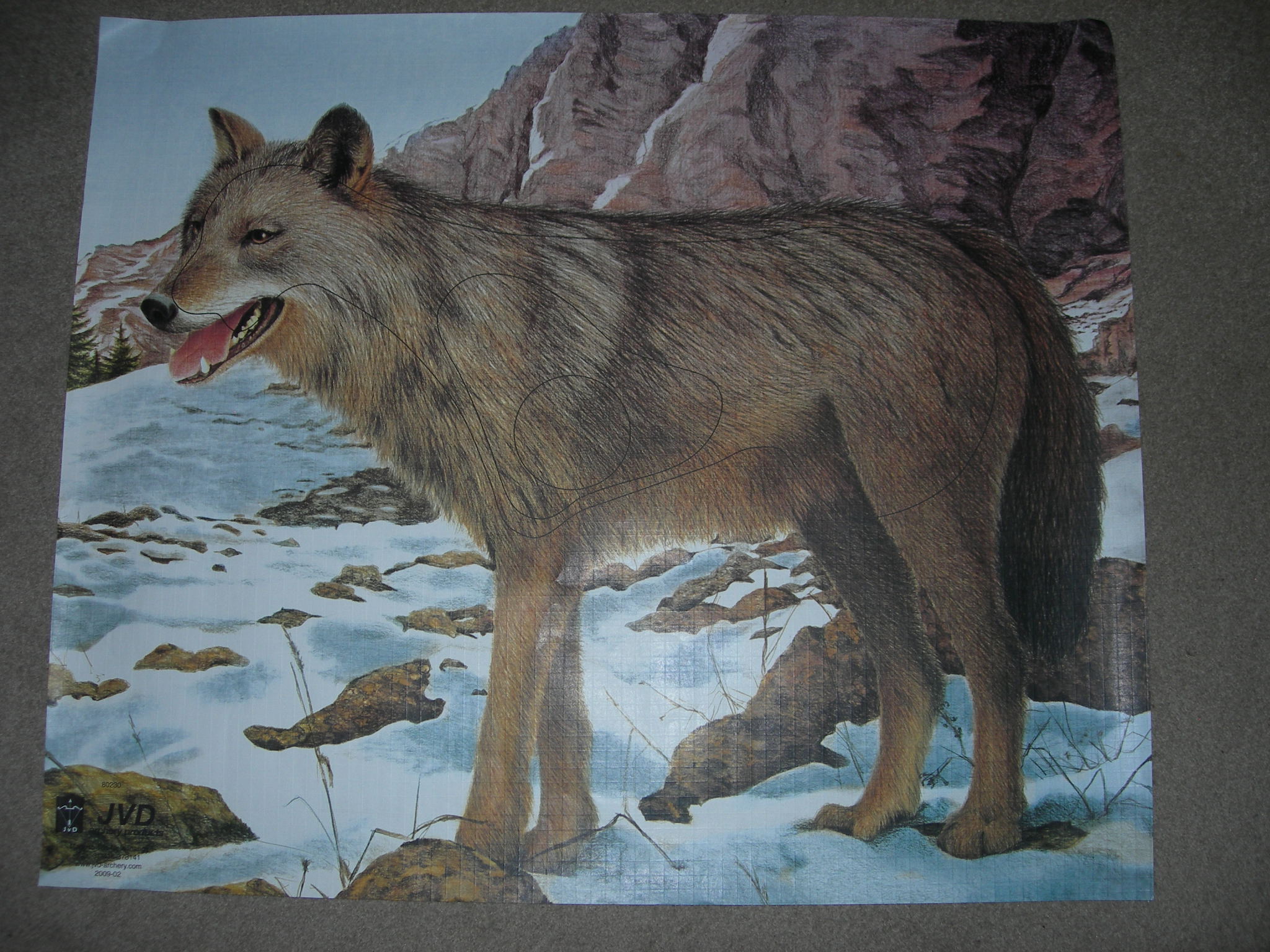
The target face is quite large but the first thing to note is the animal is not that large on the face, secondly the scoring lines are some distance in from edge of the animal. This wolf image is another example.
Wolf picture

Wolf picture

Myth two –  all targets have the same scoring zones.

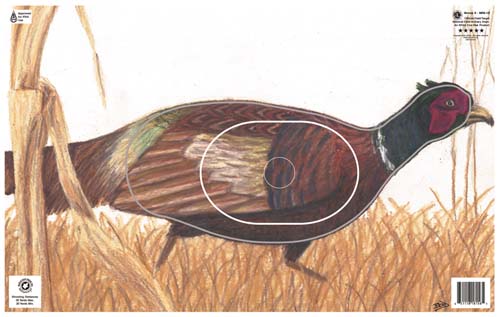
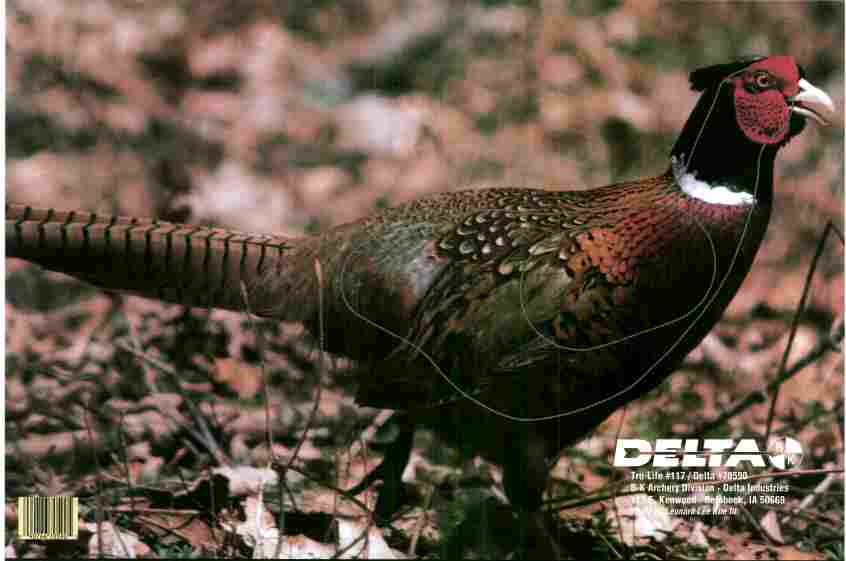
There are probably thousands of different target faces out there (Merlin  JVD Delta Maple leaf etc) and hundreds of 3d targets. Here are a few Pheasant images
Delta Pheasant

Delta Pheasant

JVD Pheasant

JVD Pheasant

Mapleleaf Pheasant

Mapleleaf Pheasant

You can have a dozen images of deer or rams and each has slightly different scoring zones, some following the line of the animal others have the scoring line much further in making the face look larger while in fact it’s not. So you might like to consider this when setting up the target and selecting a suitable target face. If you want to make a shoot easier choose targets with larger scoring zones.
3Ds are the same with each manufacturer being slightly different and if they have been repaired by the club then chances are the scoring zones maybe different.

Simple Plea

Please, please, please don’t repeat target faces on a course. There is no need on a 36 / 40 shot course to repeat any target face or 3D.
There is nothing more depressing than walking up to a shot and going oh it’s 16 yards so must be a racoon!
I’ve shot courses where in 36 targets there were multiple repeated target faces of raccoon (3) deer (twice) ground squirrel (2-3). It reflects badly on the club and can spoil the day.

Size of target face or 3D

Well this is kind of obvious or is it? You don’t put a small target at long distance as you’ll be accused of stretching shots or being in the target preservation club.
But put a large face at comparatively short distance can confuse people as they look for the trick. Others will relax and not concentrate and end up with a 16 rather than the 20 they were expecting or even worse having to take a second arrow. We saw this with our last shoot where we put a multiple shot in (see posting). Another example is the old Rhino shot shown below.

Our Target 4 Paper face Rhino

Our Target 4 Paper face Rhino

This rhino paper face is just about 34 yards away from the first shooting peg for an adult, well within the normal distance you see it at. Yet many misjudged it on our recent shoot.

Merlin Rhino

Merlin Rhino

Possibly because they were expecting it to be further than it was.

Managing faces on the day

When replacing a target face because its shot out make sure you position the replacement face exactly where the old one was so all archers are shooting the same distance or height. (I’ll do a later post on how many faces you might need for a shoot, and preparation and mounting them)

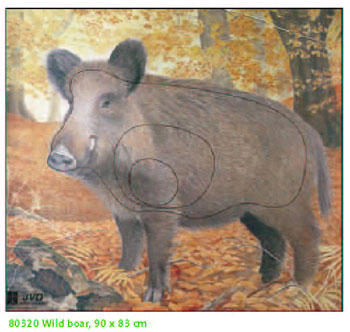
Useful tip – There are a few target faces which have great ground cover or settings. The JVD boar is one that works well if there is leaf cover on the ground as it merges with the target.
JVD Boar

JVD Boar

You can see how good it looks from the red peg.

First view from Red peg

First view from Red peg

Targets at an angle

There have been a few shoots recently where targets whether paper or 3D have been angled.
The result of this is it reduces the scoring area but it tends to increase the damage to both 3Ds and bosses as the foam is torn or ripped.
I’m not a fan of putting 3Ds at an angle promote tearing of 3d as arrows glance off.

Sharons arrow

Sharons arrow is the top one.

In my view Small 3Ds are not always worth while as they have a smaller area so hits are concentrated into one area. I know some manufacturers are looking at this. See the long life targets link a friend posted a while back.

If you find this useful or have any questions then please contact me.
As always thanks for reading.

Course and Target laying – So What makes a shot challenging?

My personal view is there are several ways in which you can make a shot challenging. Instinctively you will sometimes see how the land and vegetation can combine to make a good shot. But that doesn’t make it very easy to explain here or to new course layers developing their skills.
The art is combining one or two of them together to make a shot challenging without being too hard. In essence there is a fine balance between challenging and demoralising and as a course layer you need to judge this carefully.
In the next few posts I will look at different options from target distance to size of target, intervening terrain to footing on the peg.
First off though I’m going to give some comments on elevation.

So what do I  mean by elevation?

Any shot that is not along flat ground and requires you to change your stance or aiming because it is down a hillside or hung in a tree.
Shooting along the flat is one thing but in field archery you have the opportunity depending on terrain to introduce a shot that goes down or uphill and it confuses people. Shots across the slope also increase difficulty as you have to judge the angle and distance to the target.
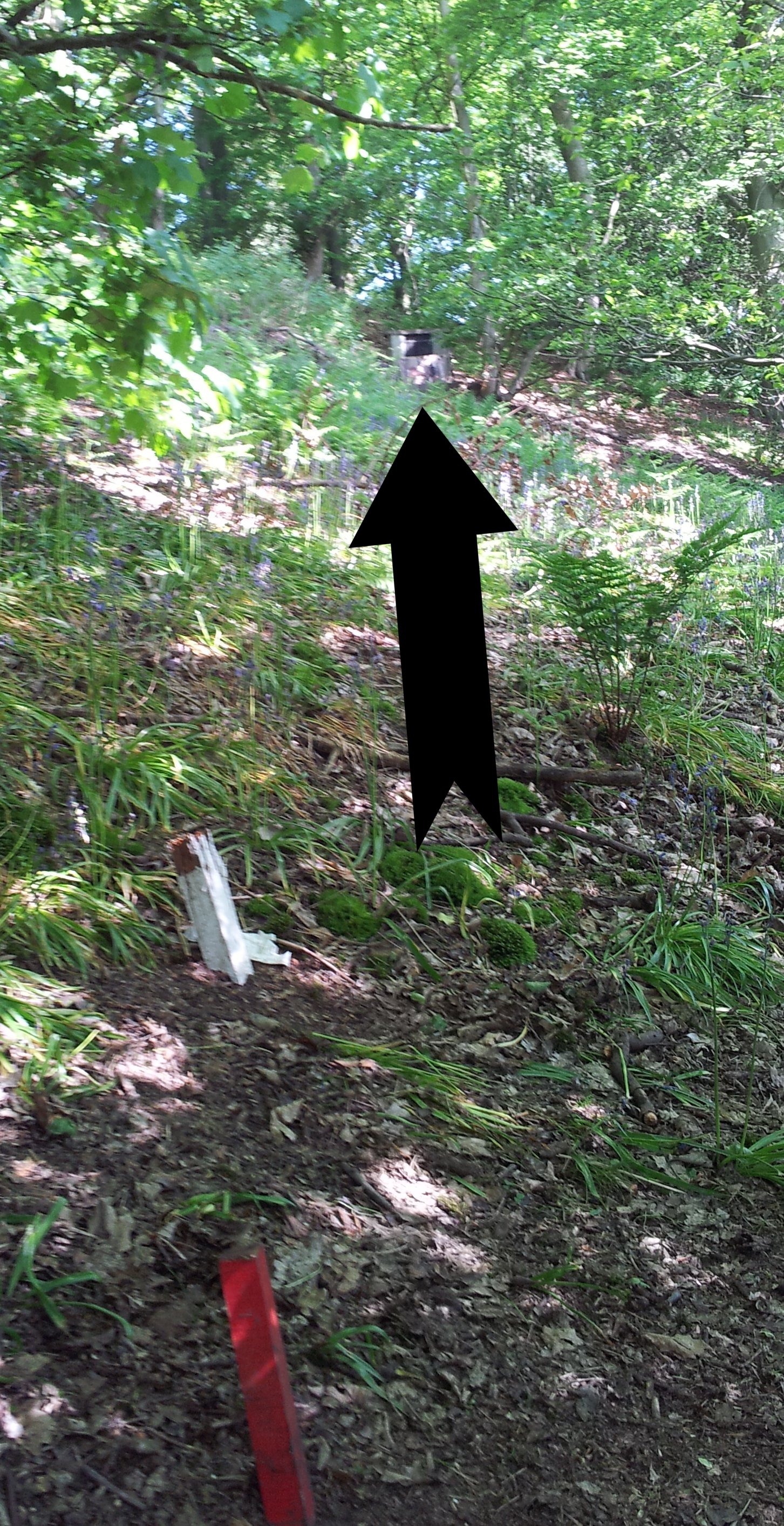
An example of this can be seen here, where it looks a straight shot up a hill to a target by the tree.
View from the red peg

View from the red peg

This isn’t a straight up hill shot though, but one at about a 30 degree angle across the slope.
Arrows shows the target

Arrows shows the target

Though it doesn’t look it, it is a largish paper target of a Ram too from the Merlin archery  range of faces, shown below. Many archers will judge the distance but not necessarily the elevation. When setting this shot we decided that a paper face mounted on a target boss was better than a 3D target.  Why, I hear you ask?
We thought that a boss would mean people would find arrows more easily rather than them skipping along the ground, also a target boss deceases the chance of an arrow skipping off the top of the target and traveling on.
target face - merlin ram

Merlin Ram

Raising a target can also work as was the case in the tree shot. You will notice we have put a lower target in for juniors.

Elevated shot for adults

Elevated shot for adults

This isn’t a long shot, being approximately 7-9 yards, but because of its elevation in a tree it often throws peoples judgement.
I hope these ideas help and generate some ideas of your own. Have a walk round your wood this weekend and see if you can apply any of these ideas. If so then let me know, via the the message for Rob.
As always thanks for reading.
Equipment Review – Bohning fletching tape

With the stormy weather hitting the UK at present, many archers are retreating to the indoor ranges or their making and doing rooms and sheds, fletching arrows and sorting gear for the new season. It’s been not so much of a white Christmas and New Year as a very, very wet one.

Here is hoping everyone is safe, warm and dry.

I thought I might take this opportunity to post my findings on using Bohning fletching tape. Been a while since I’ve written a review so here goes.

Just to make this clear from the outset. These are my views and opinions. I have no commercial interest in these products I review or the companies.

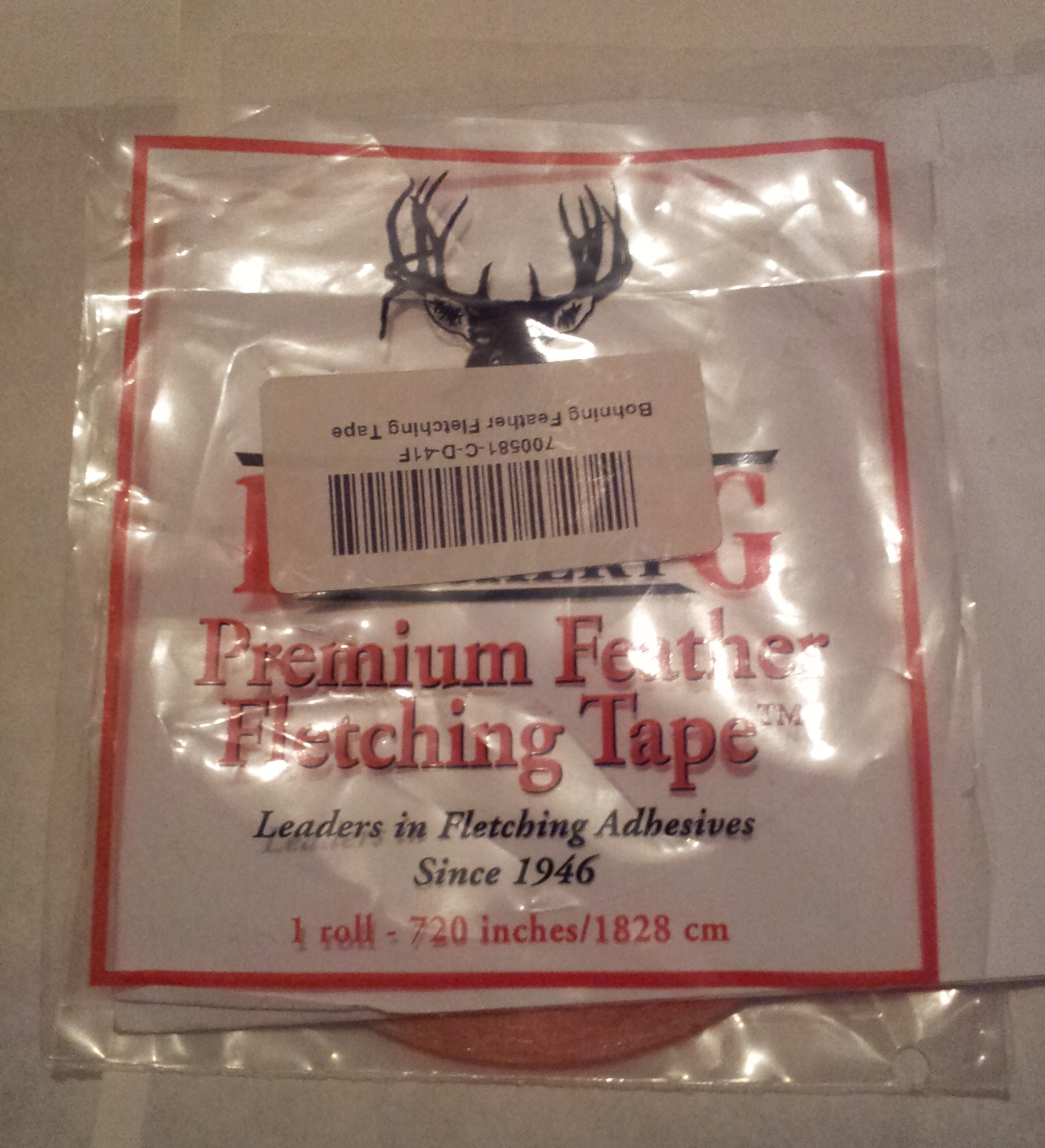
Double sided tape

Bohning Double sided tape

For years I have been using fletching glue to attach my feather fletching to the wood shafts. HMG has been my glue of choice. The only issue I’ve had is the time it takes for the adhesive to cure which is 15-20 minutes depending on air temperature.

For plastic vanes I’ve used simple bostic glue from local hardware shop which seems to work well on Sharon’s aluminium eclipse arrows.

At a shoot last year I was mentioning this and Bob one of our old club members from Black Arrow mentioned he used double sided fletching tape for all of his arrows and had never had any problems. Bob shoots longbow for both field and roving so his arrows can take some abuse. No offence Bob if you are reading this.

Initially I found applying the tape a little fiddly. Not so much when taking it off the roll and applying to the feather, but when trying to take the second covering layer off the tape when applying the fletching to the arrow shaft, but you get used to it.

Make sure you have aligned the fletching right as the tape adheres fast so you don’t have the time to re align if you make a mistake.

Quick tip. Ensure the shaft is dry and free from any dust which would cause poor adhesion. I don’t oil or varnish the shafts prior to fletching them.

Using the tape saves a lot of time as I found it quick and easy to use once you got the hang of it. I was able to fletch half dozen arrows in 15 minutes a significant time saving as it used to take 45-55 minutes using the glue to fletch one arrow.

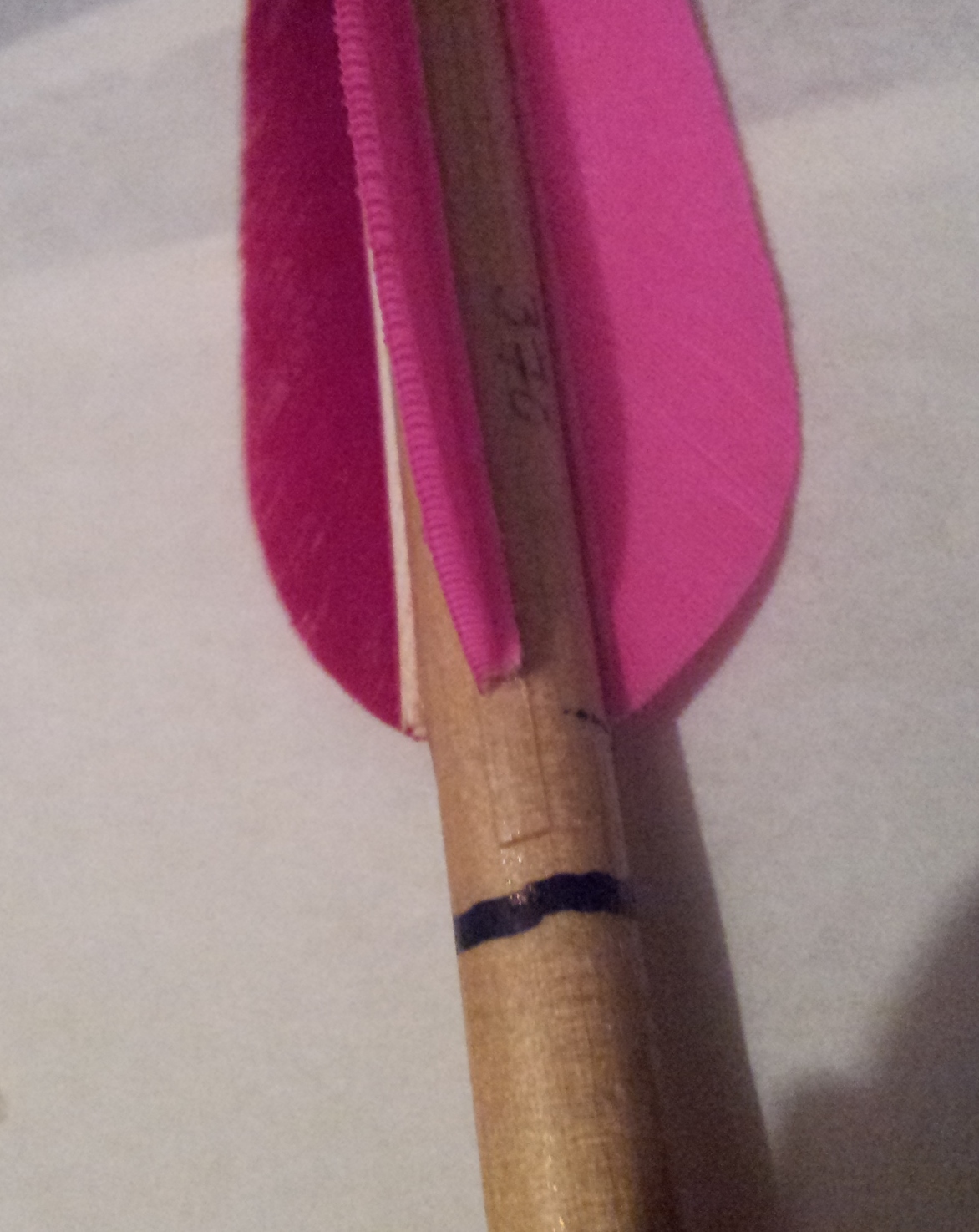
Allow a little more at each end

Allow a little more at each end to make it easier to apply.

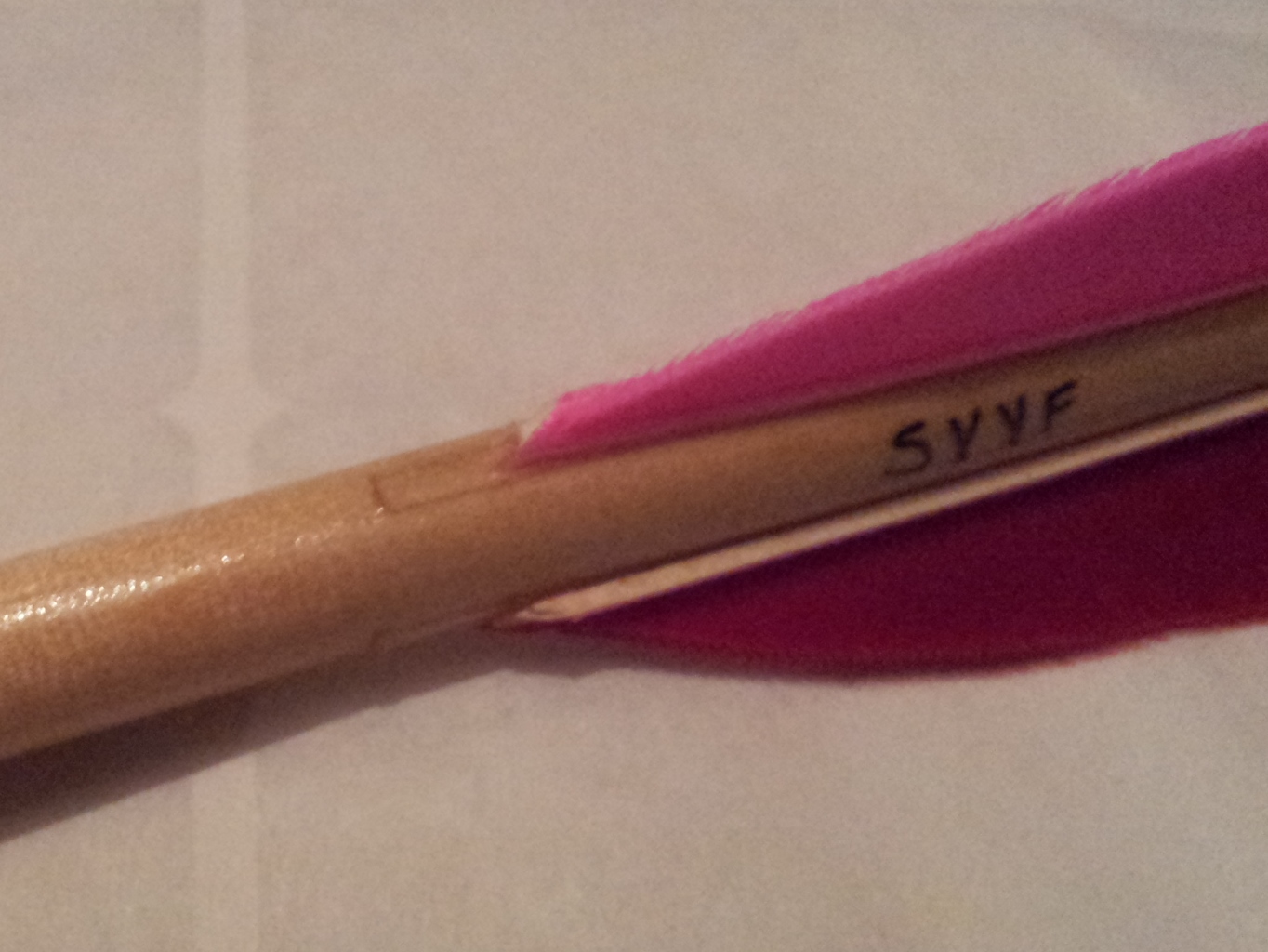
Leave a little extra at the front and rear of the fletching as it makes it easier to remove the second side of the tape and easier to apply the fletching to the shaft.

Extra length at front

Extra length at front

I was concerned the tape might come off in the rain but so far so good. I’ve been using the arrows for a little over six months and they seem okay.

My other concern was if the fletching might peel off the shaft, but this hasn’t happened either. I don’t know if this might be different if you varnished the wood first.

They have stood up to all the normal abuse I can throw at them, from being soaked in the rain, to encounters with trees and other vegetation. I’ve also used the tape for a new set of wooden arrows for Sharon and they seem to eb working well for her too.

Not sure how well it would work on plastic fletching but I am thinking of testing this shortly so it might be an update in near future.

The tape is available from most good archery shops, I got mine from Merlin in Loughborough. (http://www.merlinarchery.co.uk/bohning-feather-fletching-tape.html) I’ve used less than half the roll so far and produced a couple of dozen arrows so its pretty good value for money at just under £7 a roll.

So in short my verdict is thumbs up for Bohning tape, a good product that can save you a lot of time. 9/10 (could be higher if I had chance to try it on shafts other than wood)

Let me know if you have any experiences with this or anything else.

Happy New Year and as always thanks for reading.