Equipment Review – Bohning fletching tape

With the stormy weather hitting the UK at present, many archers are retreating to the indoor ranges or their making and doing rooms and sheds, fletching arrows and sorting gear for the new season. It’s been not so much of a white Christmas and New Year as a very, very wet one.

Here is hoping everyone is safe, warm and dry.

I thought I might take this opportunity to post my findings on using Bohning fletching tape. Been a while since I’ve written a review so here goes.

Just to make this clear from the outset. These are my views and opinions. I have no commercial interest in these products I review or the companies.
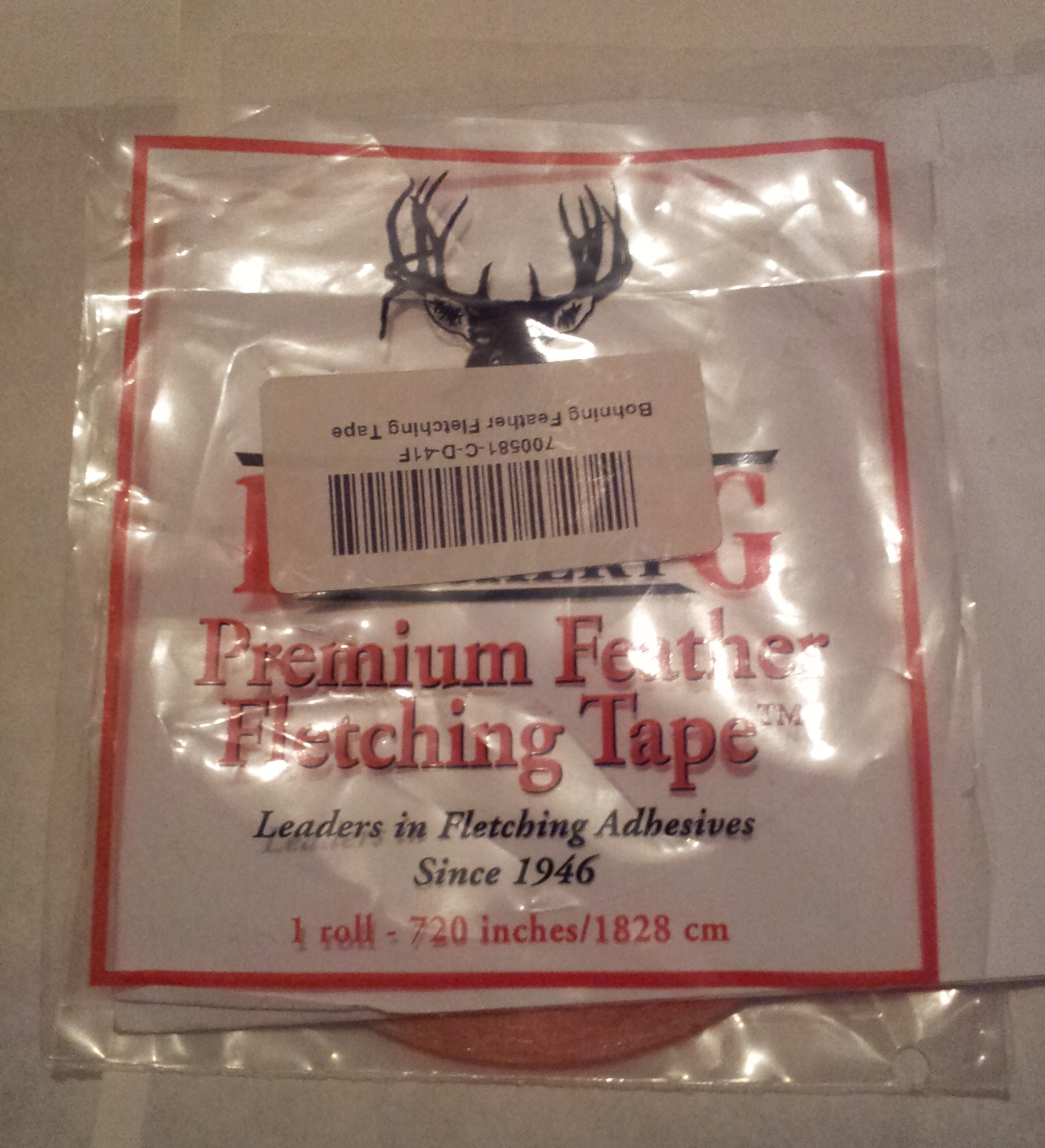
Double sided tape

Bohning Double sided tape

For years I have been using fletching glue to attach my feather fletching to the wood shafts. HMG has been my glue of choice. The only issue I’ve had is the time it takes for the adhesive to cure which is 15-20 minutes depending on air temperature.

For plastic vanes I’ve used simple bostic glue from local hardware shop which seems to work well on Sharon’s aluminium eclipse arrows.

At a shoot last year I was mentioning this and Bob one of our old club members from Black Arrow mentioned he used double sided fletching tape for all of his arrows and had never had any problems. Bob shoots longbow for both field and roving so his arrows can take some abuse. No offence Bob if you are reading this.

Initially I found applying the tape a little fiddly. Not so much when taking it off the roll and applying to the feather, but when trying to take the second covering layer off the tape when applying the fletching to the arrow shaft, but you get used to it.

Make sure you have aligned the fletching right as the tape adheres fast so you don’t have the time to re align if you make a mistake.

Quick tip. Ensure the shaft is dry and free from any dust which would cause poor adhesion. I don’t oil or varnish the shafts prior to fletching them.

Using the tape saves a lot of time as I found it quick and easy to use once you got the hang of it. I was able to fletch half dozen arrows in 15 minutes a significant time saving as it used to take 45-55 minutes using the glue to fletch one arrow.
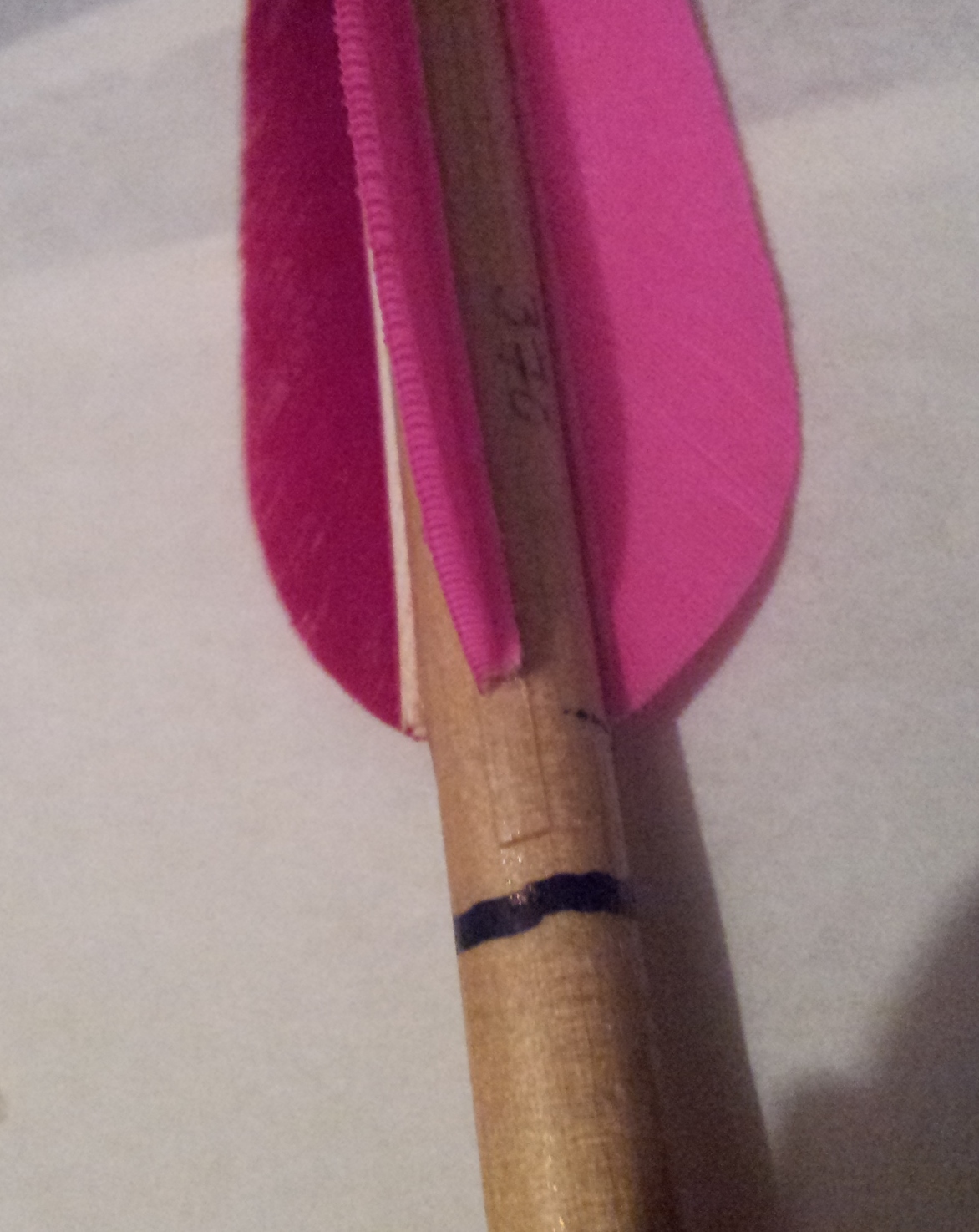
Allow a little more at each end

Allow a little more at each end to make it easier to apply.

Leave a little extra at the front and rear of the fletching as it makes it easier to remove the second side of the tape and easier to apply the fletching to the shaft.
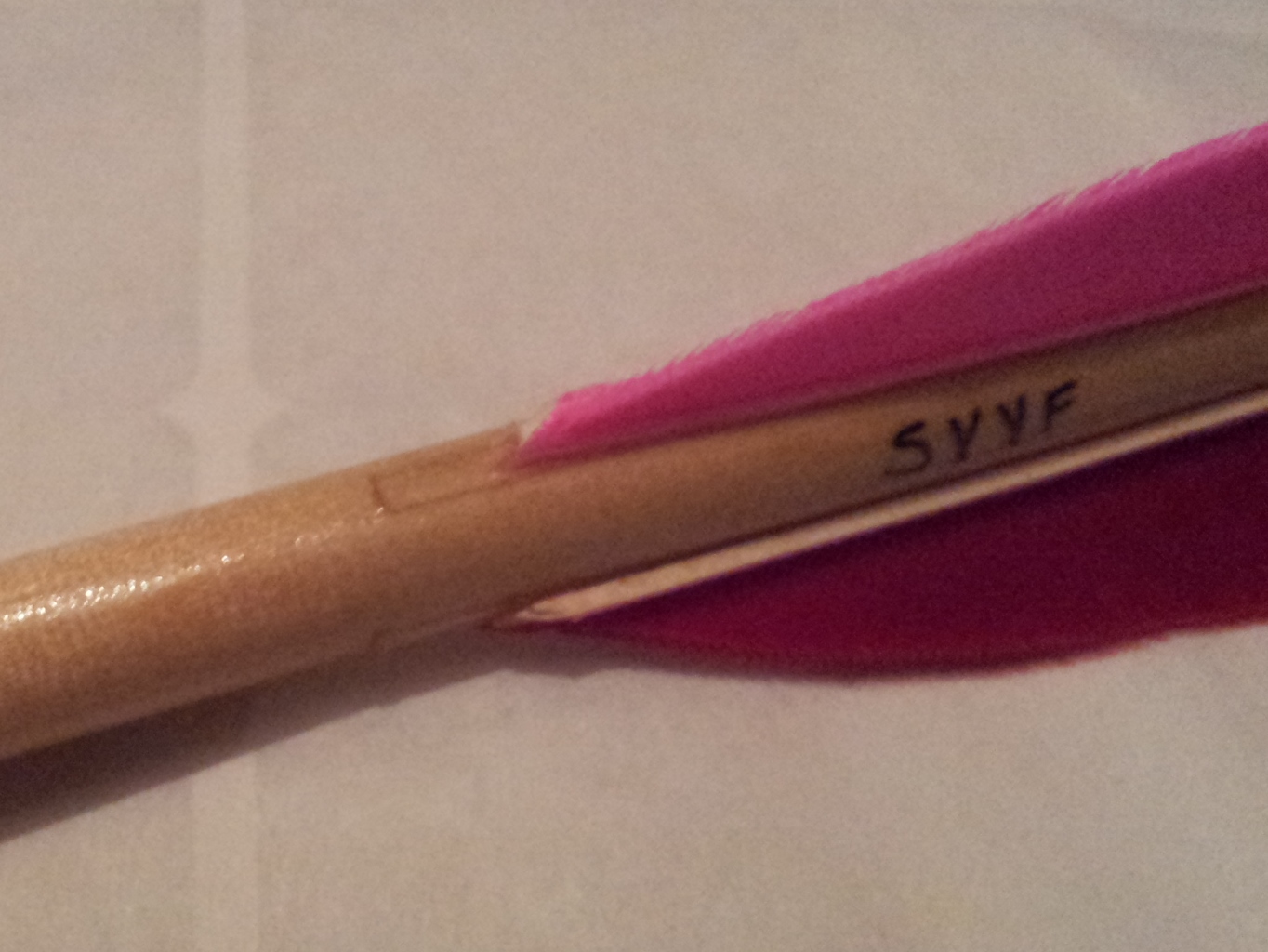
Extra length at front

Extra length at front

I was concerned the tape might come off in the rain but so far so good. I’ve been using the arrows for a little over six months and they seem okay.

My other concern was if the fletching might peel off the shaft, but this hasn’t happened either. I don’t know if this might be different if you varnished the wood first.

They have stood up to all the normal abuse I can throw at them, from being soaked in the rain, to encounters with trees and other vegetation. I’ve also used the tape for a new set of wooden arrows for Sharon and they seem to eb working well for her too.

Not sure how well it would work on plastic fletching but I am thinking of testing this shortly so it might be an update in near future.

The tape is available from most good archery shops, I got mine from Merlin in Loughborough. (http://www.merlinarchery.co.uk/bohning-feather-fletching-tape.html) I’ve used less than half the roll so far and produced a couple of dozen arrows so its pretty good value for money at just under £7 a roll.

So in short my verdict is thumbs up for Bohning tape, a good product that can save you a lot of time. 9/10 (could be higher if I had chance to try it on shafts other than wood)

Let me know if you have any experiences with this or anything else.

Happy New Year and as always thanks for reading.

Literature review – Shooting the Stickbow

Shooting the Stickbow

Finally got round to writing another one of these literature reviews, sorry for the delay. So this one will be on

Fellow archer and blogger (Charles’ Archery blog) has written a great review of this book too and you can find it here.

So why did I go for this book over others?

I bought this book following a recommendation from a fellow archer (Chris Smith) He had been lent a copy and had said how informative he found it. Chris is also a NFAS coach and we had both been reviewing different books for coaching tips and as a good all round resource. This book ticks many of these boxes.

It is a very comprehensive guide for archers, covering the basic very well, more importantly you will find it an easy read, not too technical or complex. On this point I would say it is more technical than many of my other reads, but it is still an easy read. It covers the basics well and what any archer needs to know to progress.

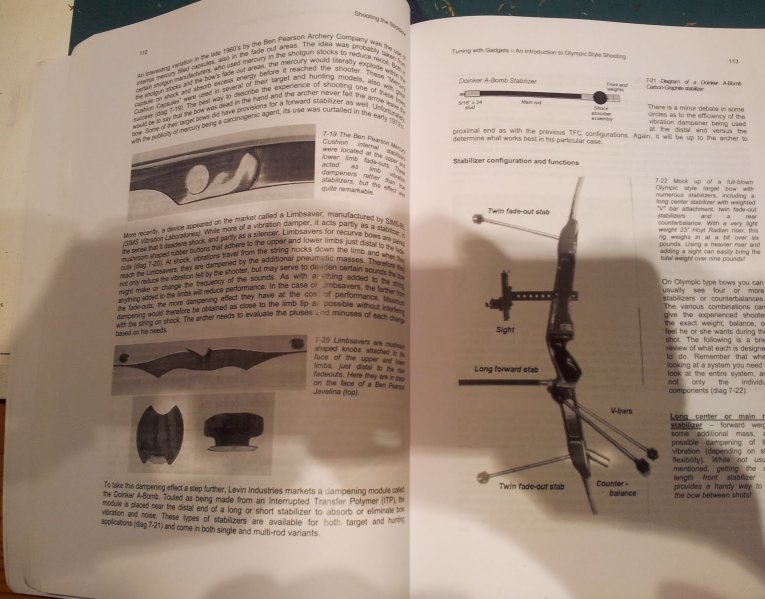
Shooting the stickbow - internal pages

Shooting the stickbow – internal pages

In short I think what makes it a good read is its chapter structure. It  enables you to pick up a copy and read a chapter or two and get something worth while out of it. So if you have a busy life style and find the time very limited it is ideal.

the book  is broken into 4 sections

  • Basic Shooting the Stickbow
  • Equipment – a detailed view
  • Making the shot – theories and practice
  • Memories and musings

Think it maybe of limited use for compound archers as it is aimed at those archers shooting recurve and afb, but I guess the clue is in the title “shooting the stick bow”. I’ve shown this to a number of other archers and everyone whether shooting barebow or longbow have found it of interest. I’ve also recommended it to anyone thinking of either becoming a coach or simply want to expand their knowledge.

Shooting the stickbow - internal pages

Shooting the stickbow – internal pages

Unlike some archery books I have which are pocket-size this is more of a tome, providing a wealth of information, experience and advice. I think it is a massive achievement of the author to produce such a weighty read but still make it easy to follow. The only downside I can give on the book is the quality of some of the photographs that are “showing their age”. Otherwise I would say its a 9 out of 10.

Here are the ISBN number etc I bought my copy from Amazon and received it within a couple of days.

Shooting the Stickbow” 2nd Edition, by Anthony Camera

Author : Anthony Camera
Paperback: 438 pages
Publisher: Virtualbookworm.com Publishing (13 Oct 2008)
Language: English
ISBN-10: 1602642443
ISBN-13: 978-1602642447

Thanks for reading and hope you find this of use.

Equipment Review – Bearpaw 3D Steel Screw-On Points

Okay, to go with my literature reviews (which reminds me I need to finish the write-up on the next one) I thought I’d make a few comments on equipment and bits that I use. Please remember these views are personal, feel free to agree or disagree. If you have any experience of using the items mentioned please let me know it would be great to know how they work for other archers.


The first item I’m going to review is not that exciting for most of you. Piles , no not the sort you see the doctor about 😉 I’m talking about the sort you fit to the end of your arrows in this case wood arrows. Over the years I have used a variety of different styles and metals including brass and steel.
On a recent trip to Merlin archery I picked up some Bearpaw screw on piles. I had mentioned to Chris I was experiencing a problem with loss of piles in some 3D targets recently and he suggested I try these piles. He also commented that they should self centre well onto the shaft.
They are longer than the type I had used previously (brass 3D points) but still a taper fit.
So how have they worked?
Well I’ve been using them now for a few months and I am very impressed. I’ve not as not had any come off in 3D or foam targets.
They do appear to self centre when fitting to the wood shafts, which saves a lot of time and hassle. I think this is due to the extra length giving a cleaner and straighter fit.
I’ve fitted them to Port Orford Cedar and Sitka spruce 11/32 shafts without any difficulty. I apply them with a small amount of 2 part adhesive to the shaft and then screw them on by hand. No need to use any power tools or pliers, if you need to I’ve found that you can remove them by heating on a gas ring burner and using pair of pliers.
 Bearpaw 3D Steel Screw-On Point – are available in

  • 11/32 – 100 grains /125 grains
  • 5/16 100 grains /70 grains
Bearpaw Screw-On 3D Point  are also available in Aluminium in – 5/16 – 40 grains though I’ve not used these, so can’t give you any feedback on them.
bearpaw-3d-steel

Hope readers find this of use. Thanks for reading